
Last updated November 18, 2026
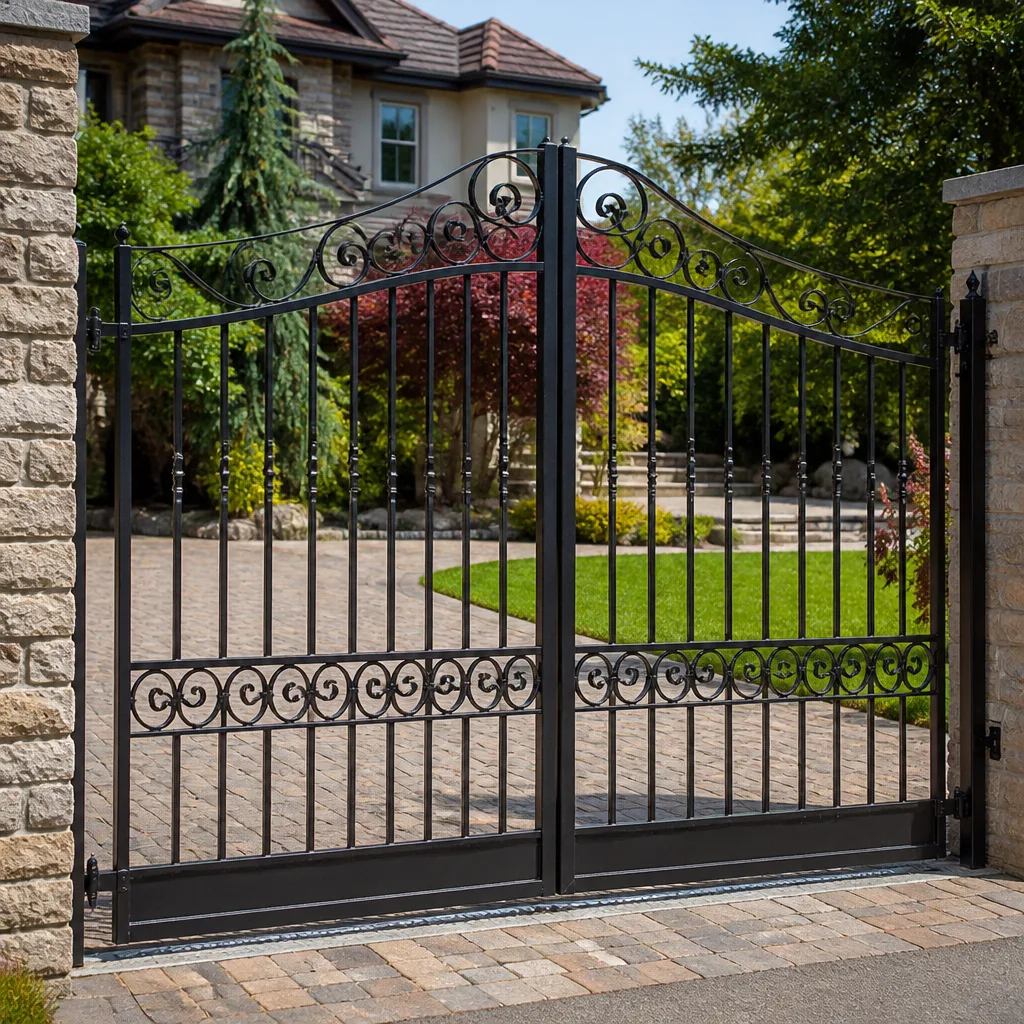 Wrought iron
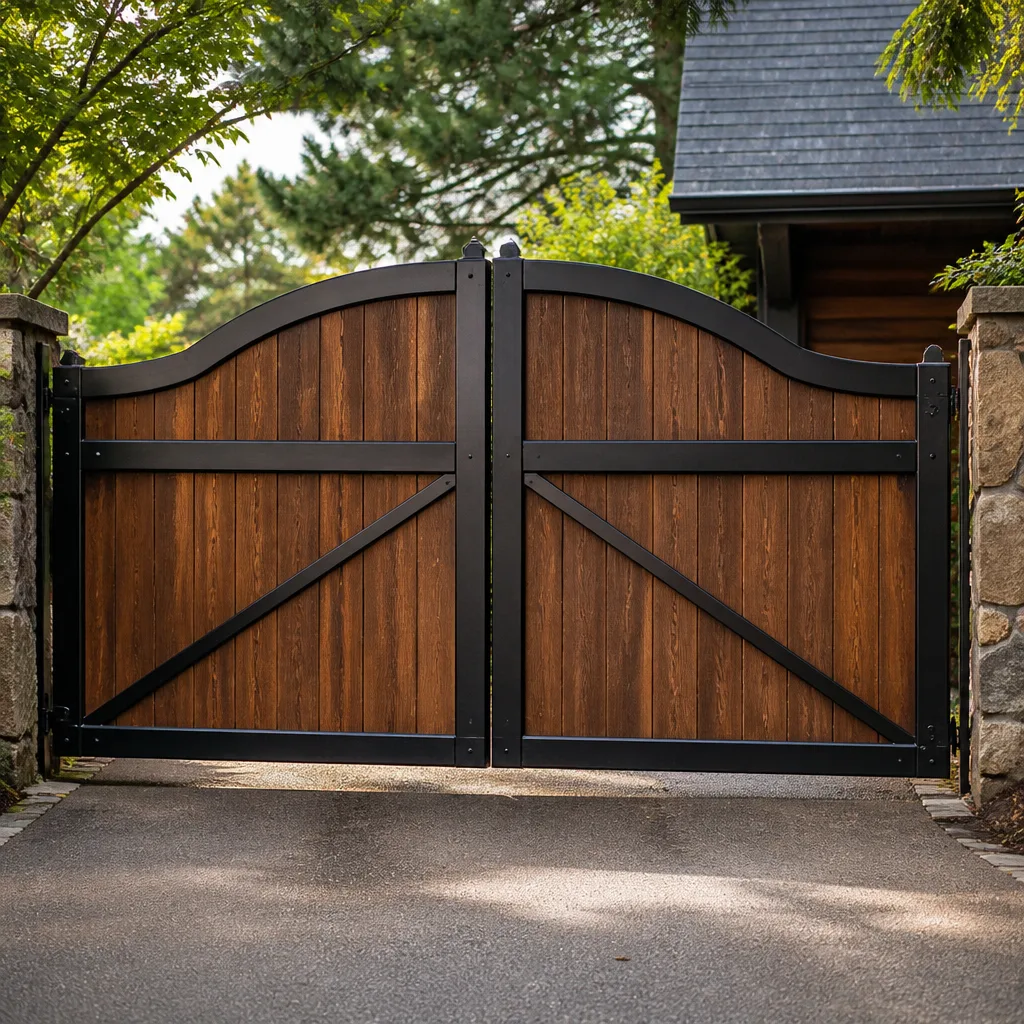 Wood & steel frame
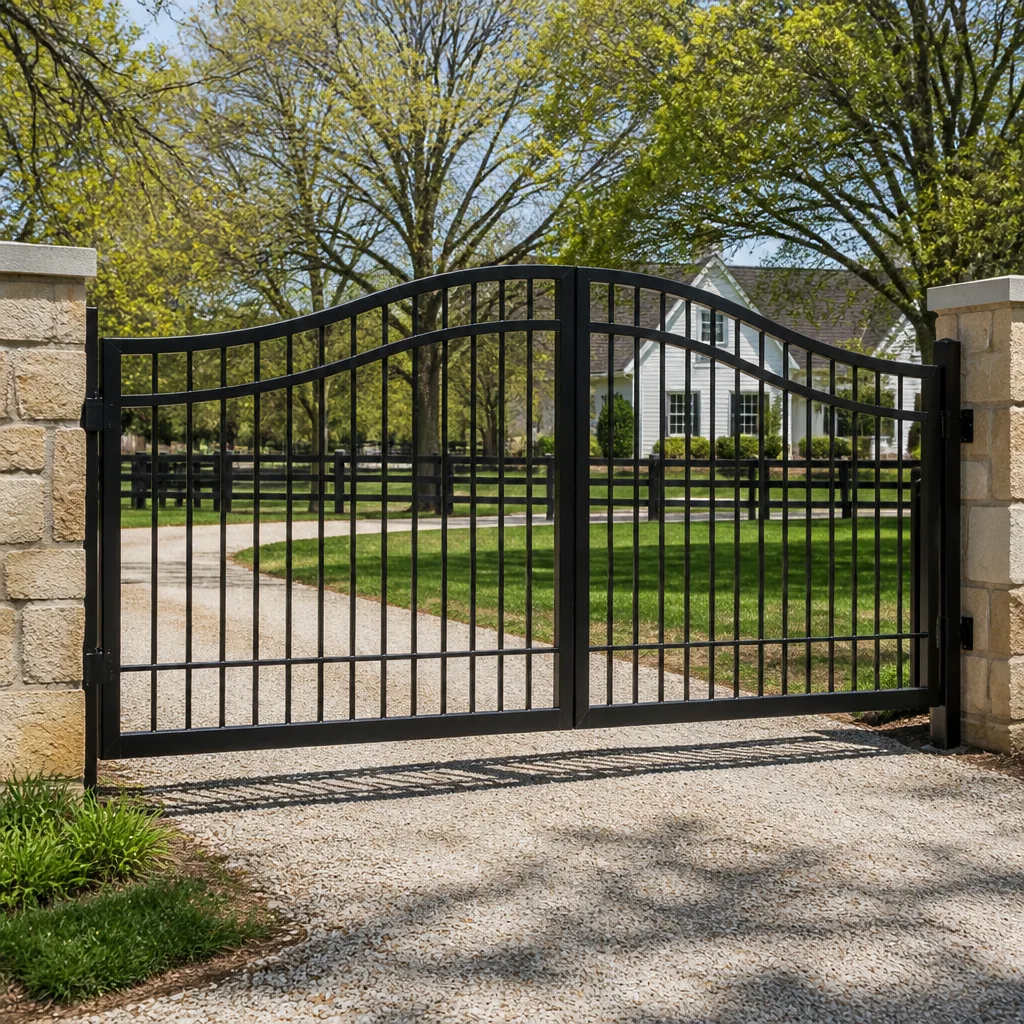 Farm & ranch
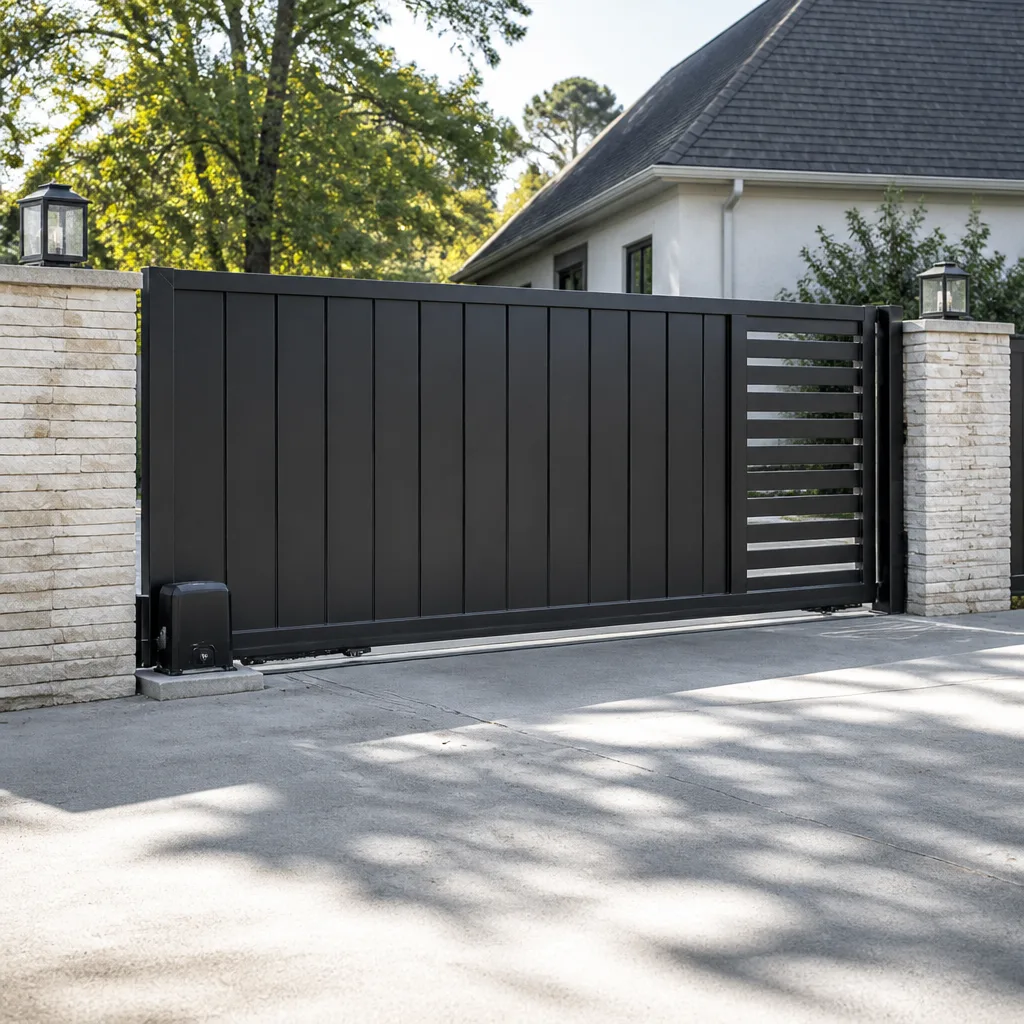 Sliding driveway gates
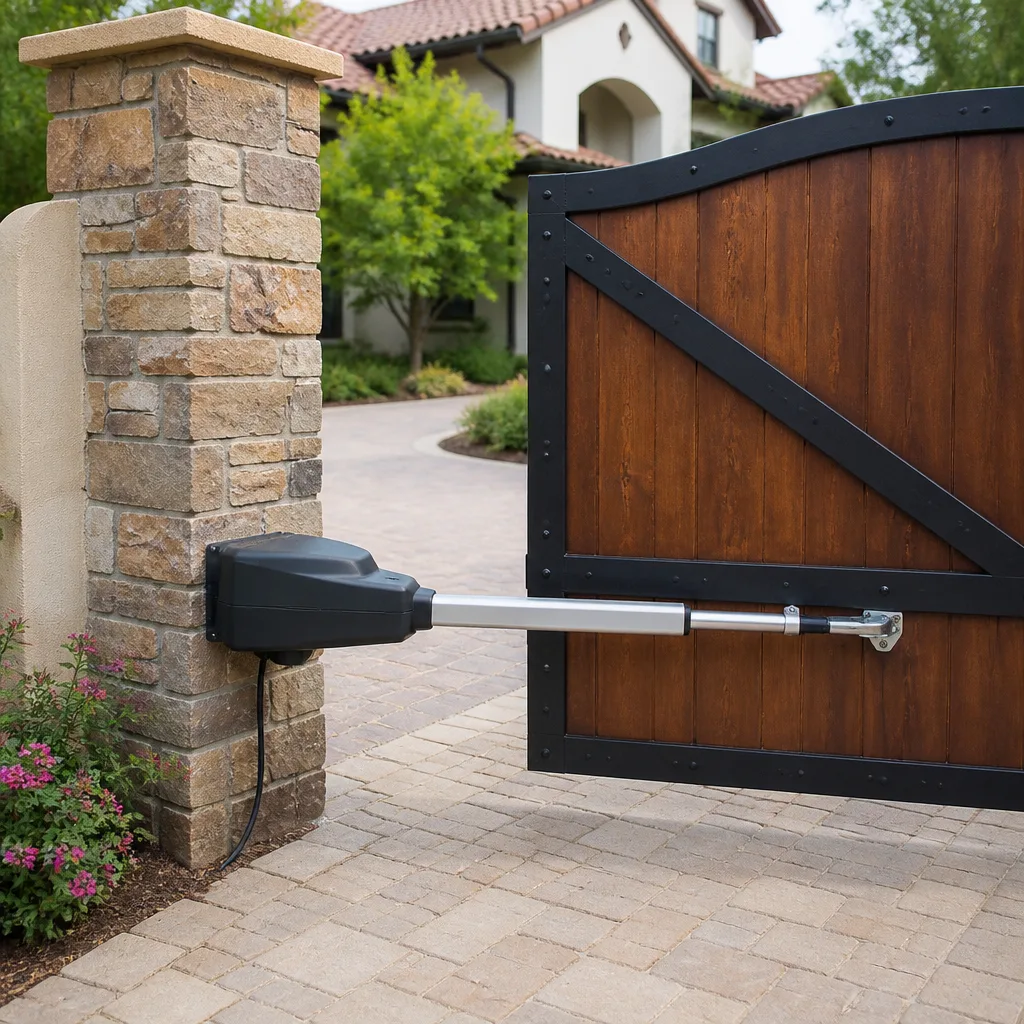 LiftMaster operators
Free on-site gate assessment - hinges, posts, and your LiftMaster or Nice gate operator checked before anything is quoted
The assessment is free and the quote is the invoice.
Get your free estimateGate Repair Warning Signs: An Enterprise Homeowner’s Reference Guide
There’s a sound a gate hinge makes right before it cracks. It’s not a squeak and it’s not a groan – it’s a dry, metallic tick that shows up once every swing, like a coin dropping into a jar that isn’t there. Once you’ve heard it, you can’t unhear it. In our experience, that tick usually shows up six to ten weeks before the hinge fails outright. Homeowners who catch it spend $150 on a hinge replacement. The ones who don’t end up with a bent post, a shattered weld, and a gate lying across the driveway. This guide walks you through everything to listen and look for on an Enterprise, NV gate: the noises, the visuals, and the honest line between “call today” and “add it to next month’s list.” By the end, you’ll know exactly what your gate is telling you.
Quick Answer
The most common gate repair warning signs in Enterprise, NV are grinding or rhythmic scraping at the hinge post, visible rust or cracking at the foundation base, an opener motor that runs for several seconds after the gate stops, remote range that shrinks week by week, and a gate that bounces back open instead of latching. Any one of these signals a component that’s failing now, not later. Catching them early usually means a repair in the $150-$400 range. Waiting until the gate won’t open at all typically pushes the job into the $600-$1,200 range once structural or opener damage is included.
Styles & brands we work with
- Wrought iron
- Wood & steel frame
- Farm & ranch
- Sliding driveway gates
- LiftMaster operators
Table of Contents
- The Noises: What Each Sound Is Telling You
- Visual Signs at the Post Base and Foundation
- Early Opener Strain: The Signs Most Homeowners Miss
- Slow to Close, Bouncing Back Open: Limit Switch vs. Obstruction vs. Sag
- How Enterprise’s Climate Accelerates Gate Failure
- The Honest Triage: Call Today vs. Next Month’s Maintenance
- Common Mistakes to Avoid
- When to Call a Professional
- Frequently Asked Questions
The Noises: What Each Sound Is Telling You
Every gate noise points at a component. Learn the handful that matter and you’ll diagnose the general area of failure without ever opening a toolbox. Here’s how we break them down after decades of listening:
- Grinding, low and rough at the hinge: Metal-on-metal contact inside the hinge pin. The bearing surface is dry, worn, or has swallowed grit. Left alone, the pin seizes and the hinge arm shears.
- Clicking on every swing: A loose bolt, a worn weld, or a fatigued hinge knuckle. Listen for whether the click happens at the same point in the swing each time – if it does, it’s mechanical, not random.
- Rhythmic scraping, once per revolution: Something is rubbing where it shouldn’t. On sliding gates in Enterprise, this is usually the roller wheel or the track. On swing gates, it’s often the bottom of the leaf dragging the ground.
- High, sharp squeal: Fresh metal-on-metal. This is urgent – it means parts are actively eating each other.
- Repeated thunking when the gate reaches fully open or closed: The opener is forcing the gate into its stop. The limit switch has drifted, or the gate has physically settled.
The one sound that’s actually normal is a gentle, consistent hum from the motor housing during a cycle. Any tick, click, scrape, or grind layered on top of that hum deserves a look at the gate motor or the hardware behind it. If you’re hearing anything from that list more than once a week, it’s worth a gate repair in Enterprise evaluation before it turns into something bigger. On our side of the driveway, the sound we hear most in Enterprise is a dry hinge tick – it comes from the seasonal temperature swings that pull lubricant out of the pin. Simple fix. Expensive if ignored.
Visual Signs at the Post Base and Foundation
Here’s a distinction that saves homeowners hundreds of dollars: a hardware failure is one repair, and a structural failure is a completely different one. The post base tells you which you’re looking at. Take two minutes once a month, walk to the hinge post, and look at where it meets concrete or ground.
Hardware Problem (Repair Scope: Small)
- Rust streaks running down the post from a hinge mount, but the post is straight and solid
- A gap opening up between the hinge and the post face (loose bolts, worn hinge)
- Squeaking that responds to lubrication but returns within a few weeks
- Gate leaf sagging at the far end while the post itself is plumb
Structural Problem (Repair Scope: Larger)
- The post leans – even a few degrees. This means concrete has shifted, cracked, or settled.
- Visible cracks radiating from the post base into the surrounding slab or footings
- Exposed concrete around the post that looks chalky, crumbling, or flaking
- The gate leaf itself sits square, but the post has rotated slightly (hold a level to the post face – not the gate)
- A visible gap between the post and the concrete on any side, especially after a wind event
Fix the panel without the post and you’ll fix it twice. That’s the rule we run on. In Enterprise, our soil and summer heat conspire to shift post bases that were set in shallow footings, so a leaning post here is almost always a foundation question rather than a hardware question. If you’re seeing any of those structural signs, that’s not a DIY weekend job – it’s measurement, re-set, and welding. Our gate installation in Enterprise team handles both repairs and full resets of gate posts when the footing has failed.
Early Opener Strain: The Signs Most Homeowners Miss
Gate openers rarely fail without warning. A dying motor will tell you for weeks that it’s struggling – most homeowners just don’t know the language yet. The signals below apply whether you’re running a newer Mighty Mule or a DoorKing commercial-grade unit; the mechanics are the same.
- Longer cycle time. Time your gate opening from fully closed to fully open today, then again next month. More than a 15% increase in cycle time on the same gate means the opener is fighting something – friction, weight, or a failing gear.
- Motor running after the gate stops. When the gate reaches its end position but you hear the motor whine for another second or two, the limit switch isn’t engaging properly, or the gate is stalling against an obstruction the opener is still pushing through.
- Shrinking remote range. If your clicker used to work from the top of the driveway and now only works from 30 feet, that’s not just a weak battery. Low range usually means a failing receiver, degraded antenna wire, or the opener drawing voltage it shouldn’t.
- Faster battery drain in the remote. A remote that suddenly needs batteries every few months is a sign the receiver is inefficient or the opener is being cycled more often (because the gate isn’t latching on the first try).
- The opener seems to “think” about it. A pause at the start of a cycle that wasn’t there before – that’s often a control board or capacitor beginning to fail.
Any one of those is worth a look. Two or more together is the point where the opener needs a proper diagnosis rather than another month of hoping. If you’re already at that stage, a gate motor & opener in Enterprise evaluation will tell you whether it’s a service fix or a replacement – and we’ll tell you straight if a replacement isn’t needed yet.
Slow to Close, Bouncing Back Open: Limit Switch vs. Obstruction vs. Sag
These three symptoms look alike from the driver’s seat, but they’re very different repairs. Sorting them out yourself saves a diagnostic call and puts you in the right frame of mind when you do call.
Limit Switch Drift
If the gate closes slowly and consistently – every single time – the opener’s limit setting has probably drifted. This happens over months as the gate settles and the arm wears. It’s a service adjustment, usually minor. The clue is that it’s consistent; there are no good days and bad days, just slow closes.
Physical Obstruction
If the gate closes normally sometimes and stalls or reverses other times, something is physically getting in the way. Common culprits on an Enterprise property: gravel buildup on the driveway, a raised concrete lip after a monsoon event, vegetation growing into the travel path, or a child’s toy wedged where you can’t see it. Check every obstruction sensor and the safety edge first – an obstruction sensor that isn’t working correctly is a hazard, not a convenience.
Gate Sag
If the gate bounces back open only when it’s near fully closed, and you can see daylight under the outer leaf where it should be near the ground, the gate has sagged. This is a structural issue – most often the hinge post, sometimes the leaf itself. Swinging gates in Enterprise sag over time as the ground shifts and the hinge hardware wears. If you can push the closed gate by hand and feel it scrape the ground or hit a stop, sag is your answer.
If you’re not sure which of the three you’re looking at, that’s actually the most common question we get. In Enterprise, it’s usually sag first, limit drift second.
How Enterprise’s Climate Accelerates Gate Failure
Gates in Enterprise live a harder life than gates in most of the country. Knowing how our climate stresses specific components can help you inspect the right spots.
- Summer heat of 105°F+: Metal expands during the day and contracts at night. The expansion/contraction cycle works bolts loose over a season. We find loose hinge bolts on Enterprise gates more often than anywhere else we work.
- Seasonal winds: Spring wind events load gates sideways, putting stress on the hinge post and the closed-gate latch. A gate that survived the same wind ten years ago may struggle today because the hardware is older and the post has shifted a millimeter.
- Alkaline soil and heavy irrigation: Concrete footings here can slowly erode or crack. A post that was solid at install can loosen over years if drainage isn’t right. That’s a common Enterprise-specific problem.
- UV degradation on operators: Plastic housing and solar panels on the opener take direct sun. Seals harden, weather-stripping shrinks. If you’re running a Ghost Controls or Elite solar unit, the panel and battery efficiency drops before the opener actually fails – that shortening remote range is often a battery losing capacity to heat.
- Dust: Fine desert dust works into hinges, tracks, and the opener drive gear. More frequent lubrication is the cheapest protection you can give your gate.
Every one of those factors points to the same conclusion: gates in Enterprise don’t fail because of a single part, they fail because several small stresses gather up over one season. That’s why the warning signs matter here more than they do in cooler climates.
The Honest Triage: Call Today vs. Next Month’s Maintenance
This is the section that won’t sell you anything. Some warning signs are urgent. Others genuinely aren’t. Here’s our honest split:
Call Today – Do Not Wait
- Any sharp metal-on-metal squeal or screech
- A post that has visibly moved, tilted, or cracked at the base
- The gate opens but will not close at all, or closes on an obstruction
- Opener motor runs and then trips a breaker – stop using it immediately
- A gate that has swung off its track or through a stop
- Any electrical smell, visible scorching, or sparking from the opener or control box. This is a safety issue – do not attempt to troubleshoot it yourself.
Add to Next Month’s Maintenance List
- A single dry hinge that ticks – lubricate it, then check again in 30 days
- Rust streaks on a post that’s still plumb and solid – cosmetic, but a sign to schedule a hardware check
- Slightly reduced remote range on a unit that’s more than 5 years old – worth testing the battery and antenna connection
- A gate that’s 10% slower to cycle than it used to be – schedule a tune-up, not an emergency call
- Annual lubrication and bolt check to keep it from becoming urgent
Here’s the part most repair companies won’t say: if your gate is on the “add to next month” list, don’t call us today. We’d rather you call in three weeks for a $200 tune-up than in three months for a $900 repair. That said, if you’re genuinely not sure which side of the line your gate falls on, call and describe it – a live person will tell you the truth about whether it’s a today problem or a next-month problem.
Common Mistakes to Avoid
- Trusting the phone quote. In small Enterprise neighborhoods and outlying counties, we hear about a national outfit that quoted $180 on the phone and billed $640 at the door almost every month. Written, upfront pricing before anyone touches the gate is the baseline – not a favor.
- Lubricating and hoping. Grease quiets a worn hinge for a few weeks and hides the failure. If the tick returns within a month, the pin is going and needs to be replaced, not re-greased.
- Bolting through a cracked post base. Adding bolts to a foundation crack doesn’t repair the base. It just moves the failure point to the next weakest weld downstream.
- Ignoring the opener until it dies. A struggling opener is diagnosable. A dead opener is a replacement. Watch the cycle time and remote range – those two signals catch most failures two months before the gate stops moving.
- Skipping the safety edge or obstruction sensor test. These are not optional accessories – they’re the reason a gate stops on a person’s leg instead of continuing through it. Test them once a month by placing a solid object in the closing path (with the gate on a slow setting, never standing under the gate). If the gate doesn’t reverse, stop using the opener and get it looked at.
- Cutting the gate off to “start fresh” when a fix is available. We weld on-site and repair first. A gate that’s hauled off for replacement is expensive; a gate that’s re-welded in the driveway usually costs a fraction.
- Assuming a level gate means a level post. The gate can look perfect while the post underneath has rotated a few degrees. Always check the post face with a level, not the gate itself.
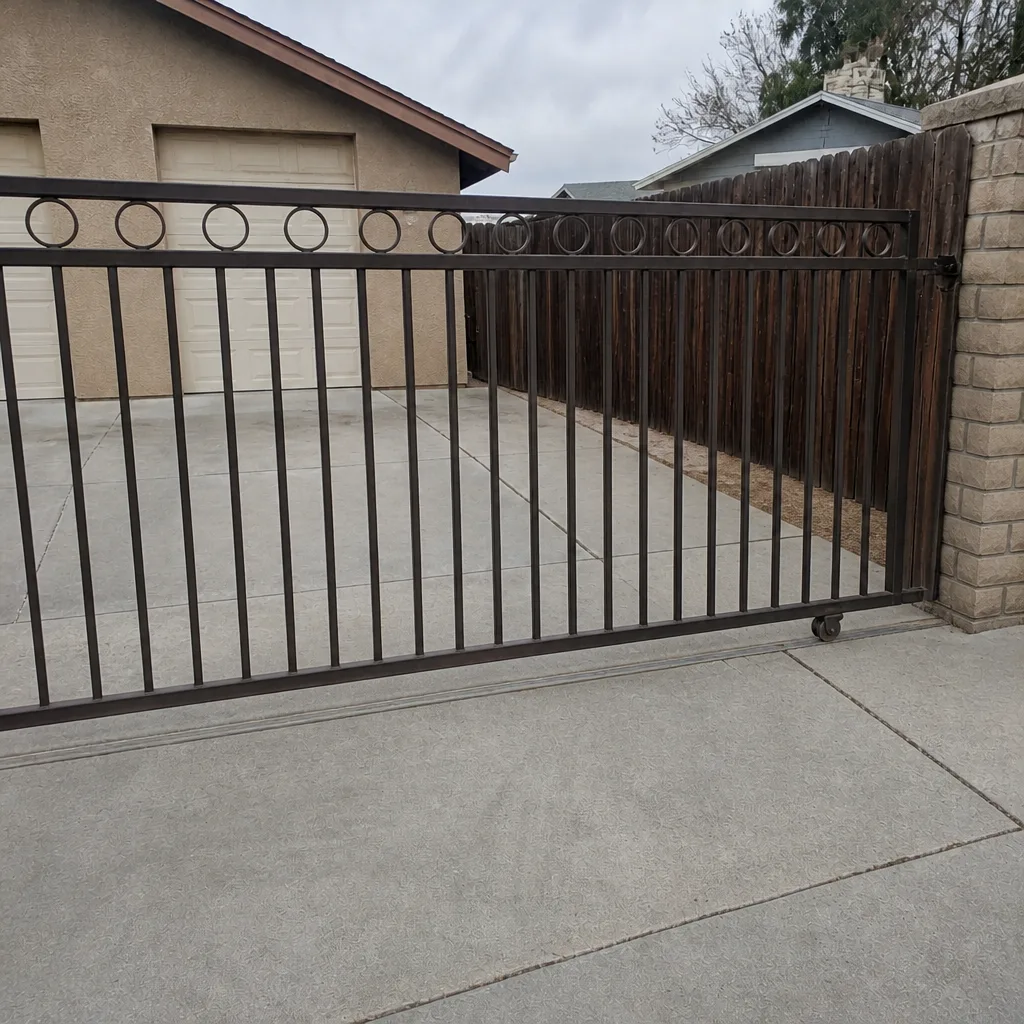
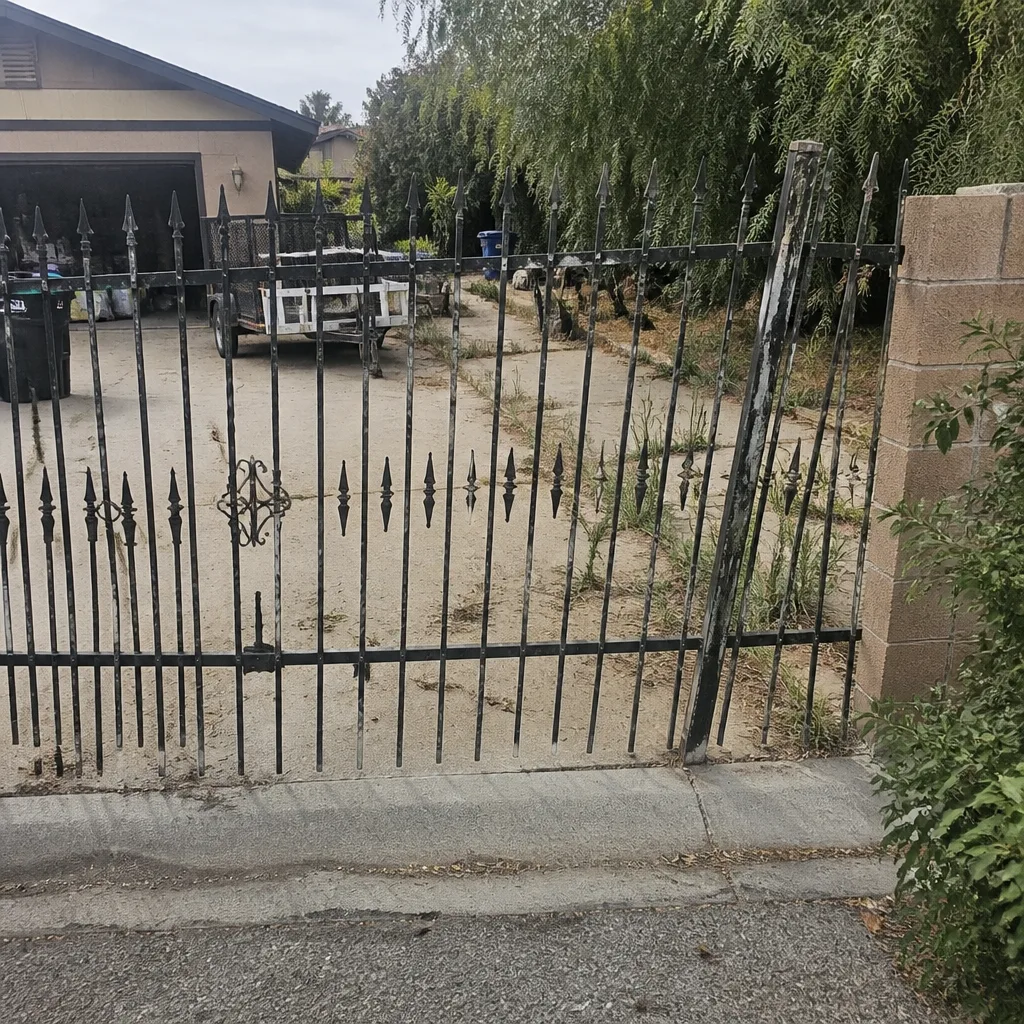
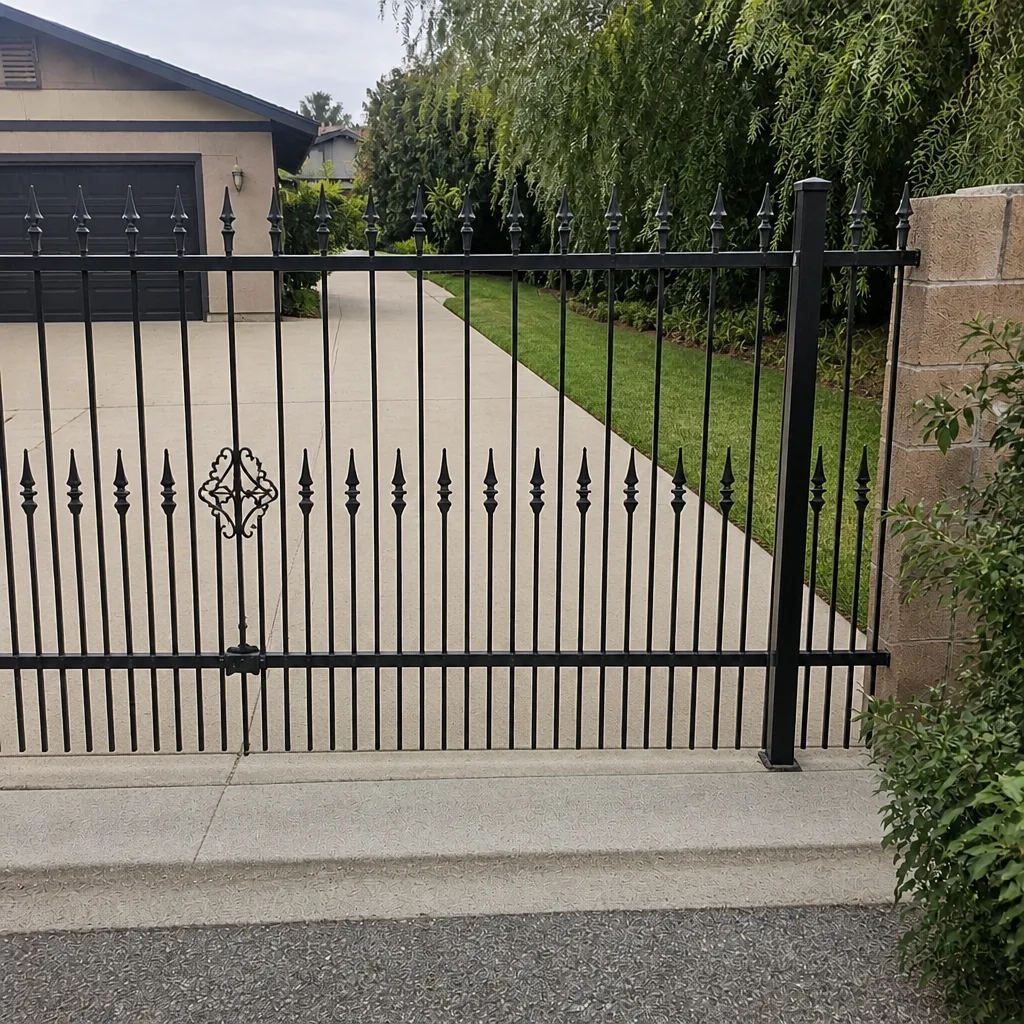
See the difference
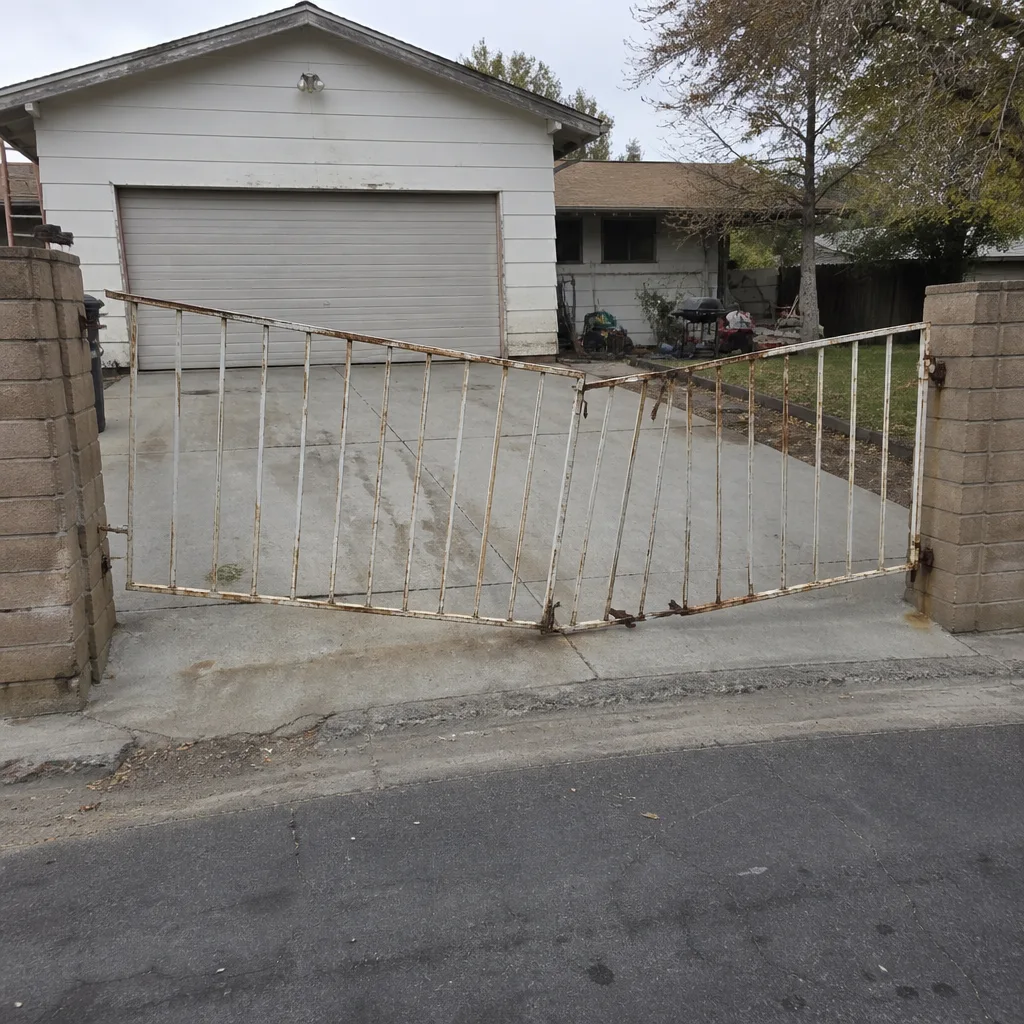 Before
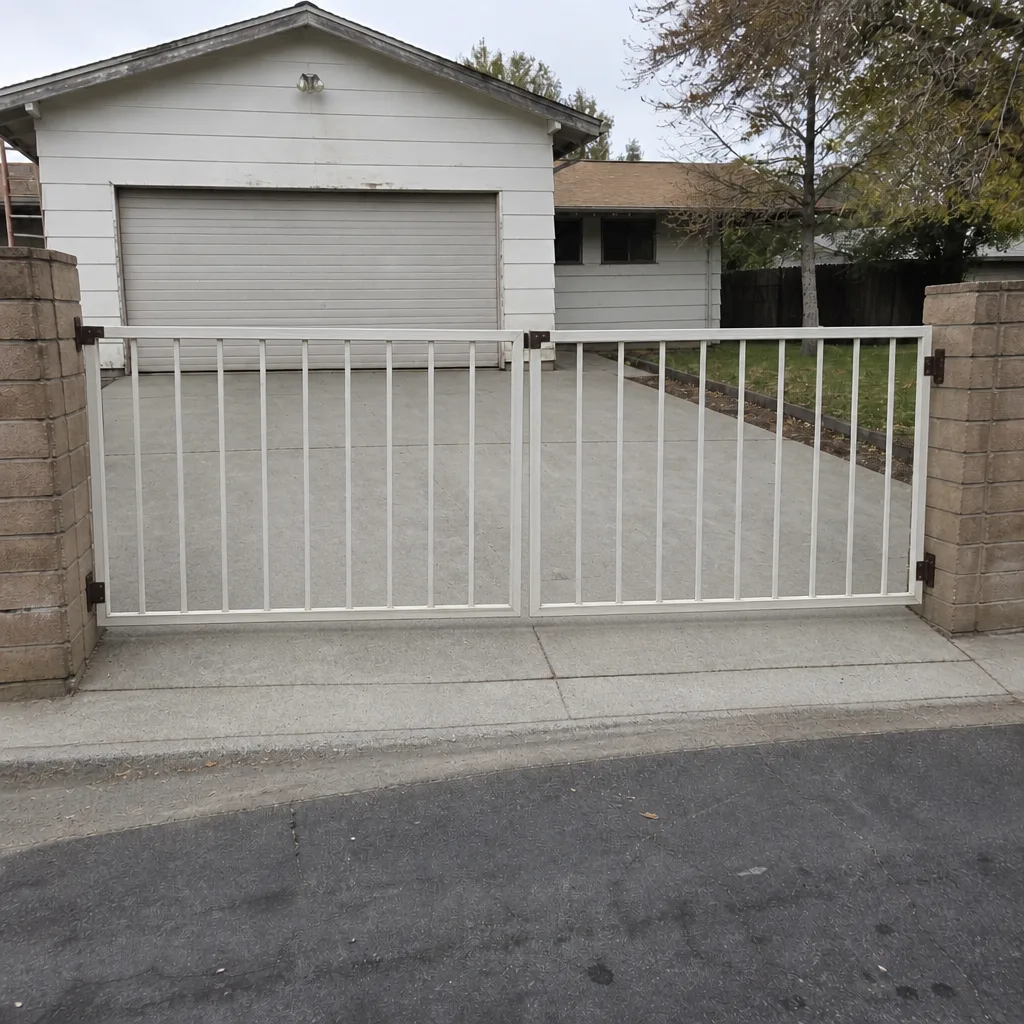 After
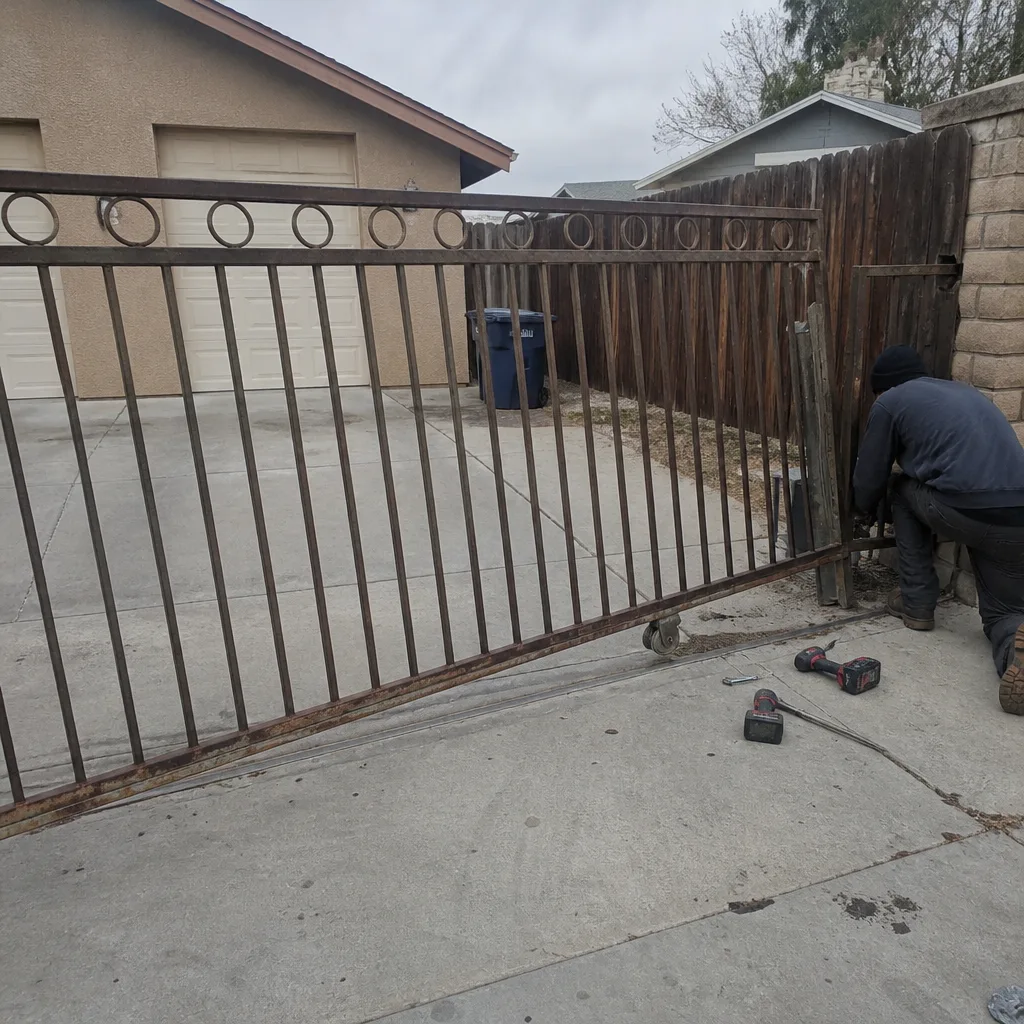 Before
 After
 Before
 After
When to Call a Professional
Call a professional the moment you see a structural sign – a leaning post, a cracked foundation base, or a gate that has come off its track. Call us today if you hear metal- grinding, if the opener smokes, sparks, or trips a breaker, or if the safety edge fails its monthly test. For mechanical warning signs like dry hinges, slow cycle times, or sluggish remotes, a scheduled maintenance call in the next four to six weeks is the right move. Gatewood Fence & Gate Enterprise offers free estimates in Enterprise – call (833) 780-1547 and describe what you’re hearing or seeing. A live person will pick up and tell you straight whether it’s a today problem or a next-month problem. That’s the whole point of having a phone number you can actually reach someone on.
Frequently Asked Questions
Hold a level against the hinge post face. If the post is plumb and the gate still sags or squeaks, the failure is in the hinge hardware. If the post tilts even slightly, or if you see cracks radiating from the post into the concrete, the foundation has shifted and the whole post needs attention. In Enterprise, the leaning-post scenario is more common than homeowners realize because soil movement is quiet and cumulative. Fix the panel without the post and you’ll fix it twice – so check the post first.
Most gate repairs in Enterprise, NV fall between $150 and $400 for hardware-level fixes – hinge replacement, weld repairs, opener adjustments, or limit switch calibration. Structural repairs involving a post reset or foundation work typically run $600 to $1,200 or more depending on the size and footing. We give written upfront pricing before any work begins. Call (833) 780-1547 for an exact quote – estimates are free.
The opener is still pushing against the gate after the gate has reached its limit, which means the limit switch has drifted or the gate is physically stalling. Over time this burns through the motor’s gear drive and capacitor. It’s a service fix most of the time – not a replacement – but it needs looking at before the motor fails. If you’re hearing it every cycle, don’t wait another month.
Walk out and check your gate once a month – a two-minute inspection of the hinge post, the foundation base, the safety sensors, and the cycle time. In Enterprise, the heat and wind put more stress on gates than a cooler climate would, so we recommend a professional tune-up once a year. The monthly inspection is what turns a $200 repair into a $1,200 repair when you’re not paying attention.
Often, yes. If you can describe the sound (grinding, clicking, screeching), the timing (every cycle, random, only when fully open), and what the gate looks like at the hinge post, we can usually narrow it down to two or three possibilities over the phone and tell you whether it’s urgent. Call (833) 780-1547 – a live person answers, not a voicemail.
We service the major residential and light-commercial gate opener brands, including LiftMaster, FAAC, BFT, Linear, Viking, Ghost Controls, DoorKing, Elite, and Mighty Mule. If you’re not sure which one you have, take a picture of the housing label and call us – we’ll tell you what you’re working with and what the warning signs mean for that specific unit.
The Bottom Line
Gates don’t fail without warning. They give you a hinge tick, a slower cycle, a shrinking remote, a post that leans two degrees – weeks or months before they actually break. The homeowners who catch those signs spend a few hundred dollars and keep their driveway working. The ones who wait spend a thousand and lose their gate for a week. Walk out once a month. Test the safety sensors. Listen for the sounds. If anything on the “call today” list shows up, call. If it’s on the “next month” list, put it on the calendar. That’s the entire system. Here’s where to start exploring what we do: Gatewood Fence & Gate Enterprise home.
Gatewood Fence & Gate Enterprise is locally owned and owner-operated, servicing Enterprise and the surrounding rural counties. Every job carries the 90-Day Done Right Promise in writing. Standing offers include $40 off any repair over $200, a free second opinion on any written estimate, no trip charge inside the county, and a permanent 10% discount for seniors and veterans. Call (833) 780-1547 for a free estimate in Enterprise – a live person answers every call, 24 hours a day, 7 days a week.
Written by the team at Gatewood Fence & Gate Enterprise.