
Last updated November 18, 2026
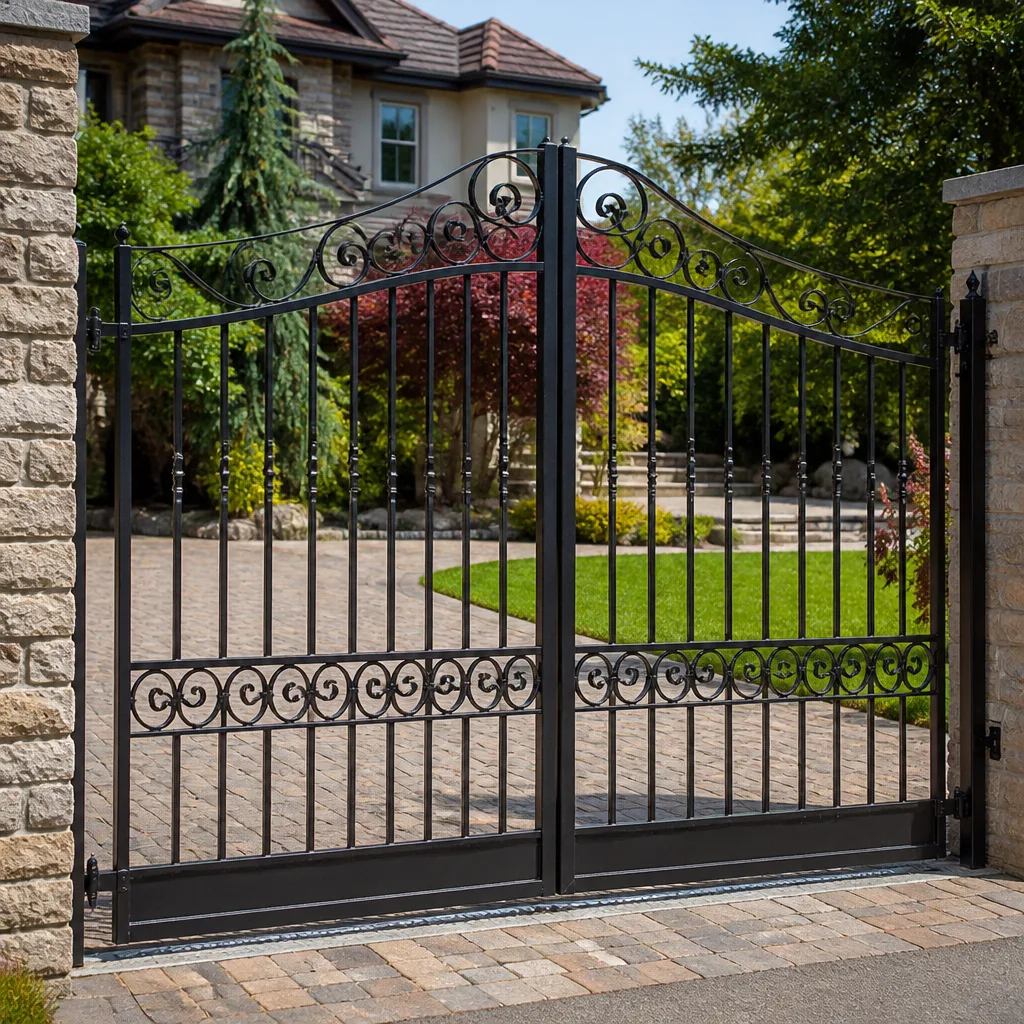 Wrought iron
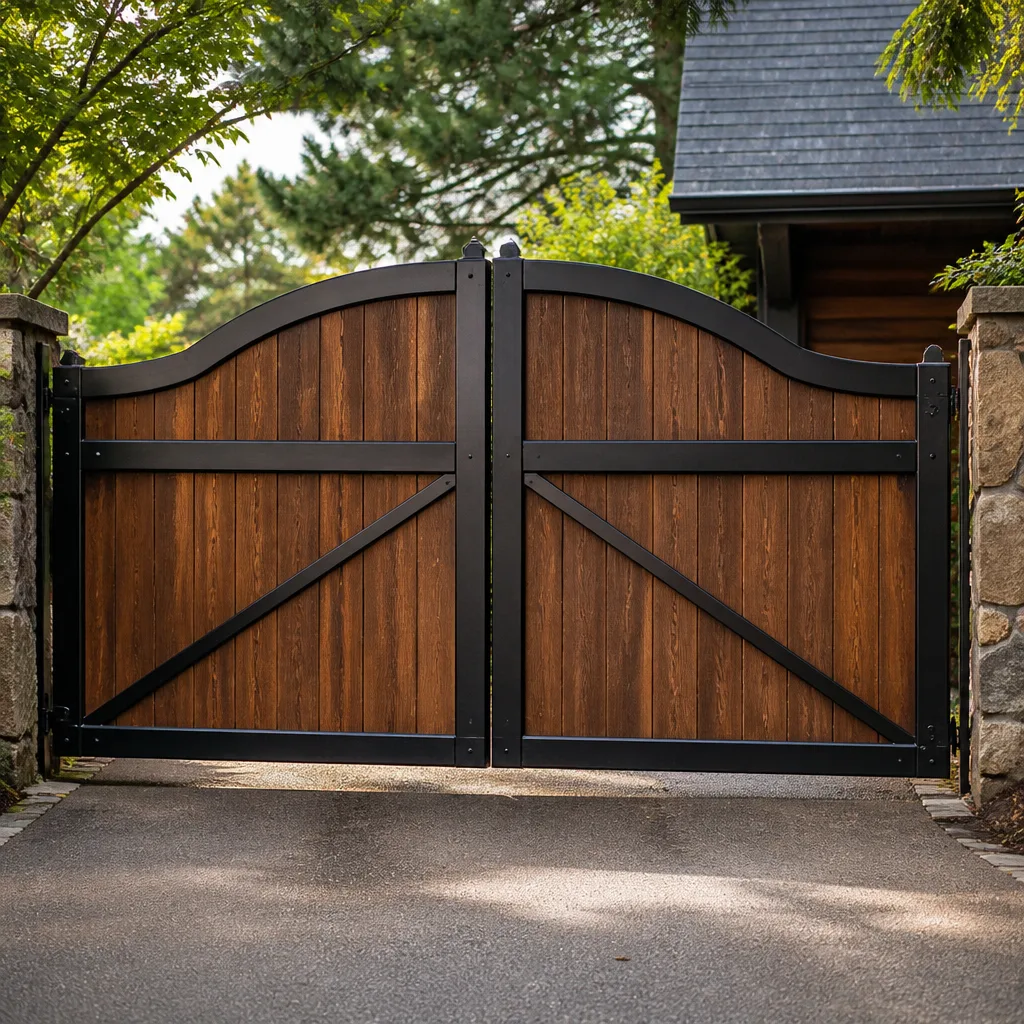 Wood & steel frame
 Farm & ranch
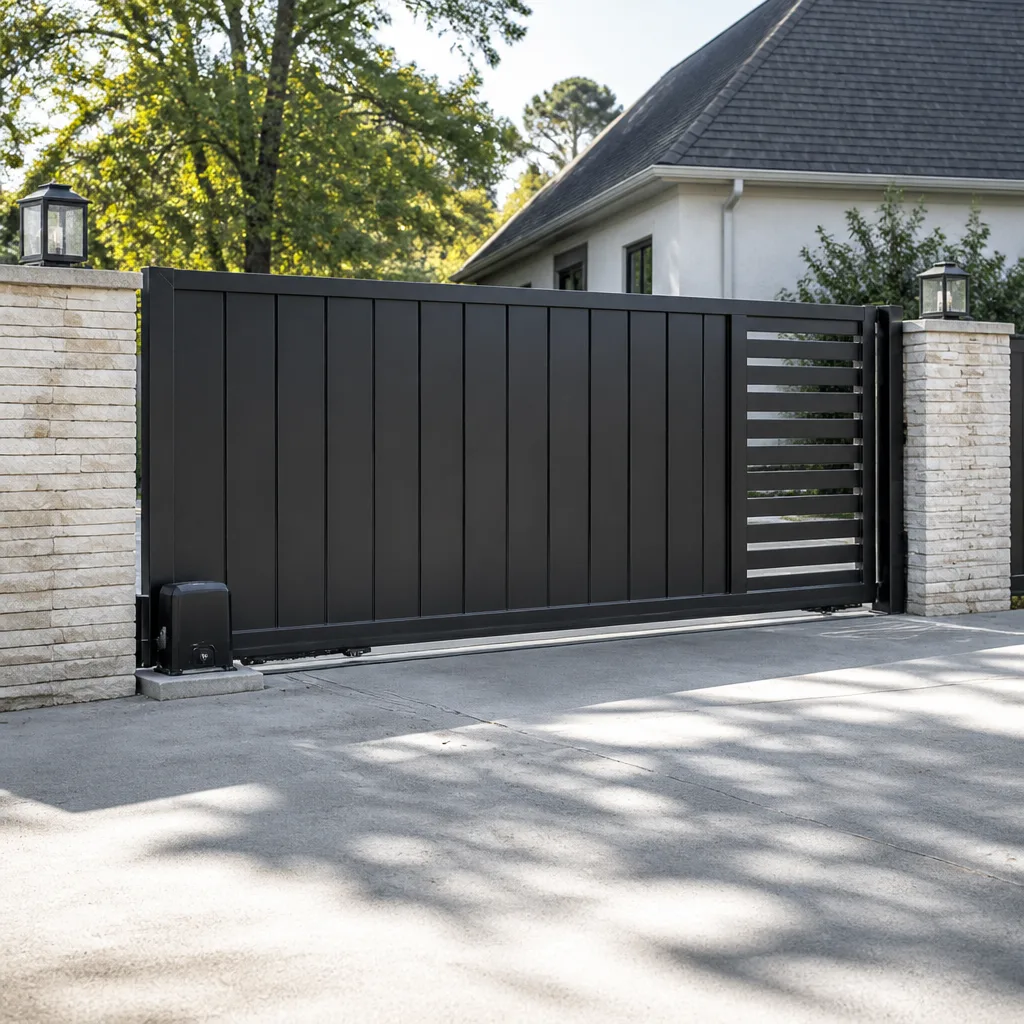 Sliding driveway gates
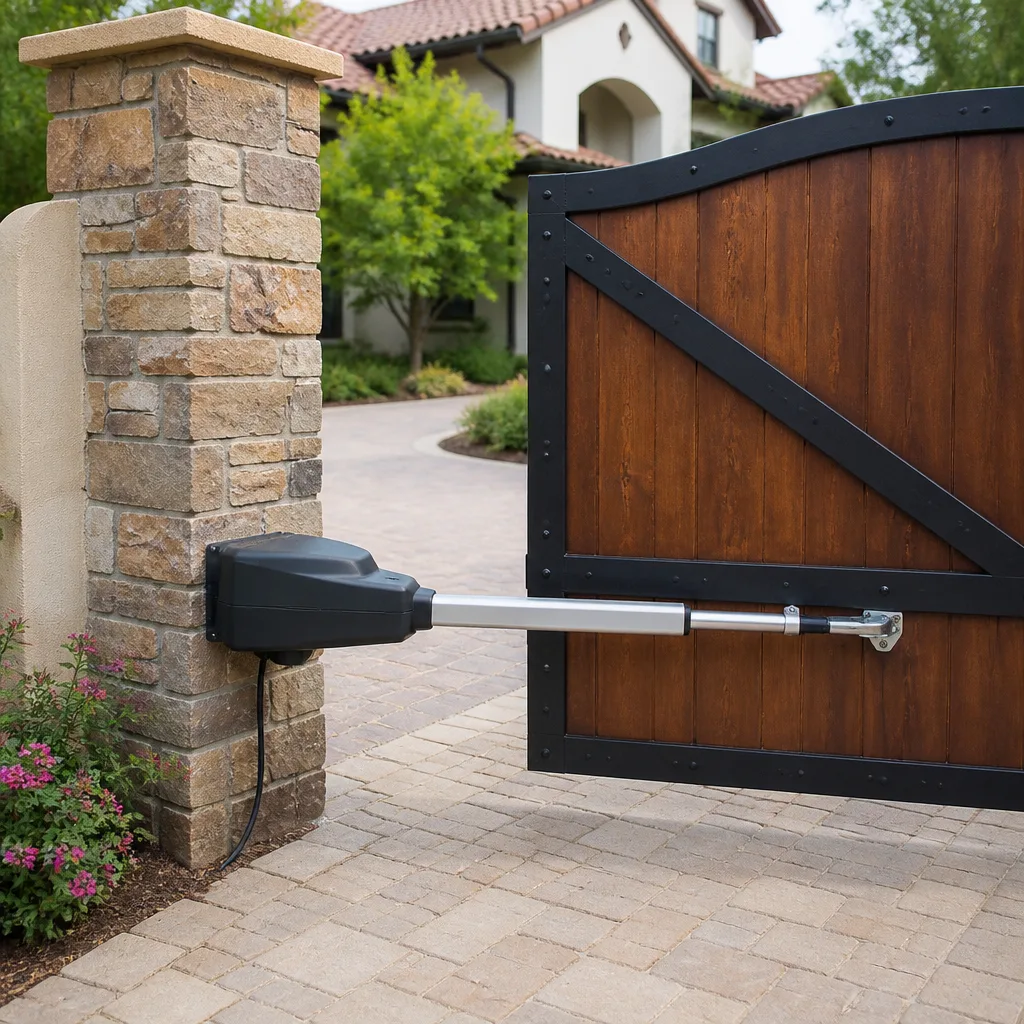 LiftMaster operators
Free on-site gate assessment - hinges, posts, and your LiftMaster or Nice gate operator checked before anything is quoted
The assessment is free and the quote is the invoice.
Get your free estimateHow Long Does Gate Motor & Opener Take? Timelines and What to Expect
The honest answer to “how long will this take” is: it depends on what the last person left behind. In our experience, it is rarely a clean slate. A straightforward motor swap on a gate that’s already prepped, with power already run to the post, takes about ninety minutes. But that job is the exception, not the rule. Half the calls we get in Enterprise are for gates where a previous installer slapped a motor onto a sagging frame, ran a zip-cord power line across a driveway, or left a bracket that’s rusted solid to the hinge post. This guide is about every condition that pushes a motor installation from ninety minutes into a half-day or longer, and how to know which situation you’re in before you schedule the work.
Quick Answer
A gate motor installation typically takes 2 to 4 hours for a new motor on an existing bracket, and 4 to 8 hours when the bracket has to be replaced, the power has to be run, or the gate needs alignment work first. A retrofit to a manual gate with no prep at all can stretch into a second day. The single biggest variable in Enterprise is not the motor itself – it’s the gate frame and the power situation.
Styles & brands we work with
- Wrought iron
- Wood & steel frame
- Farm & ranch
- Sliding driveway gates
- LiftMaster operators
Table of Contents
- Timeline breakdown: what each installation type actually takes
- Why the electrical portion is usually the longest and most variable
- Gate alignment problems that add hours – and why a straight answer matters
- The programming and commissioning step most timelines skip
- What “same-day” really means for emergency vs. scheduled work
- Motor brands and how they affect install time in Enterprise
- How to know your situation before the technician arrives
- Common mistakes to avoid
Timeline Breakdown: What Each Installation Type Actually Takes
Not every motor installation is the same job, even though they all end with a gate swinging or sliding on its own. Here’s how the timelines shake out by situation, based on what we see most often around Enterprise.
New motor on an existing bracket (the easy one)
If the bracket is sound, the power is already in place, and the gate is a brand that swaps cleanly – LiftMaster to LiftMaster, say, or a Viking replacement on a Viking frame – you’re looking at roughly 90 minutes to 2 hours. The mounting holes line up, the wiring terminations are familiar, and the programming is a matter of setting limits and pairing remotes. This is the job everybody hopes for. It’s also the one that gets quoted over the phone and then blows up at the door, which is why we don’t quote install timelines until we’ve looked at the bracket.
Full bracket replacement (the common one)
When the bracket is rusted, bent, or was welded by someone who didn’t measure twice, we cut it off and weld a new one on site. That’s 3 to 5 hours on a swing gate, longer on a heavy slide gate. The welding itself is maybe 30 minutes. The rest is prep, measurement, and letting the weld cool before you mount anything to it. In Enterprise we deal with a lot of winter freeze-thaw on gate posts, and a bracket that looked fine in October can be a cracked weld by March.
Retrofit to a manual gate with no existing prep
This is the old gate that’s been opened by hand for 15 years and now the homeowner wants it automated. There’s no bracket, no power, no mounting plate, and often no idea whether the gate posts are deep enough for the load. This is a 6 to 8 hour job minimum, and if the power has to be run underground or the posts have to be reset, it rolls into a second visit. We’ve done retrofits in the older neighborhoods around Enterprise where the fence line was set decades ago and the posts were never designed to carry a motor. It’s doable. It’s just not a 90-minute job.
If you’re starting from zero, the broader scope is worth reading up on: our Gate Motor & Opener in Enterprise page walks through what a full motor package includes, from bracket to remote.
Why the Electrical Portion Is Usually the Longest and Most Variable
Here’s the thing nobody tells you when they quote a motor install: the motor is not the slow part. Getting power to the motor is. We’ve installed motors in under an hour on a gate where a dedicated circuit was already stubbed out at the post. We’ve also spent a full afternoon just figuring out where the power was going to come from.
The electrical question comes down to three scenarios:
- Dedicated power already at the gate post. A weatherproof outlet or a junction box with the right voltage already in place. This is the fast case – 15 to 30 minutes to connect and test. If you don’t know whether you have this, that’s the first thing to find out.
- Power nearby but not at the post. There’s an outlet on the house or a garage subpanel within reach. Running a line from there to the gate is usually 1 to 3 hours depending on distance and whether it has to be buried or run in conduit. In Enterprise, buried line has to go below the frost line, which adds depth and time.
- No convenient power at all. This is the slow one. Either a new circuit comes off the panel and runs out to the gate, or the homeowner goes with a solar setup. Solar-powered motors – and we install a lot of Ghost Controls units for this exact reason – sidestep the trenching entirely, but they add their own commissioning time and are better suited to lighter gates.
If your gate is a slide gate and you suspect the electrical is going to be involved, you may be looking at a bigger project than a simple motor swap. Our Gate Installation in Enterprise page covers how power, posts, and gate geometry get planned together on new installs.
The practical takeaway: before anyone schedules a motor installation at your place, they should be able to tell you what your power situation is, or ask you the right questions to find out. If an installer shows up cold and starts digging around your panel without having asked ahead of time, your 2-hour job just became a 5-hour job.
Gate Alignment Problems That Add Hours – and Why a Straight Answer Matters
A gate sags in the hinge post, not in the middle, and that’s where we start. If the gate itself is out of alignment – the post has shifted, a hinge has worn, the gate drags on the ground on one side – bolting a motor to it doesn’t fix the alignment. It just makes the motor drag the gate through the misalignment until something fails.
This is the part of the job where a straight-talking technician earns their keep. A motor installer can absolutely mount a new opener onto a crooked gate and collect the check. The gate will open and close for a while. Then, in six or eight months, the motor starts straining, the limits drift, and the homeowner is back on the phone wondering why the opener they bought last year already needs service.
What a good technician does instead:
- Checks the gate for level and plumb before touching the motor, not after.
- Tells you upfront if the alignment is bad enough to need repair before the motor goes on – and quotes it as a separate line item so you can see exactly what’s what.
- Recommends fixing the hinge post or hinge set before installing the motor, and explains what happens if you don’t.
- Doesn’t install over a frame that’s already failing. Fix the panel without the post and you’ll fix it twice.
Alignment correction on a swing gate typically adds 1 to 3 hours. On a heavy slide gate, more. It’s the single most common reason a motor installation runs long in Enterprise – the gate looked fine from the street, but the post was never set properly to begin with. If your gate has a repair history already, it’s worth reading our Gate Repair in Enterprise page to understand what needs to happen before automation makes sense.
The Programming and Commissioning Step Most Timelines Skip
Mounting the motor is maybe 60% of the physical work. The rest is making it do what it’s supposed to do, safely. This is the step that gets glossed over in a lot of quotes, and it’s where an installer who rushes causes problems down the line.
Here’s the sequence every motor we install goes through before we call it done:
- Set the open and close limits. The gate needs to stop at the right point in both directions. On a swing gate, that’s both leaves. On a slide gate, that’s the full travel. If the limits are off, the gate slams, strains, or stops short.
- Test the obstruction sensors. The safety edges and photoelectric eyes have to be tested against an actual obstruction, not just powered up. A sensor that lights up but doesn’t trip the reverse function is worse than no sensor at all, because the homeowner thinks they’re protected and they aren’t.
- Pair and label the remotes. Every remote that goes out the door should work, and every entry code on the keypad should be tested.
- Test the auto-reverse on the safety edges. The gate should reverse when it meets resistance on close. This is a code-required feature and it should be verified, not assumed.
- Walk the homeowner through the manual release. If the power goes out, someone needs to know how to disengage the motor and open the gate by hand. Every install ends with a short walkthrough.
Commissioning on a typical residential motor adds 30 to 60 minutes. Skip it and you’ll be back for a warranty call. We service a lot of DoorKing and Elite systems around Enterprise, and the most common call we get on those isn’t a failed motor – it’s a limit switch that drifted because it was never set properly on day one.
What “Same-Day” Really Means for Emergency vs. Scheduled Work
Two different jobs, two different expectations. We answer the phone around the clock for a reason: a gate that fails open at 10 p.m. is a security issue, not a convenience one. A gate that fails closed leaves you parked outside your own driveway. Both get prioritized, but not the same way.
Emergency motor replacement. A motor that’s dead, a gate stuck open or stuck closed – this is a same-day or next-day call in Enterprise if the motor is one we stock or can source same-day. The actual swap, on a prepped gate, is the 90-minute job. The variable is whether the new unit matches the old mounting pattern. If it does, fast. If it doesn’t, we’re cutting and re-welding a bracket, which is 3 to 5 hours. Emergency work is the one place same-day is realistic, and only because we’re not waiting on anything but the motor itself.
Scheduled install. A new motor on a new gate, a retrofit, a full automation package with new power – these get scheduled, ordered, and priced in writing. Nobody should be promising a same-day full install on a manual gate with no prep. That work is a measured, ordered, planned job and pretending otherwise is how you end up with a gate that’s half-done at dark. If you want a firm timeline, the honest answer is: we measure, we order, we schedule, and we show up when we say we will.
Motor Brands and How They Affect Install Time in Enterprise
Different motor brands behave differently on install, and if you know what’s on your gate it helps set the timeline. We’re certified to service nine major brands, and the ones we install most often around here each have their own quirks.
- LiftMaster is the most common household name and the most likely to be a clean swap – mounting patterns are consistent across models, and the accessories (remotes, keypads, safety edges) are widely stocked.
- Viking is often found on gates that have been in service for a while. The motor units are solid, but the older brackets don’t always mate up with newer units, which pushes a swap into bracket-replacement territory.
- Ghost Controls is the solar-friendly option we install for gates in outlying Enterprise properties where running power to the post isn’t practical. Setting up a solar system adds 45 to 90 minutes to the install for panel mounting and battery commissioning.
- DoorKing and Elite are more common on heavier slide gates and on gates with an access-control component, and those installs typically run longer because the safety- and access-control wiring has more terminations to verify.
If you’ve got an existing motor and you want to know whether it can be replaced, our team can usually identify the make and model from a photo and tell you what the swap looks like before anyone shows up. That’s a free second opinion on any written estimate, and it’s a genuinely useful phone call.
How to Know Your Situation Before the Technician Arrives
The more you know about your gate before anyone shows up, the more accurate the timeline will be. Here’s what to have ready for the phone call:
- Is the gate swing or slide? It changes everything about the motor, the bracket, and the installation time.
- Is there a motor on it now? If so, what brand and model – look for a label on the housing. If you can’t read it, send a photo.
- Is there power at the gate post? An outlet or a junction box. If you’re not sure, say so – it’s the difference between a 2-hour job and a 6-hour job.
- Does the gate open and close smoothly by hand? If it drags or binds, alignment work is likely needed before the motor goes on. Say so up front and the quote will be more honest.
- Any gate accessories already in place? Keypads, intercoms, safety edges, access control. Each one is another thing that gets wired in during commissioning.
None of this is complicated. It’s the same set of questions we ask on every call, and it’s why our estimates tend to hold close to what actually happens. If you’re tired of one number on the phone and another at the door, that’s the whole point of the calls being answered by a live person and quoted in writing before any work starts. If you’re ready to see your property’s options, start at our Gatewood Fence & Gate Enterprise home page and give us a call to set up a measure.
Common Mistakes to Avoid
- Quoting a motor install over the phone without looking at the gate or the power. A phone quote is a guess. In a market with as many older gate installs as Enterprise, half of them need work before a motor goes on, and nobody can see that over the phone.
- Installing over a sagging gate. A crooked gate burns out motors. The motor isn’t the problem – the alignment is. Fix the post and the hinge before the motor, not after the motor fails.
- Skipping the obstruction sensor test. A sensor that powers up but doesn’t trip the reverse is worse than no sensor, because you’ll trust it. Every gate we install gets a live obstruction test.
- Going solar on a gate that doesn’t support it. Solar motors (Ghost Controls, among others) are excellent, but they’re weight-sensitive. A solar unit on a heavy slide gate will drain the battery and cause a service call within a season.
- Undersizing the bracket for the gate weight. Enterprise sees a lot of freeze-thaw on gate posts. A bracket that was meant for a lighter gate will crack at the weld after a winter or two, and you’ll be re-doing the whole install.
- Not walking the homeowner through the manual release. When the power goes out, or the motor fails, you need to know how to disengage it. If nobody showed you, that’s a miss on the install.
- Hiring on price alone. The cheapest quote for a motor install is usually a quote that skips the alignment check, the sensor test, or the power run. You’ll pay for the difference at the second visit.
See the difference
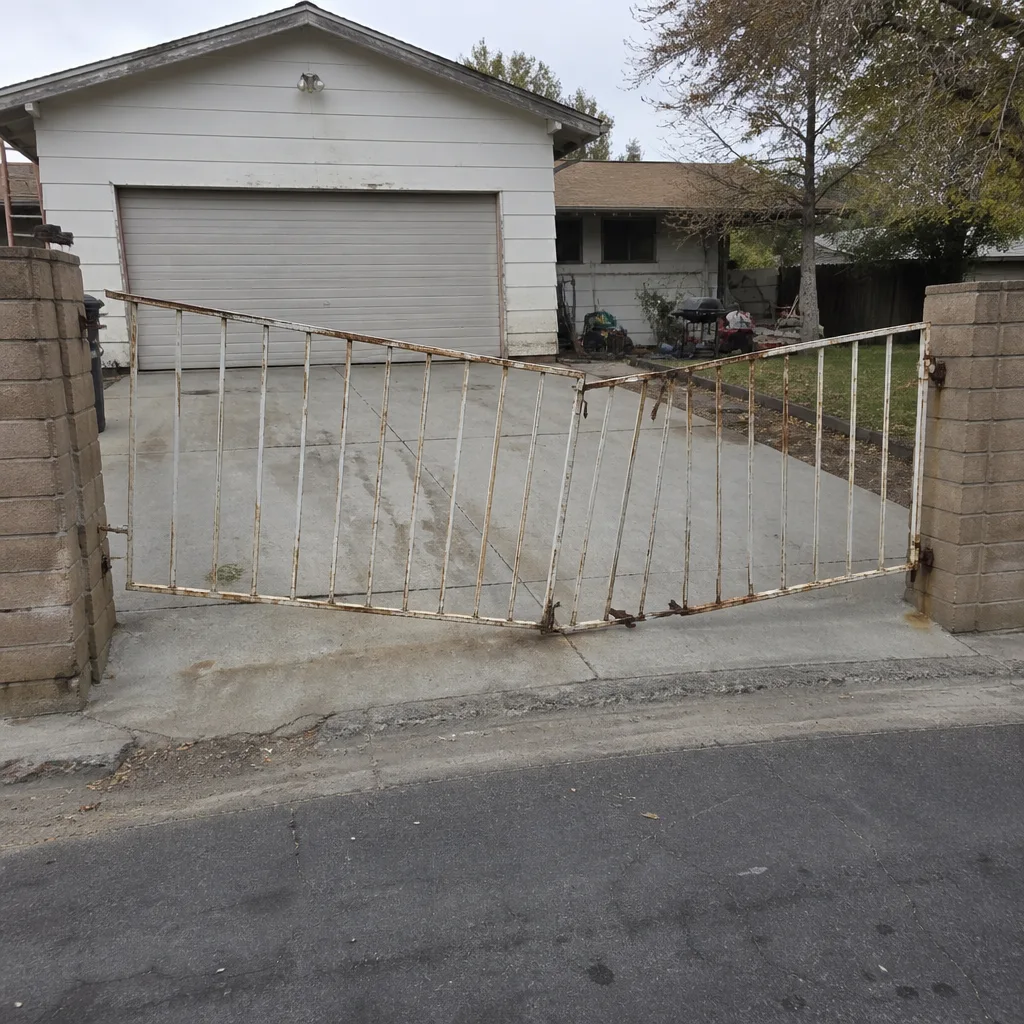 Before
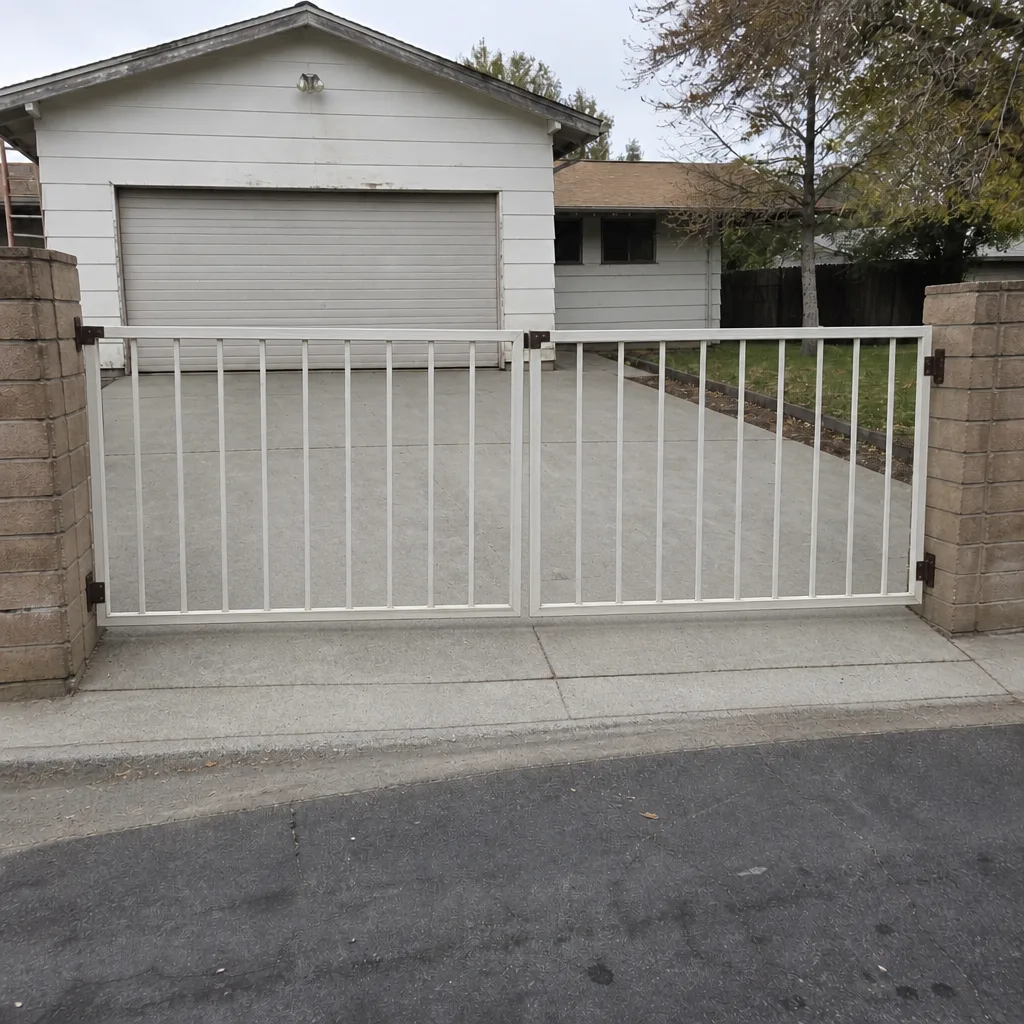 After
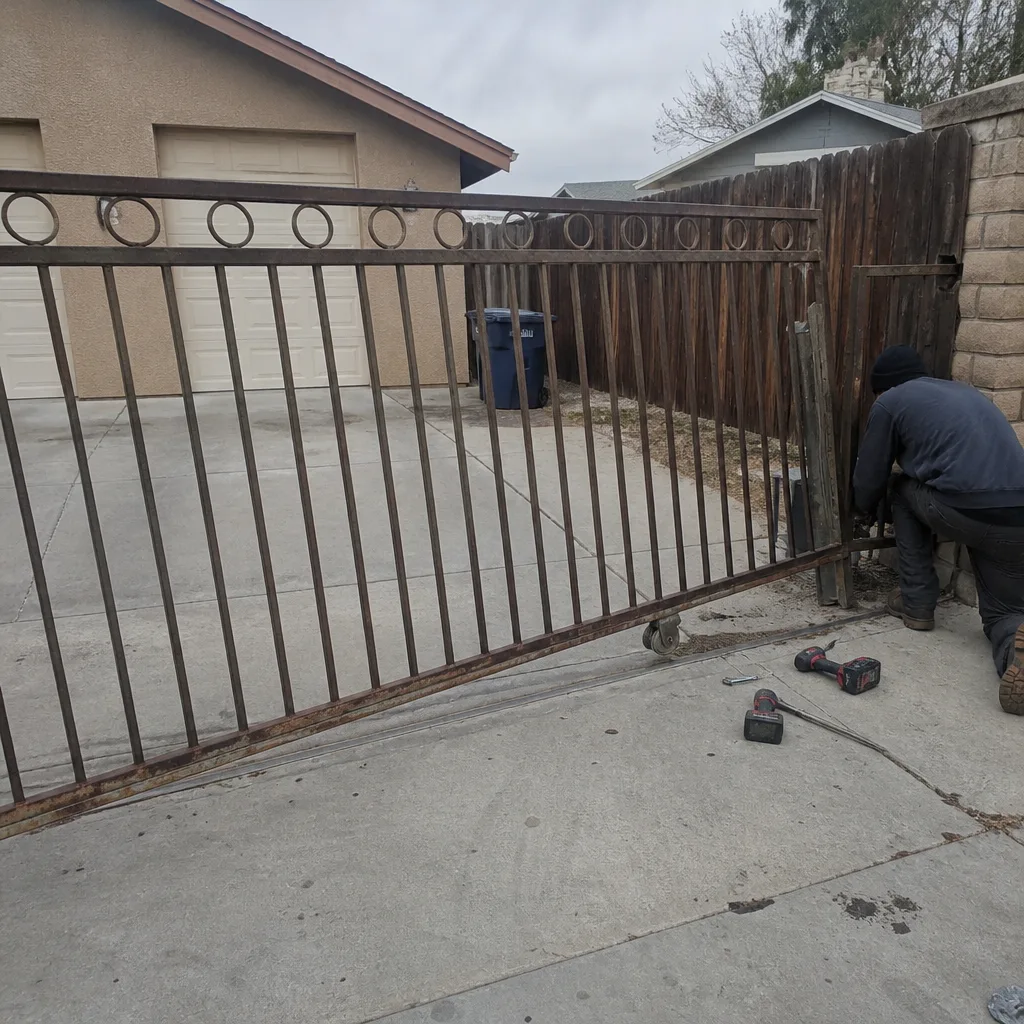 Before
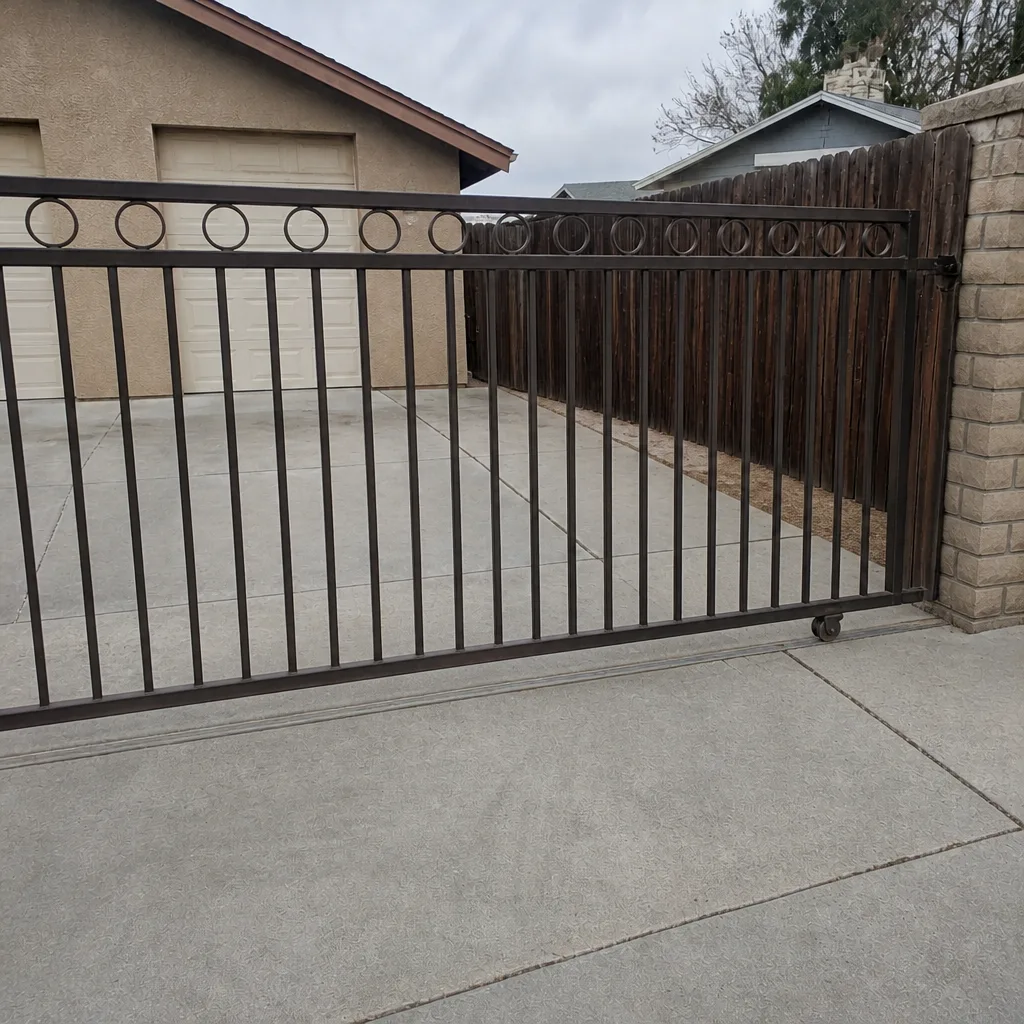 After
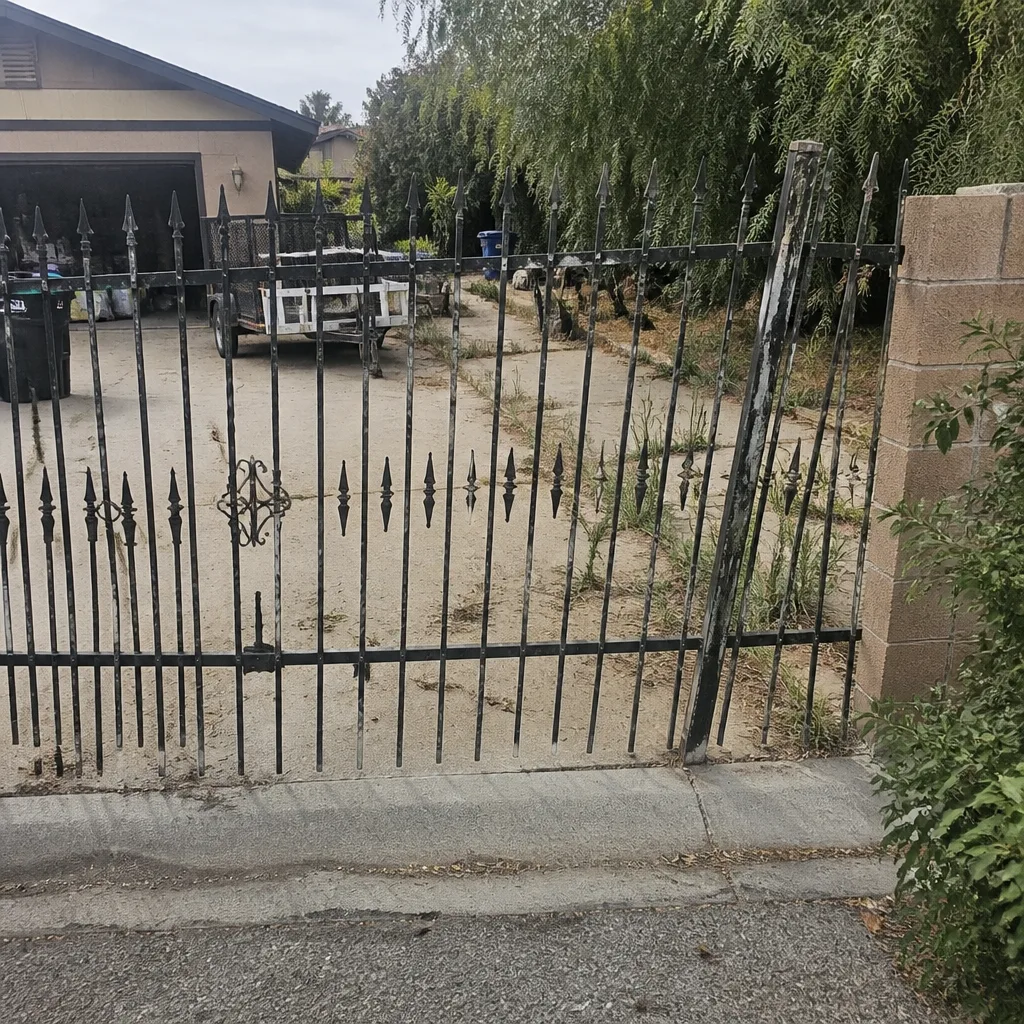 Before
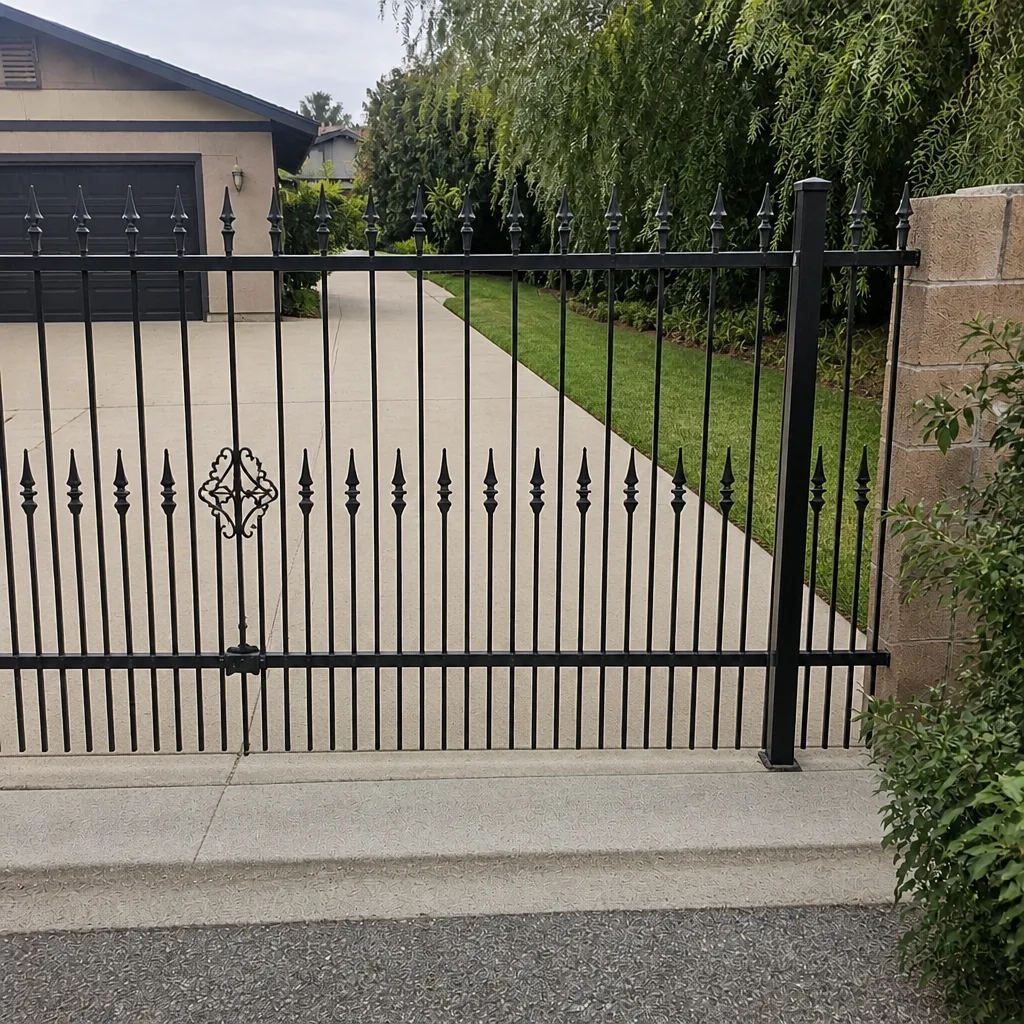 After
When to Call a Professional
If the gate is already open or already stuck, call. If the motor hums and the gate doesn’t move, call. If you’re installing a motor on a manual gate and you’re not sure about the posts, the bracket, or the power, call before you buy a motor. If the gate has a sag or a drag that wasn’t there last year, call now, before the motor gets installed onto a problem.
Gatewood Fence & Gate Enterprise offers free estimates in Enterprise – call (833) 780-1547. We answer around the clock, and we quote the work in writing before anything gets started. If you’ve already got a written estimate from someone else, we’ll give you a free second opinion on it. No haggling, no runaround.
Frequently Asked Questions
Most residential motor installs in Enterprise take 2 to 4 hours on a gate that’s already set up for a motor, and 4 to 8 hours when the bracket has to be replaced, the power has to be run, or the gate needs alignment work. A retrofit to a manual gate with no prep can stretch to a second visit. Call (833) 780-1547 and we can usually narrow it down over the phone before anyone comes out.
Same-day is realistic for emergency motor replacement on a gate that’s already prepped for a motor, and only if the new unit matches the existing bracket pattern. Same-day is not realistic for a full install on a manual gate with no prep – that work gets measured, ordered, and scheduled. We’ll tell you honestly which one you’re in.
An extension cord is a fire hazard and won’t hold up outdoors, so it’s not an option we install or recommend. Power has to be run properly in conduit, buried below the frost line, or a solar setup has to be used. If you’ve got a gate where running power isn’t practical, we install solar units – Ghost Controls in particular – that are set up for that exact situation.
Every motor install includes setting the open and close limits, testing the obstruction sensors and safety edges, pairing and testing every remote and keypad, verifying the auto-reverse, and walking you through the manual release. We also check gate alignment and tell you before we mount the motor if the frame needs work first.
We’re certified to service nine major brands, including LiftMaster, Viking, Ghost Controls, DoorKing, Elite, FAAC, BFT, Linear, and Mighty Mule. The right unit depends on gate type, gate weight, and whether you’ve got power at the post or need solar. Call (833) 780-1547 with the make and model of your gate and we’ll tell you what the swap looks like.
It shouldn’t. If the written estimate says one thing and the tech finds something unexpected after arrival, we stop and quote the extra work before we do it. We don’t install over a problem and then bill you for the fix. The price is quoted and agreed before any work starts, and every job carries our 90-Day Done Right Promise in writing – if it isn’t done right, we make it right.
The Bottom Line
A gate motor installation takes 90 minutes in the clean case and the better part of a day in most real cases. The two things that push the timeline are the power situation and the gate’s alignment. If you know both before you call, you’ll get an honest quote and an honest timeline, and you’ll know whether you’re scheduling a swap or a project. If you don’t know, that’s what we’re here for. We’re locally owned, we answer the phone around the clock, and the name is on the shop and on every invoice. Call (833) 780-1547 for a free estimate in Enterprise and we’ll tell you what your gate actually needs.
Written by the team at Gatewood Fence & Gate Enterprise.