
Last updated November 18, 2026
 Wrought iron
 Wood & steel frame
 Farm & ranch
 Sliding driveway gates
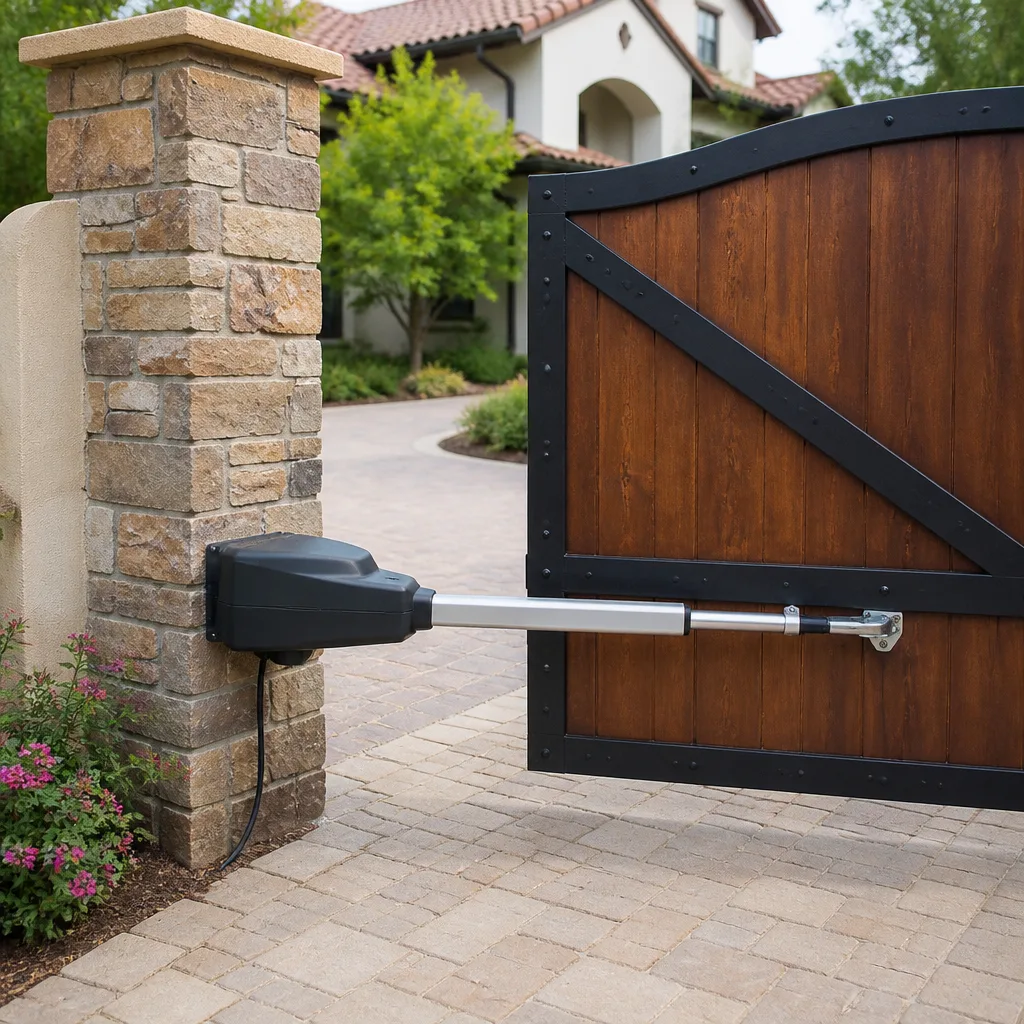 LiftMaster operators
Free on-site gate assessment - hinges, posts, and your LiftMaster or Nice gate operator checked before anything is quoted
The assessment is free and the quote is the invoice.
Get your free estimateGate Motor & Opener Maintenance Schedule: What to Do and When
If you’re doing your gate motor maintenance in January and skipping August, you’ve got the schedule exactly backwards for living in Nevada. January here is mild and forgiving. August is the month that cooks control boards, bakes grease into wax, and drains batteries until the gate stops halfway open on a Tuesday afternoon. In our experience servicing gates across Enterprise and the surrounding desert, the failures that strand homeowners almost always trace back to a task somebody skipped in the hot season. This guide lays out a real schedule for a high-heat, monsoon-cycle climate: what fails first here, when to do it, and which jobs you can safely handle versus which ones need a trained pro.
Quick Answer
The core schedule for a desert climate is built around two anchor points: a pre-summer service in April (battery load test, control-board ventilation, high-temp grease for rack-and-pinion systems) and a post-monsoon service in October (dust and moisture cleanup, track clearing, fastener check). Between those two, you test the manual release monthly and clear debris from the track every few weeks. Peak heat and the July-September storm window do the most damage, so schedule the heavy work around them, not in the mild months.
Styles & brands we work with
- Wrought iron
- Wood & steel frame
- Farm & ranch
- Sliding driveway gates
- LiftMaster operators
Table of Contents
- Why Gate Hardware Fails Differently in Enterprise
- The April Pre-Summer Checklist: Heat Prep
- The Grease Spec That Actually Matters in High Heat
- The October Post-Monsoon Checklist: Dust & Moisture
- Testing the Manual Release (and Why It Seizes)
- Owner Does This, Pro Does That: A Realistic Split
- Motor, Spring, and Electrical Safety
- Common Mistakes to Avoid
- When to Call a Professional
- Frequently Asked Questions
Why Gate Hardware Fails Differently in Enterprise
Most gate motor maintenance guides are written for a temperate climate where the enemy is cold and damp. That’s not what you’re dealing with in Enterprise. Here the two seasons that beat up gate hardware hardest are peak summer and the monsoon window, and they attack in opposite ways.
Peak summer is a slow bake. Ambient temperatures push control boards past what a manufacturer’s temperate testing ever accounted for, batteries lose capacity faster, and any grease not rated for high heat thins, migrates, and leaves the rack running metal-on-metal. In our experience, a solenoid or board that tested fine in April can be marginal by late July simply because of sustained heat load.
Then the monsoon arrives and flips the problem. July through September brings wind-driven dust that settles into tracks, hinges, and gear teeth, plus the occasional hard downpour that pushes grit and moisture into places it shouldn’t sit. Dust that gets into the grease becomes an abrasive paste. Moisture that gets into a control box and then sits through the next hot spell does quiet corrosion damage. Gate hardware in Enterprise has to survive both extremes in a single year, which is why a climate-blind checklist misses half the failures we get called out for. The schedule that follows is built for these two seasons specifically, not a generic spring-and-fall tune-up.
The April Pre-Summer Checklist: Heat Prep
April is when you want to get ahead of the heat, before the first real triple-digit stretch. By the time it’s hot enough to notice a slow gate, you’re already behind. Here’s the sequence we work through going into summer:
- Battery load test. Not a voltage check – an actual load test. A resting voltage can look healthy while the battery has lost the capacity to move the gate under summer heat. If the battery is older, this is the test that catches a failure before it strands you.
- Control-board ventilation check. Confirm the enclosure breathes, the vents aren’t clogged with dust or insect nests, and the board isn’t boxed in where heat builds. Heat is what ages electronics here.
- Grease type swap. Move to a high-temperature grease rated for the rack system (more on the exact spec below). Summer is not the season for whatever general-purpose tube is on the shelf.
- Lubricate hinges, rollers, and the track. Clear old contaminated grease first, then apply fresh. Don’t grease over grit.
- Tighten fasteners and check the chain or belt tension. Heat cycling loosens hardware over a season. A loose motor mount shows up as a gate that shudders at the start of travel.
- Test the safety edges and photo-eye reversal. Confirm the gate reverses on obstruction. This is a safety function, not a convenience, and it belongs on the pre-summer list every year.
- Verify the manual release operates freely. Test it in April so you’re not discovering a seized release in August when you actually need it.
If you’re not comfortable inside a live control box, have this done by someone who is. April is also a smart month to book a full gate motor and opener service in Enterprise, because a trained eye catches board and wiring issues that a visual walk-around won’t.
The Grease Spec That Actually Matters in High Heat
This is the single most overlooked detail in rack-and-pinion gate maintenance here, and it’s where most homeowners go wrong without knowing it. You walk into the hardware store, grab whatever tube says “gate” or “gear,” and head home. In a mild climate that’s probably fine. In Enterprise summer heat, the wrong grease is the reason a rack wears out years early.
The problem is simple: grease that isn’t rated for high heat thins out as temperatures climb. Once it thins, it migrates off the rack teeth, and the drive pinion starts contacting bare metal. That contact is where the wear happens, and it happens fast under summer load. The grease you want is a high-temperature, water-resistant lithium or synthetic grease rated for the heat your gate actually sees in peak summer – not a general-purpose tube. A heavier high-temp grease stays put on the rack instead of running off.
Two more rules that matter with rack-and-pinion systems. First, clean before you apply. Grit embedded in old grease turns into an abrasive, and greasing over it just holds the grit against the teeth. Wipe the rack down and clear the teeth, then apply fresh. Second, a light film is the goal, not a heavy coat, because a heavy coat just collects more dust. In our experience on Linear and FAAC rack drives around Enterprise, the gates that last are the ones greased correctly with the right product, not the ones greased most often with the wrong one.
The October Post-Monsoon Checklist: Dust & Moisture
Once the July-September storm window has passed, October is your cleanup and inspection window. This is when you undo the wear that accumulated over the wet-and-dusty season and catch anything that started failing quietly. Work this list:
- Clear the track and rack of dust and grit. Wind-driven dust settles into every low point. Clear it before it packs into the grease.
- Inspect for moisture intrusion. Open the control enclosure and check for water staining, corrosion, or damp at the board. A monsoon downpour that got in and then sat through a hot spell is the classic corrosion setup.
- Re-grease after cleaning. Fresh high-temp grease on a clean rack going into the milder months.
- Check fasteners, hinges, and the post. Storms and thermal cycling loosen hardware. A gate that sags usually starts with a loose hinge or a shifting post, not the panel itself.
- Test battery capacity again. Summer heat is hard on batteries. Re-check after the hot season to catch one that’s declining before winter.
- Re-test safety edges and reversal. Confirm everything reverses on obstruction after a season of storms and dust.
- Look at wiring and any exposed connections. Sun and heat age insulation. October is the time to catch a cracked wire before it leaves you with a dead gate.
If the October inspection turns up a bigger structural issue – a leaning post, a rack that’s chewed itself up – that’s repair territory. A proper gate repair service in Enterprise handles the fix on site rather than hauling the gate away.
Testing the Manual Release (and Why It Seizes)
Every automatic gate has a manual release so you can open it by hand during a power outage or a motor failure. Most homeowners never touch it until the day they need it – and on that day, it’s frozen solid. That’s the failure that leaves people stuck, and the desert makes it worse.
Why does it seize faster here? Because the release mechanism sits exposed to fine dust and the dry heat that dries out whatever light lubrication is inside it. Over a hot season, that combination lets the mechanism stiffen and eventually lock. Manufacturers’ schedules are written for a generic climate and don’t account for how quickly dust and dry heat do that job here. So test it more like monthly – it takes a minute.
- Put the gate in manual mode per the operator’s instructions (this varies – a lever, a key, a handle, depending on the brand; check your manual, whether it’s a Viking, BFT, or another make).
- Move the gate by hand through its full travel. It should move smoothly with reasonable effort.
- If it binds or won’t move, stop – don’t force it. A seized release is a service call, not a wrestle.
- Re-engage the operator and confirm the gate runs and reverses correctly on the automatic cycle.
Testing it in April and again in October – and ideally once a month in between – means the day the power goes out, the release works the way it was built to. If yours is already seized, that’s a straightforward fix for a trained hand.
Owner Does This, Pro Does That: A Realistic Split
A lot of people over-maintain the things they can handle and under-maintain the things they shouldn’t touch. Here’s a realistic split so you spend your effort where it counts.
What you can safely do yourself:
- Clear dust, grit, and debris from the track and rack between scheduled services.
- Visually check the gate swings or slides freely with no binding or unusual noise.
- Wipe the rack and apply high-temp grease on a clean surface, following the spec above.
- Test the manual release monthly and re-engage it correctly.
- Look for obvious damage after a storm – leaning posts, loose hinges, visible corrosion.
What a trained pro should handle:
- Battery load testing and replacement inside a live operator enclosure.
- Anything inside the control box – board inspection, wiring, ventilation repair, moisture intrusion.
- Safety edge and reversal calibration.
- Motor, spring, and electrical work (see the safety section below).
- Post-monsoon structural checks and any welding or rack-and-pinion repair.
Staying on the safe side of that line is how you avoid both over-maintaining things you can’t fix and letting the expensive stuff fail. If you’re not sure which side a task falls on, that’s a good reason to ask. We’re happy to give a free second opinion on any written estimate before you commit to anything.
Motor, Spring, and Electrical Safety
Some of this work is genuinely dangerous, and it’s worth saying plainly rather than dancing around it. Gate motors and openers run on line voltage, and the springs and cables that counterbalance a swing or slide gate are under heavy tension. A spring or cable that lets go can cause serious injury, and working inside a live electrical panel can too. Never attempt to release, adjust, or repair springs, cables, or high-voltage wiring yourself – call a trained professional. Keep children and pets clear of a moving gate, and never bypass a safety edge or photo-eye to stop the gate from reversing. The maintenance in this guide is about the safe, routine work; the moment a task involves springs, cables, mains wiring, or opening a live control box, it belongs with someone who does it every day. Our technicians have up to 25 years of experience with exactly these systems, and that’s the reason we draw the owner/pro line where we do.
Common Mistakes to Avoid
- Scheduling service in the mild months and skipping summer. In Enterprise, August is the month that stresses the motor, not January. Reverse the instinct and put your real service before and after the hot season.
- Using whatever grease is on the shelf. General-purpose grease thins in summer heat and migrates off the rack, chewing up the teeth. Use a high-temp, water-resistant grease rated for the heat.
- Greasing over grit. If you don’t clean the rack first, you’re grinding abrasive dust into the teeth. Clean, then apply a light film.
- Never testing the manual release. It seizes faster here because of dust and dry heat. Test it monthly, not once a year, so it works when the power’s out.
- Skipping the battery load test. A voltage check can look fine while the battery has lost the capacity to move the gate under summer load. Load-test it.
- Bypassing safety edges to stop nuisance reversing. A gate that reverses “annoyingly” is often doing its job. Fix the cause; never disable the safety function.
- Ignoring a sagging gate until the motor fails. A gate sags at the hinge or post, and that binding loads the motor. Catch it early and the motor lasts.
When to Call a Professional
Some jobs are simply not homeowner jobs, and pretending otherwise is how people get hurt. Call a pro if your gate binds, stalls, or reverses on its own; if the manual release is seized; if you see moisture or corrosion inside the control box; if the battery won’t hold a load; if safety edges or photo-eyes aren’t reversing the gate; or if a post is leaning or a hinge is failing. Springs, cables, and high-voltage wiring are always a professional call. Gatewood Fence & Gate Enterprise offers free estimates in Enterprise – call (833) 780-1547. A trained handler can tell you in one visit whether you’re looking at routine maintenance or a repair, and a live person answers the phone around the clock. Every job we do carries the 90-Day Done Right Promise in writing: if it’s not done right, we make it right.
Frequently Asked Questions
Twice a year for the heavy work – a pre-summer service in April and a post-monsoon service in October – plus a monthly manual-release test and regular debris clearing in between. The desert climate stresses hardware hardest in peak summer and the monsoon window, so those two anchor points matter more than a generic spring-and-fall tune-up.
A high-temperature, water-resistant lithium or synthetic grease rated for the heat your gate actually sees in peak summer – not a general-purpose tube. Clean the rack before applying and use a light film, not a heavy coat. Call (833) 780-1547 for an exact quote on a service if you’d rather have it done right; estimates are free.
Because fine dust and dry desert heat dry out and stiffen the release mechanism faster than a manufacturer’s generic schedule accounts for. Test it monthly and it stays usable; leave it untouched for a year and it can freeze solid right when you need it.
We’re certified to service nine major brands, including FAAC, BFT, Linear, Viking, and more, so most common residential and commercial operators are covered. Call (833) 780-1547 to confirm your model and get a free estimate.
You can safely clear debris, grease the rack, visually inspect, and test the manual release. Anything involving the control box, battery load testing, safety-edge calibration, springs, cables, or live wiring needs a trained professional. When in doubt, ask before you touch it.
Yes. We offer free estimates in Enterprise, a free second opinion on any written estimate, no trip charge inside the county, and upfront pricing agreed before any work starts. Call (833) 780-1547 – a live person answers around the clock.
The Bottom Line
The right gate motor schedule in Enterprise runs on the desert’s calendar, not a generic one: April for heat prep (battery load test, control-board ventilation, high-temp grease), October for dust and moisture cleanup after the monsoon, and a monthly manual-release test in between. Use the right high-temp grease on a clean rack, know where the owner/pro line sits, and never touch springs, cables, or live wiring yourself. Do that and you’ll get more years out of the motor and far fewer stranded afternoons. When you want it handled right the first time, start with our gate motor and opener services in Enterprise, or reach out for gate repair and gate installation if you’re weighing a new system. You can also visit our Gatewood Fence & Gate Enterprise home page to see everything we do.
Ready to get your gate on the right schedule? Call Gatewood Fence & Gate Enterprise at (833) 780-1547 for a free estimate. A live person answers 24/7, pricing is agreed upfront before any work starts, and every job carries the 90-Day Done Right Promise in writing. We also offer $40 off any repair over $200, no trip charge inside the county, a free second opinion on any written estimate, and a permanent 10% discount for seniors and veterans.
Written by the team at Gatewood Fence & Gate Enterprise.
See the difference
 Before
 After
 Before
 After
 Before
 After