
Last updated November 18, 2026
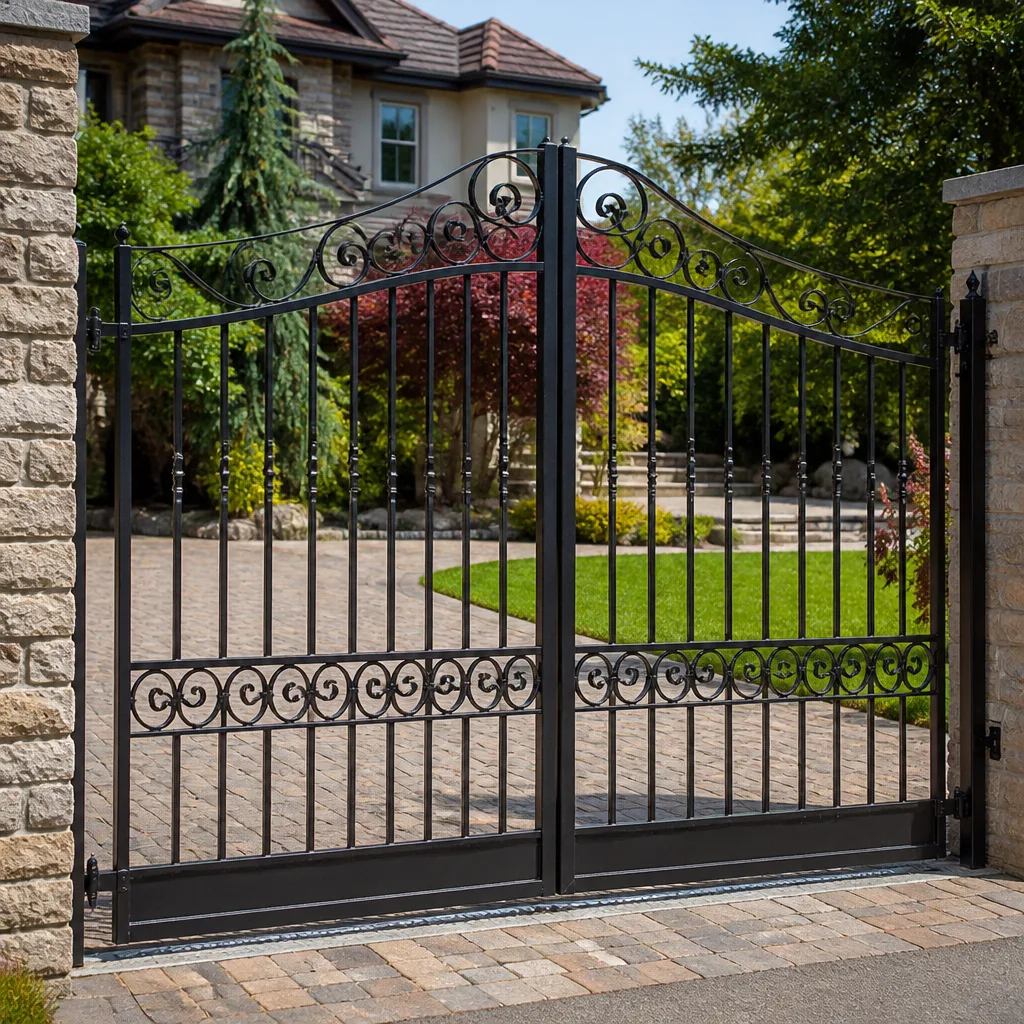 Wrought iron
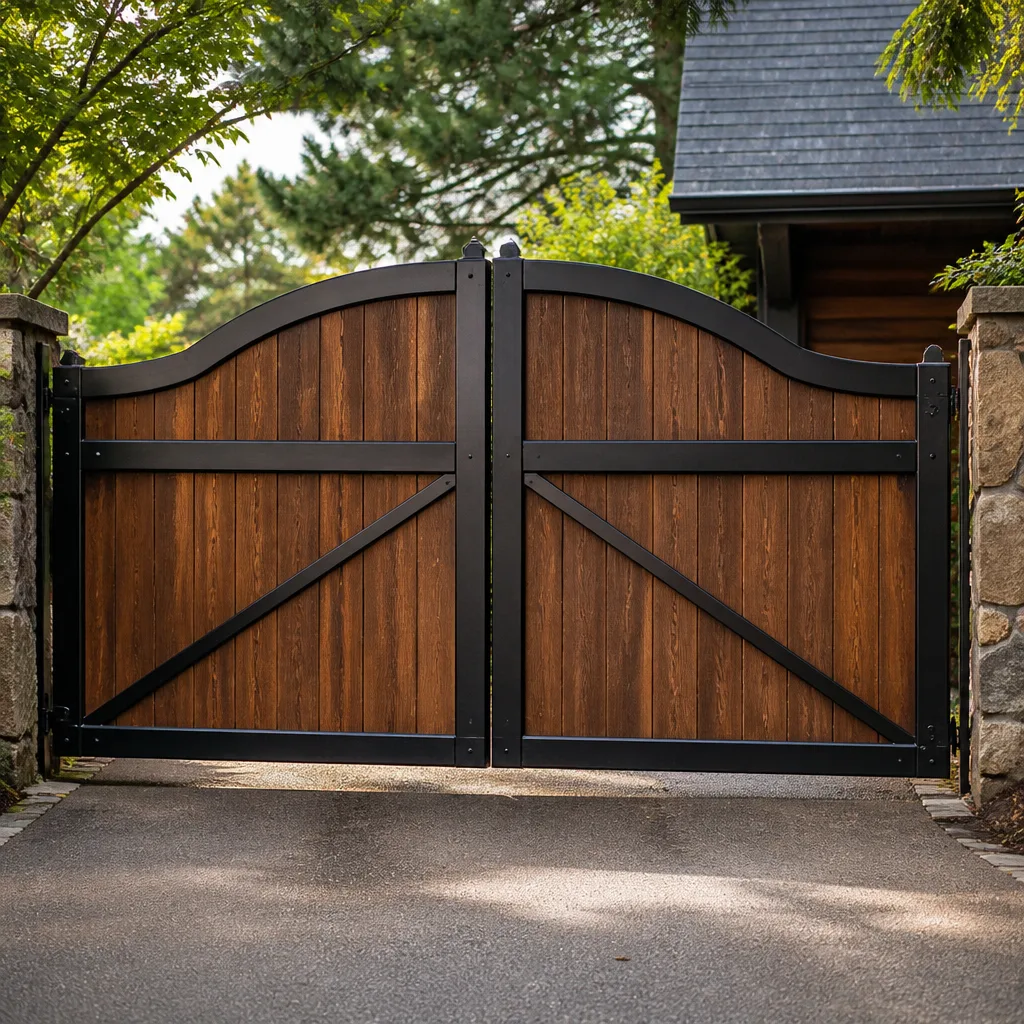 Wood & steel frame
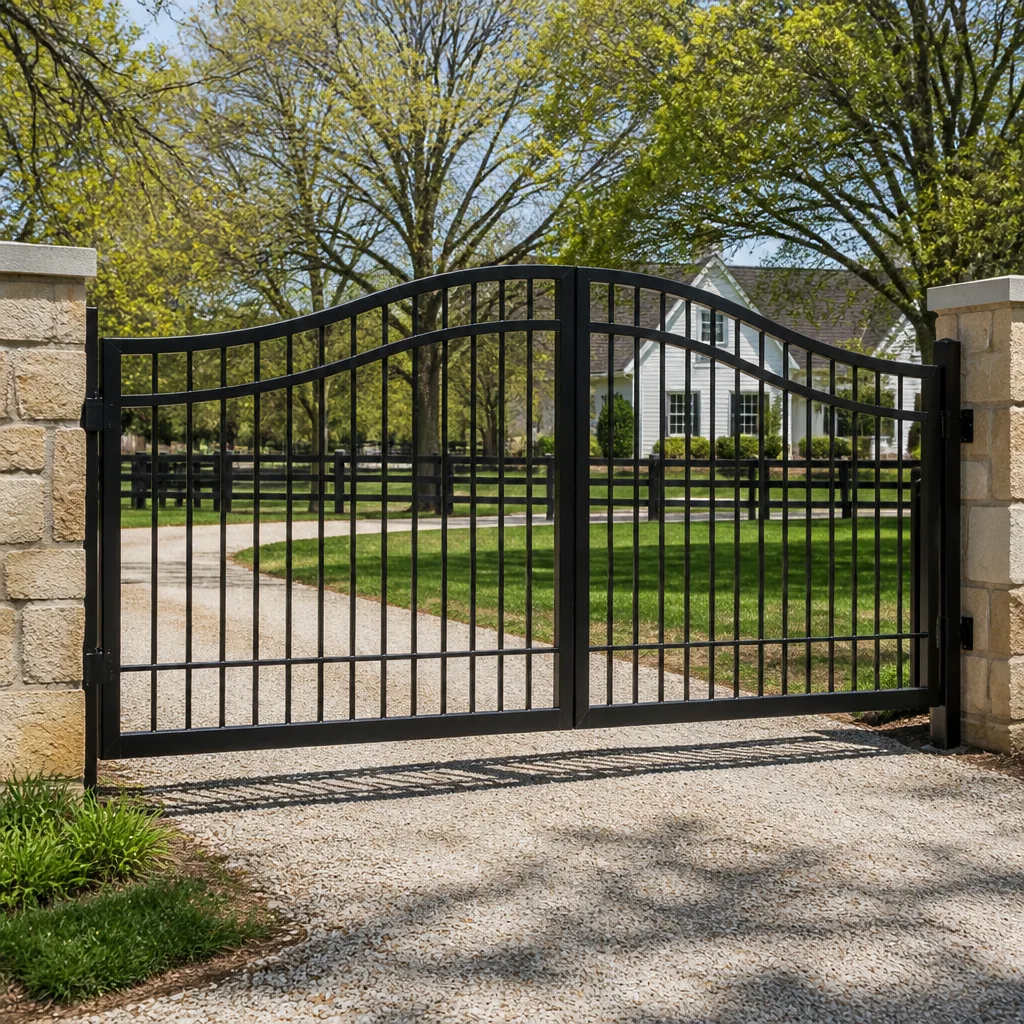 Farm & ranch
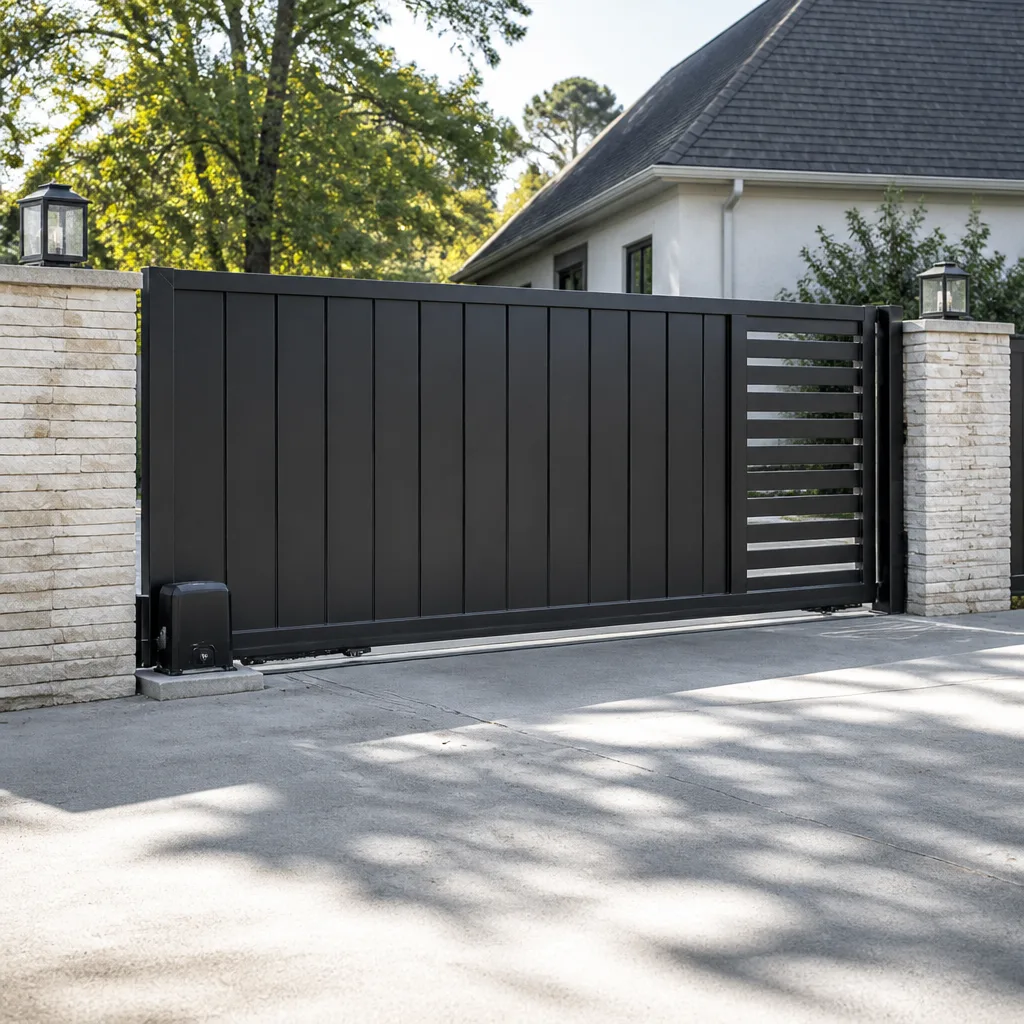 Sliding driveway gates
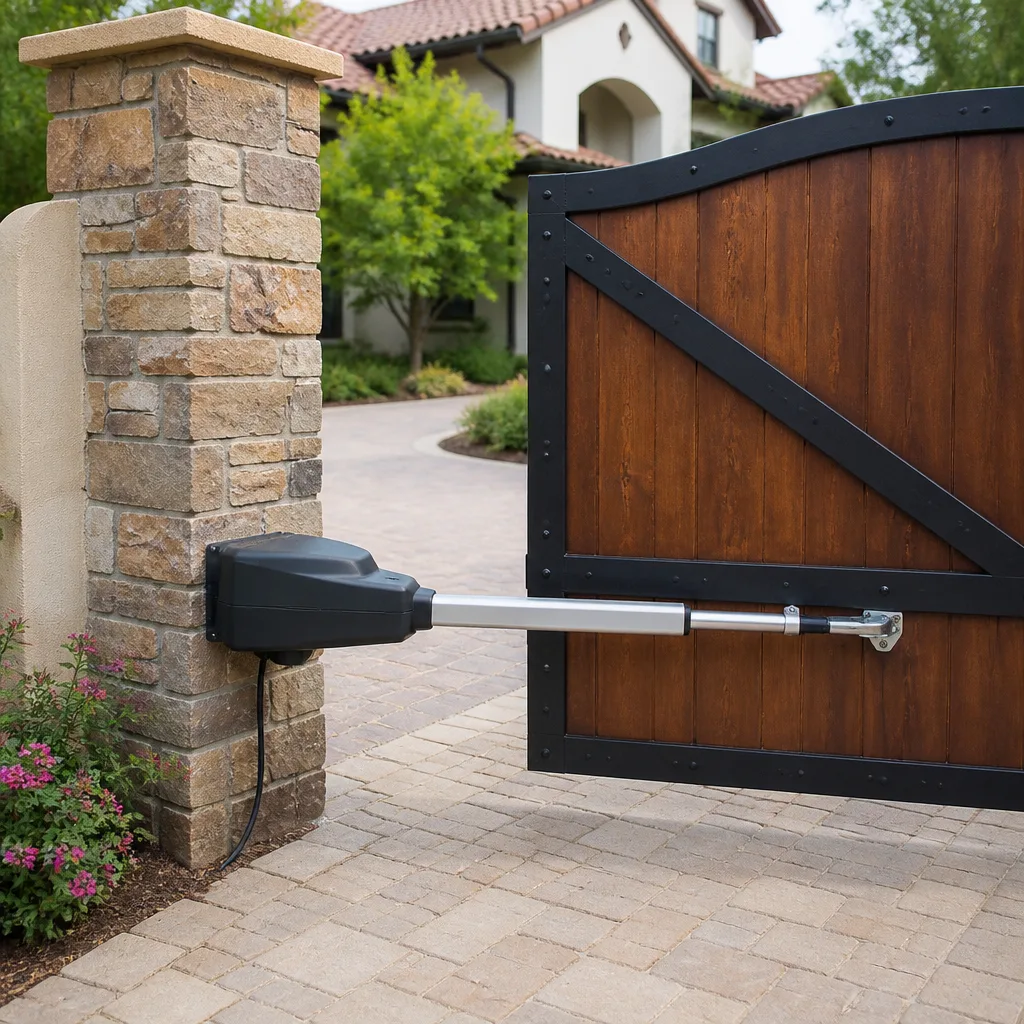 LiftMaster operators
Free on-site gate assessment - hinges, posts, and your LiftMaster or Nice gate operator checked before anything is quoted
The assessment is free and the quote is the invoice.
Get your free estimateGate Parts & Welding Maintenance Schedule: What to Do and When
A gate that opens twice a day – morning and evening – puts 730 open/close cycles on its hardware every year. A gate serving a small business or a multi-family property might hit 15,000 cycles. Those two gates do not need the same maintenance schedule, and treating them the same is exactly why gates fail early. Most maintenance advice you’ll find online amounts to “lubricate the hinges once a year,” which tells you nothing about the ground movement, dust, and vibration that actually wear a gate out in Enterprise. This guide lays out a schedule built around cycle count and application type, separates the jobs you can do yourself from the ones that need trained eyes, and covers the one welded-hardware check nearly every schedule skips.
Quick Answer
Match your maintenance interval to actual cycles, not the calendar. A low-cycle residential gate in Enterprise needs a full inspection twice a year and lubrication every three to four months; a light commercial gate needs monthly checks; a high-cycle commercial gate needs weekly walk-arounds and quarterly weld inspection. The tasks that require a trained eye – weld inspection, post plumb checks, and frame diagonal measurement – should be done at every full inspection, because catching 1/8 inch of post movement early is a shim and a lag bolt, while catching it two years later is a concrete break and a full re-set.
Styles & brands we work with
- Wrought iron
- Wood & steel frame
- Farm & ranch
- Sliding driveway gates
- LiftMaster operators
Table of Contents
- Why Cycle Count Beats the Calendar
- The Interval Table: Residential, Light Commercial, High-Cycle
- Five Tasks You Can Do Yourself
- Three Tasks That Need Trained Eyes
- Creep and Correct: Catching Post Movement Early
- Lubrication in Desert Dust: What Actually Works
- The Welded Hardware Check Everyone Skips
- Seasonal Calendar for Enterprise
Why Cycle Count Beats the Calendar
Hardware wears out in proportion to how many times it moves, not how many months have passed. A hinge that cycles 730 times a year wears at a completely different rate than one that cycles 15,000 times. If your schedule says “check the gate every spring” and your gate is a busy commercial slider opening 40 times a day, you are inspecting it after it has already cycled 14,600 times between visits. That is how gates fail with no warning.
Before you build a schedule, count your cycles for one week. I mean literally watch the gate or check the opener’s cycle log if it has one. A LiftMaster or FAAC operator can often tell you how many times it has opened since the counter was reset. Multiply the weekly number by 52 and you have your annual cycle count. From there:
- Under 2,000 cycles a year (most single-family homes in Enterprise): residential schedule.
- 2,000 to 8,000 cycles a year (small offices, churches, gated communities with moderate traffic): light commercial schedule.
- Over 8,000 cycles a year (multi-family, storage facilities, busy commercial entries): high-cycle schedule.
Knowing your number changes everything downstream – how often you grease, how often you inspect welds, and how quickly you react to a small problem. If you’re not sure what you’re looking at, the team behind our Gatewood Fence & Gate Enterprise home page can help you figure out where your gate falls.
The Interval Table: Residential, Light Commercial, High-Cycle
Here are the three schedules we recommend, adjusted for the dry, dusty conditions we deal with across Enterprise. Note that “inspect” means a full walk-around with a flashlight and a wrench, not a glance from the car.
Residential (under 2,000 cycles/year)
- Monthly: Visual check – listen for new noises, watch for a gate that closes on its own or drags.
- Every 3-4 months: Lubricate hinges, rollers, and the operator chain or arm.
- Every 6 months: Full inspection – post plumb, weld check, frame diagonal, hardware tightness.
- Annually: Deep clean, touch-up paint on rust spots, full hardware torque check.
Light Commercial (2,000-8,000 cycles/year)
- Weekly: Visual walk-around, listen for changes.
- Monthly: Lubricate all moving contact points; check hardware for vibration loosening.
- Quarterly: Full inspection with weld check, plumb check, and diagonal measurement.
- Annually: Full teardown inspection of operator, chain, and gate frame.
High-Cycle Commercial (over 8,000 cycles/year)
- Weekly: Full walk-around including hardware tightness.
- Monthly: Lubrication and operator inspection.
- Quarterly: Professional weld and frame inspection.
- Annually: Operator service and gate frame evaluation.
If your operator is past its recommended service interval, or the gate is starting to stutter, our Gate Motor & Opener in Enterprise service covers the operator side of the equation.
Five Tasks You Can Do Yourself
These five jobs need nothing but time, a grease gun, and a wrench. Do them on your schedule and you’ll catch most small problems before they become expensive ones.
- Lubricate hinges and rollers. A few drops of oil on each hinge barrel and a light coat on rollers. Don’t overdo it – more on that below.
- Tighten visible bolts and lag screws. Walk the gate with a socket wrench and snug anything that moves. Vibration works fasteners loose.
- Clear the track and ground path. Sweep dirt, gravel, and blown debris out of the gate’s travel path. In Enterprise this is a monthly job, not seasonal.
- Wipe down and check rust. Wipe the frame with a dry cloth and touch up any rust spot with paint before it spreads.
- Cycle the gate and listen. Open and close it a few times and listen. New squeaks, grinds, or thumps are your early warning system.
Do these five and you’ve handled the routine wear. Anything more than that – anything involving a weld or a moving post – belongs to a trained hand.
Three Tasks That Need Trained Eyes
Three jobs look simple and are not. A homeowner who doesn’t know what to look for can miss the early signs, and missing them is how a $300 repair becomes a $3,000 re-set.
- Weld inspection. A cracked weld can look fine until it fails suddenly and drops a gate section. A trained eye checks the weld bead itself, not just the joint, and looks for hairline fractures in the heat-affected zone next to the weld.
- Post plumb check. Posts move. Ground shifts, roots spread, water pools. A plumb check with a level shows movement long before the gate visibly sags. That early reading is the difference between a shim and a concrete job.
- Frame diagonal measurement. Racking – where the gate frame goes out of square – is invisible to the eye until it’s advanced. Measuring both diagonals tells you whether the frame has shifted and by how much. It’s a two-minute task with a tape measure and a trained interpreter.
These three tasks belong on every full inspection in your schedule. If you’d rather not tackle them yourself, our Gate Repair in Enterprise service includes them in every visit.
Creep and Correct: Catching Post Movement Early
Here’s the concept that saves more money than anything else in this guide: creep and correct. A gate post almost never fails suddenly. It creeps – a fraction of an inch at a time, usually in response to soil movement or water. Catch 1/8 inch of movement at the six-month mark and the fix is a shim and a lag bolt, a twenty-minute job. Catch that same movement at two years and the post has walked enough that the concrete around it has cracked, which means a re-set, which means digging and pouring. Same problem, wildly different price.
In Enterprise this matters more than in wet climates because our soil expands and contracts dramatically with seasonal moisture. A post set in the fall may shift by spring, especially near irrigation or after a wet winter. Blown sand against the base of a post compounds the problem by creating a small cavity that lets water pool. That’s why post plumb goes on every full inspection and not just once a year.
- Six-month motion: shim and re-torque the hinge hardware. Cheap.
- One-year motion: re-weld or brace the mounting plate. Moderate.
- Two-year motion: excavate and re-set the post. Expensive.
The name is on the shop, and the shop is down the road – that’s the oldest accountability there is. If you want an honest read on whether your post is creeping, we’ll tell you.
Lubrication in Desert Dust: What Actually Works
Most big-box lubricant sprays do more harm than good in high-desert climates. The problem is that a wet, sticky spray attracts the fine airborne dust that’s everywhere in Enterprise, and once dust settles onto the lubricant it becomes a grinding compound – literally lapping away steel-on-steel contact points faster than no lubricant would. We’ve pulled gate hinges apart that were “well maintained” and found the hinges almost entirely worn through because the wrong lube collected grit.
What works better:
- Dry-film PTFE lubricants on hinges and contact points. They go on wet, dry to a slick film, and don’t hold dust.
- Graphite powder inside lock cylinders and on sliding contact surfaces. Doesn’t attract grit.
- Marine-grade grease on the operator chain and the internal gears of a LiftMaster or FAAC operator, applied lightly with a brush rather than a spray can.
- Silicone spray on rubber seals and weatherstripping, which dry out fast in our low humidity.
Skip the WD-40 for anything that faces the open air. It’s a fine solvent and a fine light oil, but it’s a dust magnet on a gate that lives outside. Use a dry film.
The Welded Hardware Check Everyone Skips
Most maintenance schedules stop at the welds themselves. That’s a mistake, because welds are rarely what fails – it’s the hardware bolted or welded onto the gate that vibrates loose over time. Drop rod guides, motor mounts, keeper hooks, hinge plates, latch bars, and gate stop brackets all sit in a zone of constant vibration and thermal cycling. Even when the welds are sound, the fasteners holding these parts can back out over a season or two.
Here’s what to check at every full inspection:
- Drop rod guides: the guide bracket holding the drop rod should be snug. Improperly seated guides let the rod rattle and eventually shear the bracket.
- Motor mount bolts: on an automated gate, the operator mount is under constant torque. A bolt backed out by 1/4 inch can let the operator shift and misalign the whole gate.
- Keeper hooks and latch catches: these get slammed against a striker every close cycle. Check for wear and re-torque.
- Hinge plate welds: the plate itself may be fine, but the weld bead where it meets the frame needs inspecting for cracks.
- Gate stop bumpers: the rubber bumper protecting the gate from itself on close. If it’s missing, your gate is slamming steel against steel.
This is the part of the schedule where on-site welding pays for itself. If a bracket has cracked loose, the fix in your driveway is a fifteen-minute weld, not a shop trip. A gate can be back in service the same day.
Seasonal Calendar for Enterprise
Enterprise weather has two maintenance seasons and two mild stretches. Here’s how to layer the schedule over the year.
- Spring (March-May): Post-winter post plumb check, frame diagonal check, and full weld inspection. Our wet winters move soil the most.
- Early summer (June): Full lubrication pass with dry film, before the peak dust season.
- Mid-summer (July-August): Monthly visual checks. UV and heat dry out rubber seals and can warp composite panels.
- Fall (September-October): Second full inspection. Clean out the travel path before the winter winds bring debris.
- Winter (November-February): Light maintenance only – visual checks and lubrication. Post the freeze-thaw watch.
If your gate is automated and the operator is starting to strain, or you’re planning a replacement, our Gate Installation in Enterprise service is the place to start with a free measure and a written price.
Common Mistakes to Avoid
- Lubricating on a calendar schedule ignoring cycles. A busy commercial gate serviced “every spring” has cycled thousands of times between visits. Match the schedule to the count.
- Using a spray that attracts dust. WD-40 and similar sprays turn into a grinding paste in Enterprise’s fine windblown dust. Use dry film on any exposed contact point.
- Fixing the panel and forgetting the post. A gate sags in the hinge post, not the middle. Fix the panel without the post and you’ll fix it twice.
- Ignoring vibration loosening on welded hardware. People inspect the weld bead and stop there. The brackets, mounts, and keeper hooks bolted to the weld are what come loose.
- Waiting for a visible sag before calling. By the time the sag is obvious, the post has moved two or three times the amount you could have caught on a six-month plumb check. That’s the expensive stage.
- Trusting the opener’s self-diagnostics alone. A modern Elite, LiftMaster, or FAAC operator reports fault codes, but it can’t tell you a weld bracket is loosening or a post has moved. Human inspection covers what the electronics can’t see.
- Skipping the seam where the gate frame meets the hinge plate. This is where hairline cracks start, and where most “sudden” failures were preceded by months of small movement you’d only catch with a flashlight.
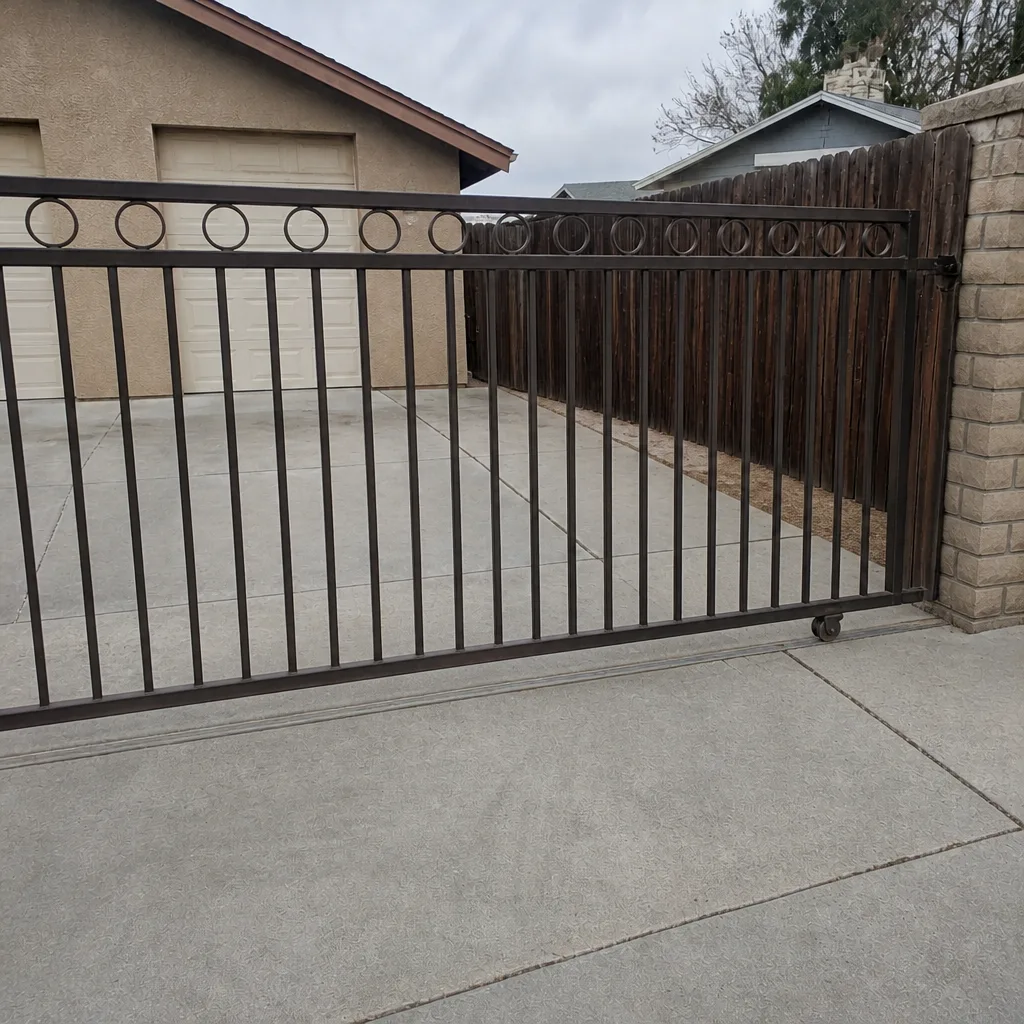
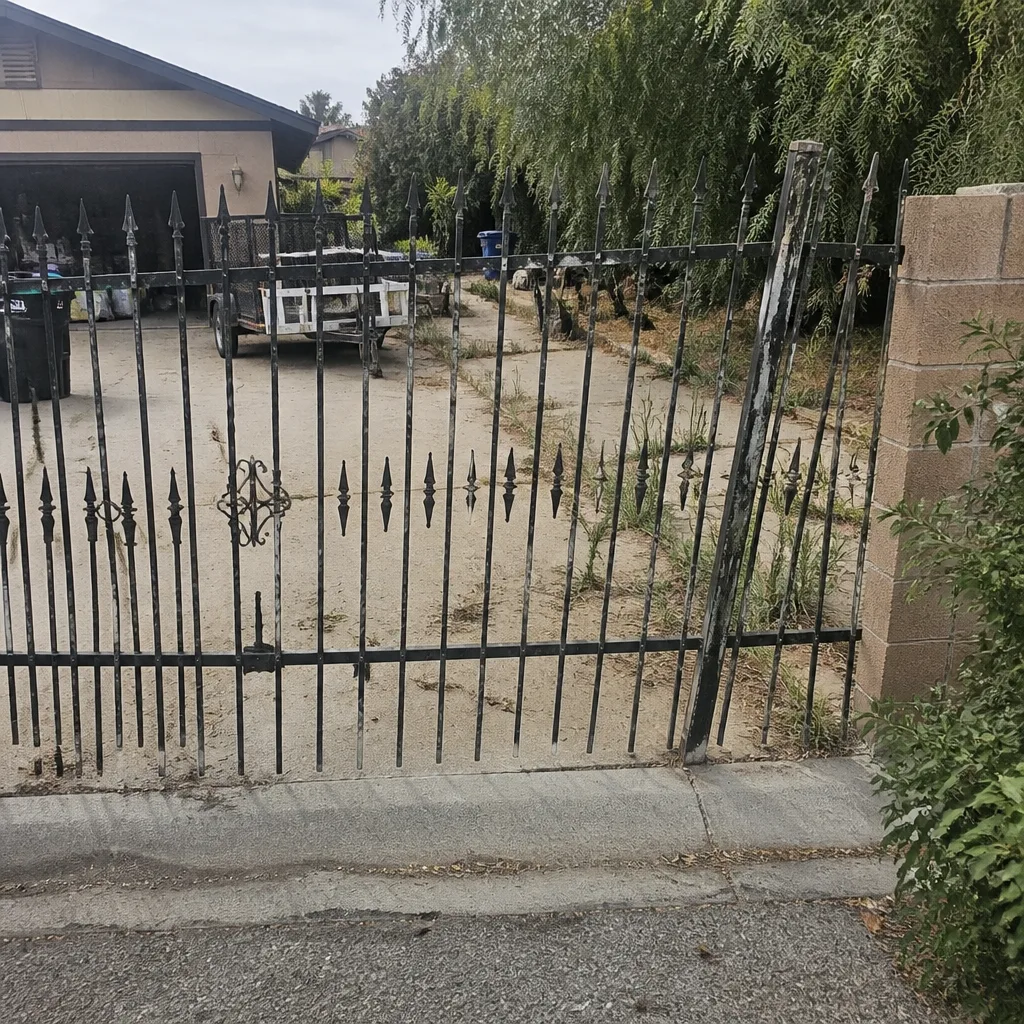
See the difference
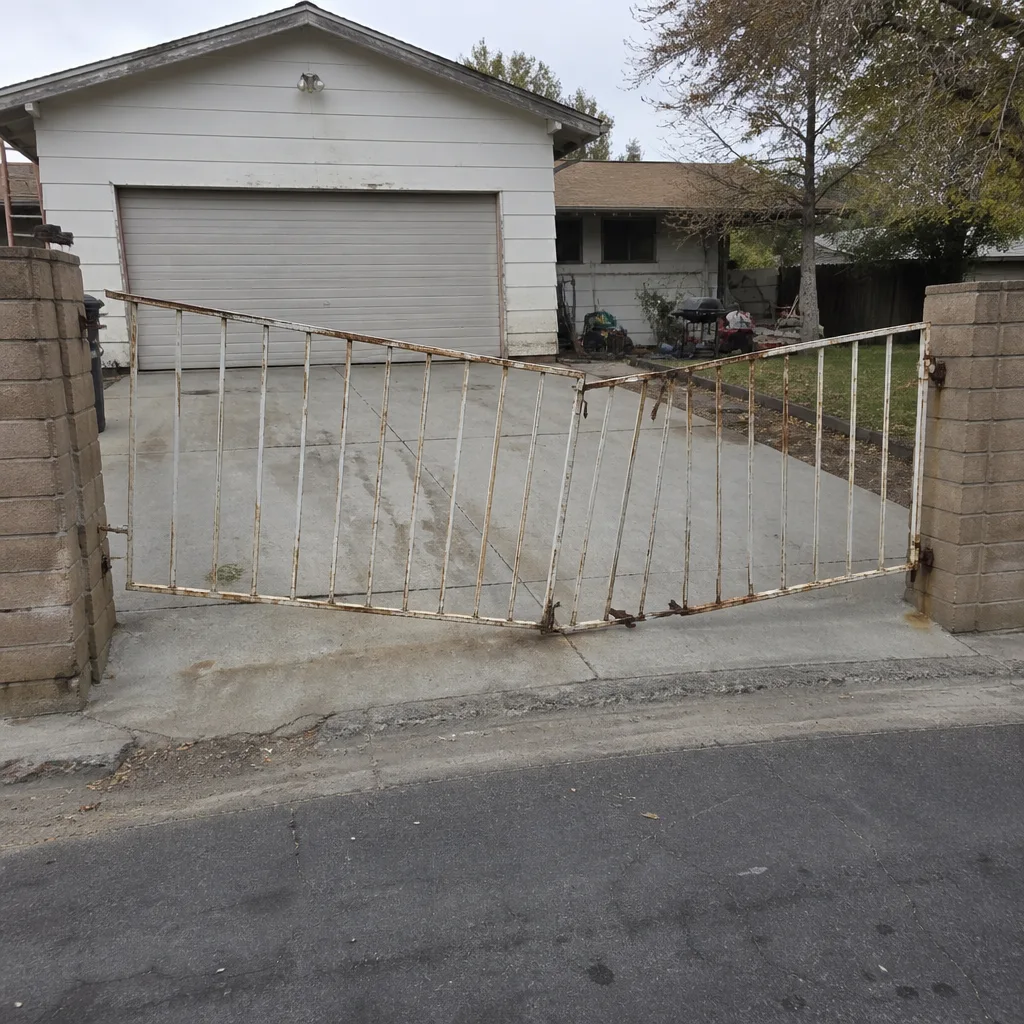 Before
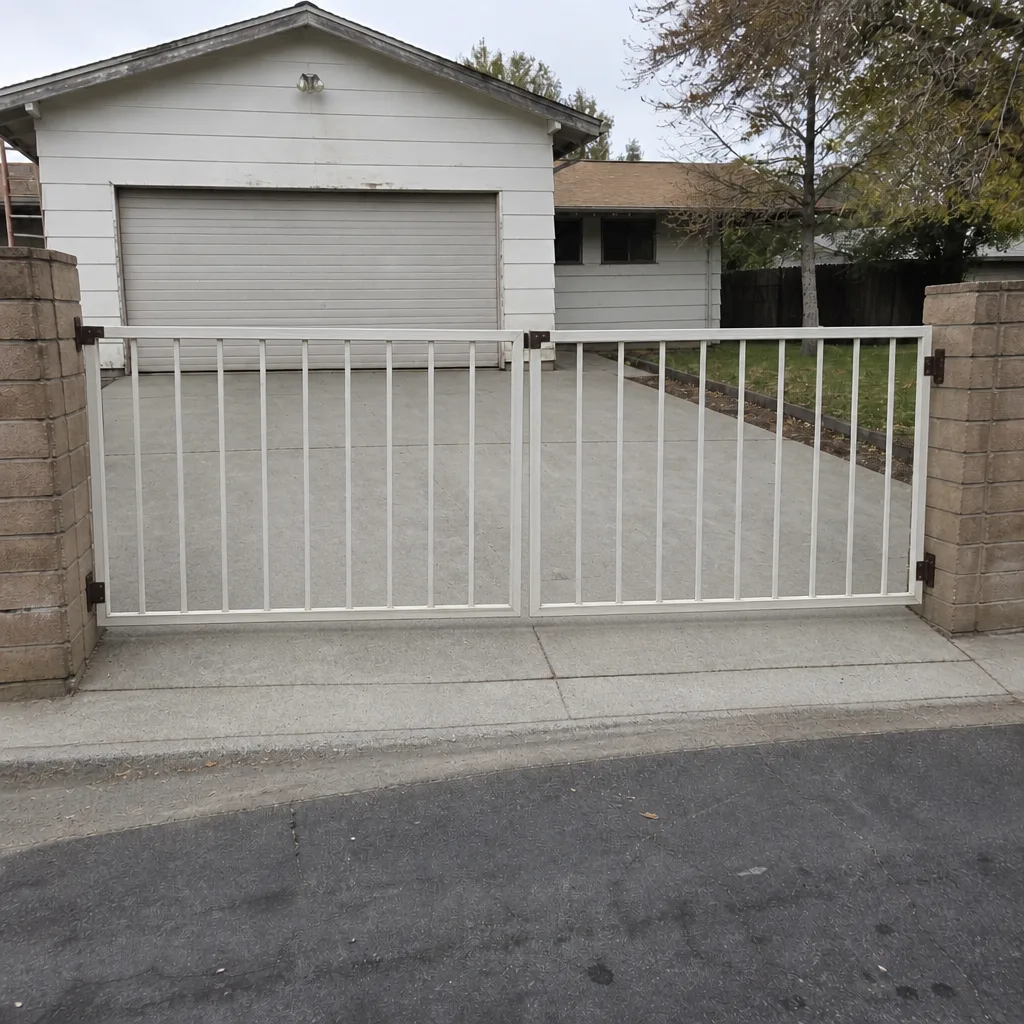 After
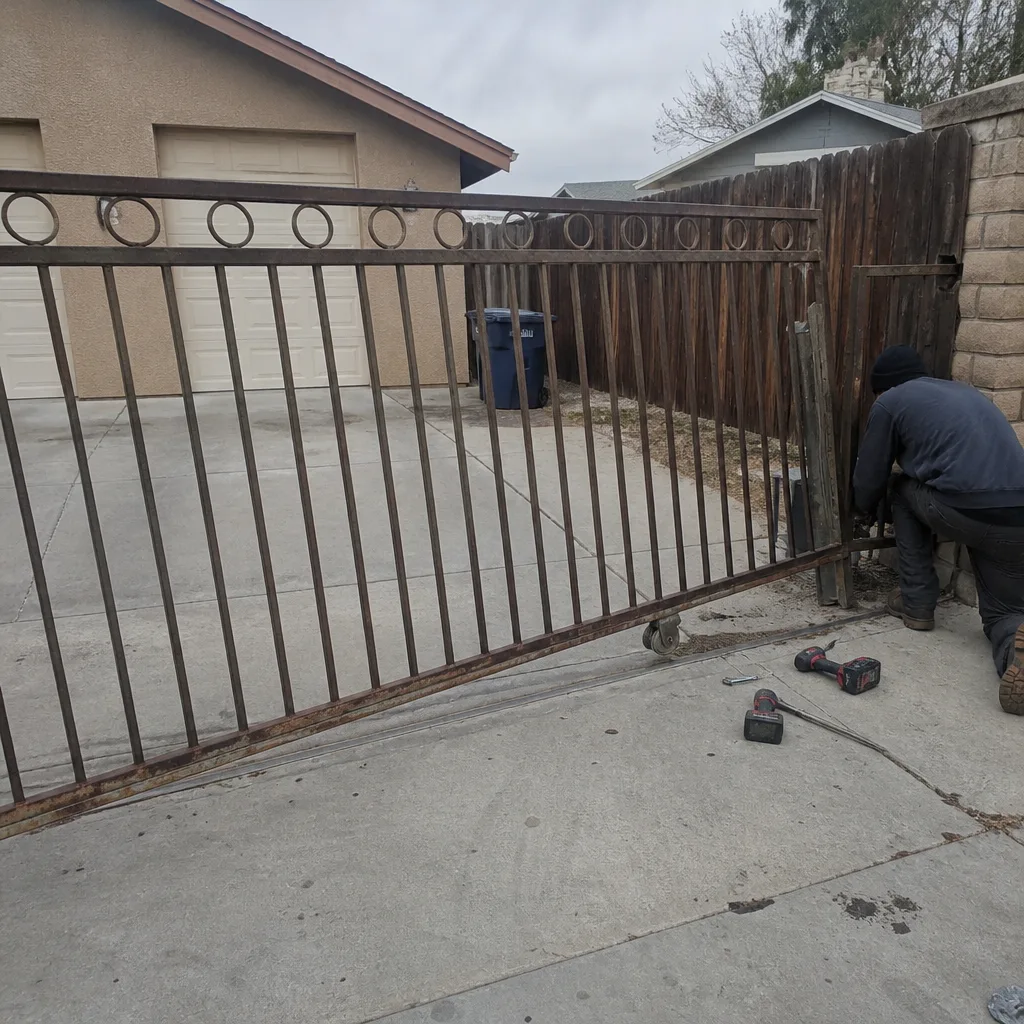 Before
 After
 Before
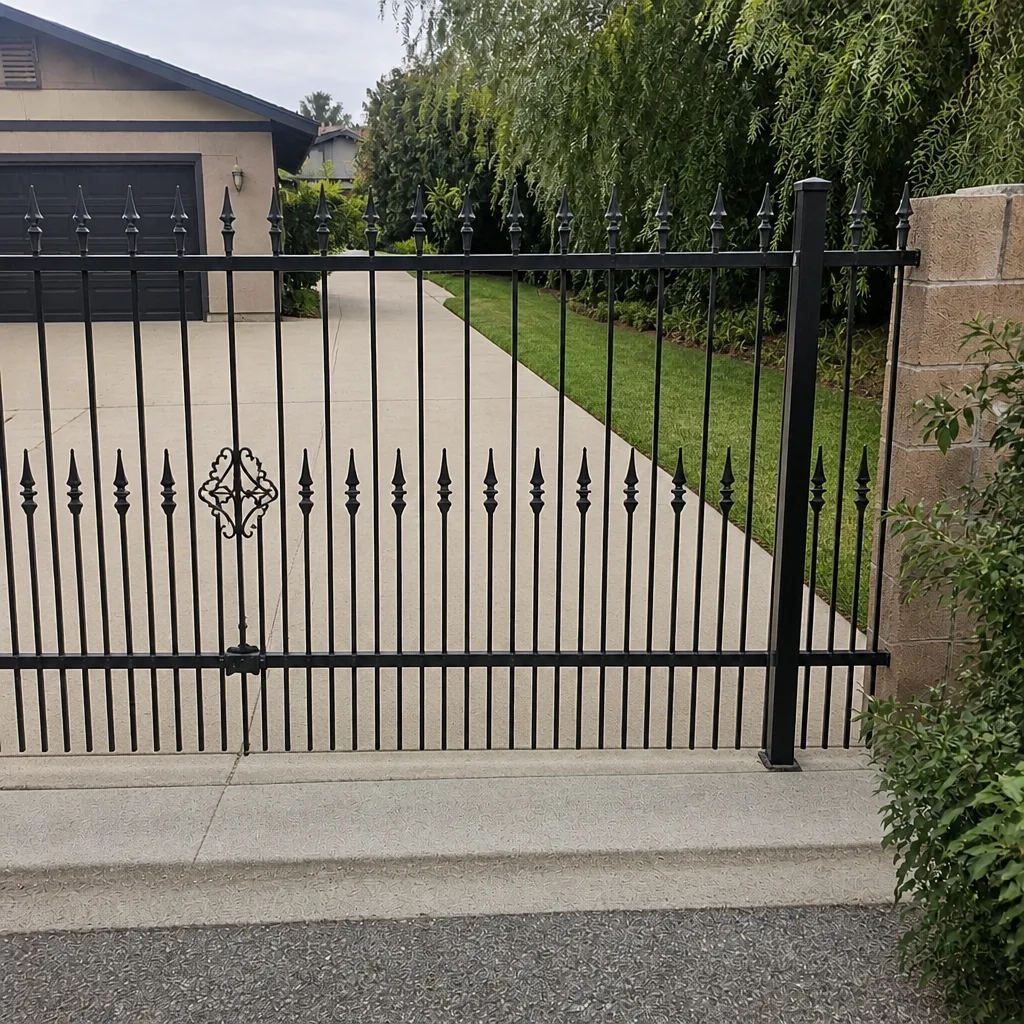 After
When to Call a Professional
Call a trained hand when you see any of the following: a visible sag in the hinge post, a gate that closes on its own, a noise that wasn’t there last month, a cracked paint line around a weld bead, or a post that’s moved enough to swing past plumb. Call immediately if any part of the gate is currently seized, hanging from one hinge, or moving while the operator is off – those are safety conditions, not maintenance. High-tension springs on automatic gates and any kind of arc welding are dangerous jobs a homeowner should not tackle alone; a spring under load can cause serious injury if released wrong. Gatewood Fence & Gate Enterprise offers free estimates in Enterprise – call (833) 780-1547 and we’ll tell you honestly whether you’re looking at a maintenance item or a repair.
Frequently Asked Questions
Every three to four months for a residential gate, monthly for a commercial gate over 2,000 cycles a year. Use a dry-film PTFE lubricant rather than a sticky spray – our dust turns wet lube into a grinding paste and wears hinges out faster than no lube at all. If you’re not sure what your gate has been getting, call (833) 780-1547 for a free second opinion on any written estimate.
Yes, at least at every full inspection, because hairline weld cracks are almost invisible without training and they fail suddenly. A trained eye looks at the weld bead, the heat-affected zone next to it, and the brackets bolted onto the weld – which are where most failures actually start. On-site welding means the repair happens in your driveway instead of a shop trip.
It’s the idea that post movement happens in tiny increments, so catching 1/8 inch early means a shim and a lag bolt, while catching it two years later means a concrete break and a full re-set. In Enterprise’s soil, posts move fastest after wet winters. A six-month plumb check is cheap; a post re-set is not.
We don’t recommend it. Any structural welding on a loaded gate frame carries risk, and a bad weld can fail without warning under the weight of the gate. On-site welding by a trained welder is a ten-to-fifteen minute repair and carries the 90-Day Done Right Promise in writing. If it fails, one call brings us back.
Count the opens per week and multiply by 52. Under 2,000 cycles a year is residential, 2,000 to 8,000 is light commercial, and over 8,000 is high-cycle. If your operator has a cycle log, that’s the fastest read. If it doesn’t, one week of counting is enough. Our team answers the phone 24/7 with a live person; call (833) 780-1547 for help scoring it.
Hinges, rollers, and the welded hardware brackets bolted to the frame – motor mounts, keeper hooks, drop rod guides – because they take the most vibration and thermal cycling. On LiftMaster, Elite, and FAAC operators, the chain and drive arm are the next things to check. We’re certified to service nine major brands including all four of these.
The Bottom Line
A maintenance schedule that ignores cycle count and soil movement is a schedule that misses the failures before they happen. Count your cycles, match the interval, do the five tasks you can safely do yourself, and pay for the three that need trained eyes – weld inspection, post plumb, and frame diagonal. Catch post movement at six months and you’ll save the price of a re-set. Use dry-film lubricants, not sticky sprays, to survive Enterprise dust. And inspect the welded hardware brackets, not just the welds, because that’s where gates actually fail. If you want a trained read on your gate, we’ll be there ourselves.
Call (833) 780-1547 for a free estimate in Enterprise. Calls are answered by a live person 24/7 – not a voicemail, not a call center three states away. Every job comes with our 90-Day Done Right Promise in writing, our $40 off any repair over $200, and a free second opinion on any written estimate.
Written by the team at Gatewood Fence & Gate Enterprise.