
Last updated November 18, 2026
 Wrought iron
 Wood & steel frame
 Farm & ranch
 Sliding driveway gates
 LiftMaster operators
Free on-site gate assessment - hinges, posts, and your LiftMaster or Nice gate operator checked before anything is quoted
The assessment is free and the quote is the invoice.
Get your free estimateGate Parts & Welding Warning Signs Every Homeowner Should Know
There’s a rust pattern called active rust that’s dark orange, slightly wet-looking, and powdery at the edges. It means the steel underneath is actively corroding. There’s also old rust that’s flat, brown, and dry, and that one is cosmetic. Most homeowners can’t tell the difference, and that difference is the whole ballgame: paint it this weekend versus this weld is six months from failure. In this guide we’ll teach you to see what a trained eye sees, so you can catch a gate problem before it drops on a person, a car, or your driveway in Enterprise. No jargon, no scare tactics. Just what to look at and what it means.
Quick Answer
The main warning signs a gate is heading for a parts or weld failure are active (dark orange, powdery) rust at a joint, a gate that now drags a quarter inch lower on the latch side, a frame that isn’t square corner to corner, a post that’s no longer plumb, hairline cracks or paint bubbling at the toe of a weld, and a new tick, grind, or clunk during the swing. Any one of these means get it looked at. Two or more together means stop using the gate and have it inspected.
Styles & brands we work with
- Wrought iron
- Wood & steel frame
- Farm & ranch
- Sliding driveway gates
- LiftMaster operators
Table of Contents
- Cosmetic Rust vs. Active Corrosion: How to Tell the Difference
- The Early Movement Tells Most Homeowners Miss
- What a Weld Looks Like Before It Cracks Apart
- The Sounds Your Gate Is Making and What They Mean
- A Simple Fall Inspection Routine for Nevada Gates
- Which Parts Fail First (and Why)
- Common Mistakes to Avoid
- When to Call a Professional
Cosmetic Rust vs. Active Corrosion: How to Tell the Difference
Rust is a signal, not a sentence. The trick is reading which kind you’re looking at. Use your eyes and your thumbnail, and check three things on every spot: color, texture, and location.
- Old rust is flat, dry, and a uniform brown. It sits on the surface, doesn’t flake when you press a thumbnail into it, and clears up with a wire brush and a coat of paint. This is superficial oxidation and it’s the kind you’ll see on plenty of gates in Enterprise that are otherwise perfectly sound.
- Active rust is dark orange, looks slightly wet even when it’s dry, and crumbles into powder at the edges. Press a thumbnail in and it sinks. The steel is eating itself, and if it’s sitting anywhere near a weld, that weld is losing its material from the inside out.
Location matters as much as appearance. Active rust around a hinge weld, at the base of a post where water pools, or on the weld bead that ties the gate frame together is a structural warning. Active rust in the middle of a flat panel is a paint problem. The reason we make this distinction is simple: a gate sags in the hinge post, not in the middle, and that’s where we start looking every time. If you want a plain-English rundown of what we find and fix, our Gate Repair in Enterprise page covers the common jobs.
In our experience, gates in Enterprise take a beating from windblown dust and the wide day-night temperature swing, and rust often starts on the side facing the prevailing weather. Walk both sides of the gate and compare. One side will usually tell you more than the other.
The Early Movement Tells Most Homeowners Miss
Movement is the second warning system. Steel gates don’t fail all at once. They move first, and they move slowly enough that your eye adjusts without noticing. Here’s how to catch it.
- Check the latch side gap. Close the gate and look at the gap between the gate frame and the latch post. Then look at the gap on the hinge side. If the latch side is now dragging a quarter inch lower than it used to, the gate has settled. A quarter inch matters.
- Measure corner to corner. Run a tape from the top hinge corner to the bottom latch corner, then from the top latch corner to the bottom hinge corner. On a square frame the two numbers match. If they don’t, the frame is racking, and racking is what shears welds.
- Sight the post for plumb. Hold a level against the hinge post, or just stand back and eyeball it against the fence line. A post that has begun to lean or twist is the beginning of a slow failure.
Any of these alone is a reason to book an inspection. Two together is a reason to stop using the gate. In Enterprise and the surrounding rural counties, a post that’s lost soil support after a wet winter or heavy irrigation is a routine cause, and it’s fixable without replacing the whole gate when it’s caught early. That repair-first approach is the whole point: fix the panel without the post and you’ll fix it twice.
What a Weld Looks Like Before It Cracks Apart
A failing weld gives three tells before it separates. Look for these at every joint where the gate frame ties together and where the hinges meet the frame.
- The hairline at the toe of the weld. Look at the edge where the weld bead meets the base metal, called the toe. A thin dark line there is the start of a crack. It will run parallel to the weld bead at first, then start crossing it.
- Paint bubbling over a joint. If the paint over a weld is puffing up or peeling in a small blistered patch, moisture has gotten under it, usually from the inside. That’s rust working on the weld from the back side.
- Cold-metal movement when you push. Put both hands on the gate and push it gently sideways. If you feel a slight shift or hear a faint gritting sensation at a joint, the weld is letting go. You are feeling cold metal moving against cold metal, and it should feel solid.
We’ve welded plenty of gates where the homeowner noticed nothing wrong until the gate dropped a corner. Almost every one of them showed one of these three signs first. Knowing what to look for is the whole reason this piece exists. When a joint has let go, our on-site welding keeps the gate in your driveway and out of the back of a truck. If you’d like to understand the full range of options, our Gatewood Fence & Gate Enterprise home page lays it all out.
The Sounds Your Gate Is Making and What They Mean
Your ears catch what your eyes miss, if you know what to listen for. Stand next to your gate and open and close it slowly by hand. These are the three sounds that mean something.
- A metallic tick at the same point in the swing cycle. That’s a joint flexing as the gate swings through a specific angle. It’s the sound of a crack opening and closing, and it’s the one homeowners most often dismiss.
- A grinding sound from a roller or hinge. That’s bearing wear or dry pivot points. Left alone, a grinding roller chews into the track or the post bracket, and then the repair grows. Small noise now, small repair now.
- A new clunk at full open or full close. That’s the gate hitting its stop harder than it used to, often because the operator or the sag has changed how far the gate travels. On a gate run by a BFT or Ghost Controls operator, a new clunk can also mean the limit switch is off.
If you’re hearing a grinding noise on a gate that’s driven by a motor, shut the operator off and swing it by hand. A gate that grinds by hand has a mechanical problem, not an operator problem, and fixing the operator won’t fix the gate. Our Gate Motor & Opener information explains how the two systems interact.
A Simple Fall Inspection Routine for Nevada Gates
In Enterprise, the transition out of summer is the right time to look. Months of heat expansion and cool-night contraction have done their work on welds and hardware, and a fall inspection catches what the season shook loose.
- Walk the gate closed. Look for active rust at every weld and hinge. Thumbnail test any spot that looks wet.
- Open it by hand. Listen for ticks, grinds, and clunks. Disconnect the operator first if you have one.
- Push the gate sideways. Feel for any shift at the frame joints.
- Measure the latch gap and the frame corner to corner. Write the numbers down on a note you keep. Compare next spring.
- Check post plumb. Eyeball the hinge post against the fence line and tap the base for hollow, unsettled soil.
Once a year is enough if the gate gets light use. Twice is better if it’s a driveway gate that runs on a Linear operator several times a day. The cost of an inspection is small against the cost of a gate that drops onto a car. Getting a set of eyes on it before signs turn into failures is the cheapest repair in the book.
Which Parts Fail First (and Why)
Some parts go before others, and knowing the order helps you prioritize. The hinge points take the most stress, followed by the frame welds, then the hardware.
- Hinge welds and pivot points. Every swing loads these. They show rust and cracking first, and they’re where a sag begins.
- The frame welds at the corners. Racking puts shear stress right at the corners, and that’s where a cracked weld usually starts.
- Rollers and tracks on sliding gates. Dirt and grit wear the roller wheels, and worn rollers drag a gate out of alignment, which then loads the frame.
- Operator hardware on automated gates, including the arm, the limit switches, and the safety sensors. Brands like Viking and Ghost Controls have parts that wear at different rates, and we’ve serviced enough of them to know the pattern.
The takeaway is that most “replace the gate” quotes start with a part that’s actually replaceable. The trick is figuring out which part, and fixing it before it damages the assembly behind it. When a gate is welded and adjusted on site, you keep the frame that’s already built for your driveway and you only swap what’s genuinely worn. That’s the difference between a repair and a replacement.
Common Mistakes to Avoid
- Painting over active rust. Paint traps the moisture and the corrosion keeps eating the steel underneath. Wire-brush it back to bare metal or have it welded first.
- Adding a brace to a racked frame. A brace hides the crack without fixing the cause. The gate will fail again, usually worse. In Enterprise we see this on gate after gate where someone bolted on a scrap of angle iron and hoped.
- Replacing the whole gate over a cracked weld. A cracked hinge weld is a welding job, not a replacement job, when the frame is sound. Get a second opinion before you spend the money on a new gate.
- Ignoring a new clunk. That clunk is a warning, and the repair gets bigger every week you let it ride.
- Running a motorized gate by hand when it grinds. You’ll damage the operator and the gate. Shut it off and sort the mechanical problem first.
- Skipping the post. Fix the panel without the post and you’ll fix it twice. If the hinge post is leaning, that’s where the job starts.
- Trusting a phone quote. A gate problem can look like one thing over the phone and turn out to be another onsite. Upfront pricing means the number is agreed before any work starts, not after.
When to Call a Professional
Call a professional when you find active rust at a weld or hinge, a hairline crack or paint bubbling at a joint, or any of the movement signs: a dragging latch gap, a frame that’s out of square, or a post that’s no longer plumb. Call too if the gate makes a new tick, grind, or clunk during the swing, or if a motorized gate behaves differently than it used to. The reason to call rather than tinker is that welding, structural adjustments, and operator repairs are the difference between a fix and a bigger problem. Gatewood Fence & Gate Enterprise offers free estimates in Enterprise – call (833) 780-1547. Every job comes with our 90-Day Done Right Promise in writing, and a live person answers the phone around the clock. Our technicians have up to 25 years of experience, and we’ve welded and repaired gates long enough to know what a failing weld looks like before it lets go.
See the difference
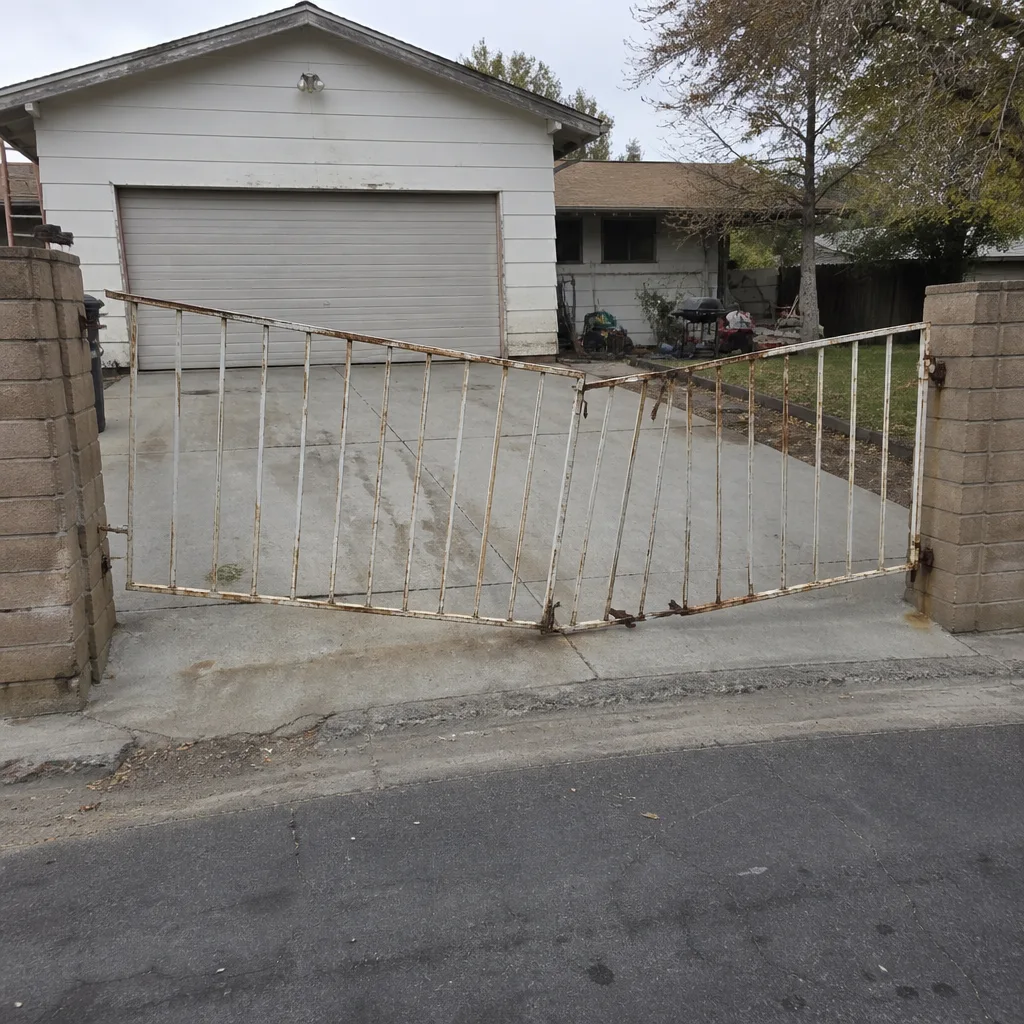 Before
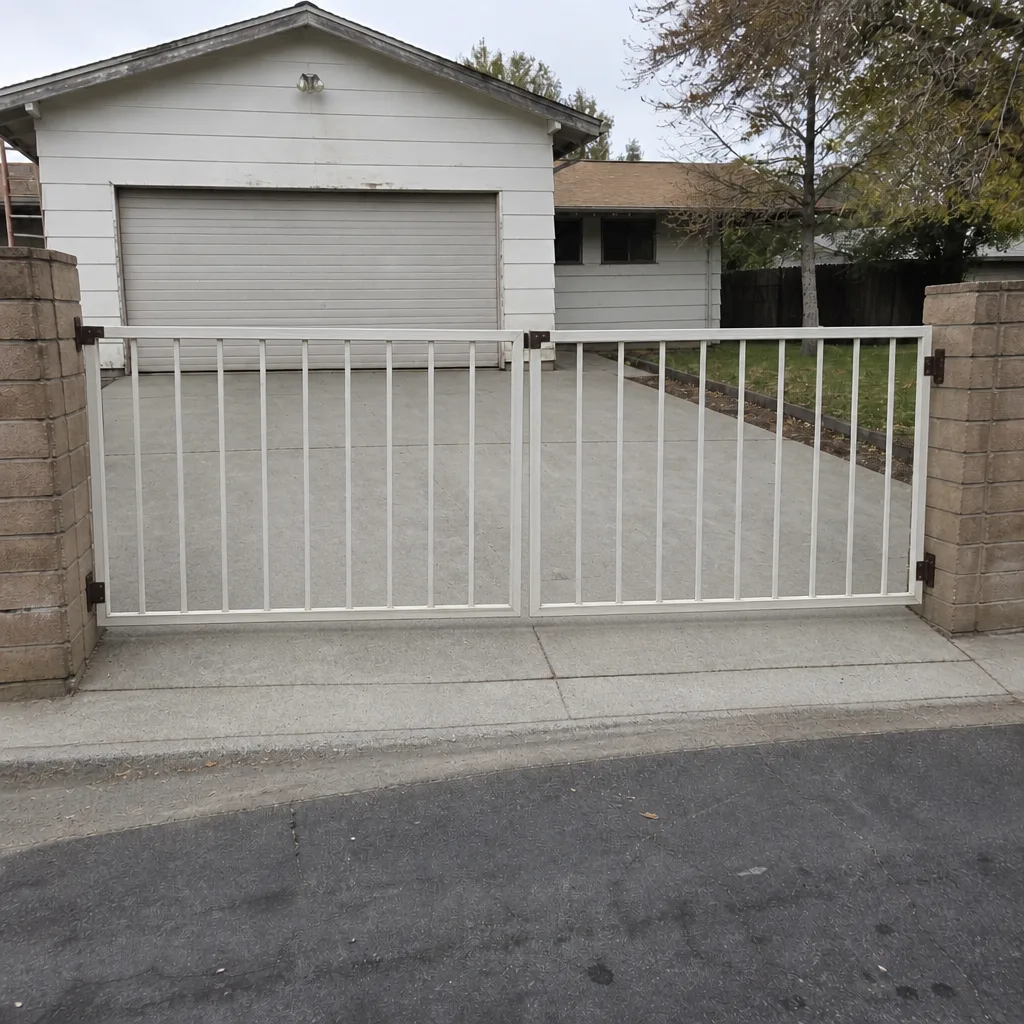 After
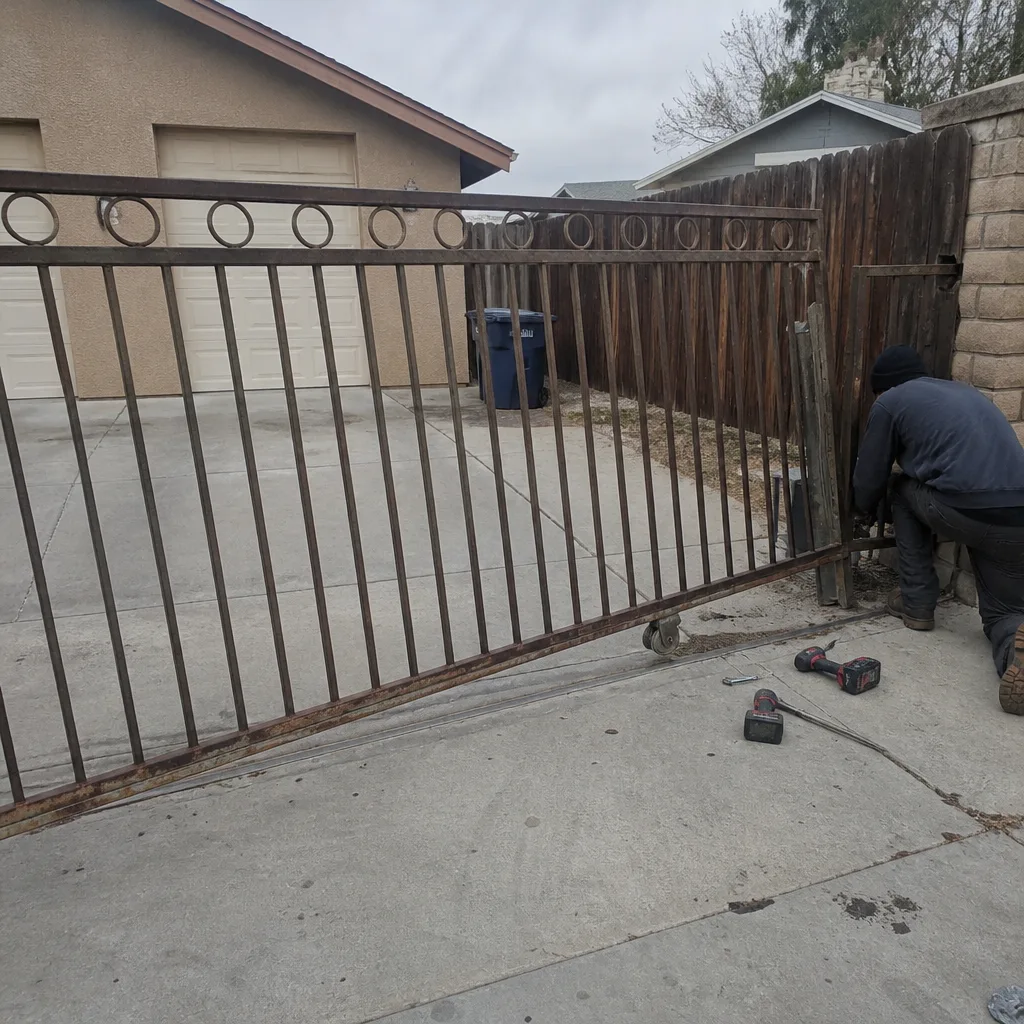 Before
 After
 Before
 After
Frequently Asked Questions
Cosmetic rust is flat, dry, and brown, and it clears with a wire brush. Active corrosion is dark orange, looks wet, and crumbles into powder at the edges, especially around a weld. If you’re unsure, call us for a free second opinion on any written estimate.
A cracked weld can usually be repaired on site if the frame is still sound. On-site welding keeps the gate in your driveway instead of hauling it off, and we only replace parts that are genuinely worn. Call (833) 780-1547 for a free estimate.
It usually means the gate has settled or the frame has racked, and the hinge post or hinge welds are involved. That’s the start of a structural problem, and the earlier it’s caught the cheaper it is. Call us and we’ll look.
Most weld and hinge repairs fall in a modest range, and the exact number depends on what we find. We quote and agree the price before any work starts, with no trip charge inside the county. Our standing $40 off any repair over $200 applies, and we offer a free second opinion on any written estimate.
We answer the phone around the clock, and we schedule repairs as fast as we can. Call (833) 780-1547 and a live person will set up a free estimate and a time that works.
We service both, including operators from LiftMaster, BFT, Linear, Viking, Ghost Controls, FAAC, DoorKing, Elite, and Mighty Mule. When a motorized gate grinds by hand, the problem is usually mechanical, and we diagnose the whole system. Call for a free estimate.
The Bottom Line
A gate almost never fails without warning. It rusts, it moves, its welds crack, and it makes noise, and every one of those is readable if you know what to look at. Walk your gate in the fall, use your thumbnail on rust, measure the frame corners once a year, push it sideways, and listen. If you find a warning sign, get it looked at before it becomes an accident. In Enterprise, Gatewood Fence & Gate Enterprise is a locally owned, owner-operated shop that fixes what others replace, answers the phone 24/7, and stands behind every job with the 90-Day Done Right Promise. If you want the full picture of what we do, our Gate Installation in Enterprise page covers the build side, and a live person is ready to help with the repair side today.
Call (833) 780-1547 for a free estimate. We offer no trip charge inside the county, a free second opinion on any written estimate, and a permanent 10% discount for seniors and veterans. If you’d rather look us in the eye, you can drive to the shop.
Written by the team at Gatewood Fence & Gate Enterprise.