
Last updated November 18, 2026
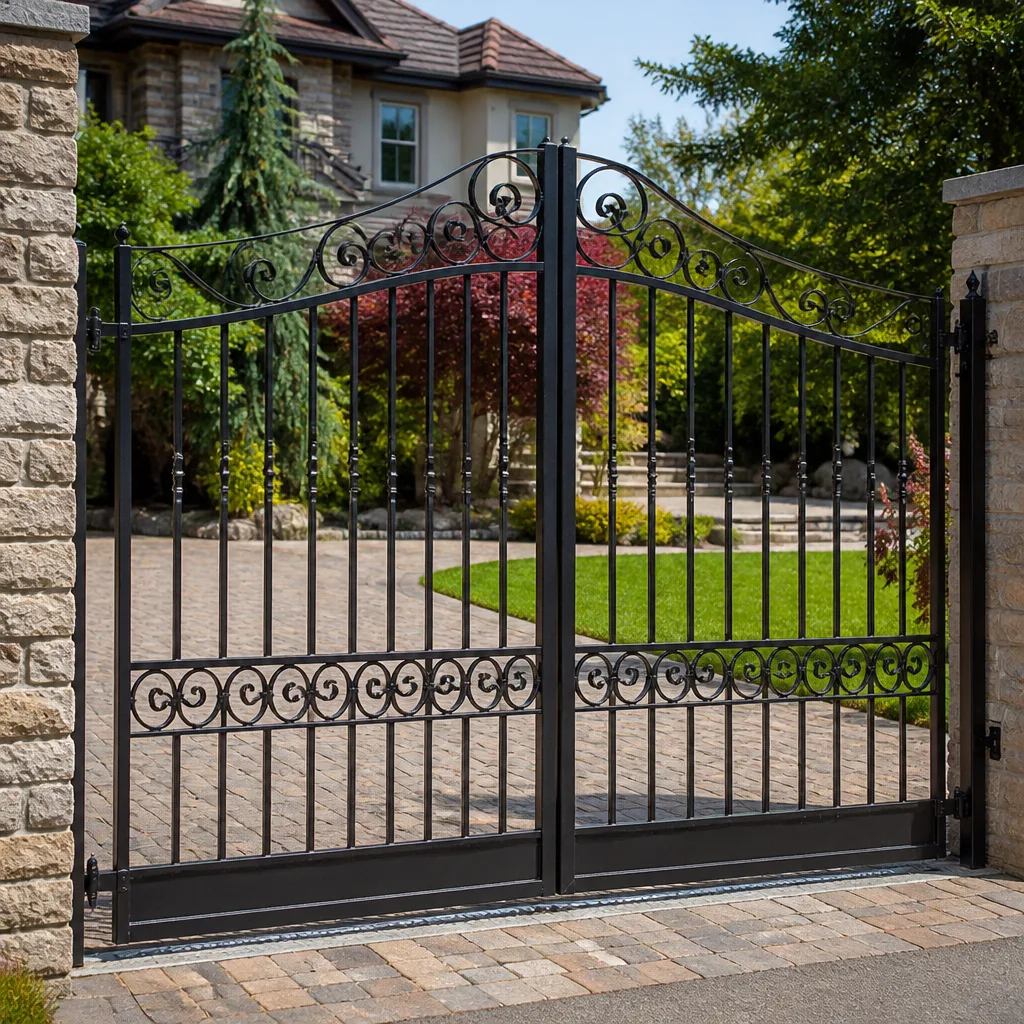 Wrought iron
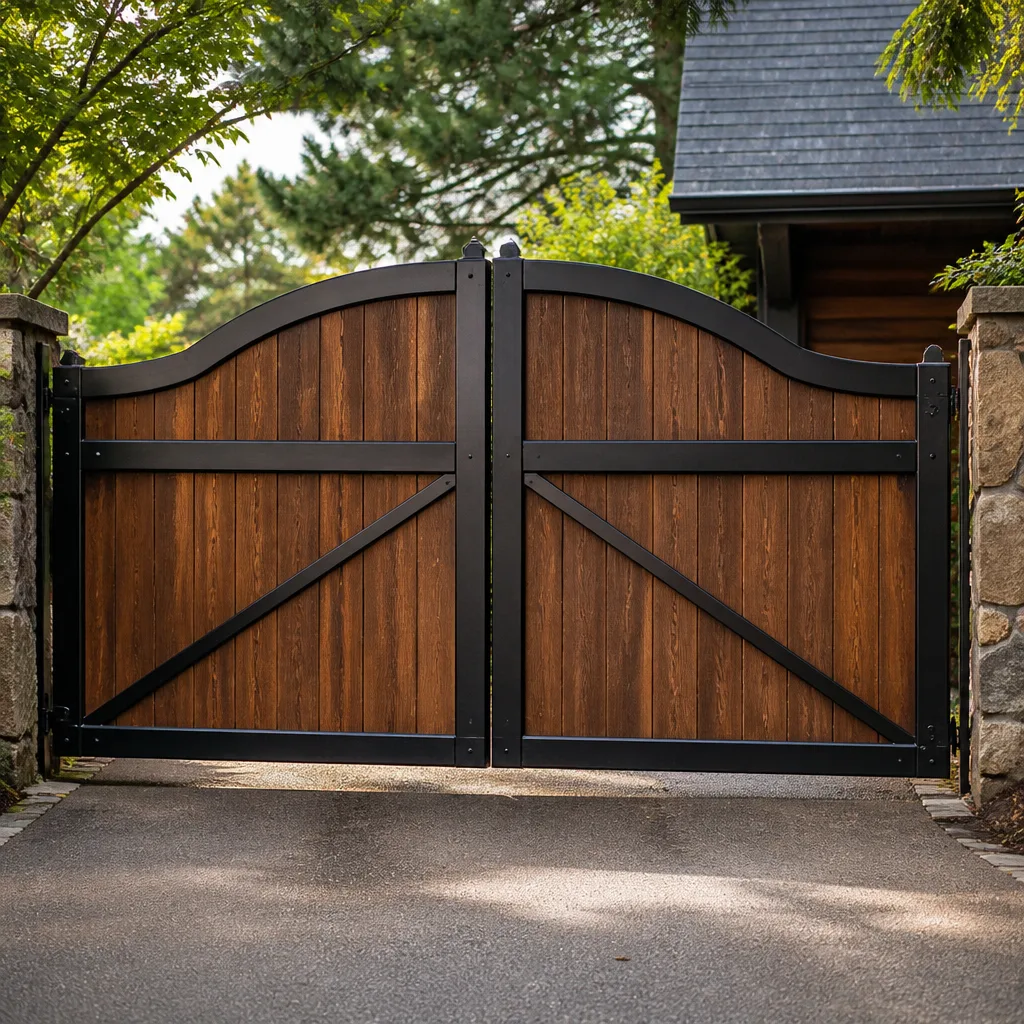 Wood & steel frame
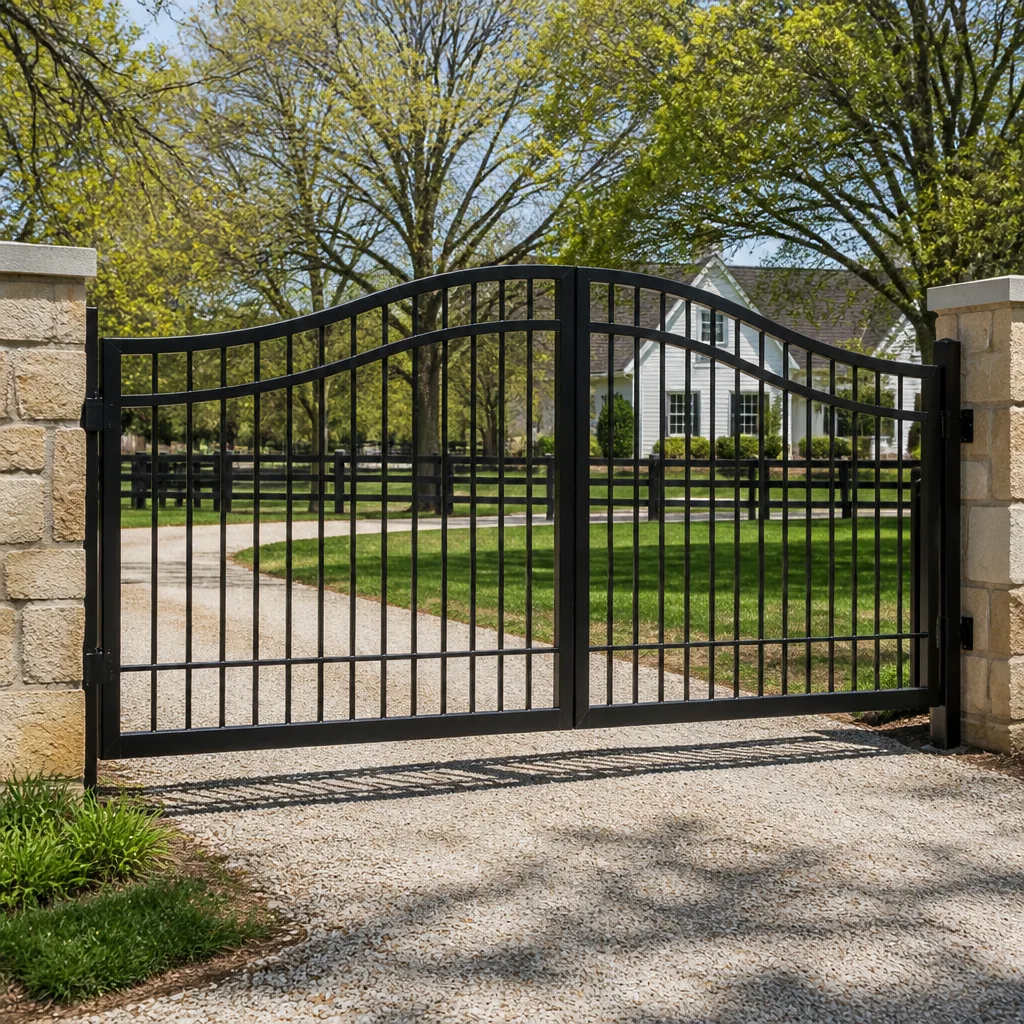 Farm & ranch
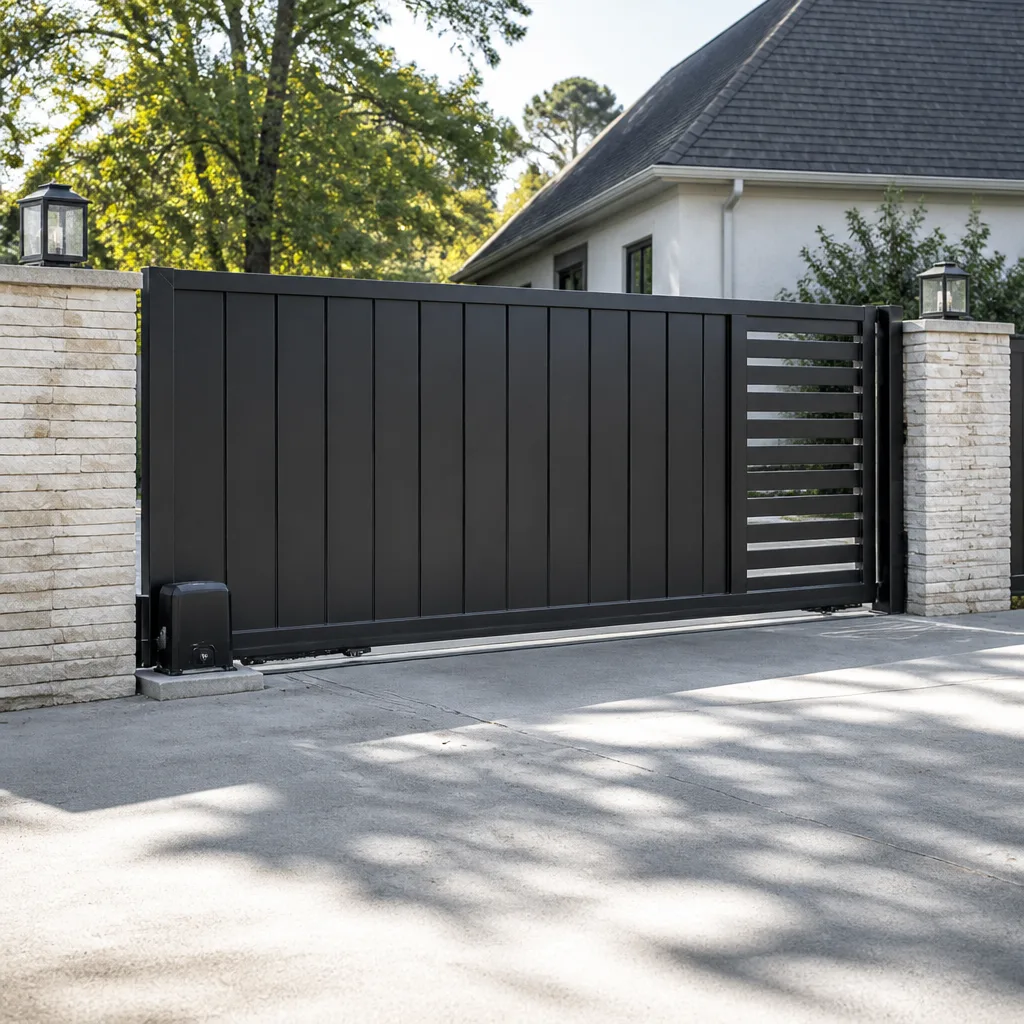 Sliding driveway gates
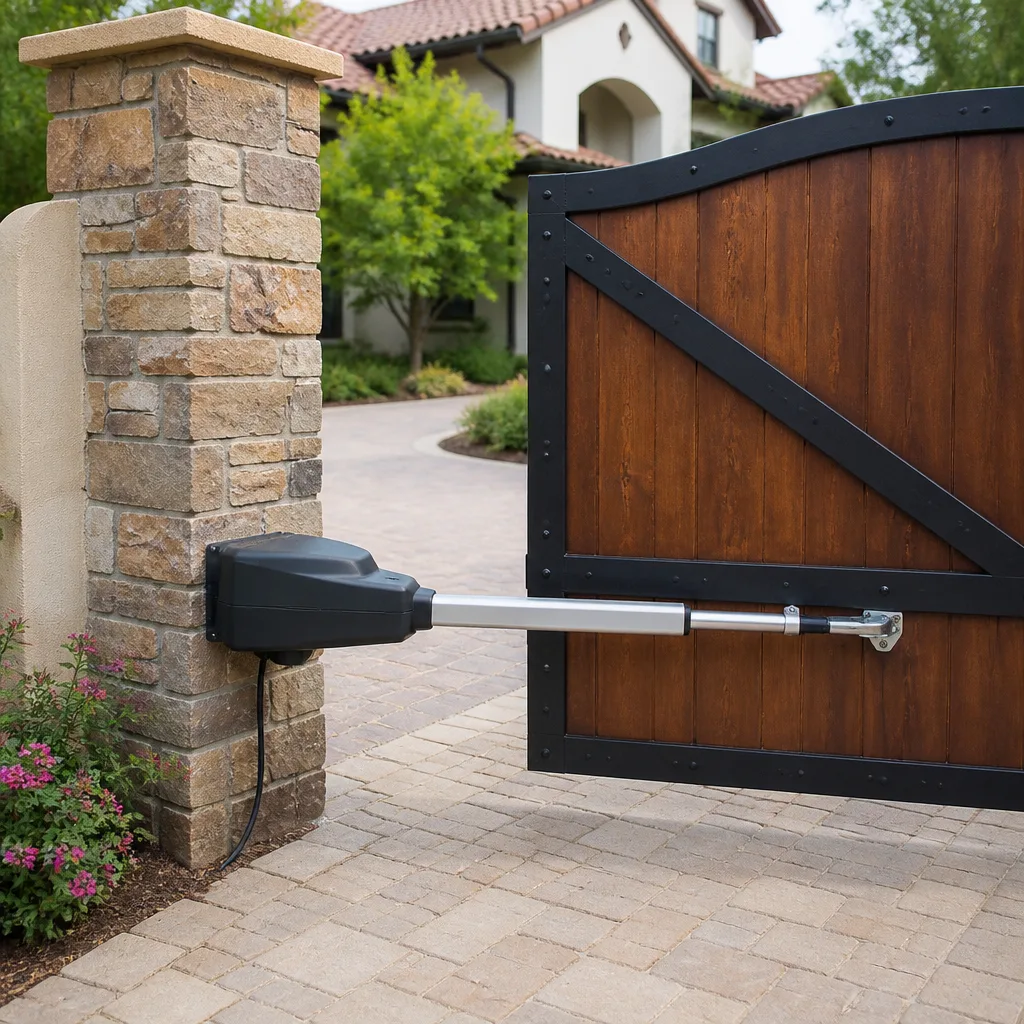 LiftMaster operators
Free on-site gate assessment - hinges, posts, and your LiftMaster or Nice gate operator checked before anything is quoted
The assessment is free and the quote is the invoice.
Get your free estimateGate Repair Maintenance Checklist for Enterprise Homeowners
Nine out of ten “sudden” gate failures we get called out for in Enterprise weren’t sudden at all. There were signs three months earlier – a hinge pin walking loose, a weld starting to spider, a post collar sinking half an inch after a monsoon – that nobody knew to look for. Gates don’t fail at the moment they stop working. They fail quietly over a season and then announce it on a Sunday morning when you’re already late. This checklist covers the fifteen minutes, four times a year, that keeps a gate out of the emergency call column: what to eyeball after Enterprise’s temperature swings, how to test balance by hand in under two minutes, and where to stop before a small fix becomes a big one.
Quick Answer
A gate maintenance checklist for Enterprise homeowners should cover four seasonal walks: fastener and weld inspection at every hinge and post connection, a two-minute balance test, correct lubrication of hinges, rollers, chains and limit switches, and a ground check around every post after heavy rain or wind. Done four times a year, this routine prevents most emergency repairs. Anything involving springs, motors, electrical connections or structural welds belongs with a trained professional.
Styles & brands we work with
- Wrought iron
- Wood & steel frame
- Farm & ranch
- Sliding driveway gates
- LiftMaster operators
Table of Contents
- The Seasonal Fastener and Weld Walk-Through
- How to Test Gate Balance by Hand in Under Two Minutes
- The Right Lubricant for Every Gate Component (and the Wrong Ones)
- What the Ground Around Your Posts Tells You After Rain and Wind
- What Your Opener Is Trying to Tell You
- Why Enterprise Climate Wreaks Havoc on Gate Hardware
- What You Can Maintain Yourself vs. What Needs a Pro
- Your Four-Season Maintenance Calendar
The Seasonal Fastener and Weld Walk-Through
Start every seasonal check at the hinge post and work outward. That’s where the gate actually hangs. A gate sags in the hinge post, not in the middle – and that is where we start, every single time. On a typical swing gate in an Enterprise subdivision off Horizon Ridge or out toward the foothills, you’ll have four to six hinge bolts per side, a latch post connection, and a frame weld at every corner. Those are the points that matter.
Grab a wrench that fits and put real torque on every hinge bolt. Loose is normal after a season of swing cycles; backing out completely is what you’re looking for. On self-closing gates with springs or torsion bars, do not put your hands or tools near the spring, cable or tension assembly – that is stored energy and it can hurt you badly. Look at the weld at each corner for a hairline crack, especially at the bottom hinge where water pools. A crack that’s fine today becomes a hinge that separates in a winter wind.
What to check, in order:
- Hinge bolts on the post side – wrench-tight, no rust streaks.
- Hinge bolts on the gate side – same check, look for oval wear around the hole.
- Latch and receiver alignment – gate should meet the receiver without forcing.
- Frame welds at every corner and T-joint – hairline cracks, rust bloom, paint lifting.
- Post base plate and concrete – no rocking when you push the post.
We’ve found more cracked welds on Enterprise gates in spring than any other season, because a summer of expansion and a winter of contraction stress the same joint twice a year. If you catch a crack at the size of a hair, our team can weld it on site in the driveway – see Gate Repair in Enterprise for what that looks like.
How to Test Gate Balance by Hand in Under Two Minutes
Balance is the single best early warning your gate can give you, and you can test it by hand in less time than it takes to make coffee. The rule is simple: a properly balanced gate will sit still at any point in its swing arc, except where gravity wants it to drift toward the closed position. If it swings open on its own, or slams shut hard, it’s out of balance – and your opener is doing work it wasn’t designed to do.
Here’s the test:
- Disengage the opener. On most LiftMaster, Elite or Viking units, that’s a pull cord or a lever on the operator arm – check the manual if you’re not sure.
- Push the gate to the halfway-open position and let go.
- Watch what happens. It should hold roughly where you left it.
- Push it to a quarter-open. Same test.
- Push it fully open. A balanced gate stays open. A sagging gate swings closed on its own.
Show me the gate closing on its own and I’ll show you where it’s failing. That drift tells you the hinge side has shifted or the post has settled – often after a wet winter here in Enterprise – and the gate is fighting gravity with every cycle. Your opener doesn’t complain, but it’s running hot, drawing more amps than it should, and aging out two or three years early. Left long enough, it fails the motor or the gear, and now you’re pricing a whole operator instead of a hinge adjustment. A two-minute test, four times a year, is the cheapest insurance you’ll ever buy for your automation.
The Right Lubricant for Every Gate Component (and the Wrong Ones)
Half the lubrication jobs we see on service calls in Enterprise aren’t lubrication jobs at all – they’re de-greasing jobs. Someone sprayed WD-40 on a chain, or hit a hinge with motor oil, and a season later it’s a gummed-up mess collecting dust from the desert and turning into grinding paste. The component matters more than the brand.
Here’s the run-down we give every homeowner:
- Hinges and pivot points: a lithium grease or a proper hinge lubricant applied sparingly. Not WD-40 – it’s a solvent, not a lasting lube, and it strips the factory grease.
- Rollers on sliding gates: silicone spray. It doesn’t attract grit the way oil does.
- Chains (on sliding gate operators): chain and cable lube, not motor oil. Motor oil flings off and stains your driveway.
- Limit switches and photo-eye lenses: nothing wet. A dry cloth and a soft brush. A wet lens attracts dust and the beam fails on a windy day.
- Locks, latches and deadbolts: graphite powder. Grease in a lock in Enterprise (with our dust) is a lock that stops working.
- Weld seams and bare metal: a coat of rust-inhibiting primer or paint. Lubricant on a weld does nothing.
The wrong ones to avoid: WD-40 as a general-purpose lube, motor oil on anything with grit exposure, cooking spray (we’ve seen it), and grease on any surface near an opener photo-eye. If you’re running a Ghost Controls or DoorKing operator, the manual tells you exactly what the manufacturer recommends for the chain and gear – use that, not what’s in the garage.
What the Ground Around Your Posts Tells You After Rain and Wind
The gate tells you what’s happening above ground. The soil tells you what’s happening below it, and below is where the expensive problems live. After a heavy rainstorm or a windy stretch – both of which Enterprise gets plenty of, especially from July through September – walk your property and look at the base of every gate post.
Specific things to check:
- Ponding or a visible trench on the hinge-post side. Water running against the concrete footing softens soil and speeds settlement. If your gate is on the low side of the driveway, this is where problems start.
- A gap between the post and the concrete collar. Even a quarter-inch gap means the post is moving. Push the post firmly with two hands – if it rocks, that’s a footing issue.
- Cracked or lifted concrete around the base. This often shows after a freeze-thaw cycle, which Enterprise does get in the winter at elevation.
- Dirt piled above the base plate. Irrigation and wind-blown sand pile up over years. That traps moisture against the metal and accelerates rust at the footing.
- Lean of more than 2 degrees. Sight down the post against a fence line. A lean you can see is a lean that will get worse.
Our team has seen footing failures that started six months before the gate actually sagged – the homeowner just never looked at the ground. Post resetting and footing repair are job-one work, not something to schedule after a gate has already fallen. If you spot a rock or a lean, call sooner rather than later.
What Your Opener Is Trying to Tell You
A gate operator is a strange thing: it either works perfectly or it doesn’t work at all, with about three weeks of warnings in between that most homeowners ignore. Those warnings show up as behavior changes. Watch for them.
The three telltale signs:
- The gate reverses without hitting anything. The force-setting has drifted, the photo-eye is blocked by dust, or the hinges have stiffened. Do not raise the force setting to compensate – fix the mechanical cause first.
- The gate stops halfway. On LiftMaster and Elite operators, this is often a limit-switch issue or an overheating motor from a gate that’s out of balance.
- You press the remote and nothing happens, then it works fine. Battery in the remote, a loose wire at the receiver, or a photo-eye that’s failing intermittently in wind.
Do not open the operator housing on an active electrical circuit. Low-voltage gate operators still carry line voltage at the transformer, and we’ve walked into too many half-finished electrical jobs done by a homeowner with good intentions. If the gate is doing any of the three things above and a lubrication pass doesn’t fix it, that’s a trained-technician call. For what motor service looks like on Enterprise gates, see Gate Motor & Opener in Enterprise.
Why Enterprise Climate Wreaks Havoc on Gate Hardware
Most gate maintenance guides are written for a climate that doesn’t exist. Enterprise isn’t that. Between June and September, daytime highs regularly sit over 100 degrees, and metal on the sun side of a gate can hit 140 to 160 degrees at the surface. In winter, overnight temperatures at elevation drop to freezing and below. That’s a 60-to-70-degree swing across a season, and every gate in Enterprise deals with it twice a year.
What that swing does, specifically:
- Weld joints expand and contract. Micro-cracks that would sit dormant in a mild climate open up faster here. This is why we see weld failures on Enterprise gates years earlier than on identical gates in coastal climates.
- Fasteners walk loose. Temperature cycling plus daily gate cycles is a slow vibration test. Hinge bolts back out. This is normal – the fix is a wrench, not replacing hardware.
- Wood gates shrink and swell. A cedar gate in Enterprise will show a 1/8-inch gap in summer that closes to a hard bind in winter. Schedule a hinge adjustment before the wet season, not after.
- Dust coats everything. Our spring winds load up chains, rollers, and photo-eyes. Clean before you lubricate – every time.
- UV ages the finish. Powder-coat and paint fade and chalk faster here. A repaint every 3 to 5 years extends the frame’s life.
A well-built gate with proper seasonal attention handles this climate just fine. What kills them is the assumption that the gate was installed and now needs nothing. For a look at how we build for the climate in the first place, see Gate Installation in Enterprise.
What You Can Maintain Yourself vs. What Needs a Pro
We get asked where the line is, and we give a straight answer: there’s a lot you can do, and a short list you shouldn’t touch. Respecting that line is how you keep a $150 hinge adjustment from becoming a $900 operator replacement – or worse, an injury.
You can safely do these:
- Wrench-tighten hinge bolts and latch hardware.
- Clean photo-eye lenses with a dry cloth.
- Lubricate hinges, chains and rollers per the schedule above.
- Clear debris, sand and dirt from around posts.
- Painting and rust touch-up on frame and welds.
- Balance test by hand and note the result.
Call a professional for these:
- Any spring, torsion bar or counterweight work. Stored energy kills people. This is not a step-by-step you should read – it’s a call.
- Welding, including cracked weld repair.
- Opener wiring, limit switches inside the housing, or photo-eye circuit faults.
- Post resetting, footing repair, or concrete work.
- Any gate leaning visibly or moving when pushed.
- Access-control wiring, keypads or intercom systems.
“Fix the panel without the post and you’ll fix it twice.” That’s the rule we run on, and it’s why we don’t quote a hinge job until we’ve checked the post footing. For the full picture of what falls under maintenance versus repair in Enterprise, our Gatewood Fence & Gate Enterprise home page lays out the services. What we won’t do is hand you a step-by-step for anything electrically live or spring-loaded, no matter how handy you are.
Your Four-Season Maintenance Calendar
Four visits a year, fifteen minutes each, tied to the seasons that actually stress the gate in Enterprise. Put these on the calendar and you’ll rarely see an emergency.
- Early spring (March-April). Post-winter inspection. Check every fastener and weld. Test balance. Note any drift or lean. Clean and lubricate every moving part. Schedule any welding or footing repair before the summer heat.
- Late spring (May-June). Pre-summer dust prep. Clean the photo-eyes and chain thoroughly. Lubricate. Test the opener at full cycle. Touch up paint on any bare metal before the sun hits it hard.
- Late summer (August-September). Post-monsoon ground check. Look at every post base after the wet season. Address any ponding, trenching, or concrete cracking. Repeat the balance test – the summer heat stresses welds.
- Late fall (October-November). Pre-freeze inspection. Tighten everything. Confirm hinges move freely with cold-weather grease. If you’ve noticed any looseness or drift across the year, this is the visit to book a repair call before winter.
Between these four visits, do the two-minute balance test any time you think about it. That single habit catches more problems early than anything else in this guide.
Common Mistakes to Avoid
- Lubricating before cleaning. Grease over dust turns into grinding paste in a week. Clean first, then lubricate – especially on Enterprise gates where spring dust loads up chains.
- Raising the force setting on an opener to fix a stiff gate. That’s masking a hinge or post problem and burning out the operator. Fix the mechanical issue instead.
- Ignoring a hairline weld crack. In our summer-to-winter temperature swing, a hairline crack in a hinge weld opens up fast. Weld it while it’s small.
- Painting over rust instead of removing it. Rust blooms back through paint in one season. Prep matters as much as the paint.
- Assuming a leaning post will straighten itself. It won’t. It gets worse, and a footing job becomes a footing-and-gate-frame job.
- Using WD-40 as a general-purpose lubricant. It’s a solvent and a water displacer. It’s not a lasting lube, and it strips factory grease off hinges and chains.
- Skipping the balance test because the gate “feels fine” when you drive through. Every gate feels fine until it doesn’t. The hand test is the only reliable check.
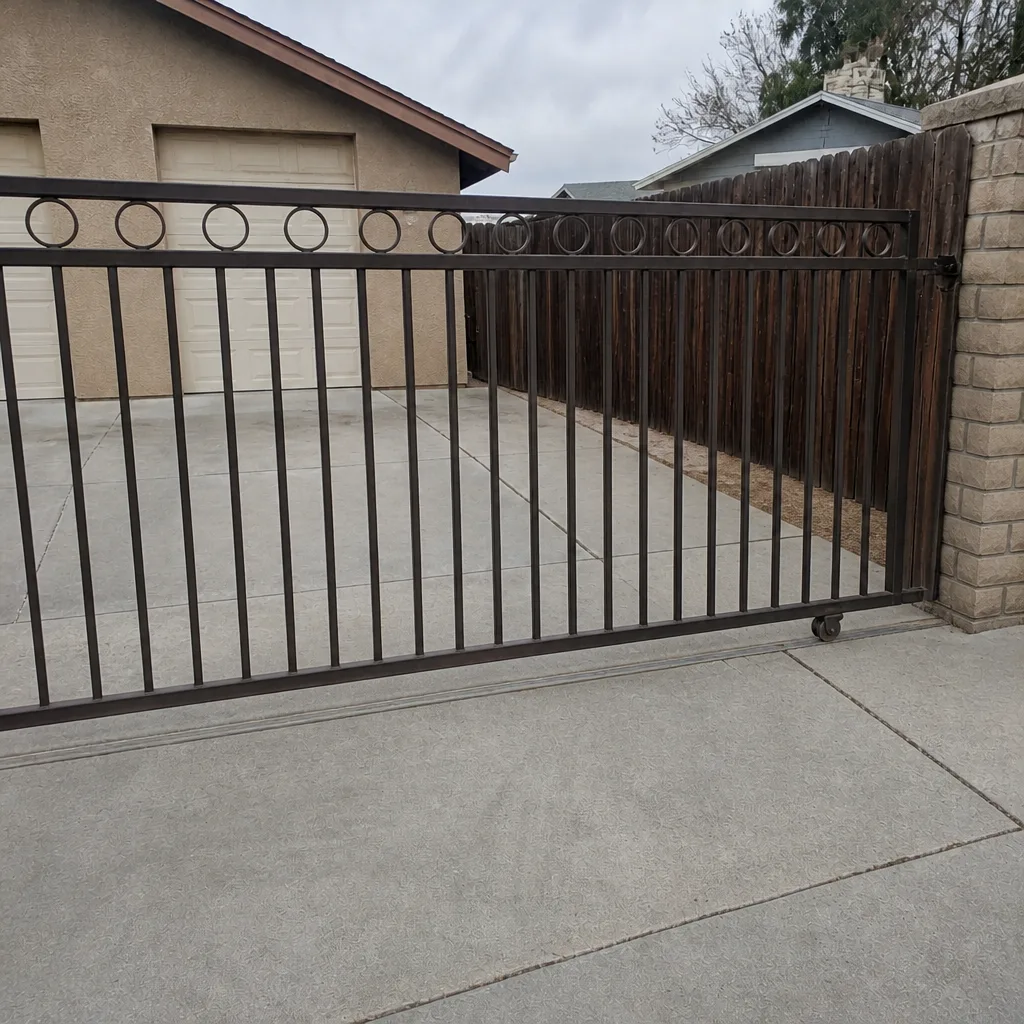
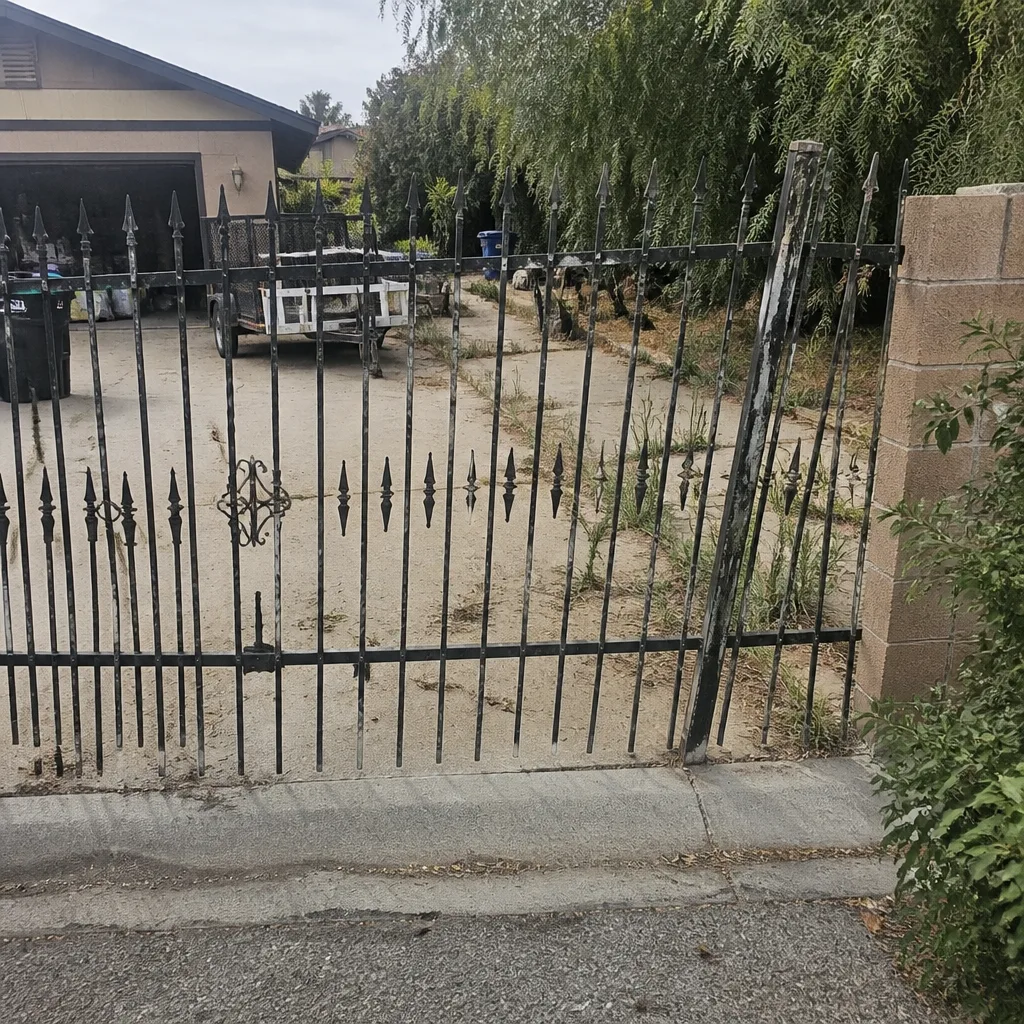
See the difference
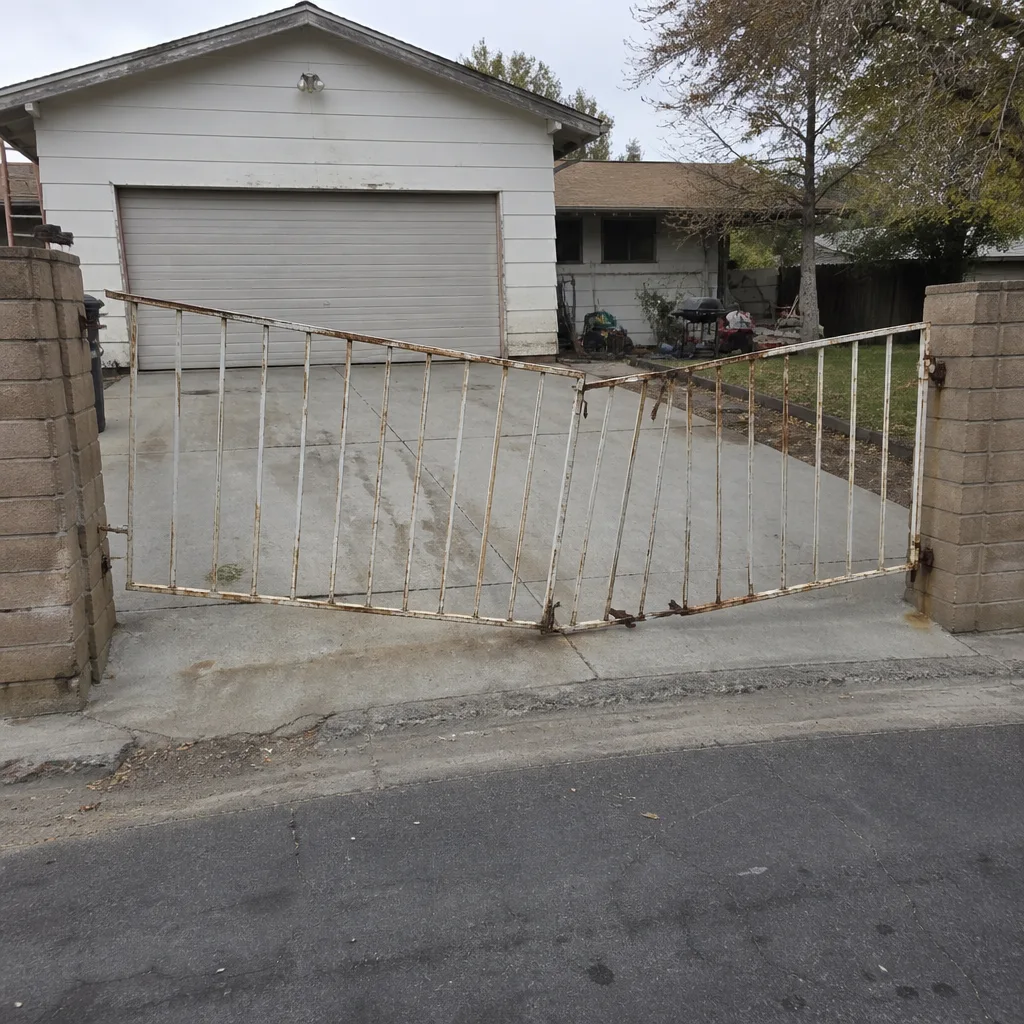 Before
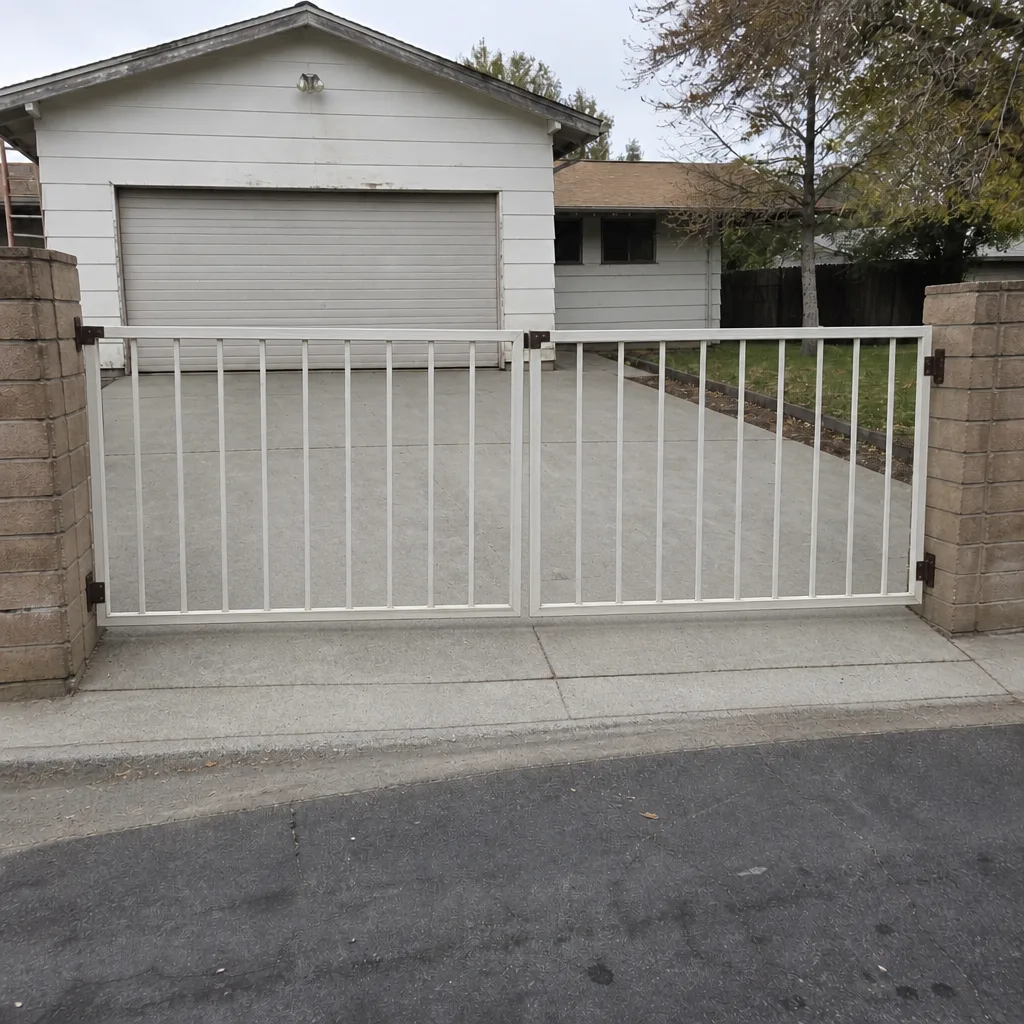 After
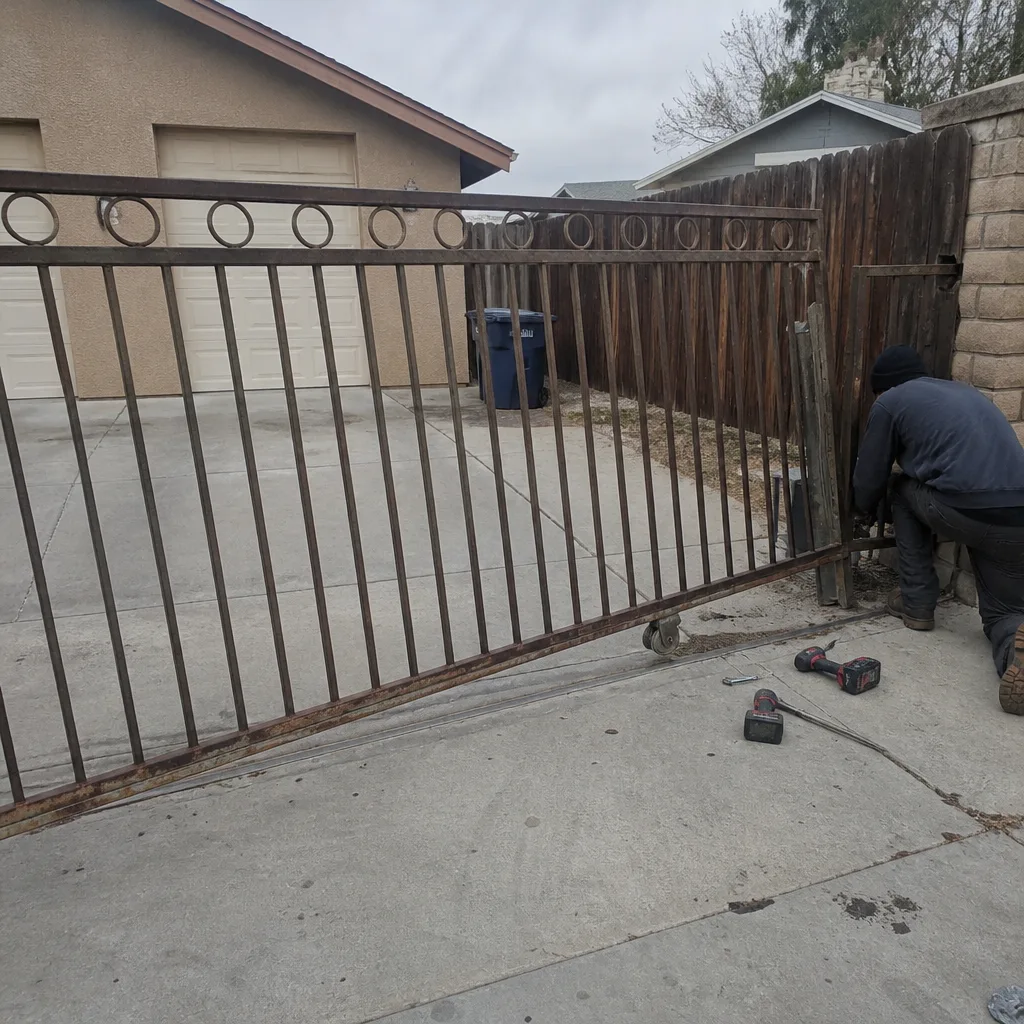 Before
 After
 Before
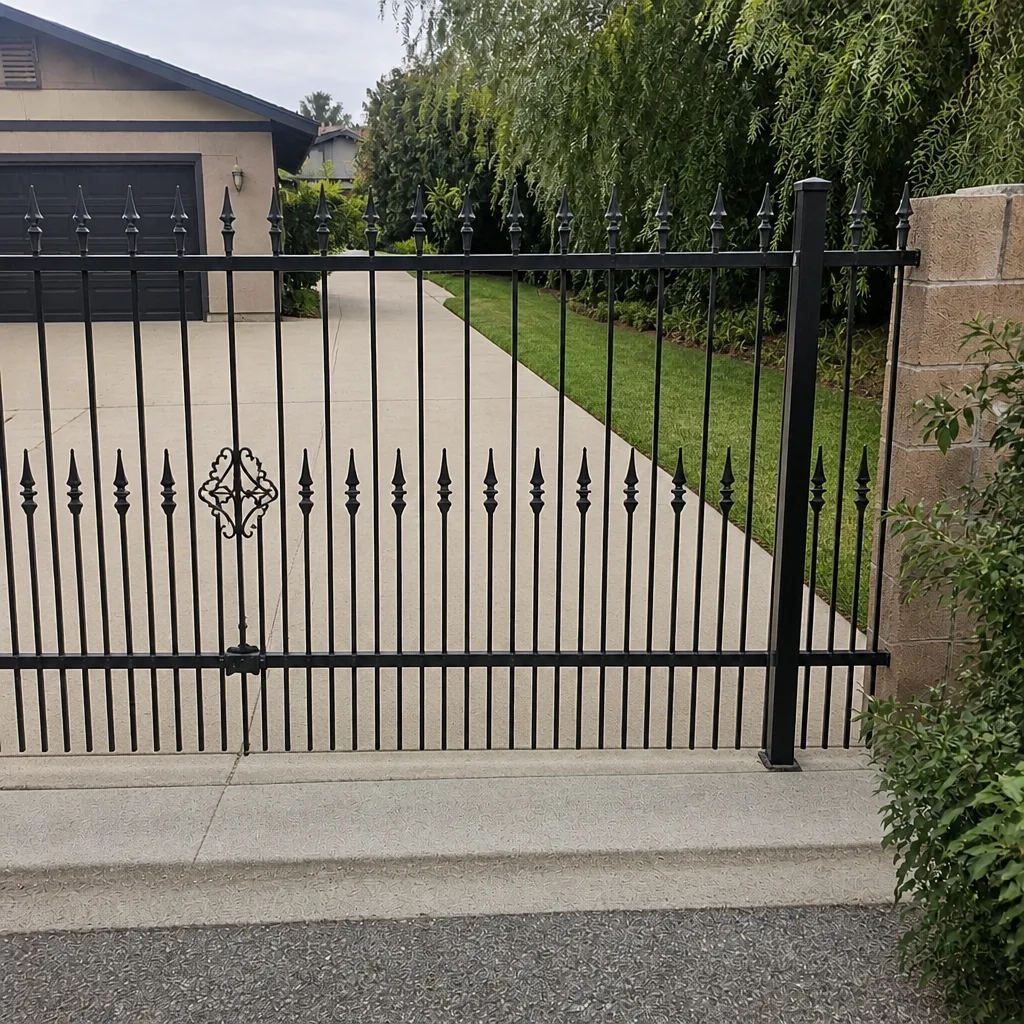 After
When to Call a Professional
Call us – don’t wait for it to fail – if any of these show up: a hairline crack at a weld, a hinge bolt that won’t hold torque, a post that rocks when pushed, a gate that swings on its own, an opener that reverses without obstruction, any spring or counterweight noise, or a winter freeze that hardened a gate overnight. Those are the calls that save money when made early. Any spring, cable, torsion bar, or electrical-panel issue is a pro-only job, no exceptions – the stored energy in a torsion spring can seriously hurt you. Gatewood Fence & Gate Enterprise offers free estimates in Enterprise and a free second opinion on any written estimate you’ve already got. Call (833) 780-1547 and a live person answers – day, night, weekend, holiday. Our technicians have up to 25 years of experience on the brands we service, and every job carries the 90-Day Done Right Promise in writing.
Frequently Asked Questions
Four times a year – tied to the seasons, not a fixed calendar. One walk each in early spring, late spring, late summer after the monsoon, and late fall before the freeze. Add the two-minute balance test any time you think of it. That schedule keeps most Enterprise gates out of the emergency column.
Yes, and you should. Use lithium grease on hinges and pivot points, chain-and-cable lube on chains, and silicone spray on sliding rollers. Skip WD-40 as a general lube – it strips factory grease and attracts dust. Never lubricate anything inside the opener housing.
Because the gate is out of balance, not because the opener is broken. A hinge post that has settled or a hinge pin that has worn lets gravity do the work. Fix the mechanical cause – usually a hinge adjustment or post service – before the operator burns out from fighting it.
The two-minute balance test. Disengage the opener, push the gate to halfway, let go. If it drifts open or slams shut from the halfway point, your gate is out of balance and your opener is working harder than it should. Call (833) 780-1547 for an exact quote on the fix – estimates are free.
Yes. We’re certified on nine major gate brands including LiftMaster, Viking, DoorKing, Elite, FAAC, BFT, Linear, Ghost Controls, and Mighty Mule. If your opener is on that list, we’ve worked on it and we can diagnose what’s wrong.
Yes – that’s why we carry the welding rig on every truck. Most cracked welds on Enterprise gates can be repaired in the driveway, same visit, without pulling the gate. That’s the whole point of fixing the gate where it lives. Call (833) 780-1547 for a free estimate.
The Bottom Line
A fifteen-minute maintenance walk, four times a year, is the difference between a gate that needs a hinge adjustment and a gate that needs a motor. The four checks that carry the most weight: a wrench-tight pass on every fastener and weld, a two-minute balance test, the right lubricant on the right component, and a hard look at the ground around every post after rain or wind. Anything spring-loaded, electrically live, or structurally welded belongs with a trained technician – that line isn’t negotiable, and it isn’t a sales pitch. It’s how you stay safe and how the gate stays working.
Contact
If this checklist turned up something you’re not sure about, or you’d rather have a trained set of eyes on it, we’re happy to come look. Gatewood Fence & Gate Enterprise offers free estimates in Enterprise and a free second opinion on any written estimate. Call (833) 780-1547 for a free estimate – a live person answers, any hour. Standing offers: $40 off any repair over $200, no trip charge inside the county, and a permanent 10% discount for seniors and veterans. The name is on the shop, and the shop is down the road – that is the oldest accountability there is.
Written by the team at Gatewood Fence & Gate Enterprise.