
Last updated November 18, 2026
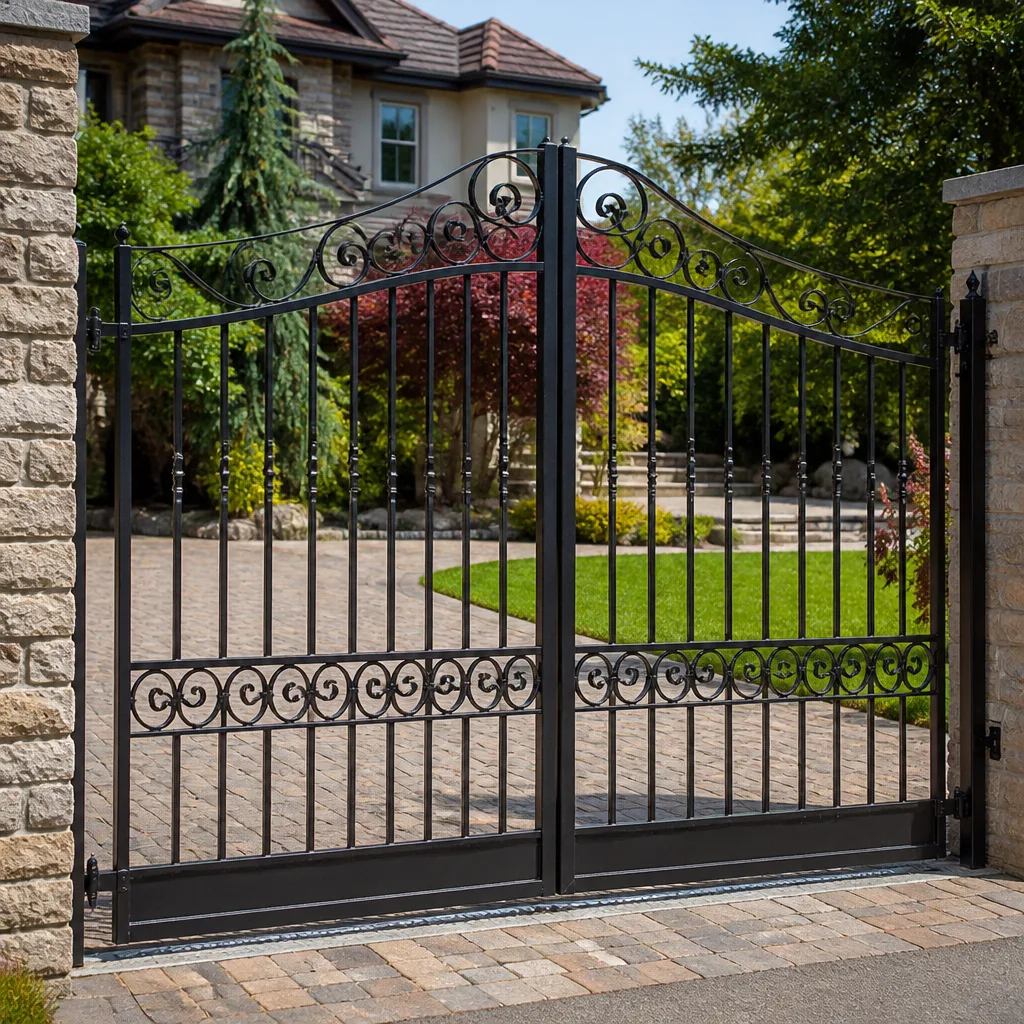 Wrought iron
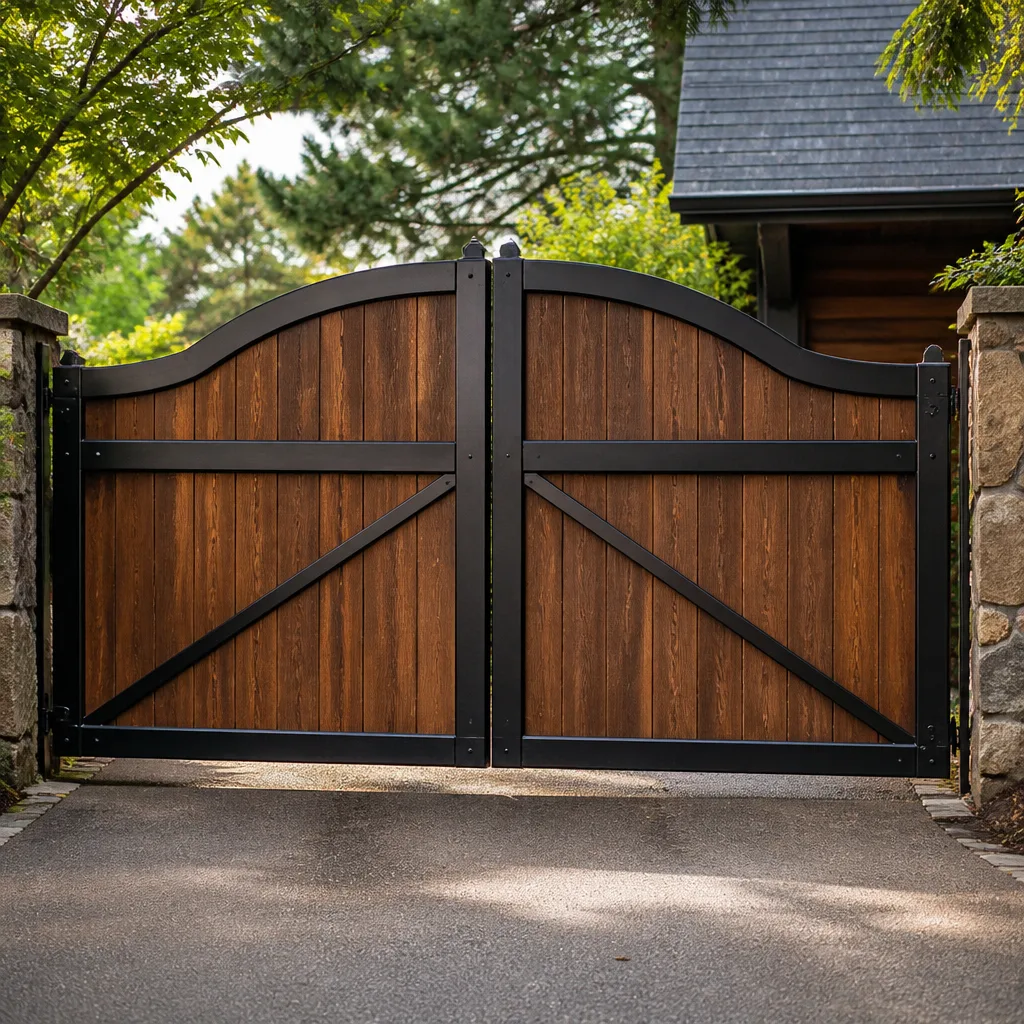 Wood & steel frame
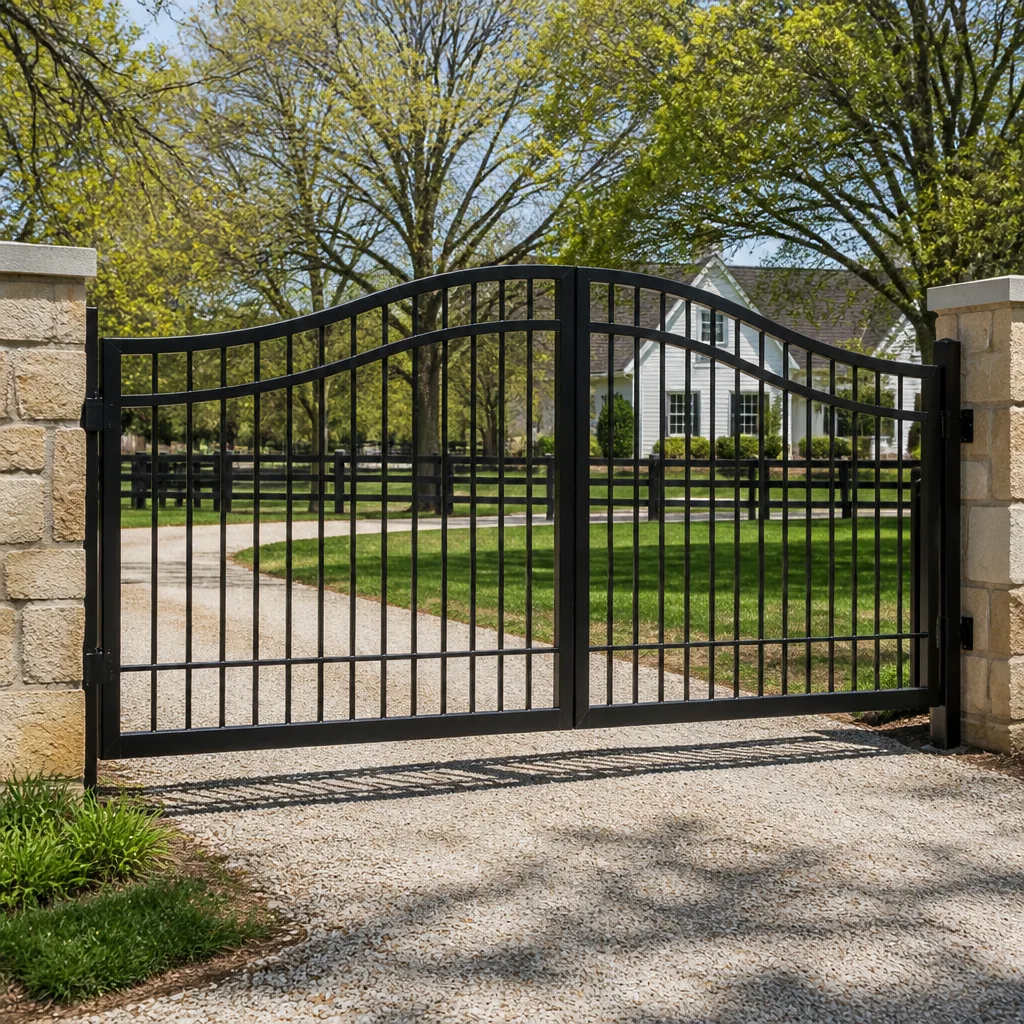 Farm & ranch
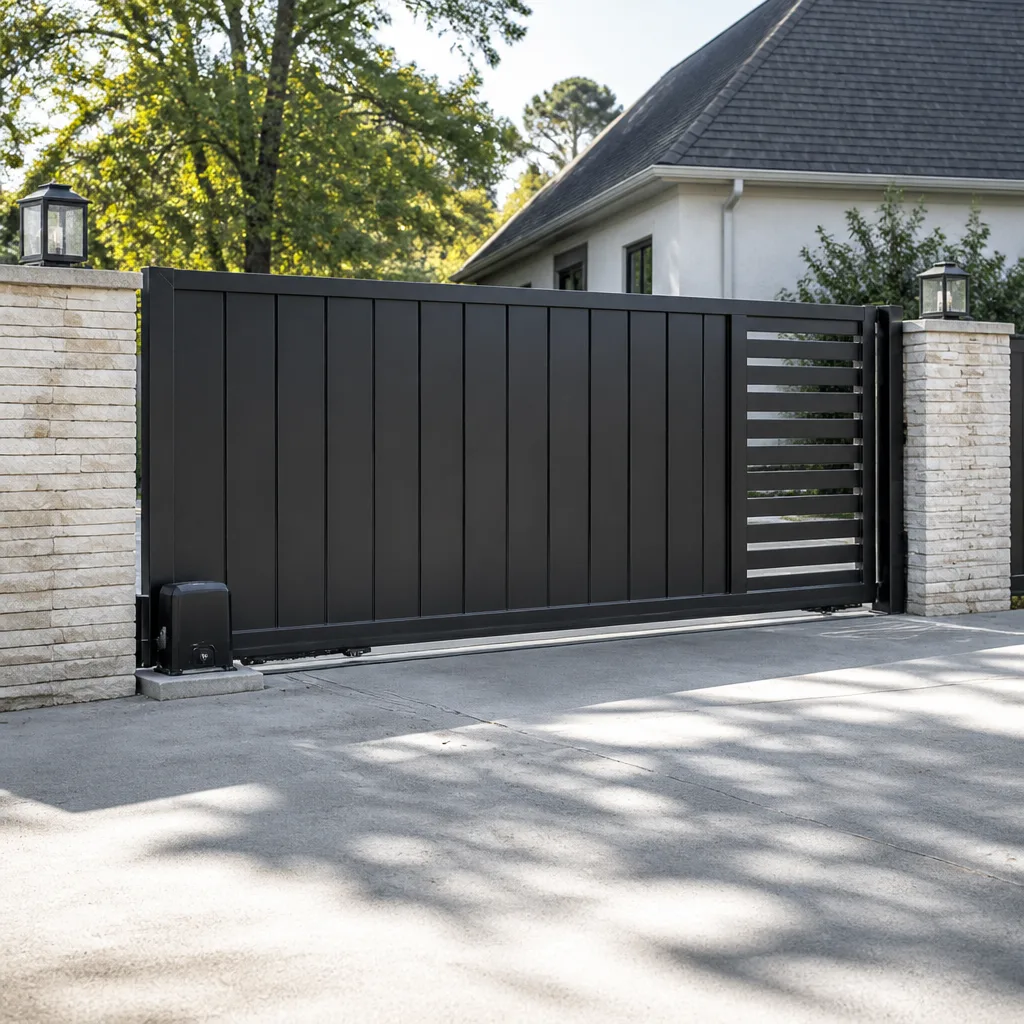 Sliding driveway gates
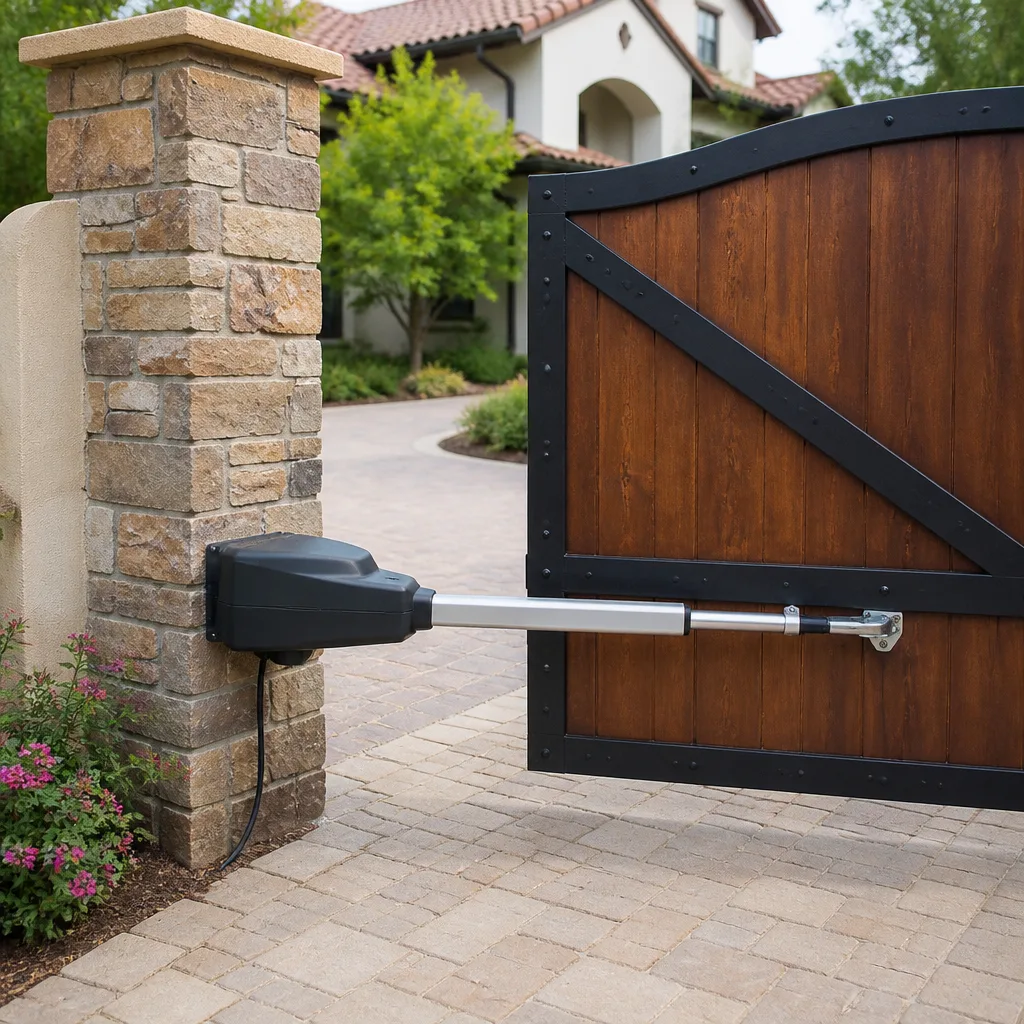 LiftMaster operators
Free on-site gate assessment - hinges, posts, and your LiftMaster or Nice gate operator checked before anything is quoted
The assessment is free and the quote is the invoice.
Get your free estimateGate Repair Troubleshooting: Common Problems and How to Fix Them
A gate that squeaks is not just annoying. A squeak on a metal hinge under load means metal is grinding against metal with no lubrication, and within a season that hinge barrel will be oval-shaped and no longer repairable without welding. Most gate failures send a warning long before the expensive part – the trick is reading the symptom correctly. We’re going to walk you through the symptom-to-cause map, the two-minute inspection we run before touching a tool, and the misdiagnoses that cost homeowners real money. Enterprise homeowners can use all of it.
Quick Answer
Most gate problems fall into four families: dragging, sagging, binding, and bouncing, and each has a different root cause. A sag usually starts at the hinge post, a drag usually comes from a footing or a misaligned roller, a bind is often hardware or frame, and a bounce points to the operator or its drive gear. If you can match the symptom to the right family, you can avoid paying to replace a part that was never broken in the first place.
Styles & brands we work with
- Wrought iron
- Wood & steel frame
- Farm & ranch
- Sliding driveway gates
- LiftMaster operators
Table of Contents
- The Symptom-to-Cause Map
- The Two-Minute Inspection Sequence
- Sagging Gates: Post or Hinge?
- Cosmetic Lean vs. Structural Footer Problem
- Automatic Gates That Work Sometimes
- Common Misdiagnoses from Non-Specialists
- What’s Different About Gates in Enterprise
- Keeping the Gate Out of Trouble
The Symptom-to-Cause Map
Nine out of ten gate problems announce themselves before they become expensive. The trouble is that the same physical complaint (“the gate drags”) can mean three completely different problems with three completely different fixes, and the invoice depends entirely on which one it is. So we start every call by asking what the gate does, not what the homeowner thinks is wrong.
- Dragging. The gate moves but feels heavy, or the bottom scrapes the ground. Root cause is usually a roller at the wrong height, a swale in the driveway, or a footing that has settled. Rarely a hinge issue.
- Sagging. The gate hangs lower on the latch side, or the top rail slopes toward the latch post. The cause is nearly always the hinge post, not the panel. Fix the panel without the post and you’ll fix it twice.
- Binding. The gate catches at one spot and stops. Look at the hardware, the latch alignment, a bent picket, or a frame that got hit by a vehicle or a tractor.
- Bouncing. The gate moves in fits and starts. On a manual gate, check the swing arc. On an automatic gate, this is operator territory – worn drive gear, low battery, or limits out of adjustment.
That last item is worth repeating. In our experience, a bouncing automatic gate is the single most commonly misread symptom we see in Enterprise. Homeowners assume the operator is fine because it eventually opens. It’s usually one repair away from stranding somebody in the driveway.
The Two-Minute Inspection Sequence
Before we reach for a wrench, we run a physical inspection on every gate. You can do the same thing yourself before you call anyone. Do it in this order.
- Press on the hinge post. Put both hands on the post and push firmly toward the gate and away. It should not move. Any wobble here is a post or footer problem, and nothing else you do matters until it’s addressed.
- Lift the gate on the latch side. A quarter inch of play in the hinges is normal. More than that means hinge wear or a loosening frame attachment.
- Swing it slowly through its full arc. Listen for grind, watch for a catch at any point, and note where the drag happens. Front, middle, or last six inches? That tells us the family.
- Look down the top rail from the hinge end. Sight it like a rifle. A slope tells you how far the gate has settled over time.
- Check the gate-to-post gap. Consistent gap means the frame is true. A gap that opens toward the bottom means hinge wear or post lean.
- On a powered gate, watch the operator arm or track. Look for bounce, hesitation, or an arm that seems to catch mid-travel. Never put your hands where the arm or chain moves – more on that below.
Two minutes of this will tell you whether the problem is a post, a hinge, a hardware item, or the operator. If it’s the post or the operator, stop here.
Sagging Gates: Post or Hinge?
A gate sags in the hinge post, not in the middle, and that is where we start. That is not a guess – it’s geometry. The entire weight of a five-foot walk gate or a sixteen-foot drive gate hangs off two or three hinge points, and those hinge points are mounted to one post with maybe 30 to 40 inches of footing underground. When the post gives even a whisker, the whole gate amplifies that movement out at the latch side.
The reason homeowners get it wrong is that a sagging gate looks like a bent frame. So they call somebody, and somebody sells them a new gate. In our experience, most of those panels were fine. The post wasn’t.
Here’s how to tell the difference yourself. One: press the post (step one of the sequence above). Two: run a straight edge or level along the top rail with the gate closed. If the rail is straight but the gate still sags, the post moved. If the rail is bowed, the frame took a hit.
- Hinge-only fix: worn hinge pins, oblong hinge barrels, or screws pulling out of the wood post. Usually a one-visit weld or hardware replacement.
- Post fix: soft footing, frost heave, water intrusion, or an original concrete pour that was too shallow. This often means resetting or replacing the post.
- Frame fix: vehicle impact, a bent picket from a ride-on mower, or corrosion at a weld joint. On-site welding usually handles this without pulling the gate.
One more note: a gate that sags because of a steel post failure often cannot be fixed by tightening screws. That’s a welding job, and one that Gatewood handles in the driveway rather than in a shop 40 minutes away. You can see more on our Gate Repair in Enterprise page.
Cosmetic Lean vs. Structural Footer Problem
Not every leaning gate post is a problem. A post that has always leaned a half-inch to one side since the day it went in is cosmetic. A post that has moved in the last six months is structural. The difference in repair cost is significant – one is a hardware adjustment, the other is a footer dig.
Here is how to tell them apart without a soil probe:
- Is the lean new? If you walk past the gate every day you will notice the change. If it’s always been that way and it isn’t affecting the latch, leave it.
- Does the ground move around the base? Cracks in the concrete ring, soft soil, or a visible gap at the base after a wet winter points to footer failure.
- Does the latch still align? A cosmetic lean usually still latches. A structural lean usually doesn’t, or it latches only on wet days and not on dry ones.
- Is the gate sticking in the same spot most of the year? Structural movement tends to be seasonal in this climate. Cosmetic lean doesn’t change much.
- Was the original concrete pour at least a foot wide and two feet deep? If you can see the footer, measure it. If it’s a bag of quick-set and a fence post, it’s going to move.
Enterprise sits on soil that shifts with the wet-dry cycle, so posts that were fine in a dry year can move after a wet one. We see this more than we’d like. If the footer is the problem, no amount of hinge tightening will fix it, and it will cost less to reset the post now than to repair a gate and post later.
Automatic Gates That Work Sometimes
An operator that “works sometimes” is more urgent than one that doesn’t work at all. That’s counterintuitive, but it’s true, and here’s why: an intermittent failure is telling you something specific about the drive train, the power, or the limits, and it is almost certainly going to fail completely at the worst possible moment – with the car half in, or with a visitor stuck in the driveway at night.
Intermittent automatic gate problems we see in Enterprise tend to fall into four buckets:
- Worn drive gear. The motor runs but the gate hesitates, then catches up. This is the most misdiagnosed gate problem on the market. Homeowners get sold a new operator when a replacement gear was the fix.
- Low or failing battery. Solar gates with a tired battery will open fine in the afternoon and stall first thing in the morning. Very common and cheap to fix.
- Limit switch drift. The gate opens too far, or reverses before it’s fully closed. Simple adjustment, but it needs to be done with the operator’s exact specs, not the internet’s.
- Obstruction sensor or safety edge fault. The gate reverses for no obvious reason. That’s the safety system doing its job, and it needs to be diagnosed correctly before it’s bypassed – and never bypassed permanently.
Gatewood is certified to service nine major gate brands, including Viking, Ghost Controls, DoorKing and Elite. If your operator is one of those and it’s doing the bounce-and-catch thing, that’s an operator call, not a gate call. Our Gate Motor & Opener in Enterprise page covers the service side. One safety note before we go further: gate operator springs, chains and arms are genuinely dangerous. Do not put your hands into the path of an arm or a chain, and do not try to adjust a torsion spring yourself. Call us, or call any trained professional. That is not an upsell – it’s a real hazard.
Common Misdiagnoses from Non-Specialists
We get called in often enough after another company has been out that we’ve started keeping notes. The same two misdiagnoses show up again and again.
Replacing an operator when the real problem is a worn drive gear
A failing gear sounds like a failing motor from the driver’s seat. It doesn’t sound like that to a specialist with a hand on the rail. A $100-ish gear replacement becomes an $1,100 operator replacement more often than it should. Ask any contractor to show you the failed part. If they can’t, they didn’t diagnose it – they guessed.
Replacing hinges when the real problem is a bent frame
If a gate got hit or dropped, the frame can go out of square by a half inch, and no new hinge will fix that. We’ve opened jobs where three sets of hinges had been installed on the same bent frame. The right repair was welding the frame true, not another hinge.
Other misdiagnoses worth flagging: lubricating a post footer problem (won’t help, will hide it), swapping a swing gate for a slide gate when the footing is fine, and quoting torsion spring work on a gate that doesn’t have torsion springs. Ask questions. The person doing the work should be able to explain the diagnosis in plain English.
What’s Different About Gates in Enterprise
Enterprise and the surrounding valley have some specific gate conditions worth knowing about if you live here. Our wet winters and dry summers move soil. That means a gate that was set perfectly in a dry July can go out of plumb by the following March, and post footings in older neighborhoods on the south side are some of the most common structural calls we run. If your driveway drains toward the gate, that’s a contributor, not a coincidence.
We also see a lot of sun-bleached wood posts and UV-cracked vinyl gates from the intensity of the afternoon sun. Neither one fails overnight, but a vinyl post that goes brittle is more likely to crack at the hinge than a wood one. If your gate is more than eight or nine years old and original, the hardware is worth a look even if the gate still swings.
One local thing we’ll mention because it comes up: if you’re replacing or significantly modifying a gate on a property line, check with your HOA and your county before you order parts. It’s an inexpensive call to make and cheaper than discovering the issue after a panel is welded. Gatewood Fence & Gate Enterprise is right here in Enterprise, and we can tell you what we’ve seen work on your street. You can read about the full service range on the Gatewood Fence & Gate Enterprise home page, or if you’re weighing repair against a fresh build, our Gate Installation in Enterprise page has the details on what a new install involves.
Keeping the Gate Out of Trouble
Most gate failures are maintenance failures, not age failures. A short annual routine keeps the expensive repairs out of the picture. Here’s what we recommend, in order, for a manual or automatic gate.
- Lubricate the hinges twice a year with a light oil or grease on the pin. This is the single cheapest thing you can do.
- Check the post every spring and fall with the palm-push test. Two seconds, and you’ll catch a footer problem early.
- Clear the ground where the gate swings. Gravel migration, weeds and small rocks are a huge share of “dragging” calls.
- On an automatic gate, test the safety reversal monthly. Put an object in the path and make sure the gate stops and reverses. If it doesn’t, stop operating it until a professional can look at it.
- Watch the operator battery on solar gates. If the gate starts running slower in the morning, that’s the battery talking, not the motor.
- Keep the operator housing clear of debris and vegetation. Thermals matter; the operator overheats when it can’t breathe.
Every job we do is covered by the 90-Day Done Right Promise, stamped in writing. If something we fixed acts up, you make one call and we come back. That’s the whole promise. If you’re not sure whether a problem is worth a visit yet, the offers below are what’s on the table:
- $40 off any repair over $200
- No trip charge inside the county
- Free second opinion on any written estimate
- A permanent 10% discount for seniors and veterans
Common Mistakes to Avoid
- Fixing the gate without fixing the post. You’ll pay twice. Fix the panel without the post and the sag comes back within a season, and the second fix is usually more expensive than the first.
- Greasing a hinge that needs replacing. Lubrication buys time on a healthy hinge. On a hinge with an oval barrel, it hides a failure that will show up mid-swing.
- Replacing an operator when the drive gear is worn. Ask to see the failed part. A gear is a fraction of the cost of an operator.
- Bypassing a safety edge or photo-eye “just this once.” Never leave a safety device disabled. It exists because a gate closing on a person or vehicle is a real hazard, not a hypothetical.
- Calling a national gate chain for a local job. Quoted one number, charged another at the door, and no name attached to the truck. Ask for a published address and a license you can look up before you schedule.
- Ignoring a gate that sticks only in winter. Wet-season sticking is the first sign of footer movement or a binder in the latch. Catching it in the wet season is cheaper than catching it in the dry.
- Hiring the lowest bid without a written scope. A written itemized estimate is the only thing that protects you from the invoice changing at the door. If the estimate isn’t in writing, it isn’t an estimate.
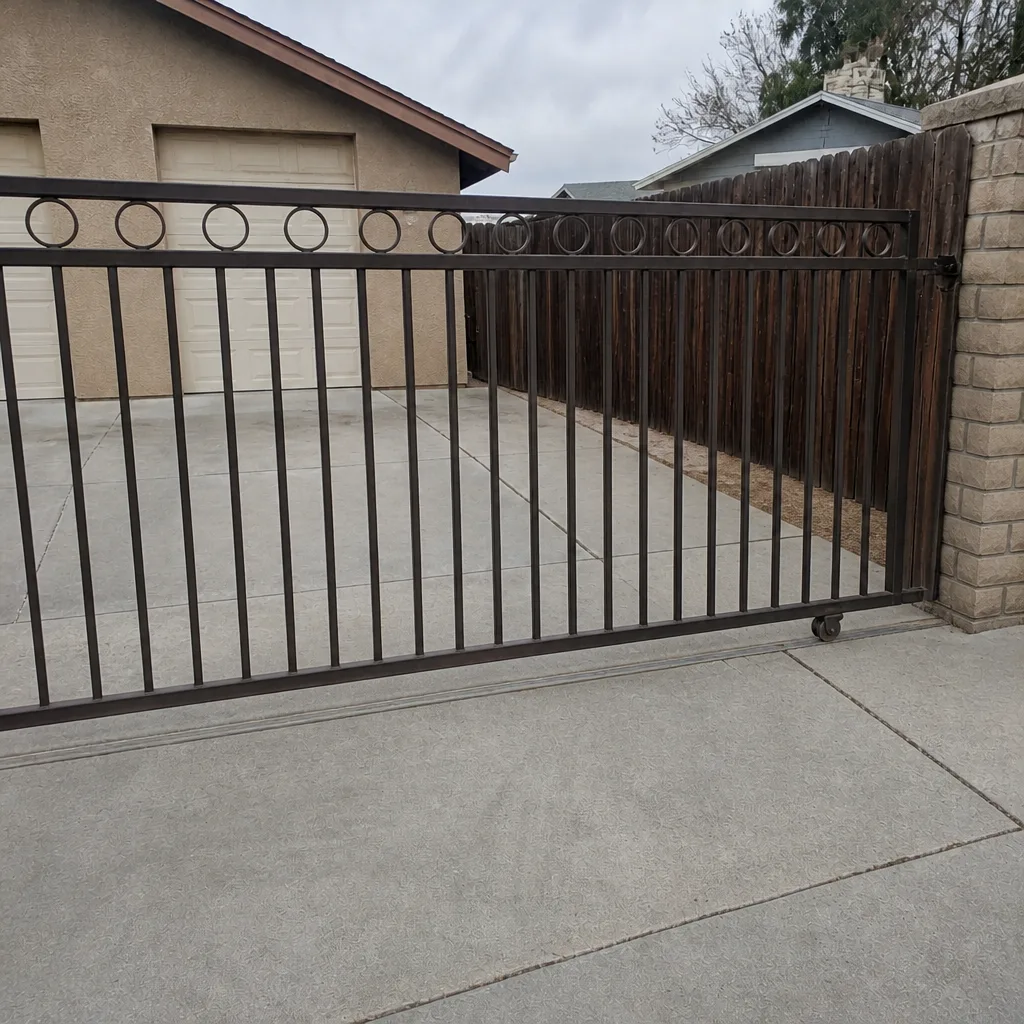
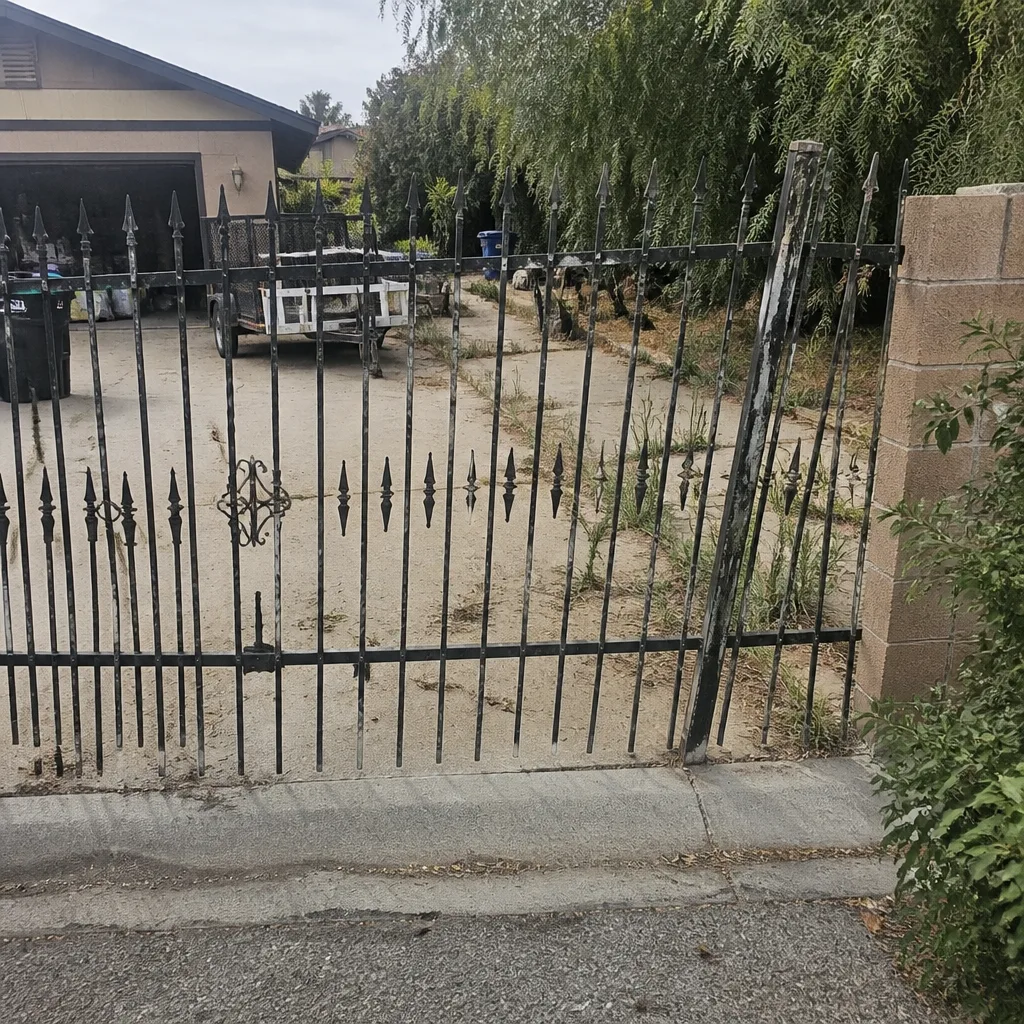
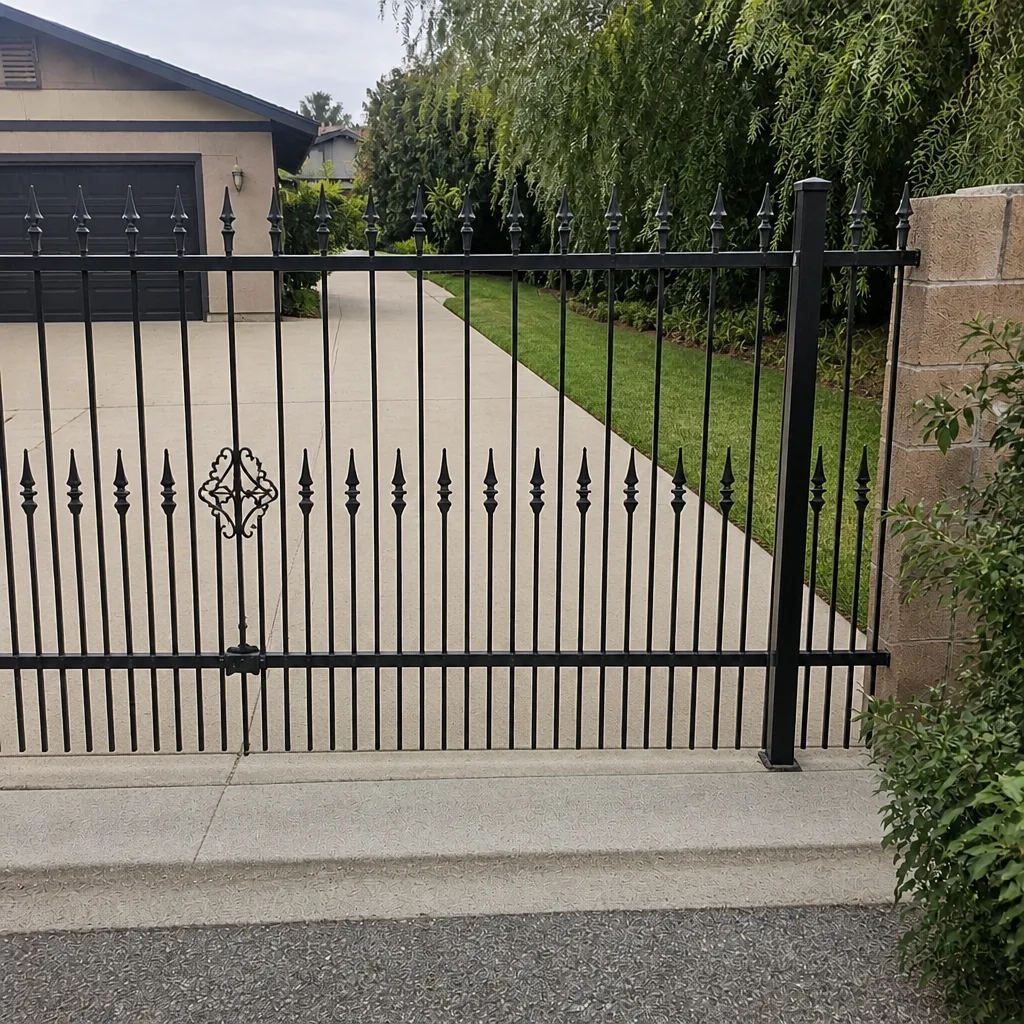
See the difference
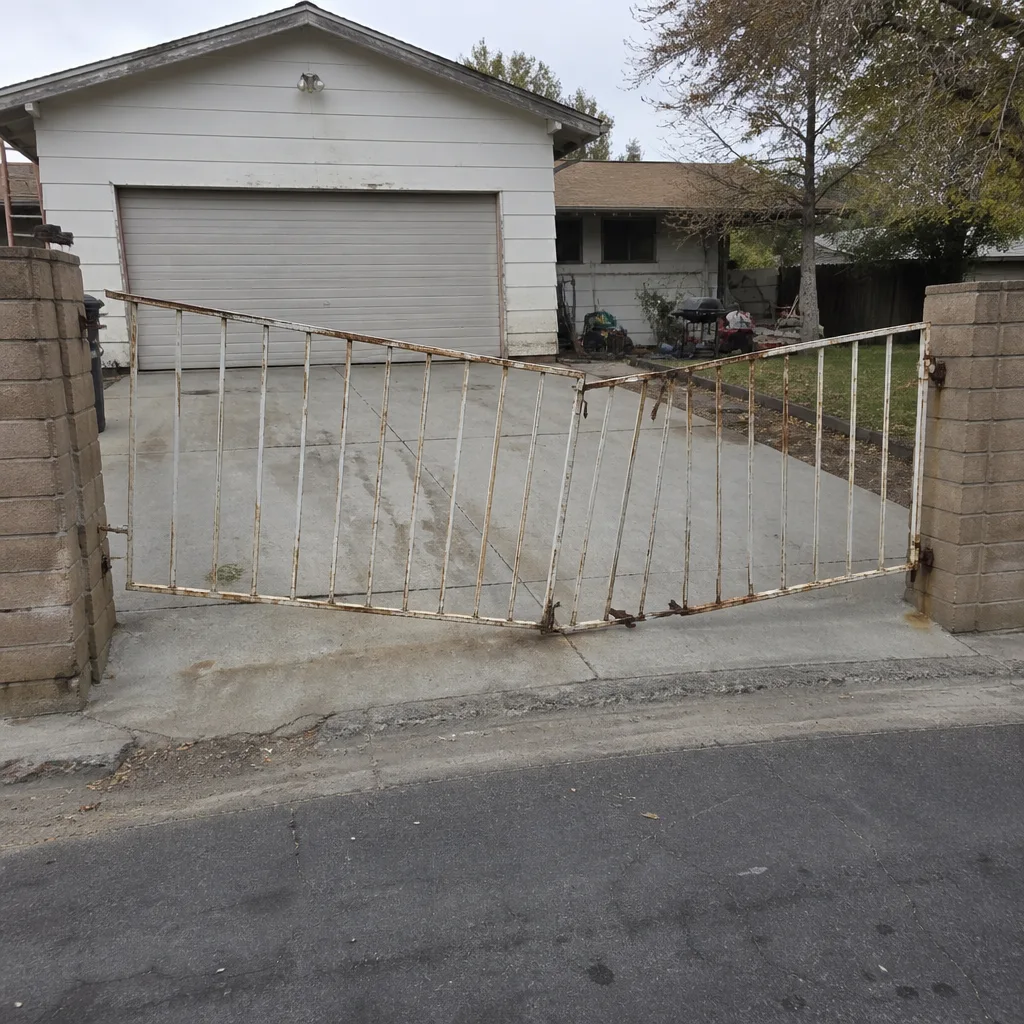 Before
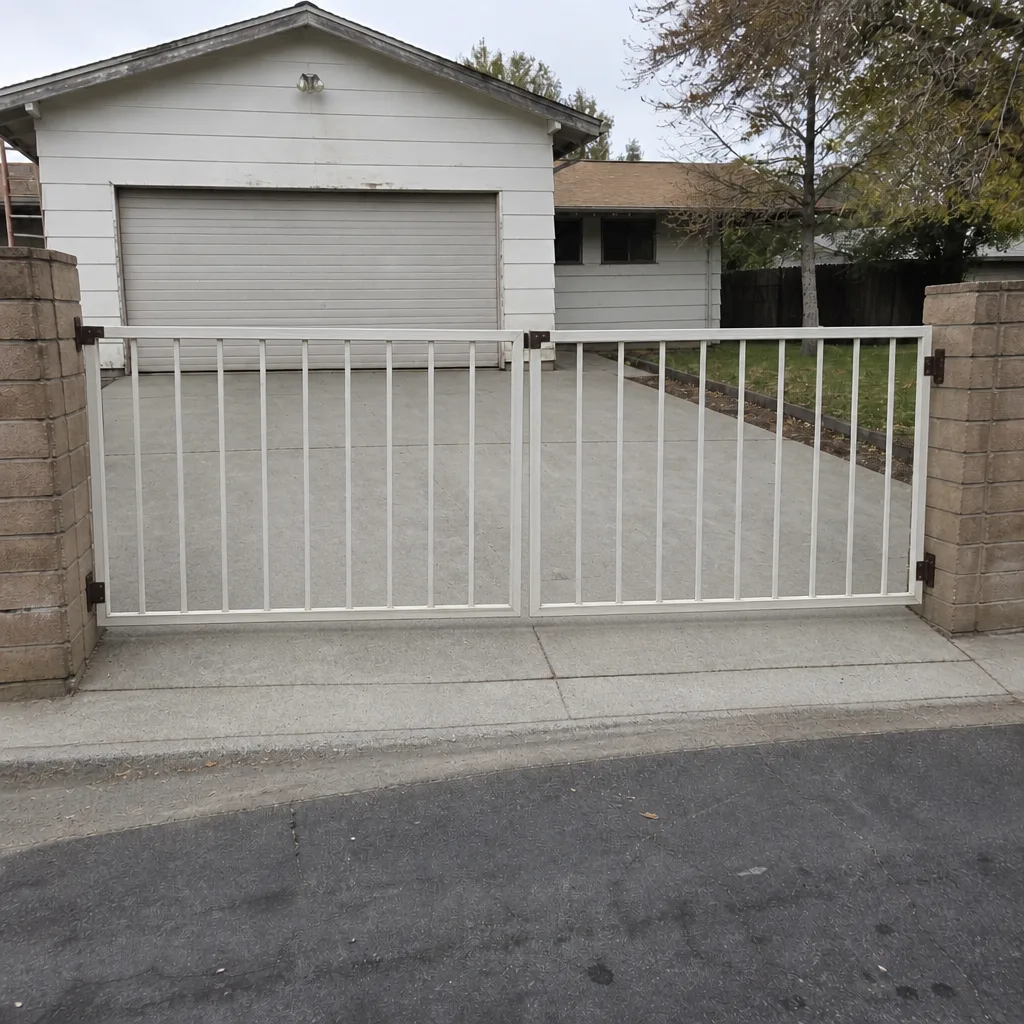 After
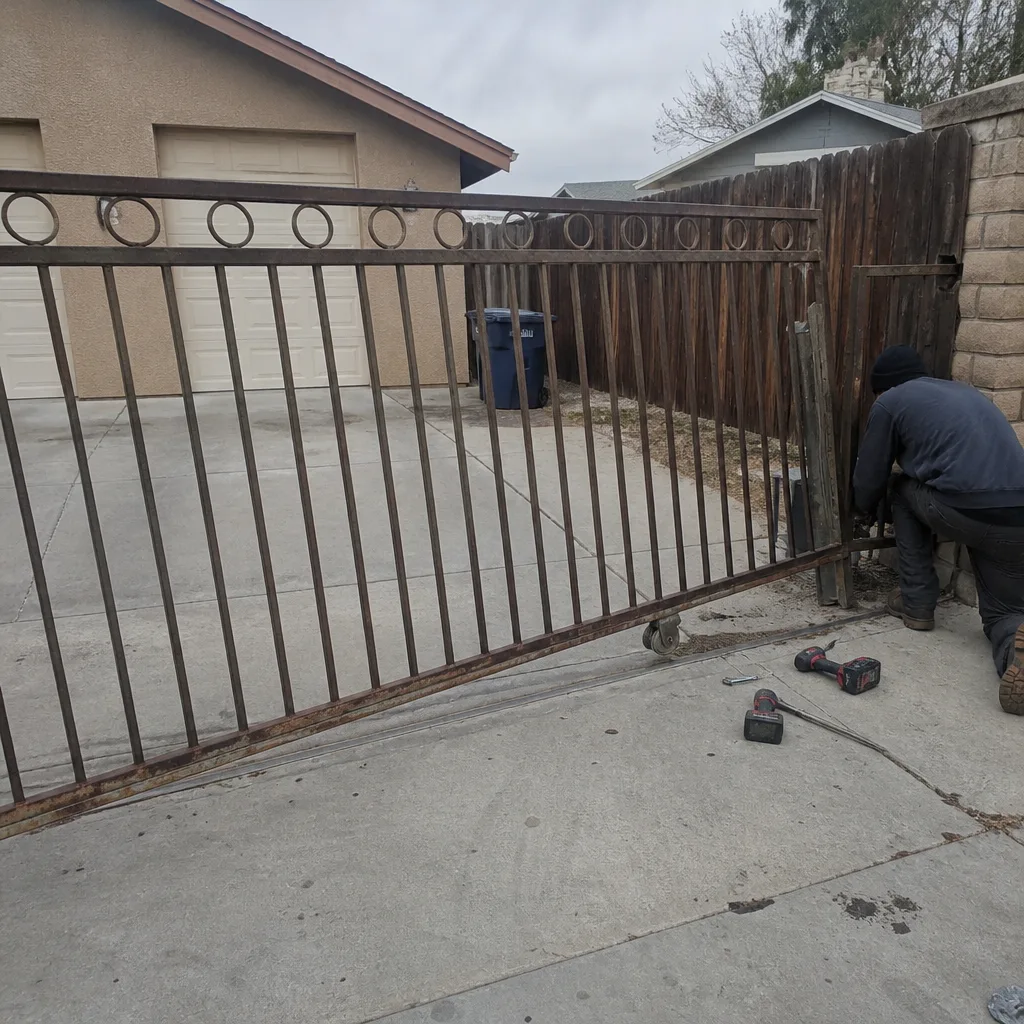 Before
 After
 Before
 After
When to Call a Professional
Most of the diagnosis above is homeowner territory. The repairs are not always. Call a professional when the post itself moves, when a weld has cracked, when an automatic operator stutters or reverses for no reason, when the safety edge or photo-eye fails its monthly test, when a gate has been struck by a vehicle, and when anything you’d need to do requires touching a torsion spring, chain, arm, or 120-volt circuit. Those are genuinely dangerous components, and a gate is not the place to learn. For everything else, the two-minute inspection will tell you whether you have a hobby project or a service call. Gatewood Fence & Gate Enterprise offers free estimates in Enterprise – call (833) 780-1547. A live person answers, day or night, and we’ll tell you honestly whether it’s a repair or a replacement. The 10% senior and veteran discount, the $40 off on repairs over $200, and the no trip charge inside the county all still apply, and the price is quoted and agreed before any work starts.
Frequently Asked Questions
Most gate repairs in Enterprise land between $150 and $600 depending on whether the fix is hardware, welding, or a post reset. Hinge and hardware replacements sit at the low end. Worn drive gear and limit adjustments on an automatic operator sit in the middle. Post resets and footer work run higher. The exact price depends on the diagnosis, and we give a written, itemized estimate before any work starts. Call (833) 780-1547 for an exact quote – estimates are free.
Yes, we keep room in the schedule for same-day gate repair calls in Enterprise, and a live person answers the phone around the clock. If we can’t get out the same day, we’ll tell you the real window when you call rather than a promise we can’t keep. Call (833) 780-1547 and we’ll get you on the schedule.
Push firmly on the post with both hands. If it moves at all, the post is the problem, and no hinge repair will fix it. If the post is rock solid, the issue is in the hinges, the frame, or the hardware. That single test answers it in under five seconds. If you’re unsure, call (833) 780-1547 and we’ll walk you through it.
An intermittent automatic gate is almost always a worn drive gear, a tired battery, a drifted limit, or a fault in the safety edge or photo-eye. Intermittent failures tend to become total failures at the worst moment, so it’s more urgent than a gate that doesn’t work at all. Call (833) 780-1547 and we’ll diagnose it properly instead of swapping parts.
Gatewood is certified to service nine major gate brands, including Viking, Ghost Controls, DoorKing, Elite, LiftMaster, FAAC, BFT, Linear and Mighty Mule. If your operator is on that list, we can work on it. Call (833) 780-1547 with the brand and model if you have it and we’ll confirm before we schedule.
Yes. Every job carries the 90-Day Done Right Promise in writing on the invoice – if it’s not done right, we make it right and you make one call. We also offer $40 off any repair over $200, no trip charge inside the county, a free second opinion on any written estimate, and a permanent 10% discount for seniors and veterans. Call (833) 780-1547 and we’ll put the whole thing in writing.
The Bottom Line
Nine out of ten gate problems tell you what’s wrong before the expensive part fails, and the diagnosis usually comes down to reading the symptom correctly. Dragging is a footing or roller issue. Sagging starts at the hinge post. Binding is hardware or frame. Bouncing on an automatic gate is operator territory. Fix the post before the panel, watch a “works sometimes” operator like it’s already failing, and don’t let a non-specialist sell you an operator when a drive gear was the whole problem. Do the two-minute press-and-swing check twice a year and most of this never happens. In Enterprise, we’re down the road, the name is on the shop, and the phone gets answered by a person any hour – call (833) 780-1547 for a free estimate whenever you’re ready.
Written by the team at Gatewood Fence & Gate Enterprise.