
Last updated November 18, 2026
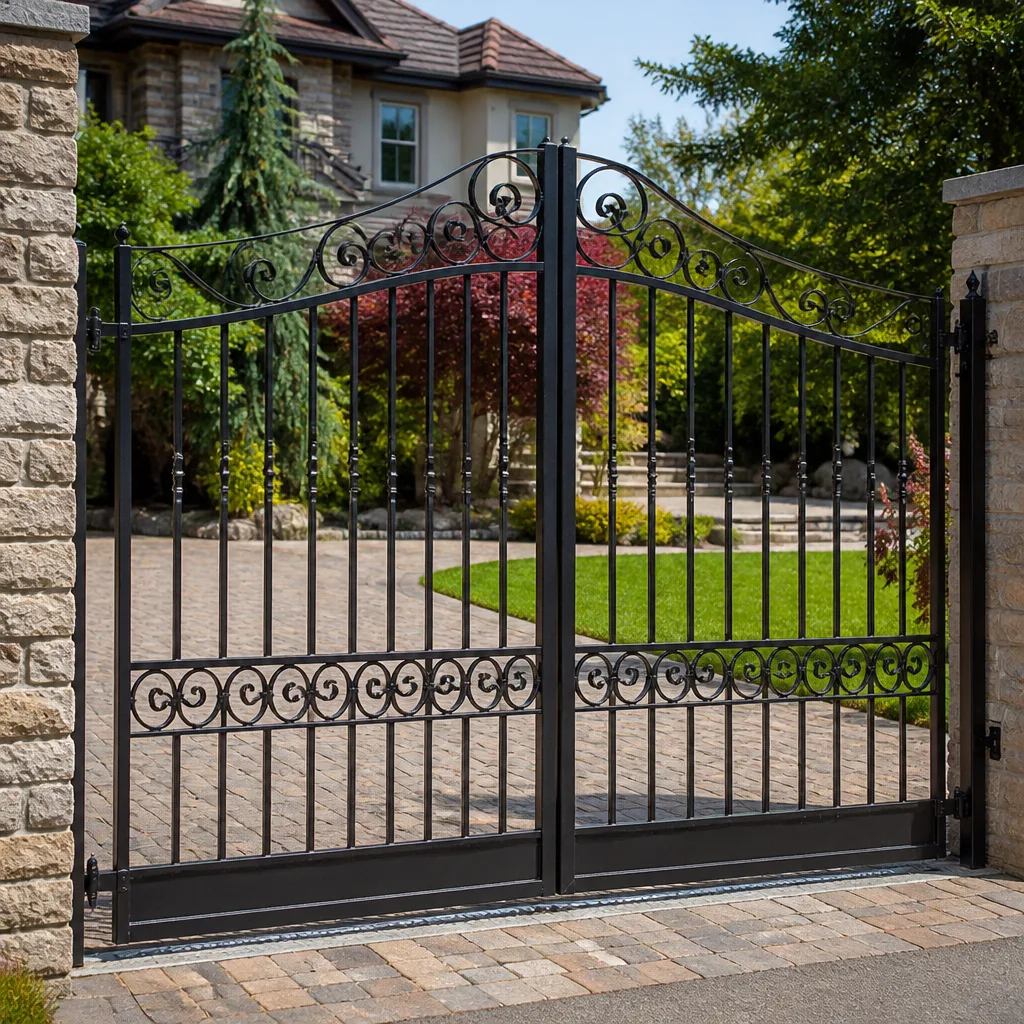 Wrought iron
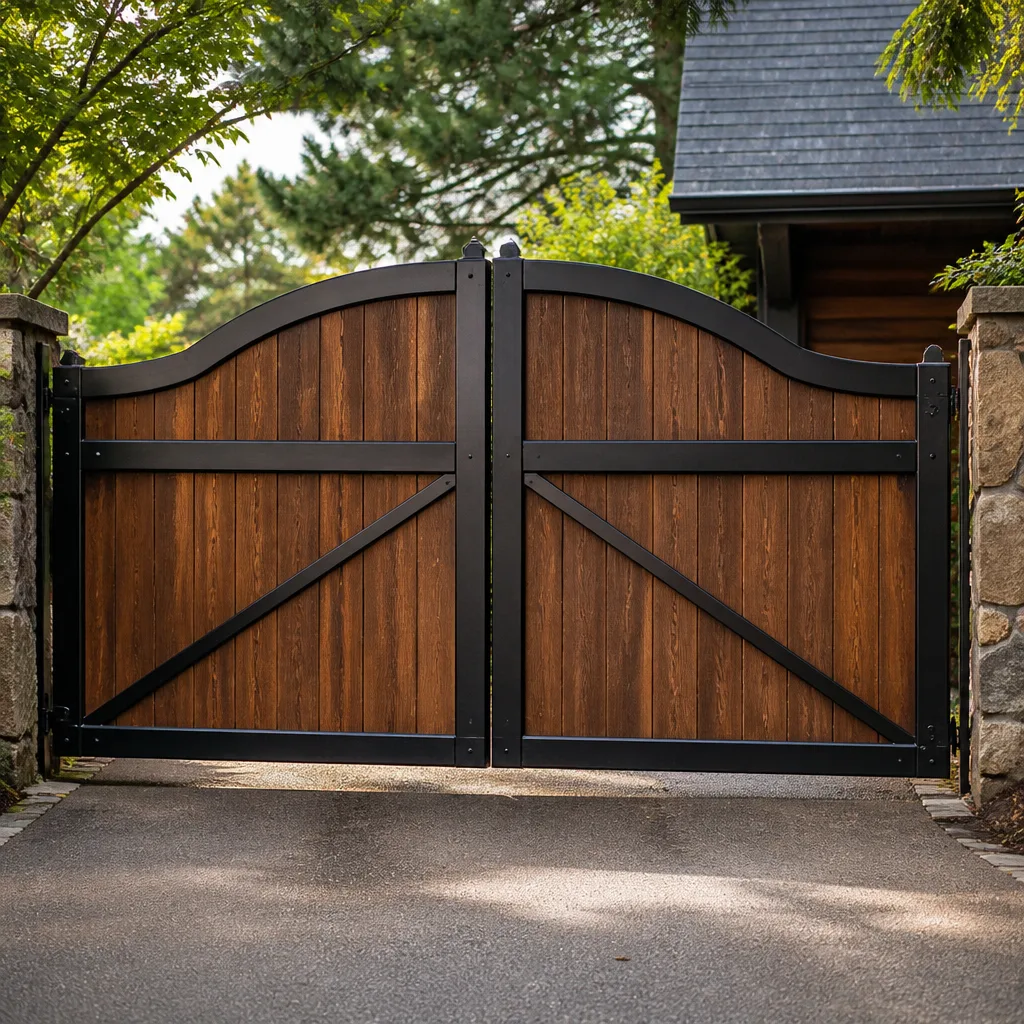 Wood & steel frame
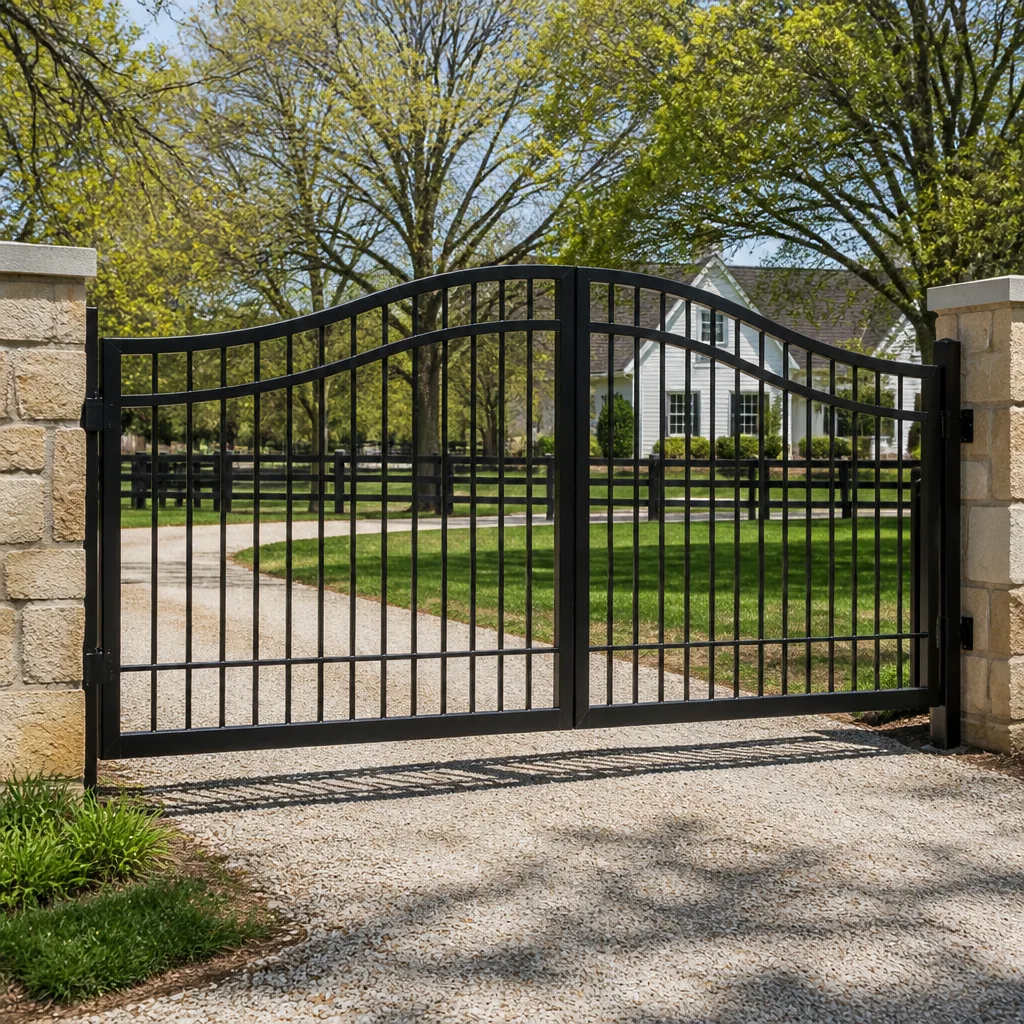 Farm & ranch
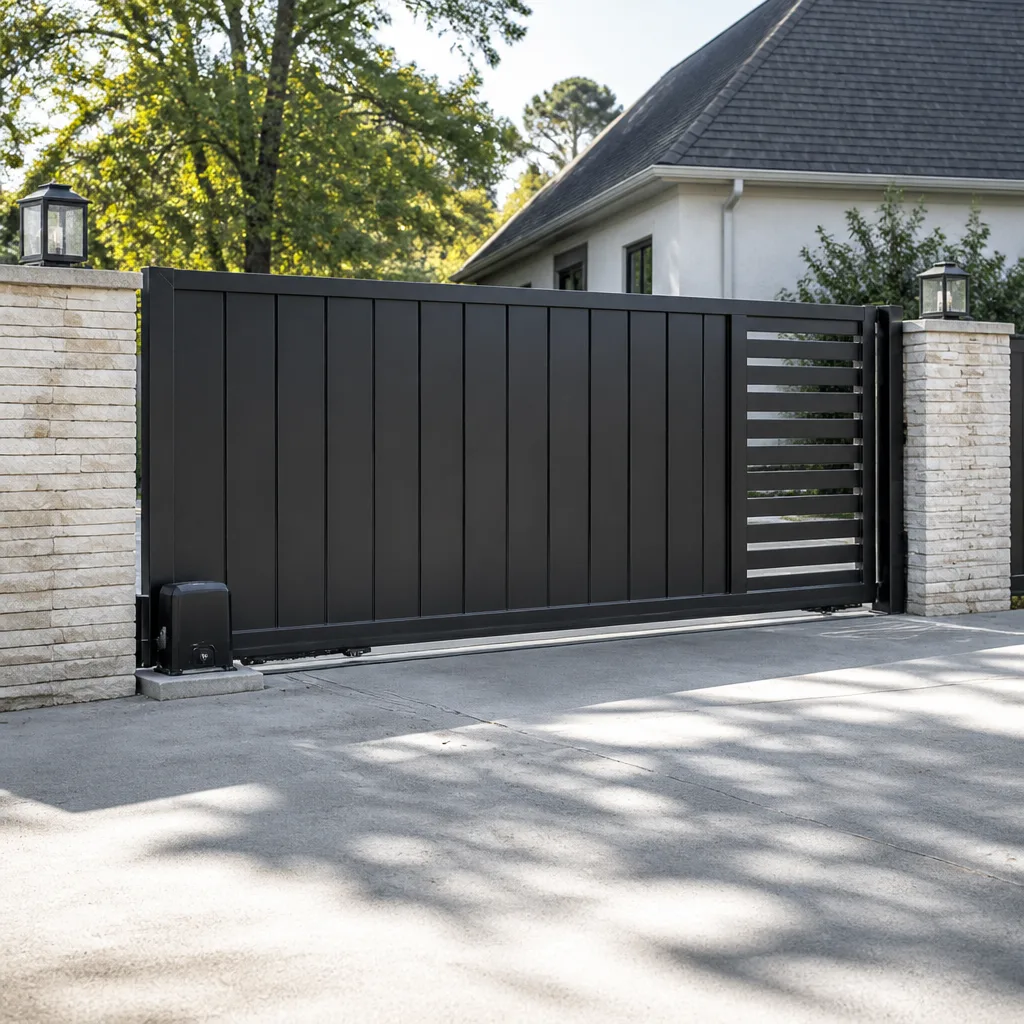 Sliding driveway gates
 LiftMaster operators
Free on-site gate assessment - hinges, posts, and your LiftMaster or Nice gate operator checked before anything is quoted
The assessment is free and the quote is the invoice.
Get your free estimateThe Complete Gate Motor & Opener Guide for Enterprise Homeowners
A gate motor that works fine in a California coastal climate can burn through a circuit board in two summers out here. The desert doesn’t care what the spec sheet says. We’ve watched brand-new openers rated for “residential use” fail inside eighteen months on driveways off Blue Diamond Road, and we’ve watched older units outlast their warranty because somebody matched the motor to the actual conditions. Enterprise sits in a peculiar pocket: hotter summer highs than most of Las Vegas proper, dust that finds every seam, and power that flickers more than the utility map suggests. This guide covers duty cycles, battery chemistry, arm versus slide openers, solar myths, and what your HOA will actually require before you buy.
Quick Answer
For most Enterprise residential driveways, a slide or swing operator rated for a continuous duty cycle, with a battery backup using lithium iron phosphate (LiFePO4) chemistry and a rated operating range that reaches at least 130°F, is the right starting point. Articulating arm openers handle dust better than slide-track units in most local installs, but they need more frequent lubrication in summer. Buy to your HOA specs and your actual daily cycle count, not to the sticker price.
Styles & brands we work with
- Wrought iron
- Wood & steel frame
- Farm & ranch
- Sliding driveway gates
- LiftMaster operators
Table of Contents
- What duty cycle rating does your Enterprise driveway actually need?
- How does Enterprise heat affect your opener’s circuit board and battery?
- Arm openers vs. slide openers in dusty desert conditions
- “Solar-ready” vs. solar that actually works in full Nevada sun
- What Enterprise HOA rules require from your gate operator
- Brand reality check: what we see in the field
- The maintenance calendar that actually extends motor life
- What a proper installation looks like
What duty cycle rating does your Enterprise driveway actually need?
Duty cycle is the percentage of any given hour your motor can run without overheating. A 50% duty cycle means the motor can run 30 minutes out of every 60. Most homeowners never read this number, then wonder why their opener quits in July.
Here’s how the thresholds actually map to real use:
- Light residential (under 10 cycles/day): Standard-duty openers from Mighty Mule and similar brands are usually fine. One car in, one car out, maybe a delivery.
- Moderate residential (10 – 25 cycles/day): You want a medium-duty or continuous-duty rating. This is the typical Enterprise household with two drivers, kids, and package deliveries.
- Heavy residential / small commercial (25+ cycles/day): Continuous-duty only. This is the territory of DoorKing and heavy LiftMaster slide operators.
Our technicians have up to 25 years of experience and the pattern is consistent: homeowners underestimate their cycle count. Count your actual openings for a week before you buy. Include every Amazon delivery, every school pickup, every trash day. In Enterprise, where driveways are long and gates are the only barrier between the road and the house, that number climbs fast.
Duty cycle also interacts with heat. A motor running at 80% of its rated load in 112°F ambient is working harder than the spec sheet assumed. If you’re anywhere near the moderate-use threshold, step up one class. The price difference is usually $200 – $400, and it buys you years.
How does Enterprise heat affect your opener’s circuit board and battery?
Control boards fail in the heat more often than motors do. The board sits inside a metal housing in direct sun, and interior temperatures can run 30 – 40°F above ambient. When the outside air is 112°F in late July, that housing is pushing 150°F. Electrolytic capacitors on cheaper boards are rated to 185°F, and they degrade fast at the top of that range.
Battery backup is where the heat really bites. Most gate openers ship with sealed lead-acid (SLA) batteries. Lead-acid hates sustained heat:
- Above 100°F, SLA battery life drops by roughly half for every 15°F increase.
- A battery rated for 5 years at 77°F might last 18 – 24 months in an Enterprise summer.
- When the SLA fails, the gate often just stops mid-travel during the next power blip, which is exactly when you need it to work.
Lithium iron phosphate (LiFePO4) batteries hold up far better in heat. They tolerate sustained 140°F storage, they don’t off-gas, and they last 3 – 4 times as long in this climate. If your current opener has an SLA pack and it’s over two years old, that’s the first thing to check. Swapping to LiFePO4 is often a $150 – $250 upgrade that prevents the most common failure call we get in August.
If you’re already seeing board or battery failures, our Gate Motor & Opener in Enterprise service page goes deeper on specific repair scenarios.
Arm openers vs. slide openers in dusty desert conditions
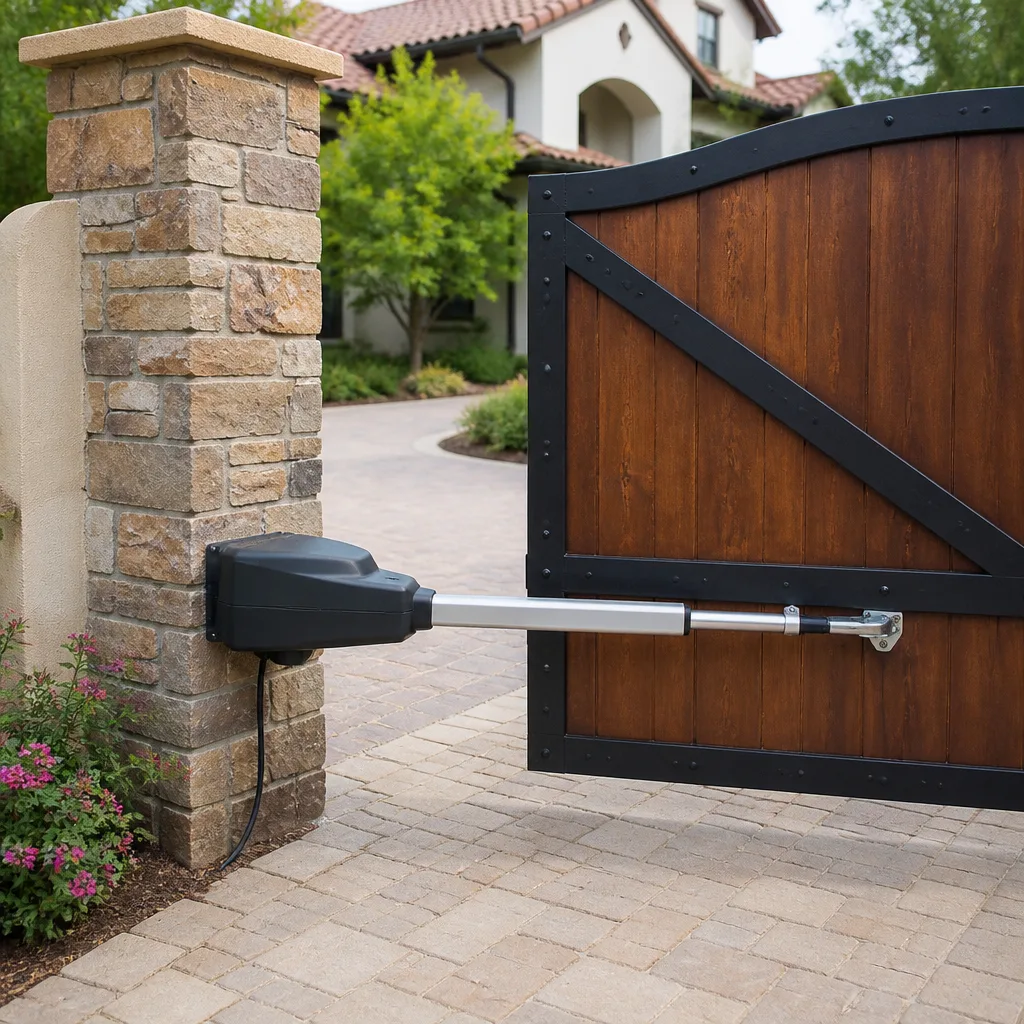
Slide and track openers have more moving parts exposed to grit. On a swing gate in Enterprise, wind-blown dust accumulates in every groove, and a slide rack that isn’t cleaned regularly will bind, strip gears, and eventually fail mid-cycle. Articulating arm openers avoid the long exposed rack entirely, which is why we lean that way for most residential installs out here.
Here’s the comparison as we actually see it:
- Articulating arm (swing gate): Fewer exposed wear surfaces, easier to service, better dust tolerance. Requires a solid hinge post and accurate swing geometry. Best for single and dual swing gates up to 12 feet.
- Slide gate operator: Great for wide openings and heavy gates but demands a level track, an exposed rack that needs monthly cleaning, and a concrete pad that won’t shift. Dust accelerates wear significantly.
- Swing gate with underground operator: Clean look, but the underground housing fills with fine sand in Enterprise, and repairs mean digging. We rarely recommend them here.
- Barrier arm (commercial): Not residential, but common at HOA entrances. Dust and heat stress the gearbox, and quarterly service is not optional.
If your gate sags in the hinge post, no opener will fix that, and that is where a proper install starts. Fix the panel without the post and you’ll fix it twice. If your gate is already misbehaving, Gate Repair in Enterprise covers the structural side before any motor gets bolted on.
“Solar-ready” vs. solar that actually works in full Nevada sun
“Solar-ready” on a spec sheet usually means there’s a plug for a panel. It doesn’t mean the system will run your gate through a cloudy week in January. Full Nevada sun is genuinely an advantage for solar gate systems, but only if the whole package is sized for it.
What we look at:
- Panel wattage vs. daily cycle count. A 10-watt panel is decoration. A residential gate doing 15 cycles a day in Enterprise wants 30 – 50 watts minimum to keep up.
- Battery bank sizing. You need enough reserve for 3 – 5 days of low sun. LiFePO4 chemistry handles the heat; SLA doesn’t.
- Charge controller quality. Cheap PWM controllers overcharge in full sun and cook batteries. An MPPT controller costs more and pays for itself.
- Panel mounting. Fixed south-facing at the correct tilt. We see plenty of panels zip-tied flat to a housing facing east, catching four hours of usable light instead of eight.
Ghost Controls makes several solar-friendly residential kits that hold up well in this climate when paired with the right panel and battery, and we’ve installed plenty. The one thing we won’t do is sell a solar package to a household doing 30+ cycles a day. That’s a grid-powered install, full stop.
What Enterprise HOA rules require from your gate operator
Enterprise has a lot of newer subdivisions with active HOAs, and most of them care about three things: operator safety, aesthetics, and access control compatibility. Before you buy, get the HOA spec in writing.
What we commonly see required:
- UL 325 compliance with photo-eye and edge sensor safety devices. This is non-negotiable nationally but HOAs enforce it explicitly.
- Quiet operation for shared-wall or close-set lots. Belt-drive and certain slide operators are noticeably quieter than chain-drive.
- Color-matched housing or fully hidden operators. Some CC&Rs prohibit visible arms.
- Access control integration for gated communities or shared driveways. DoorKing phone-entry systems are the most common in this area.
- State-required warning signage on both sides of the gate.
Matching the motor to the CC&R before purchase avoids the scenario where the opener is installed, working fine, and the HOA asks you to remove it. That’s a $1,500 mistake with no upside. If you’re in a gated community or shared driveway, our Gate Installation in Enterprise page covers the design side in detail.
Brand reality check: what we see in the field
The nine brands we’re certified to service are LiftMaster, FAAC, BFT, Linear, Viking, Ghost Controls, DoorKing, Elite, and Mighty Mule. Not every one is right for every driveway.
- LiftMaster: The most common residential brand in Enterprise. Reliable, widely supported, plenty of parts availability.
- Ghost Controls: Strong solar-friendly residential option, well-built for the price. Good for rural lots with long sunny driveways.
- Mighty Mule: Entry-level. Fine for a low-cycle gate, but the plastic gears and SLA batteries don’t love Enterprise summers long-term.
- DoorKing: Commercial and HOA-grade. The right answer when you need an access control system built to survive years of constant cycles.
- Elite: Solid slide operators, popular in larger residential installations.
The honest version: buy to your cycle count and your HOA, then pick a brand. Buying a premium brand to run a five-cycle-a-day gate is money wasted. Buying a bargain brand to run a twenty-cycle gate is a call in August.
The maintenance calendar that actually extends motor life
Enterprise gates need more attention than the manual suggests. If you do nothing else, do these four things on a schedule:
- Monthly (year-round): Blow dust out of the operator housing with compressed air. Clear the track if you have a slide gate. Wipe down the photo-eye lenses; dust film is the top cause of “stuck open” complaints.
- Quarterly: Lubricate the arm pivot points or slide rack with a dry silicone spray, never grease. Grease traps dust and turns into grinding paste in this climate.
- Twice a year (spring and fall): Test the safety reverse and edge sensors. Check the battery voltage on your backup; if it’s below rated capacity, replace it before summer, not after.
- Annually: Full professional service on the operator. Inspect the circuit board for heat damage, check terminal connections, verify duty cycle and current draw.
One more thing nobody talks about: check your hinge posts. A gate closing hard on a shifted post is the second-most-common cause of motor failure we see. The opener tries to compensate for a sag it can’t fix, and the motor eventually pays for it.
What a proper installation looks like
A gate opener installed well is a quiet opener for a decade. Installed poorly, it’s a constant headache with a 90-day warranty. Here’s what we check before a single bolt goes in:
- Post integrity. Concrete, depth, plumb. If the post is shifting, we fix it before we mount anything.
- Gate balance. A properly balanced swing gate should stay where you leave it. If it swings on its own, the hinges or post need work first.
- Power run. Whether to the closest source or to a subpanel. We quote the whole job, not just the motor.
- Safety devices. Photo-eyes, edge sensors, warning signs, 2-wire or wireless as the layout demands.
- Access control if needed. Keypads, phone entry, remotes.
Installations are measured, ordered, and scheduled, not dispatched same-day. The price is quoted and agreed before any work starts, and the 90-Day Done Right Promise is stamped in writing on the job.
Common Mistakes to Avoid
- Buying on price alone. The $250 opener that dies in two summers is the $800 mistake. Buy to your cycle count, not the sticker on the box.
- Ignoring the battery until it fails. In Enterprise heat, an SLA battery is a two-year consumable. Replace on schedule, not when the gate strands you.
- Skipping the post work. Installing a new motor on a sagging post is like rebuilding an engine on a bent frame. It will work for a while and then it won’t.
- Assuming “solar-ready” means solar-works. It means the plug exists. The whole system has to be sized.
- Choosing the motor before the HOA says what’s allowed. Get the spec in writing before you buy anything.
- Greasing the track or arm. Dry silicone only. Grease plus desert dust equals premature wear on every cycle.
- Never cleaning the photo-eyes. A $0.10 worth of cleaning saves the “gate won’t close” call. It’s that simple.
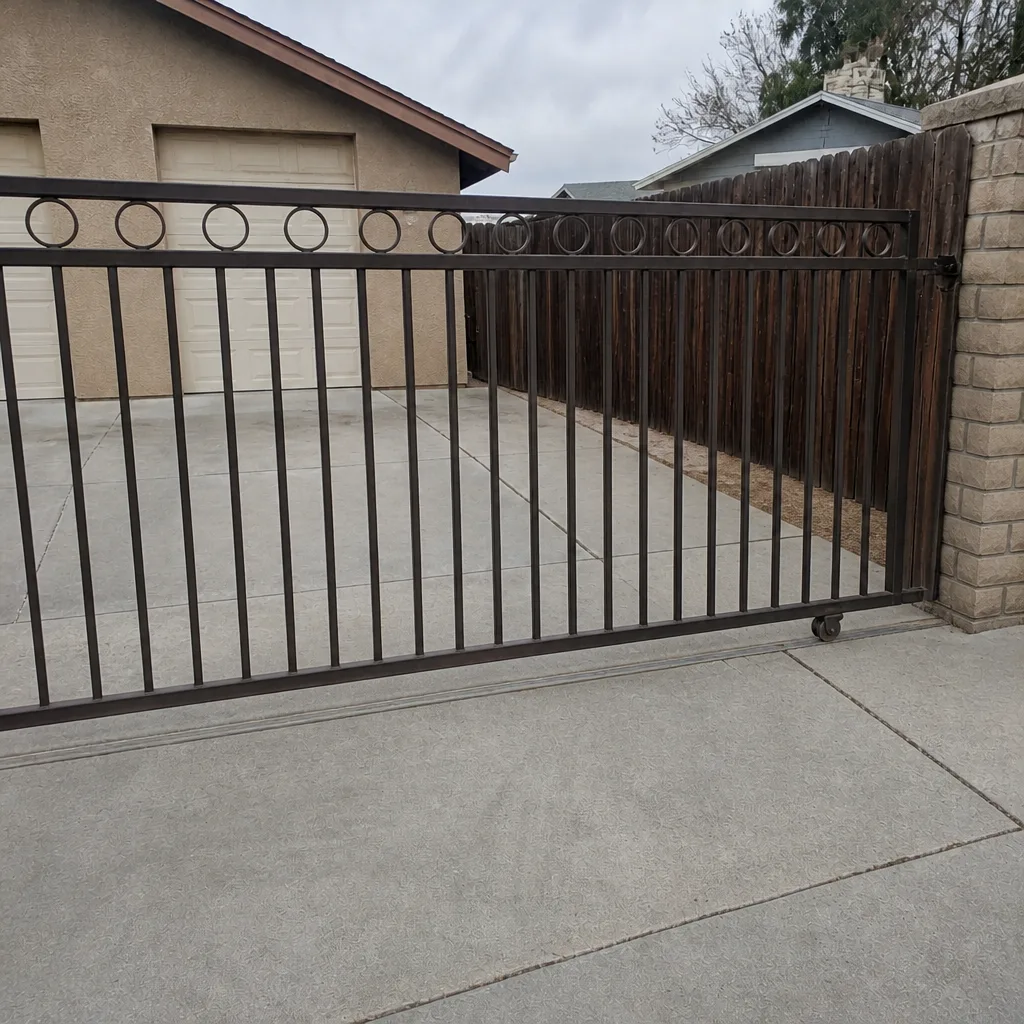
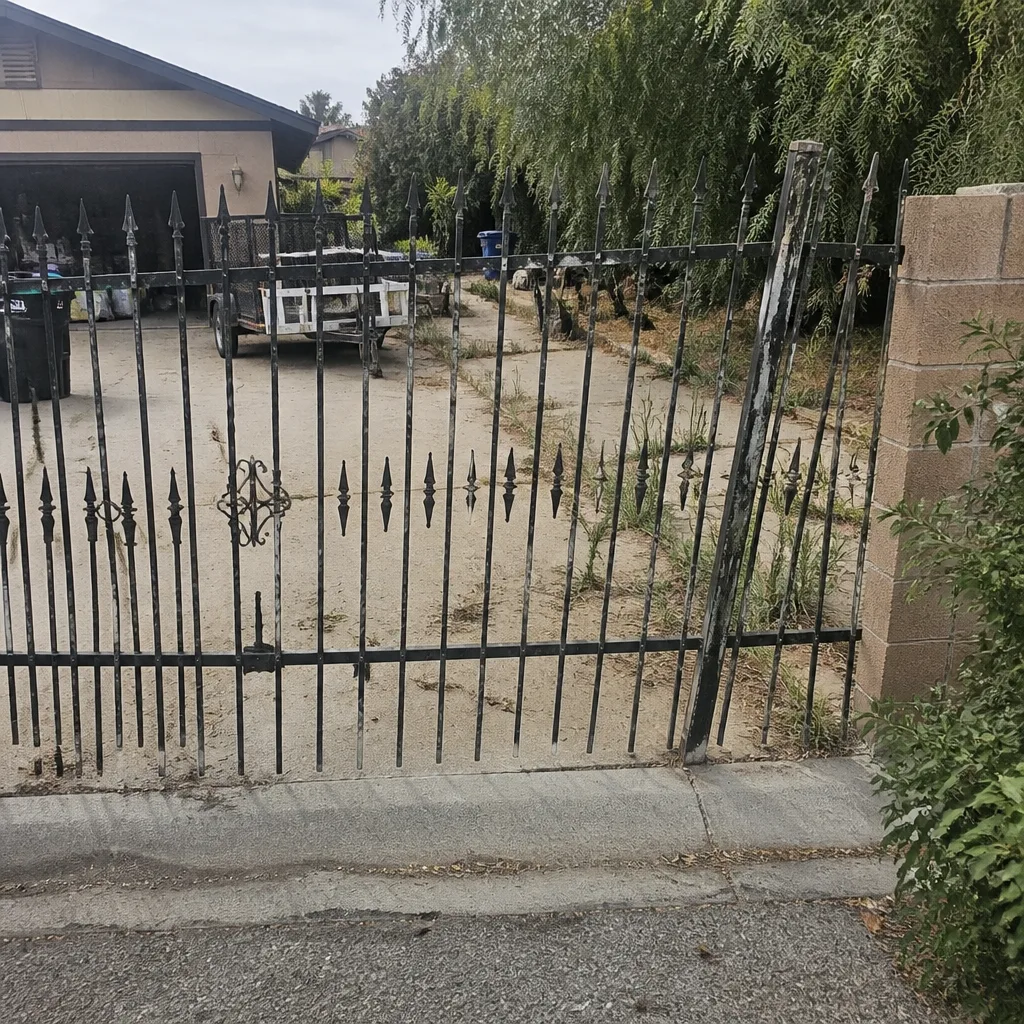
See the difference
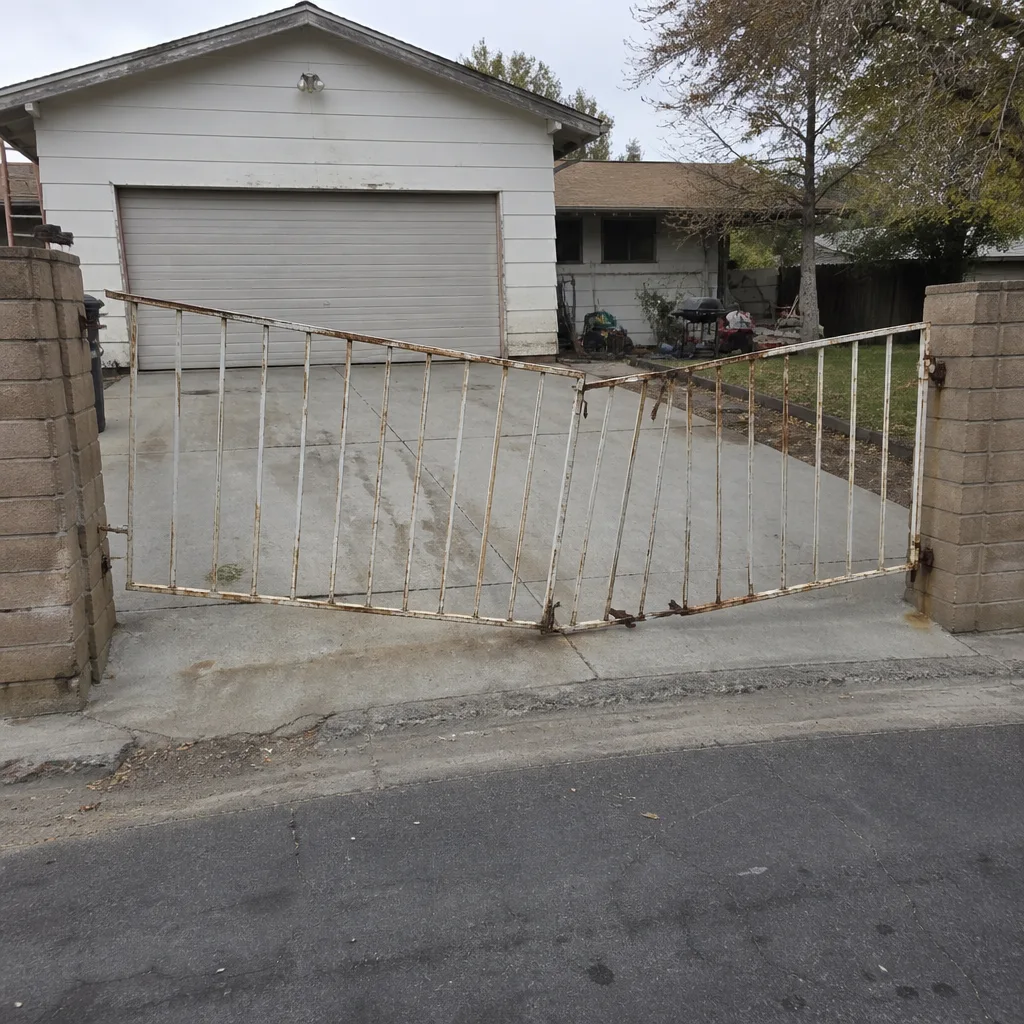 Before
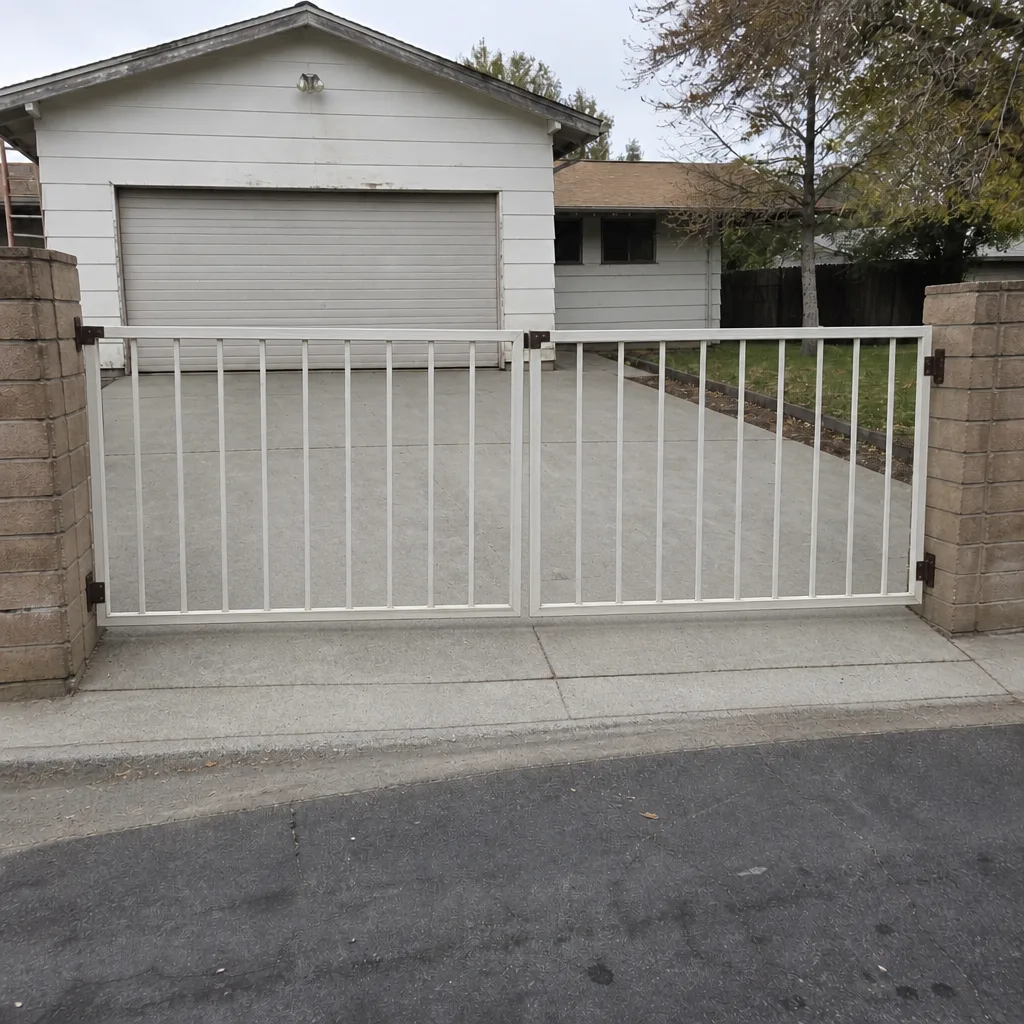 After
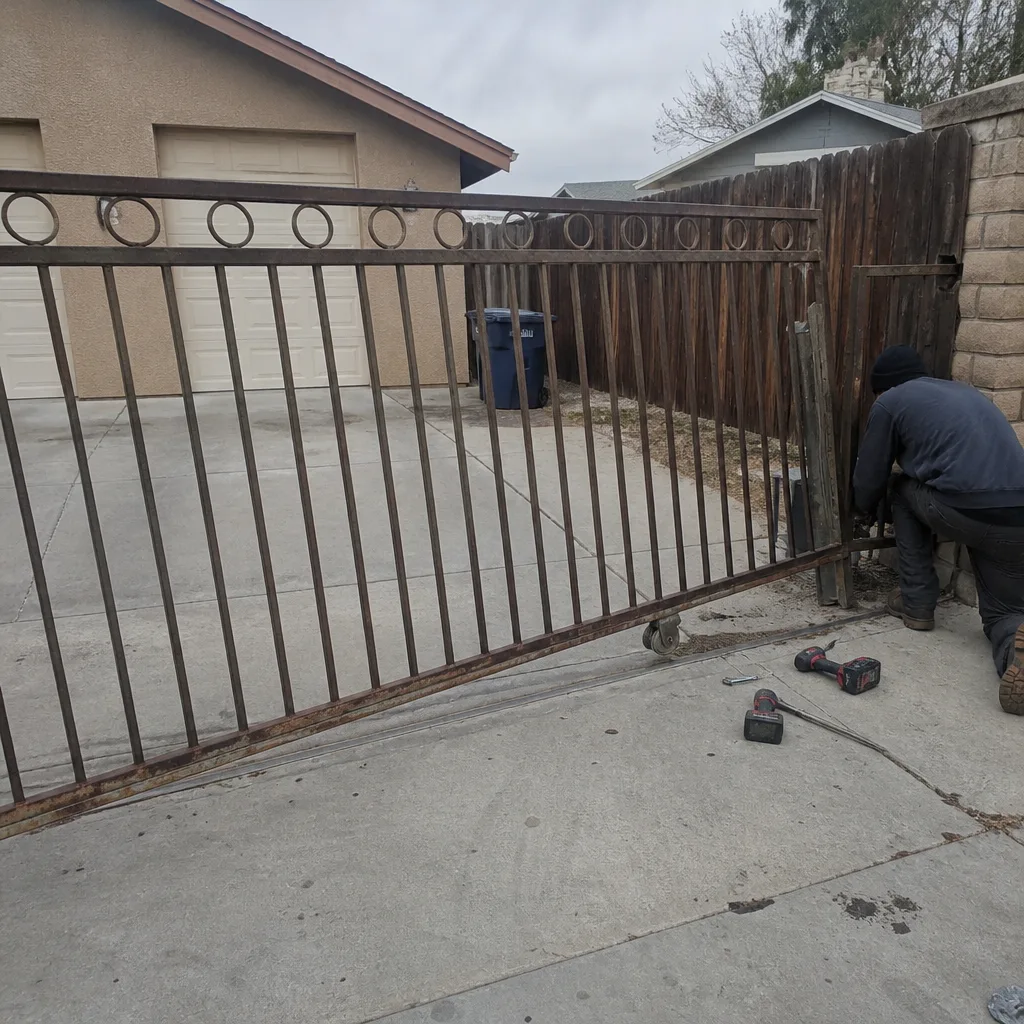 Before
 After
 Before
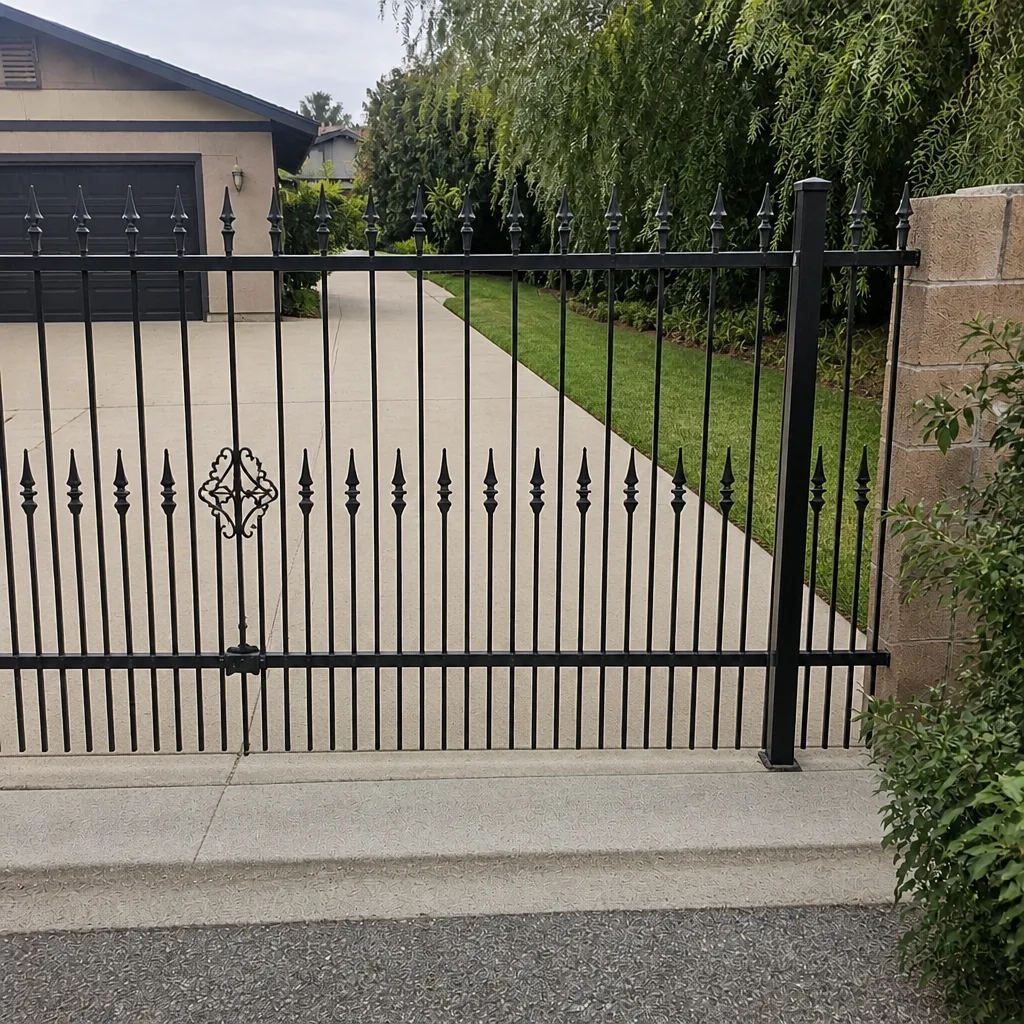 After
When to Call a Professional
Call us when the gate hasn’t moved in a day and you suspect the board, when the motor hums but doesn’t move the gate, when the gate closes on its own without being commanded to, when a photo-eye fails in a way you can’t isolate, or when the battery backup won’t hold a charge through a single outage. These are all routine for us and dangerous to chase on your own. High-voltage wiring at the operator, spring-loaded hinges, and heavy gate geometry are a bad combination for DIY diagnosis. Gatewood Fence & Gate Enterprise offers free estimates in Enterprise and a free second opinion on any written estimate you already have. Call (833) 780-1547. A live person answers, day or night.
Frequently Asked Questions
Residential gate operator installations in Enterprise typically run $1,400 – $3,800 installed, depending on gate type, cycle rating, HOA requirements, and whether a power run or access control is included. Solar packages usually land in the $2,200 – $4,500 range. Every price is quoted and agreed before any work starts, so the invoice matches the estimate. Call (833) 780-1547 for an exact quote – estimates are free.
Often yes. Gate repair is a same-day service for us in Enterprise whenever the schedule allows, and emergency calls are answered live 24 hours a day. Call (833) 780-1547 and we’ll tell you a real window, not a guess.
Two drivers plus deliveries usually falls into the 10 – 25 cycles/day range, which means medium-duty or continuous-duty is the right class. Standard-duty openers wear fast at that cycle count in this heat. Count your openings for one week, then double it as a safety margin.
Yes, if the whole package is sized correctly. That means a 30-watt-plus panel, an MPPT charge controller, and a LiFePO4 battery. SLA batteries fail fast in this heat, which is why we don’t install solar systems without the lithium pack.
A full installation includes post integrity check, gate balance assessment, operator mounting, safety devices (photo-eye and edge sensors), warning signage, power connection, and full commissioning with a walkthrough for the homeowner. Access control additions are quoted separately and can be included. Every install is quoted in writing first.
Yes, both. We run power to the operator and install the safety devices required by code and HOA. A gate operator without working photo-eyes isn’t code-compliant and isn’t safe, so we don’t consider the job done without them.
The Bottom Line
Enterprise is not Phoenix and it is not Las Vegas proper. The heat, the dust, and the power reliability in this pocket narrow down your choices more than any generic buyer’s guide will admit. Buy to your cycle count, choose lithium iron phosphate for battery backup, favor articulating arm operators for swing gates in dusty conditions, size solar packages carefully, and get your HOA spec in writing before you spend a dollar. Do those five things and you’ll get a decade out of your operator instead of three years. If you’d rather not sort through it alone, our Gatewood Fence & Gate Enterprise home page is a good starting point, or just call and talk it through. Free estimates, upfront pricing, and the 90-Day Done Right Promise in writing on every job.
Written by the team at Gatewood Fence & Gate Enterprise.