
Last updated November 18, 2026
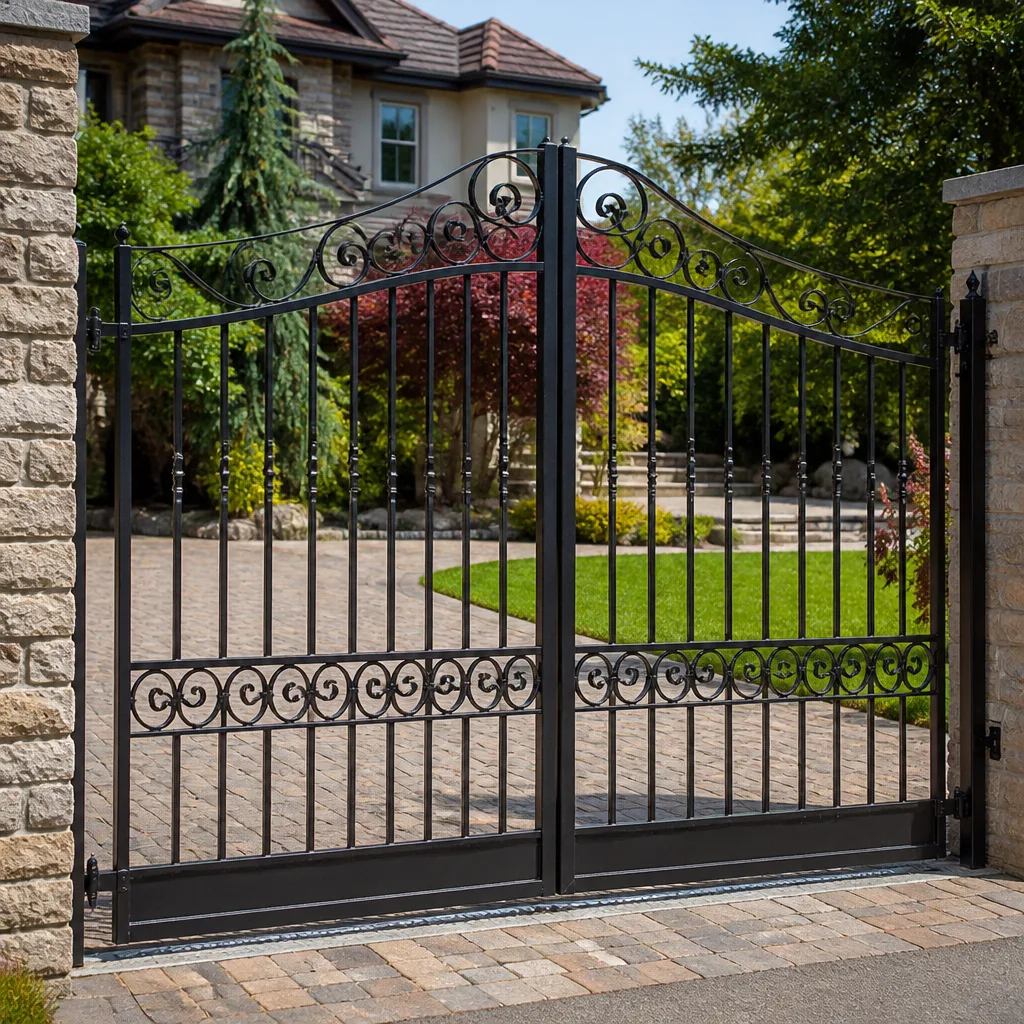 Wrought iron
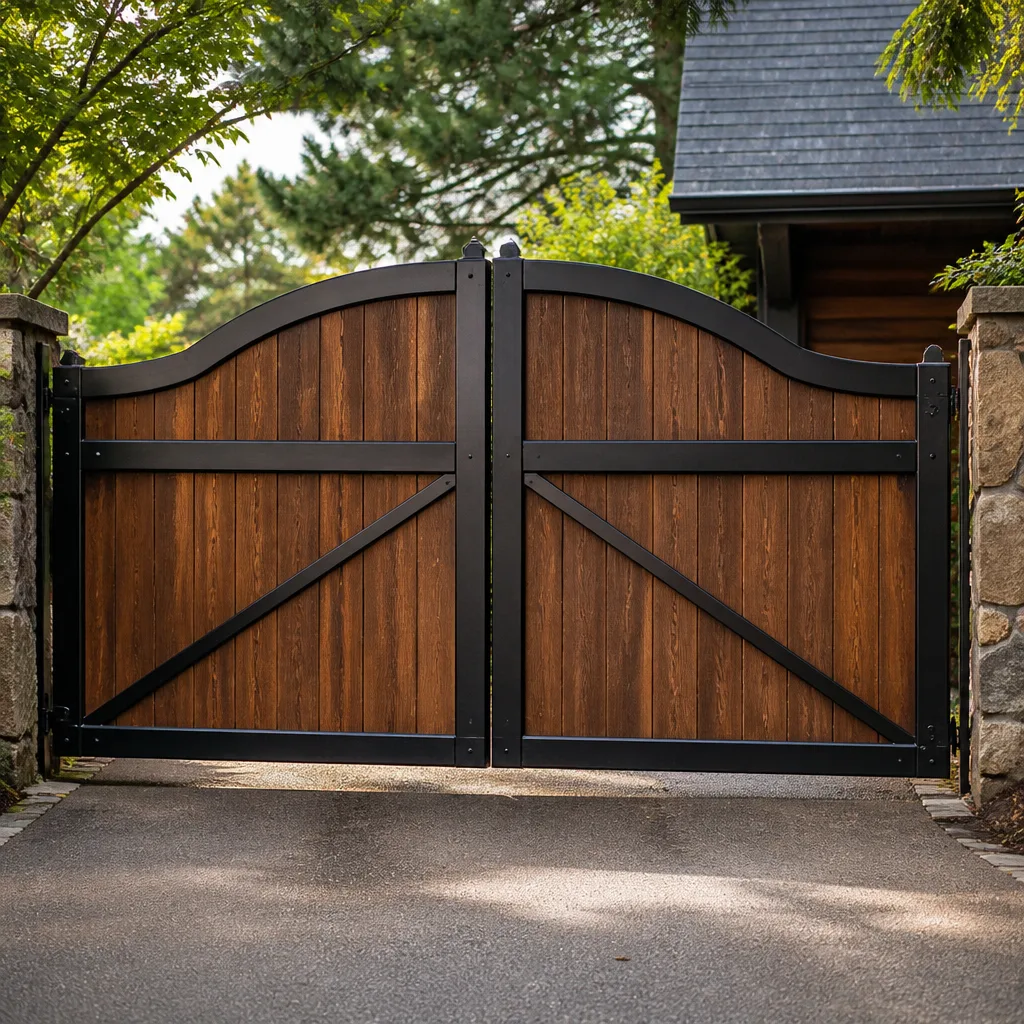 Wood & steel frame
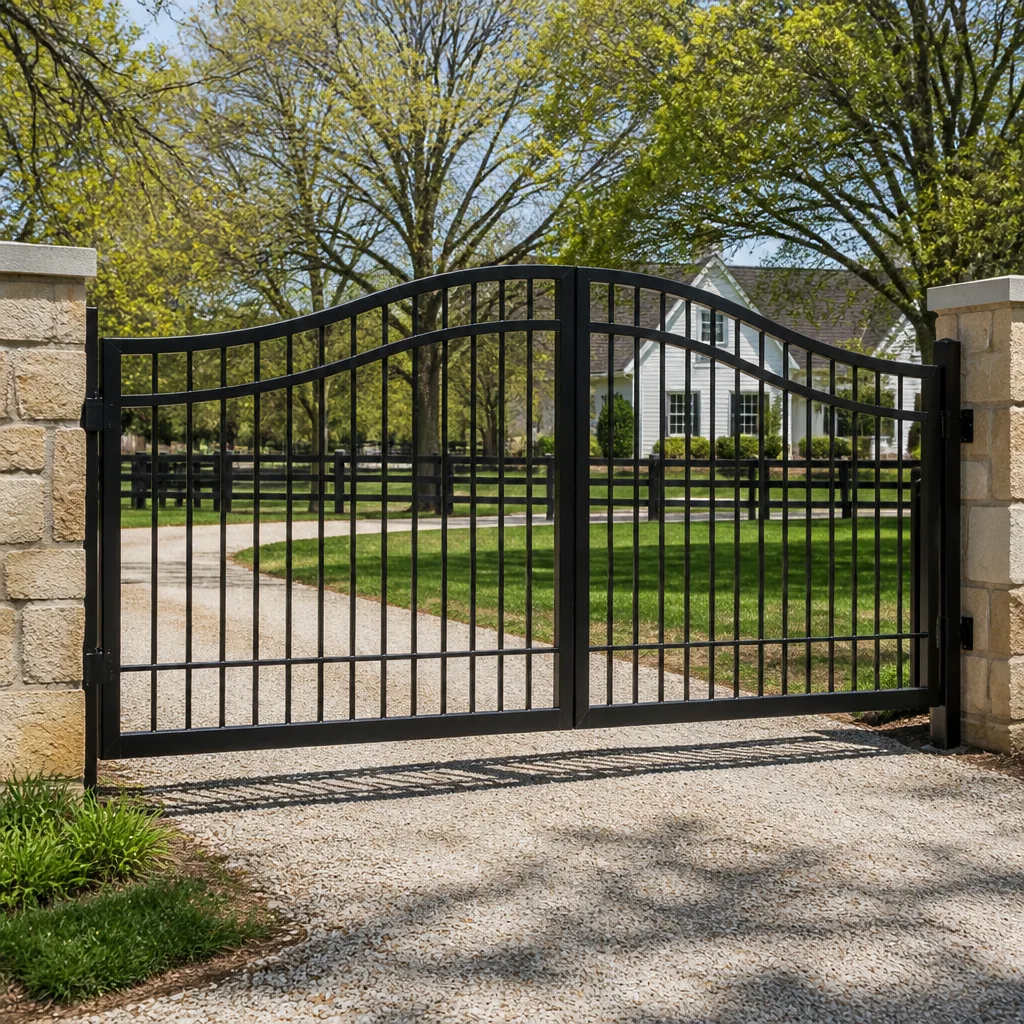 Farm & ranch
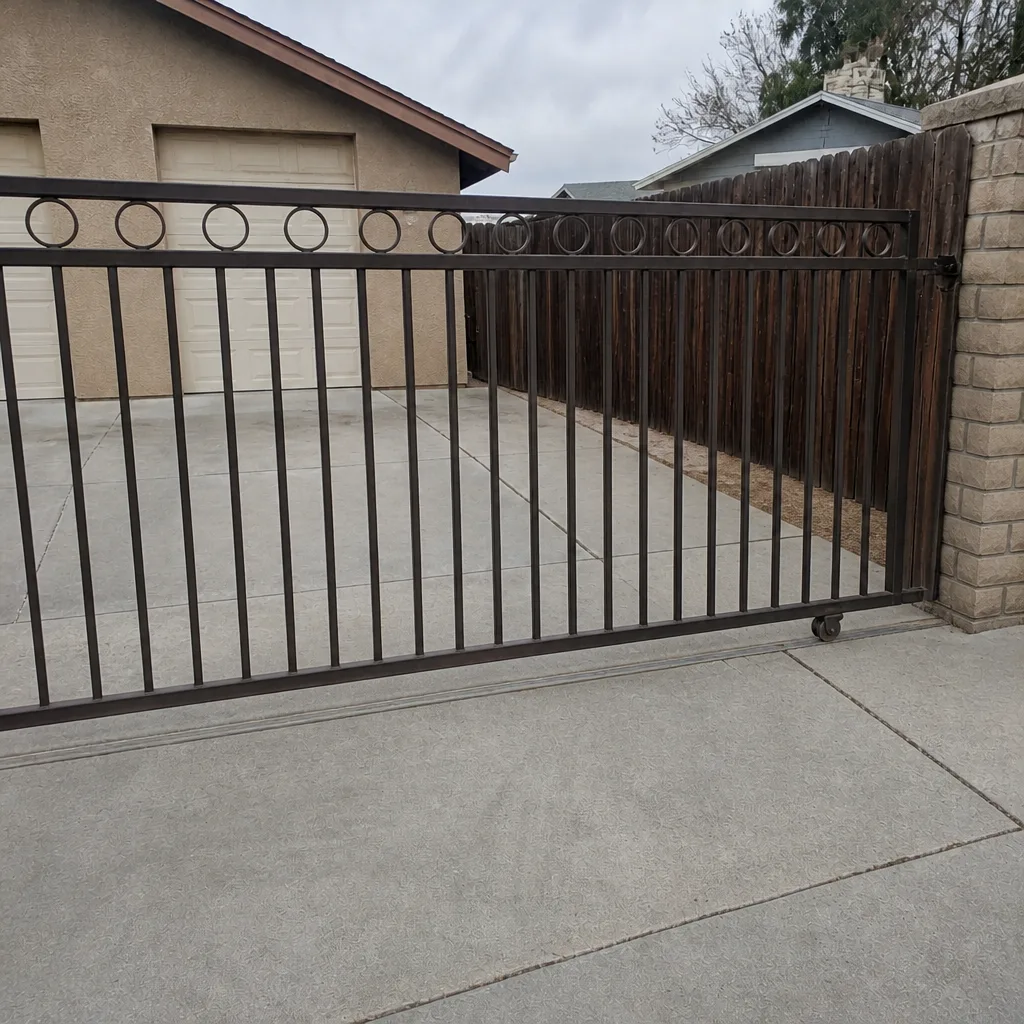
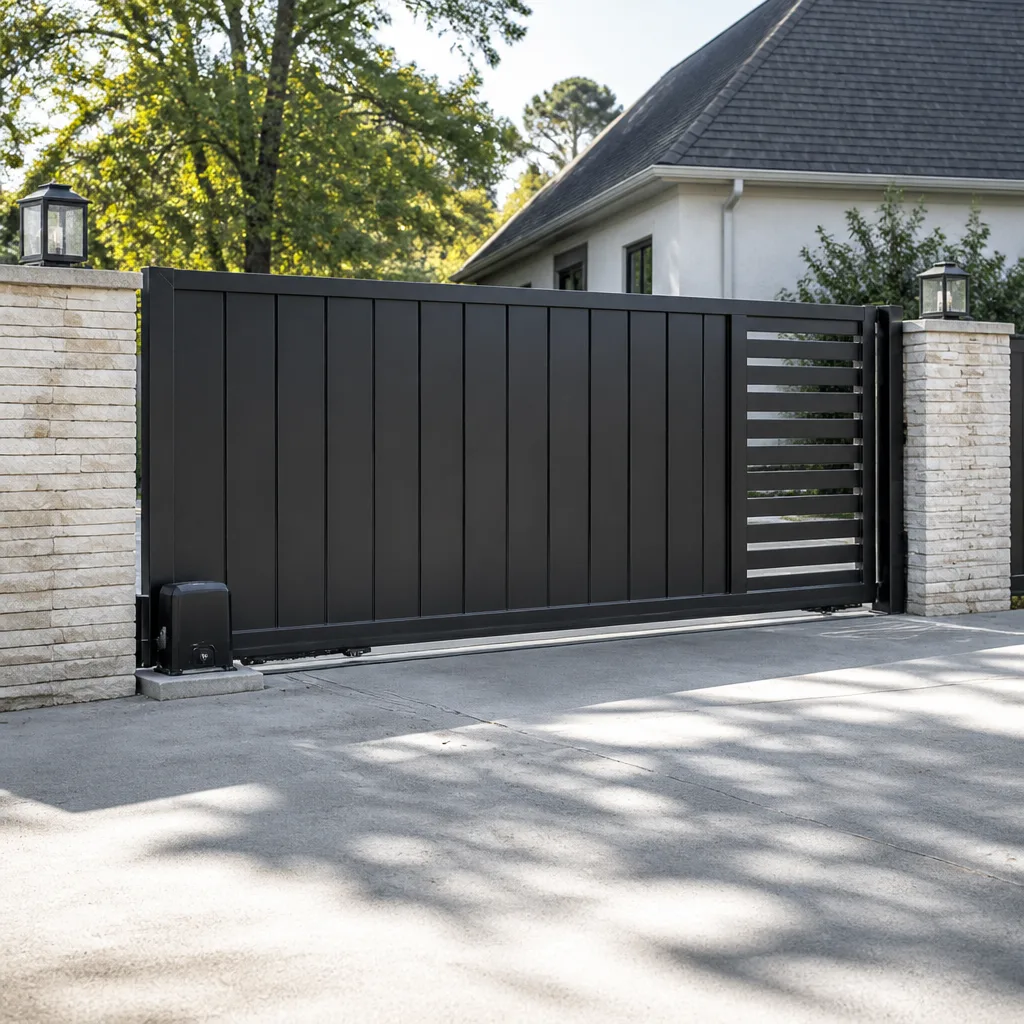 Sliding driveway gates
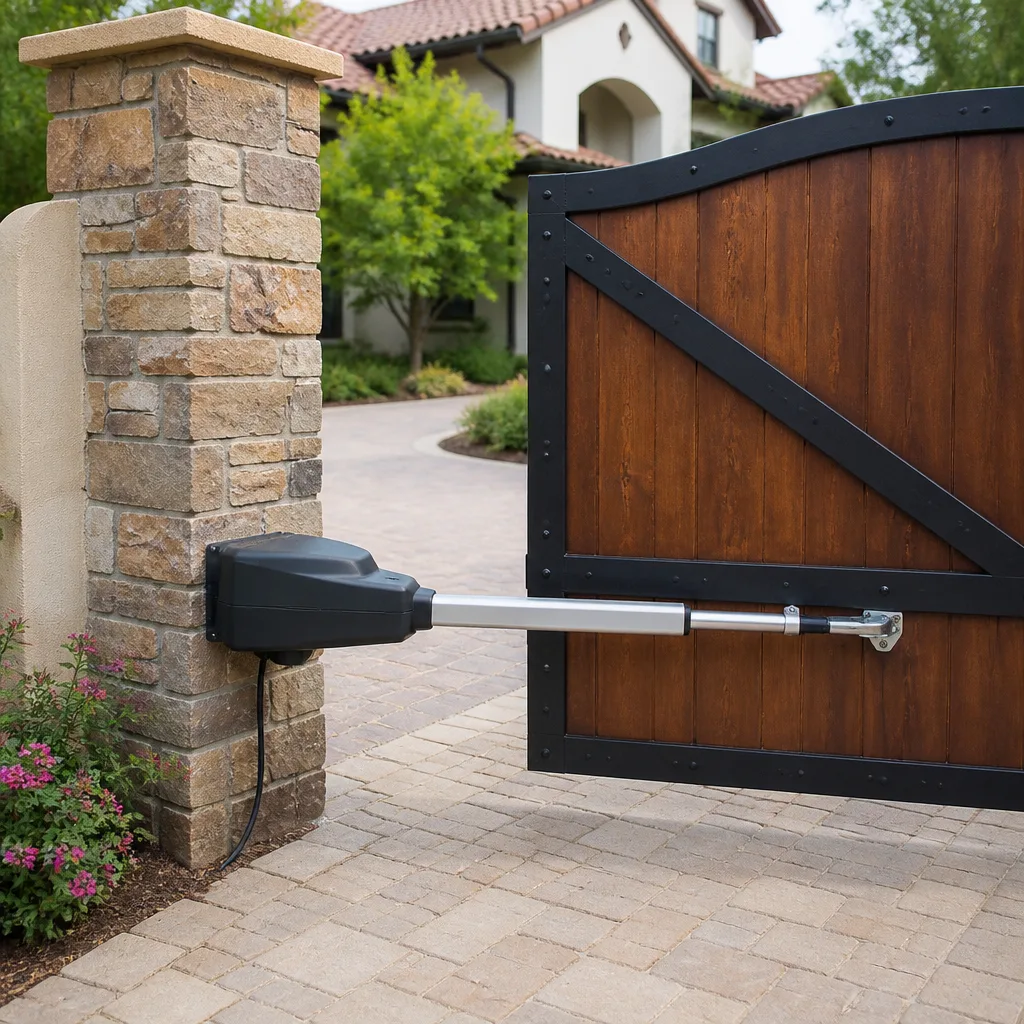 LiftMaster operators
Free on-site gate assessment - hinges, posts, and your LiftMaster or Nice gate operator checked before anything is quoted
The assessment is free and the quote is the invoice.
Get your free estimateThe Complete Guide to Gate Repair in Enterprise
Hal has pulled up to driveways where the homeowner had already paid two other guys, and the gate still dragged, still hung crooked, still wouldn’t latch. The gate wasn’t the problem. Nobody had bothered to find out what actually broke before quoting a price. That’s the pattern we see over and over in Enterprise: a symptom gets treated, the real failure keeps spreading, and a few months later the same gate is back on the fritz. This guide walks you through the three root causes behind nearly every gate failure in Enterprise – bad installation, deferred maintenance, and mismatched hardware – so you know what you’re dealing with before you pick up the phone. You’ll learn how to read your gate, why the local ground and wind matter, and which repairs actually last.
Quick Answer
Most gate failures in Enterprise come down to one of three things: a bad original install, maintenance that got put off until something snapped, or hardware that was never matched to the gate’s weight and swing. The fix that lasts is the one that starts by diagnosing the root cause – a cracked hinge weld, a shifted post, a stripped operator gear – not the one that just silences the symptom. A real repair gets done on-site, is priced upfront before any work starts, and is backed in writing.
Styles & brands we work with
- Wrought iron
- Wood & steel frame
- Farm & ranch
- Sliding driveway gates
- LiftMaster operators
Table of Contents
- Symptom vs. Failure: Diagnosing Before You Price
- Why Enterprise Soil and Wind Break Gates
- A Repair That Lasts vs. a Repair That Comes Back
- On-Site Welding vs. Bolt-On Patch Kits
- A Realistic Timeline: Same-Day, Parts, or Replace
- Matching Hardware to the Gate You Actually Have
- The Maintenance Calendar That Prevents Most Failures
- What Gate Repair Costs in Enterprise
Symptom vs. Failure: Diagnosing Before You Price
“My gate won’t close” is a symptom. It is not a diagnosis, and anyone who quotes you a number over the phone before seeing the gate is guessing. The actual failure is almost always one of a handful of things, and each one carries a different repair and a different price.
A gate sags at the hinge post, not in the middle – and that’s where we start looking. If the post has shifted in the ground, welding the hinge back on is pointless; the weld will crack again within a season. If the hinge itself is intact but the operator gear is stripped, you’re looking at an automation problem, not a structural one. Two completely different jobs, two completely different bills.
Here’s how a proper diagnosis runs before anybody touches a welder:
- Watch the gate move. Open and close it by hand with the operator disengaged. Where does it bind? Does it drift, scrape, or swing free?
- Check the posts, not just the gate. A plumb line or level on the hinge post tells you in seconds whether the foundation has moved.
- Inspect every weld and hinge point. Cracks start small at the stress points and grow. Catching a hairline crack is a cheap repair; catching it after it fails is not.
- Test the operator separately from the gate. A gate that works by hand but not by remote points to the motor or control board, not the frame.
- Match the failure to the cause. Only now do you know whether you’re welding, re-setting a post, replacing a gear, or adjusting a limit switch.
This is the step most rushed outfits skip, and it’s why a homeowner ends up paying twice. When we look at a gate in Enterprise, we diagnose before we quote, and the price you agree to is the price on the invoice. If you want the fuller walkthrough of how a proper repair call unfolds, see our Gate Repair in Enterprise page.
Why Enterprise Soil and Wind Break Gates
Enterprise sits on some of the most expansive soil in the valley, and that single fact explains a huge share of the gate failures we see here. Caliche and the clay-heavy ground beneath it swell when they take on water and shrink hard when they dry out. Over seasons, that movement works on gate posts the way frost works on them in colder climates – it pushes and pulls, and eventually the post leans a degree or two. A post that’s off by a degree at the base translates to a gate that’s off by inches at the latch.
Then there’s the wind. The open desert-adjacent stretches around Enterprise mean gates take sustained gusts that inland, tree-sheltered lots never see. A gate that was sized and hung for a mild climate gets worked hard here. The failures follow predictable patterns:
- Hinge-post lean from soil movement, showing up as a gate that drags or won’t latch in summer.
- Weld fatigue at the hinge and frame corners from constant wind load cycling back and forth.
- Operator strain and stripped gears because the motor is fighting a gate that’s no longer hanging true.
- Track and roller wear on sliding gates as the ground shifts under the track.
You won’t read that in a generic gate guide, and it’s why a repair here has to account for the ground and the wind, not just the part that broke. In neighborhoods across Enterprise, we regularly see spring and early-summer failures because the dry season shrinks the soil and a post that was fine all winter suddenly lets go.
A Repair That Lasts vs. a Repair That Comes Back
There are two kinds of gate repair. One fixes the gate today. The other fixes it for good. The difference isn’t the price of the part – it’s whether the person doing the work addressed the cause or just the symptom.
A patch that “fixes” a sagging gate by cranking the hinges tighter without touching the post will hold for a while. Then the post moves another fraction and the gate sags again. Fix the panel without the post, and you’ll fix it twice. The repair that lasts re-establishes the geometry first: the post is set true, the gate is re-hung to swing clean, and only then are the welds, hinges, and hardware brought back to spec.
A few questions separate a repair that lasts from one that comes back:
- Did they check that the post is plumb before welding anything to it?
- Are they re-using hardware that was already failing, or matching new hardware to the load?
- Did they adjust the operator after the gate was re-hung, or leave it pushing against a gate that now moves differently?
- Did they weld the joint, or bolt a patch over it?
- Is the work guaranteed in writing, and can you name the person who’ll come back if it isn’t right?
That last one matters. A repair should come with a plain, written promise – not a phone tree, not a “we’ll get to it” – so if something isn’t right, one call brings the same people back. That’s the standard we hold ourselves to, and it’s the standard to ask about before you hire anyone in Enterprise.
On-Site Welding vs. Bolt-On Patch Kits
Wrought iron and tubular steel are the most common gate materials around Enterprise, and both take a weld well. That’s the good news. The trouble is that a lot of “repairs” don’t weld at all – they bolt a bracket over a cracked joint, or clamp a patch plate on, or swap a whole section because it’s faster than fixing the actual break.
Here’s the distinction that matters. A bolt-on patch spreads the load across a few bolts and the thin metal around them. On a gate that takes wind load every day, that thin metal fatigues, the bolts loosen, and the patch works itself free. A proper weld fuses the joint back into one piece, so the gate carries the stress the way it was engineered to. For tubular steel especially, a patch kit over a hinge post is a temporary fix at best.
On-site welding means the repair happens in your driveway, with the gate where it lives, hung and adjusted and tested in place. Nothing gets hauled off to a shop for a week while you prop the gate open with a brick. That matters in Enterprise, where a gate that’s sitting open is a gate that’s not doing its job.
We’re set up to weld wrought iron and tubular steel on location, and we’re certified to service the major operators that control them – Linear, Viking, Ghost Controls, and DoorKing among the nine brands we handle. If your gate motor needs attention alongside the frame repair, our Gate Motor & Opener in Enterprise page covers that side in detail.
A Realistic Timeline: Same-Day, Parts, or Replace
Not every gate problem is an emergency, and not every one can be fixed the same day. Knowing which category you’re in keeps you from getting a promise that can’t be kept – or paying for a replacement you didn’t need.
What can usually be handled the same day: a gate that’s out of adjustment, a hinge or latch that needs re-welding, a limit switch or control setting that’s drifted, a roller that’s worn and needs swapping. These are on-site jobs with parts typically on hand, and a live person answers the phone 24/7 when something fails at an inconvenient hour. For a genuine emergency – a gate stuck open, an operator that won’t disengage – call (833) 780-1547. That’s not an installation line, it’s a repair call.
What needs parts and a scheduled visit: a stripped operator gear on a specific brand, a control board that’s failed, a post that needs re-setting in concrete and curing time. We measure, order what’s needed, and come back with a written price agreed before work starts.
When replacement is the honest answer: when the frame is rusted through at multiple points, when the post foundation has failed so badly that re-setting won’t hold, or when the gate’s been patched so many times that the metal won’t take another weld cleanly. We’d rather tell you that plainly than keep welding a gate that’s telling us it’s done. For the full picture of what new looks like, see Gate Installation in Enterprise.
Matching Hardware to the Gate You Actually Have
A mismatched gate is a gate that’s being asked to do something it wasn’t built for. It’s one of the three root causes for a reason, and it shows up constantly: an operator sized for a lighter gate bolted to a heavy wrought iron one, hinges rated for a smaller panel, a latch that doesn’t line up because the gate was re-hung on a different swing.
When hardware is undersized, it doesn’t fail all at once. It wears faster, strains the operator, and puts stress on welds that were never meant to carry that load. A gate motor fighting a heavy gate will strip its gears early – and that’s a failure you’ll blame on the motor when the real problem was the sizing from day one. Getting the gate and the operator matched to each other is what keeps both alive.
We’re certified across nine major brands, so if your gate runs on a Linear, Viking, Ghost Controls, or DoorKing operator (among others), the person who shows up knows the control board and the gear set, not just the gate frame. If you’ve inherited a gate from a previous owner and you’re not sure what’s driving it, that’s a good thing to sort out before something fails. We can look at it, tell you what you’ve got, and quote a fix honestly.
The Maintenance Calendar That Prevents Most Failures
Most of the repair calls we get in Enterprise were preventable. A little scheduled attention goes a long way toward keeping a gate swinging true, especially given the soil and wind here. This is the seasonal rhythm we recommend:
- Spring (before the dry season): check that hinge and latch posts are still plumb, look at every weld at the stress points, and lubricate hinges, rollers, and latches.
- Summer: as the ground dries and shrinks, re-check post alignment – a gate that suddenly drags in summer is telling you the soil moved.
- Fall: tighten hardware, test the operator’s limits and safety reversal, and clear debris from the track on sliding gates.
- Winter: clear grit and dust from the track and operators, check the control board and battery backup, and confirm the emergency release works.
None of this is heavy lifting, and most of it a careful homeowner can do. What you want a professional for is the weld inspection and the post plumb-check – the two things that catch failures before they turn into a gate that’s off its hinges. A quick seasonal look is the cheapest repair you’ll ever make.
What Gate Repair Costs in Enterprise
Nobody can quote a gate repair honestly before seeing the gate, and anyone who tries is guessing. But you can get a useful ballpark so the number you hear later doesn’t surprise you. The ranges below reflect typical repair work in the Enterprise market, and the real quote – the one that’s agreed before any work begins – will be based on what we actually find. Nothing changes at the door.
- Adjustments, latches, limit-switch tuning: at the low end, the simplest same-day visits.
- On-site re-welding of a hinge or frame joint: a mid-range repair, priced by the joint and access.
- Operator gear or control board replacement: higher, and driven by the brand and part.
- Post re-setting: includes the concrete work and the curing time, so it’s scheduled rather than same-day.
A few things take money off the table instead of adding to it. There’s $40 off any repair over $200, no trip charge inside the county, a free second opinion on any written estimate, and a standing 10% discount for seniors and veterans. If another outfit handed you an estimate, bring it in – a free second opinion is exactly the kind of thing that saves you from paying for the wrong repair. Call (833) 780-1547 for an exact quote; estimates are free. And it’s worth saying plainly: the price is quoted and agreed before any work starts, and the job carries the 90-Day Done Right Promise in writing.
Common Mistakes to Avoid
- Taking a phone quote as final. A price given before anyone has seen the gate is a guess, and in Enterprise’s shifting soil it’s often the wrong guess. Insist that the quote comes after a real look.
- Welding a hinge back onto a post that’s out of plumb. It’ll look fixed and fail within a season. The post gets set true first, or the weld is wasted.
- Bolting a patch over a cracked joint. Patch kits don’t carry wind load the way a weld does, and the thin metal around the bolts fatigues. It comes back.
- Replacing a gate when a post re-set would do. Replacement is sometimes the honest answer, but a lean from soil movement is a post problem, not a gate problem.
- Skipping maintenance because the gate still works. In Enterprise, a hairline weld crack or a one-degree post lean is quiet until the dry season, and then it’s a bigger bill.
- Hiring an outfit you can’t find again. If there’s no published address and no name on the invoice, you’ve got nobody to call when it isn’t right.
- Letting the operator fight a gate that’s out of adjustment. The motor wears out faster and the gears strip early. Fix the hang of the gate before you blame the operator.
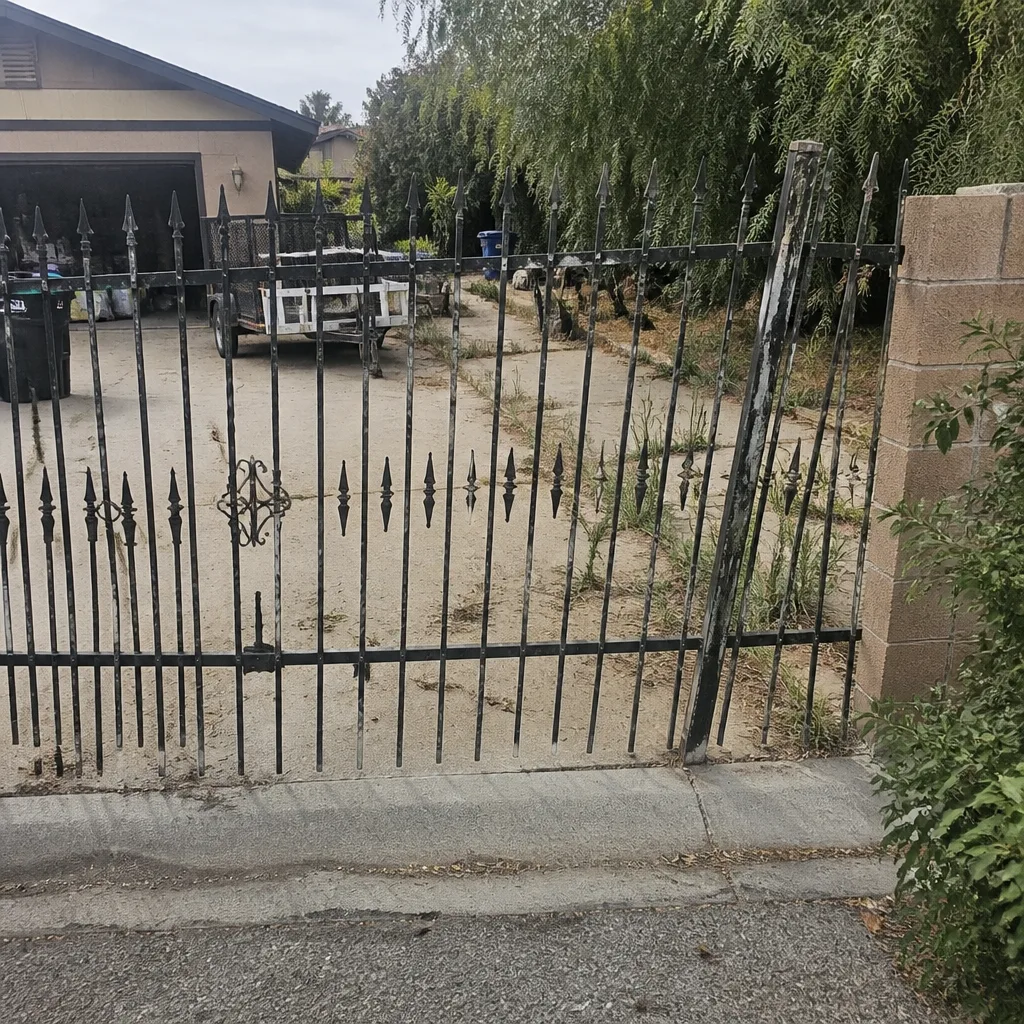
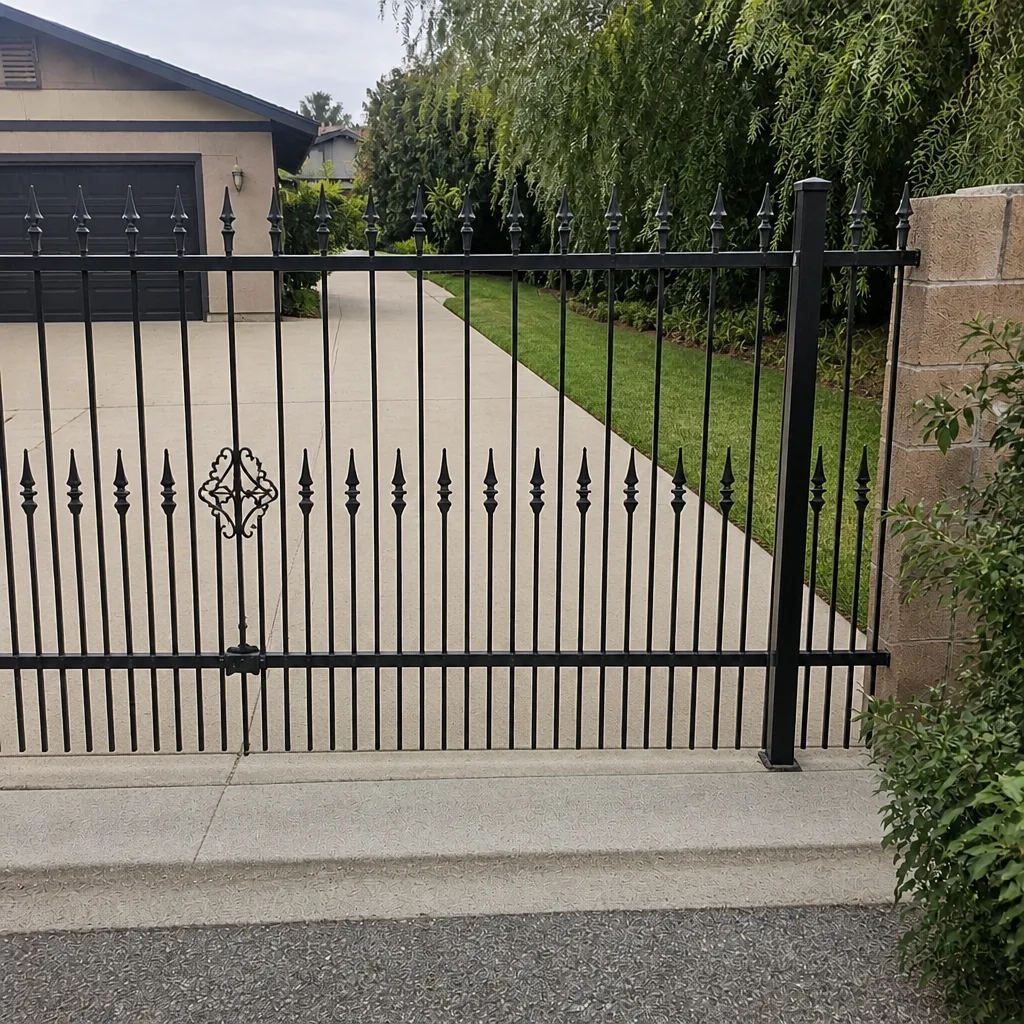
See the difference
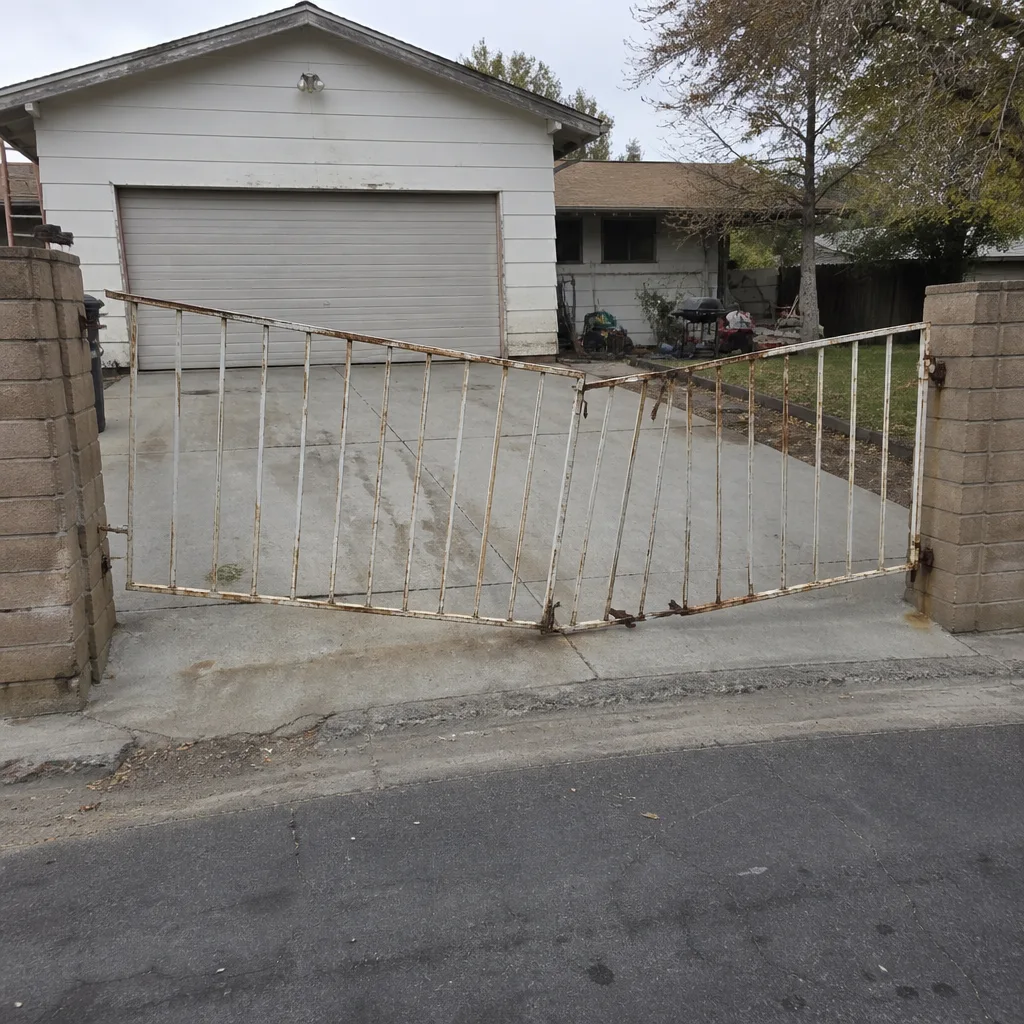 Before
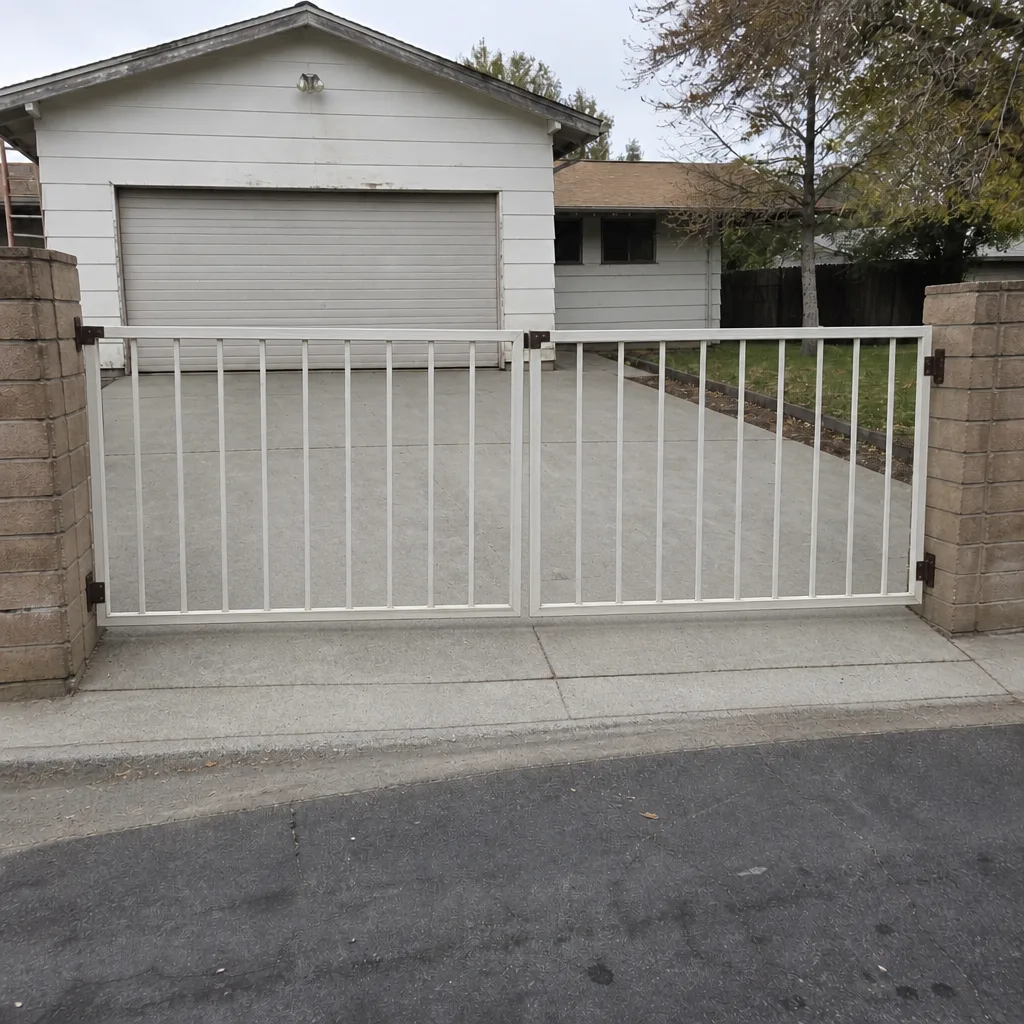 After
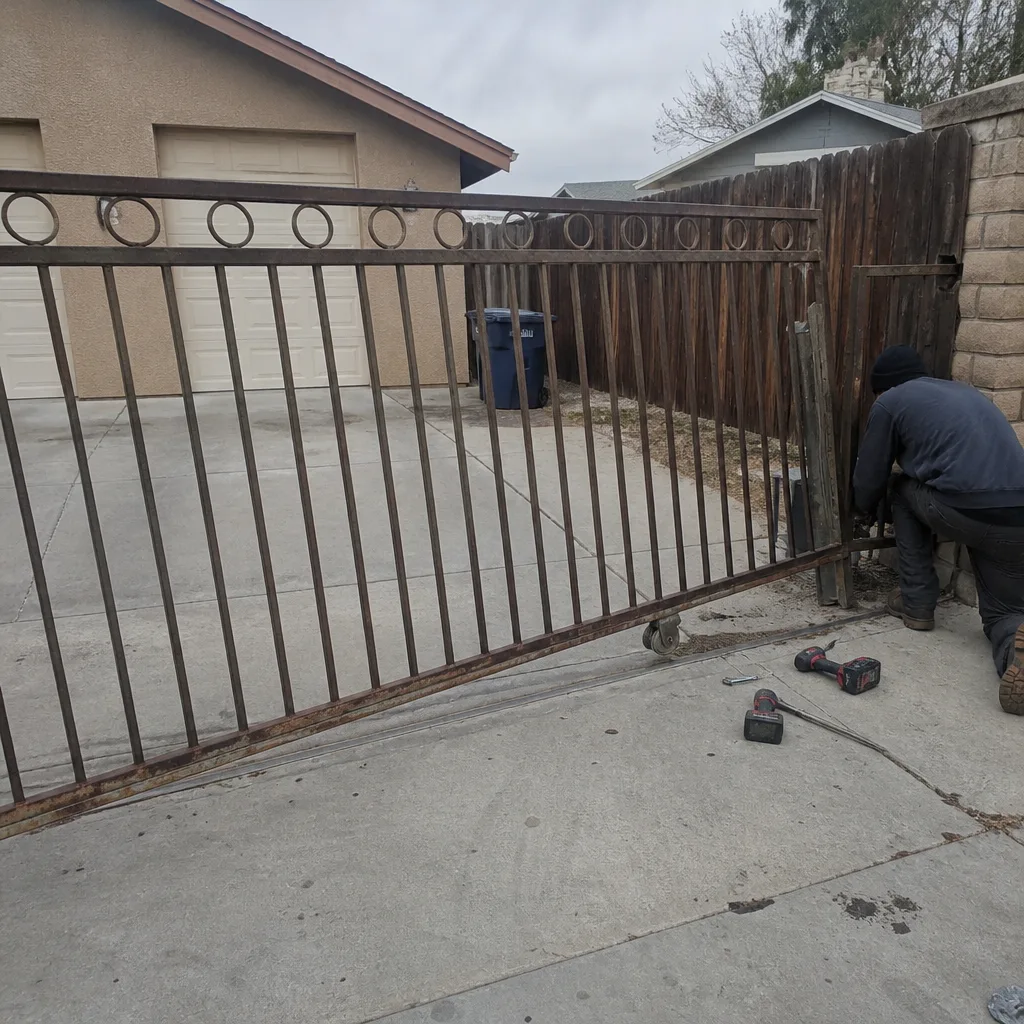 Before
 After
 Before
 After
When to Call a Professional
Plenty of gate upkeep is fine to handle yourself – a little lubrication, clearing debris, testing the emergency release. But some things genuinely need a trained hand. Call a professional if a gate post looks out of plumb, if you spot a crack at a hinge or frame weld, if the operator hums or stalls without moving the gate, if a gate won’t latch or drags, or if anything is bound up with the operator and the electrics. For anything electrical or safety-related – control boards, safety edges, wiring – let someone qualified handle it. Electric gates carry real risk, and a gate that fails to sense an obstacle is a hazard, not a nuisance. In those cases, stop using the gate and get a trained technician out. At Gatewood Fence & Gate Enterprise we offer free estimates in Enterprise. Call (833) 780-1547 and a live person will pick up, day or night.
Frequently Asked Questions
It depends on the failing part and the cause, but simple adjustments and latch fixes sit at the low end, on-site re-welding runs mid-range, and operator gear or control board work runs higher. The exact number is quoted and agreed before any work starts, so there are no surprises on the invoice. There’s also $40 off any repair over $200, no trip charge inside the county, and a free second opinion on any written estimate. Call (833) 780-1547 for an exact quote – estimates are free.
Often, yes. A gate stuck open, an operator that won’t disengage, or a hinge failure is the kind of emergency we treat as urgent, and a live person answers the phone 24/7. Some failures need a part that has to be ordered, and we’ll tell you that upfront rather than promise a same-day fix that can’t happen. Call (833) 780-1547 and we’ll tell you honestly what’s possible.
Because the post was never addressed. A gate sags at the hinge post, and in Enterprise’s expansive soil that post can shift a degree or two and drop the latch end by inches. Welding the hinge back on without re-setting a plumb post means the same failure returns within a season. A repair that lasts sets the post true, re-hangs the gate, and then does the weld.
We weld on-site, so the gate stays in your driveway and gets repaired, hung, and tested in place. That’s a real difference from bolt-on patch kits, which don’t carry wind load the way a proper weld does and tend to work themselves free. On-site welding is the fix that lasts for wrought iron and tubular steel alike.
That’s a common story, and it usually means the diagnosis was skipped. We’re glad to look at a gate someone else worked on, tell you plainly what we find, and quote a fix. Bring in any written estimate you were given and we’ll offer a free second opinion. Call (833) 780-1547 to set it up.
We do. A gate that won’t work is often a frame and an operator problem at the same time – a sagging gate fighting a motor and straining it. We weld the frame and service the operator together, and we’re certified across nine major brands including Linear, Viking, Ghost Controls, and DoorKing. For new installs or full gate replacements, we schedule a measure and give you a written price first.
The Bottom Line
Nearly every gate failure in Enterprise traces back to a bad install, deferred maintenance, or hardware that never matched the gate – and the repair that lasts is the one that starts by finding the real cause. Get the post plumb, fix the weld, match the hardware, bring the operator back into line, and the gate swings true instead of coming back in a few months. Ask the questions that separate a lasting repair from a temporary patch, and hire someone whose name is on the work and on the invoice. That’s the whole difference between a gate that’s fixed today and one that’s fixed for good.
If your gate is dragging, sagging, or stuck, we’ll come out, diagnose it honestly, and quote the price before we start. Gatewood Fence & Gate Enterprise offers free estimates throughout Enterprise – call (833) 780-1547 and a live person will pick up. You can also get to know us through our Gatewood Fence & Gate Enterprise home page, and we’ll be glad to give you a straight answer whether the gate needs a weld or a whole new install.
Written by the team at Gatewood Fence & Gate Enterprise.