
Last updated November 18, 2026
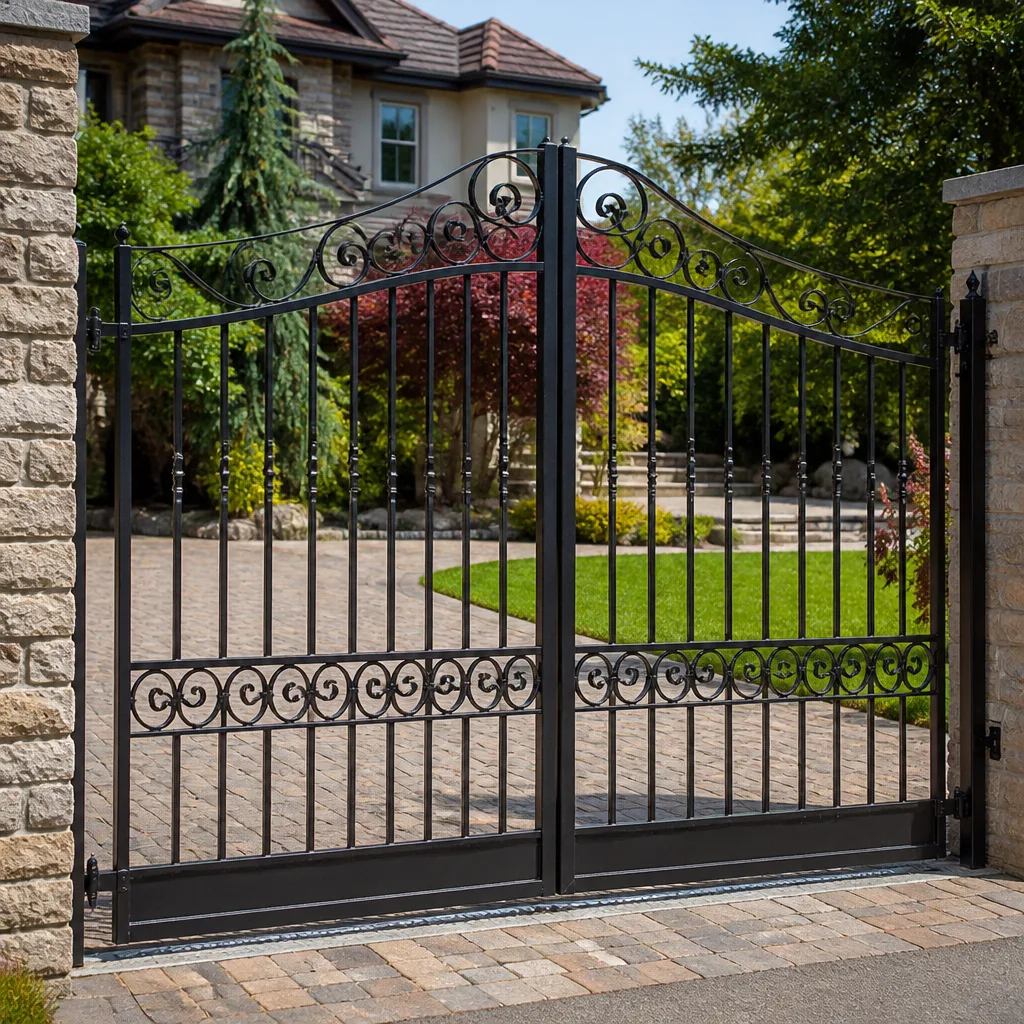 Wrought iron
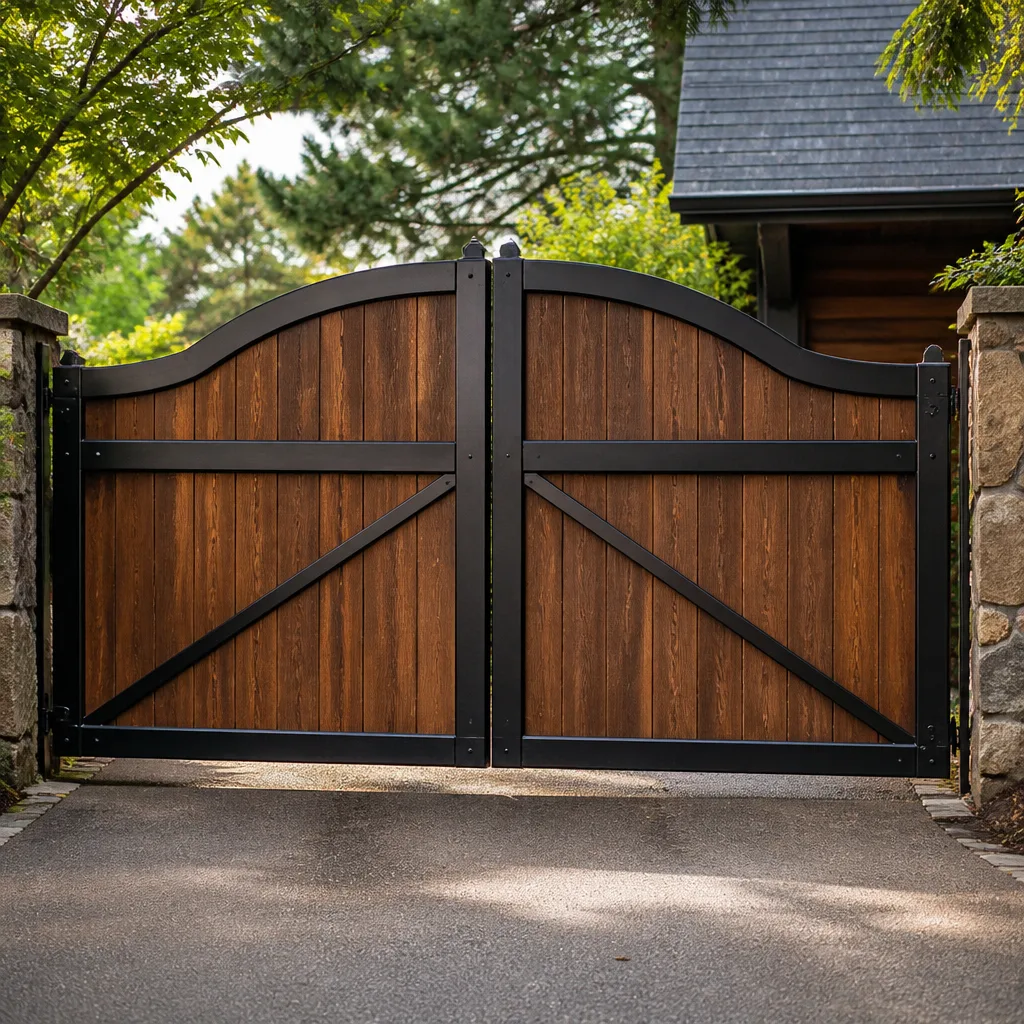 Wood & steel frame
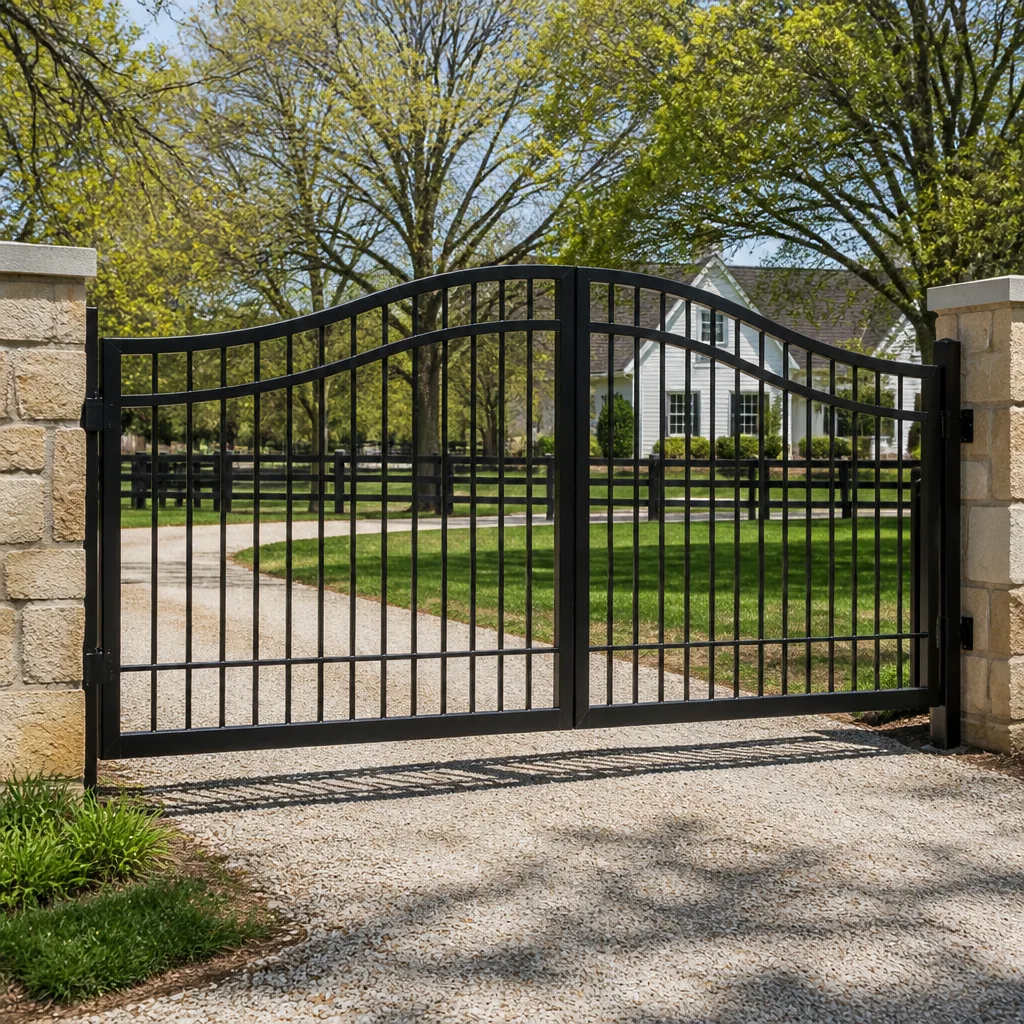 Farm & ranch
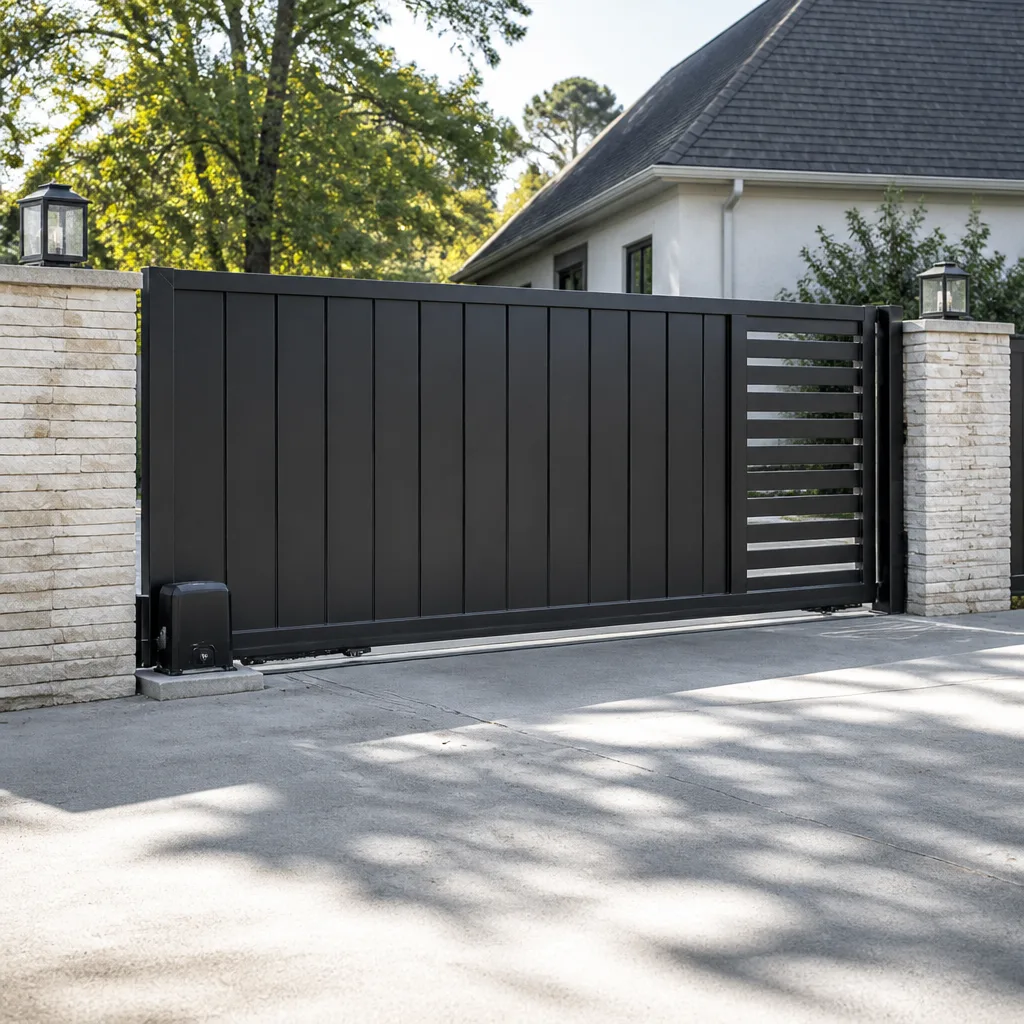 Sliding driveway gates
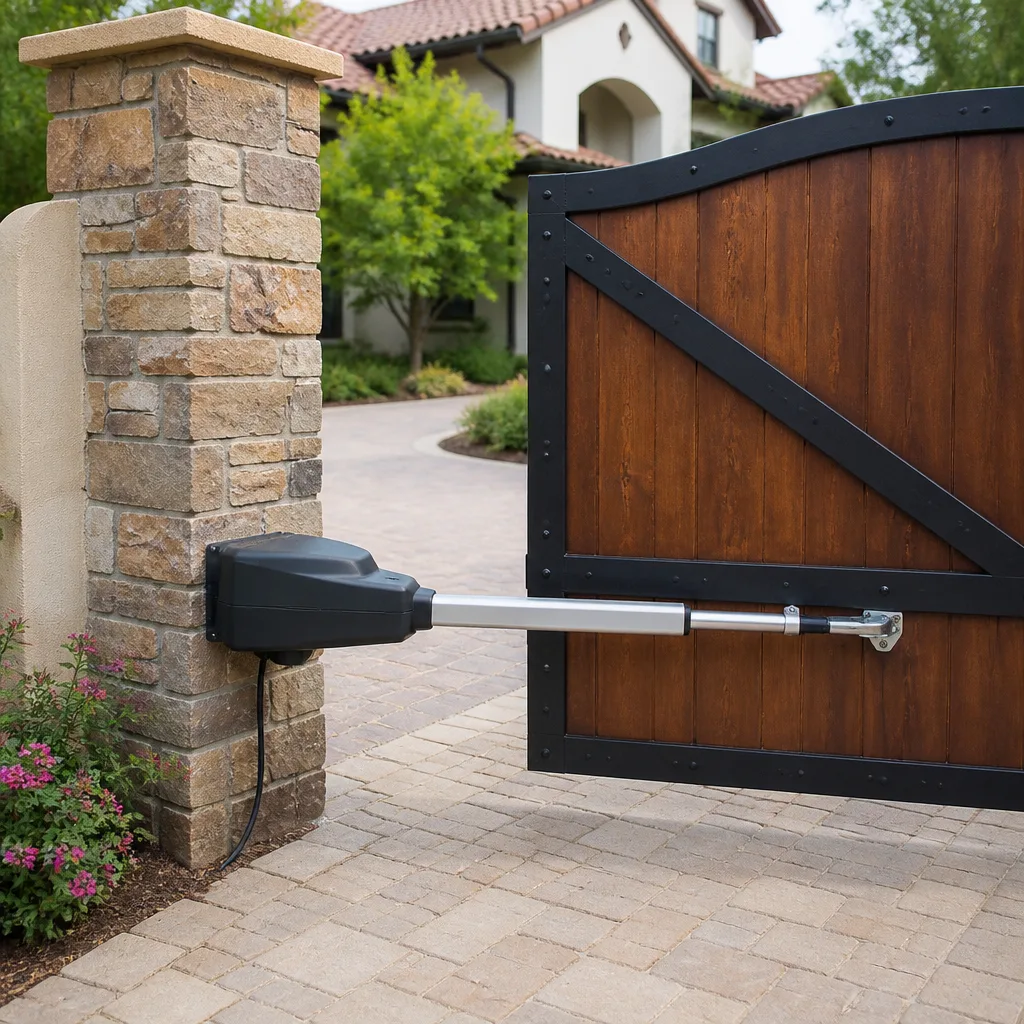 LiftMaster operators
Free on-site gate assessment - hinges, posts, and your LiftMaster or Nice gate operator checked before anything is quoted
The assessment is free and the quote is the invoice.
Get your free estimateGate Installation Troubleshooting: Common Problems and How to Fix Them
If a brand-new gate starts binding or dragging within the first season, the gate itself is probably fine. In our experience, the problem is almost always that the posts weren’t set plumb within tolerance, or the concrete went in before the frame was squared and checked. That’s a hard thing to hear when you just wrote a check for a new install. But it’s also good news, because installation errors are findable, fixable, and often covered. This guide walks you through the 90-day settling window, how to tell a hinge problem from a post problem from a frame problem, why most “operator failures” are really setup errors, and how to document it all so a warranty claim holds up. We work out of Enterprise, so a lot of what’s here comes from gates we’ve pulled apart and put right around this valley.
Quick Answer
Most problems with a new gate trace back to installation, not the product: posts set out of plumb, concrete poured before the frame was squared, and operator limits or sensitivity that were never calibrated correctly. A gate that binds, drags, or stops mid-travel within its first 90 days usually needs an adjustment or a reset, not a replacement. Get the installing company back out to re-check plumb, square, and operator settings before you accept it as a defect.
Styles & brands we work with
- Wrought iron
- Wood & steel frame
- Farm & ranch
- Sliding driveway gates
- LiftMaster operators
Table of Contents
- The 90-Day Settling Period: What’s Normal and What’s a Defect
- Hinge, Post, or Frame? Telling Three Look-Alike Problems Apart
- Operator Commissioning: Why Most New-Install “Failures” Are Setup Errors
- What a Proper Post-Installation Inspection Looks Like
- How to Document a Problem So a Warranty Claim Holds Up
- Clay Soil, Caliche, and Summer Heat: Why Enterprise Gates Move
- Which Fixes You Can Do Yourself and Which You Shouldn’t Touch
The 90-Day Settling Period: What’s Normal and What’s a Defect
Concrete doesn’t cure overnight, and soil doesn’t compact in a week. Both keep moving for weeks after a crew drives off, which is exactly why so many install problems surface at day 30 and not day one. Around Enterprise, we tell folks the same thing: judge the gate at 60 to 90 days, not at the walkthrough.
Here’s what usually settles into place and is honestly just normal:
- A slight change in how the gate latches as the post footing finishes curing
- A little more gap under the bottom rail once the ground beneath it compacts
- A push gate that swings a touch heavier than it did the first week
- Minor track or guide-roller noise on a sliding gate as the concrete finds its final position
These are adjustments. They get made with a wrench and a re-level, and they should fall inside the installer’s warranty without an argument.
What’s not normal is a gate that binds hard, a post that has visibly tilted past roughly a quarter inch out of plumb over a three-foot rise, cracked footings, hinge plates pulling away from the frame, or a gate that has dropped enough to hit the concrete. Those point to an installation defect: a footing too shallow, the wrong mix, or a frame that was never squared. If you’re seeing that, our Gate Repair in Enterprise page covers how we diagnose and correct settling and binding issues, and it’s the same process whether we installed the gate or someone else did.
Hinge, Post, or Frame? Telling Three Look-Alike Problems Apart
Three different failure points all present the same way: the gate drags, sags, or won’t close clean. The trick is that they have different fixes and very different warranty implications, so nailing down which one you’re looking at matters before you call anybody out.
A hinge issue is local. The gate sags at one corner, the hinge pin is loose or the weld has failed at the leaf, and the post itself is rock solid when you lean on it. A post issue is structural. The whole gate leans or drops because the footing moved, and you can often see a crack in the concrete or a gap where the post meets it. A frame issue is a twisting problem. The gate looks square but racks out of square as it swings, usually because the frame was welded or bolted out of square at the start.
Here’s the quick field test we use. A gate sags in the hinge post, not in the middle, and that’s where we start. Push the gate to the closed position and watch the gap between the leaf and the post. If the top gap stays even and the bottom gap widens, you’re losing the bottom hinge or the post has dropped. If the whole gap shifts from top to bottom, the frame is racking. Fix the panel without the post and you’ll fix it twice, which is why we check both before quoting anything.
This is also where warranty gets tricky. A loose hinge is a cheap adjustment. A failed footing is a re-set, and that’s the kind of thing an installer should own if it happened inside the settling window. Knowing which one you have is what keeps a warranty conversation on the level.
Operator Commissioning: Why Most New-Install “Failures” Are Setup Errors
We get calls all the time about an operator that “quit working” two weeks after install, and most of those are not hardware failures at all. They’re commissioning errors: limit switches that were never set correctly, obstruction sensitivity left too tight or too loose, or a logic board that never got finished being dialed in. LiftMaster and FAAC units are the ones we see this on most, and both are perfectly capable operators. They were just set up in a hurry.
A proper commissioning run looks like this:
- Run the gate fully open and fully closed by hand first and confirm it moves freely with no binding. The operator can’t fix a mechanical problem, and if it’s set up over a binding gate it will fail.
- Set the open and closed limits so the gate stops short of hard stops at both ends, with a small gap on each side to absorb seasonal movement.
- Calibrate obstruction sensitivity by placing a test object in the path and confirming the gate reverses or stops as it should. Test both directions.
- Check the safety edges and photo-eyes trip and register correctly. A gate that closes on a car or a kid is a setup failure, not bad luck.
- Run the gate through a full open-close-open cycle several times and watch for any hesitation, hard stop, or false reversal before signing off.
Most “operator failures” in new installs trace back to steps two and three getting skipped. If your operator reverses for no reason, stops short of full travel, or slams shut, that’s almost always a limit or sensitivity setting, and it’s a fifteen-minute correction. Our Gate Motor & Opener in Enterprise page covers how we commission and service these systems, and it’s the kind of thing that’s worth having the installing company finish properly rather than swapping parts that don’t need swapping.
What a Proper Post-Installation Inspection Looks Like
Before you sign off on a job, there’s a short series of checks you should either make yourself or watch the contractor make. We hand our customers the same list, because a good inspection protects both sides.
Walk the gate first. Push it through its full travel by hand and feel for binding, drag, or a hard spot. Then check the measurements:
- Post plumb with a level on two faces, both posts. Look for anything past a small tolerance, which on most residential gates is about an eighth of an inch over the height of the post.
- Gap between gate and post at top and bottom should match within a small margin. Uneven gaps mean a hinge or post problem already.
- Bottom clearance above the ground and above the concrete should stay consistent across the full width of the gate.
- Frame square measured diagonally corner to corner. The two diagonals should match within an eighth of an inch or so.
- Operated gate opens and closes fully without hitting hard stops, and safety edges trip when tested.
- Footing visible, sized, and set at the depth your contract called for. A footing that’s too small or too shallow is the number one cause of a post that moves in the first year.
- All hardware torqued and lock nuts installed. Loose bolts at install become drag by day 60.
Take photos of each of these checks at walkthrough. That record is what makes a warranty conversation simple. If you’re comparing installers or want to see how we approach the job, our Gate Installation in Enterprise page lays out what a proper install looks like in this area.
How to Document a Problem So a Warranty Claim Holds Up
If the installing company disputes responsibility, the difference between a claim that gets honored and one that gets brushed off comes down to your documentation. Put it in writing from the start.
Do these in order:
- Note the date the problem first appeared and keep a written log of every call, text, and visit. Names, dates, times, and what was said. Screenshots are your friend.
- Take dated photos and short videos of the problem: the gate binding, the post out of plumb against a level, the operator reversing without cause. Video that shows the symptom in motion is worth ten stills.
- Request a copy of the written warranty at signing, not years later. Every job should carry one in writing, and you should have it before they pack up the truck.
- Get the manufacturer out of the equation early. If the installer blames the equipment, a certified third-party opinion on a LiftMaster or FAAC operator, or on a Linear or BFT control board, will settle who’s on the hook.
- Keep any written estimate or contract showing what was promised. The promised measurements, tolerances, and specifications are what you’ll be checking against.
If you’re not sure whether you’ve got a legitimate claim or just a normal adjustment, a free second opinion on any written estimate or install contract can save a lot of back-and-forth. Our Gatewood Fence & Gate Enterprise home page has the standing offers we always run, and a second opinion on someone else’s work is one of them.
Clay Soil, Caliche, and Summer Heat: Why Enterprise Gates Move
A gate that’s perfectly installed in a mild climate can still move here, and it’s worth knowing why. Enterprise sits on soil that does a lot of expanding and shrinking with the seasons. Clay-heavy ground swells when it’s wet and pulls away from the footing when it dries, and caliche layers underneath make for uneven settling. Add our summer heat, which works gates and hardware hard, and you’ve got a place where a footing that would be fine in Ohio can start moving in a year.
What that means in practice is that footing depth and diameter matter more here than the spec sheet suggests. A post set in a shallow cookie-cutter hole with a light mix is a post that’s going to lean. We pour footings sized for the gate and the soil, not for the clock, and we don’t leave a gate set on concrete that hasn’t cured long enough just to make the schedule work. Over the summer, heat moves gate metal and hardware more than folks expect, so a gate that ran fine in March may drag by August if the clearance was set too tight at install.
This is one reason we don’t love replacing hardware to “fix” a problem that’s really the ground moving. If you want to see how we approach the problem locally, our Gate Repair in Enterprise page covers what we check first when a gate starts to move.
Which Fixes You Can Do Yourself and Which You Shouldn’t Touch
Some things are owner-adjustable with a wrench and a few minutes. Others are genuinely dangerous, and it’s worth being honest about the line.
Fine to handle yourself with basic tools:
- Tightening a loose hinge bolt or lock nut
- Cleaning and re-lubing hinges and track rollers
- Wiping down photo-eye lenses if a gate is falsely reversing
- Replacing a remote battery or re-pairing a remote to the operator per the manual
- Adjusting a gate stop or replacing a worn rubber bumper
Leave these to a professional:
- Any adjustment to the post, footing, or concrete. Getting it wrong means the gate comes down.
- Welding or re-welding a hinge or frame. Bad welds on a gate leaf under load are a safety issue, not a cosmetic one.
- Operator limit and sensitivity calibration if you’re not sure what you’re doing. A mis-calibrated operator on a gate that travels over a driveway is a real hazard to people and vehicles.
- Any electrical work at the operator, safety edges, or access control, including low-voltage runs and photo-eye wiring. Trust your gut on this one.
- Spring or counterweight adjustments on any gate that uses them. These store serious energy and can hurt you badly if you get it wrong.
When in doubt, have someone who does this every day take a look. It costs less than a repair, and a lot less than a hospital visit.
Common Mistakes to Avoid
- Calling the problem a product defect before checking the install. Nine times out of ten the equipment is fine and the setup is off. Get the installer out to re-check plumb, square, and limits before anyone talks about replacement parts.
- Assuming a wobbly gate means a bad gate. The gate leaf is almost never the culprit. Look at the post and footing first, especially in our soil.
- Skipping the walkthrough measurements. Plumb, square, gap, and clearance are the four checks that catch most install errors on day one. If your installer didn’t make them, ask them to.
- Not getting the warranty in writing before the truck leaves. A promise is only as good as the paper it’s on. Ask for it at signing.
- Letting an operator run over a binding gate. If the gate doesn’t move freely by hand, fix that before you touch the operator. Running an operator over a binding gate is how a fifteen-minute fix turns into a burned-out motor.
- Dismissing a slight lean as “just settling” past 90 days. A small drift in the first month is normal. Continued movement past three months is not, and it’s worth a documented call to the installer.
- Trying to fix a footing yourself. Pulling a post to re-pour is not a weekend job, and a bad re-set makes the problem worse. Call someone who does it every week.
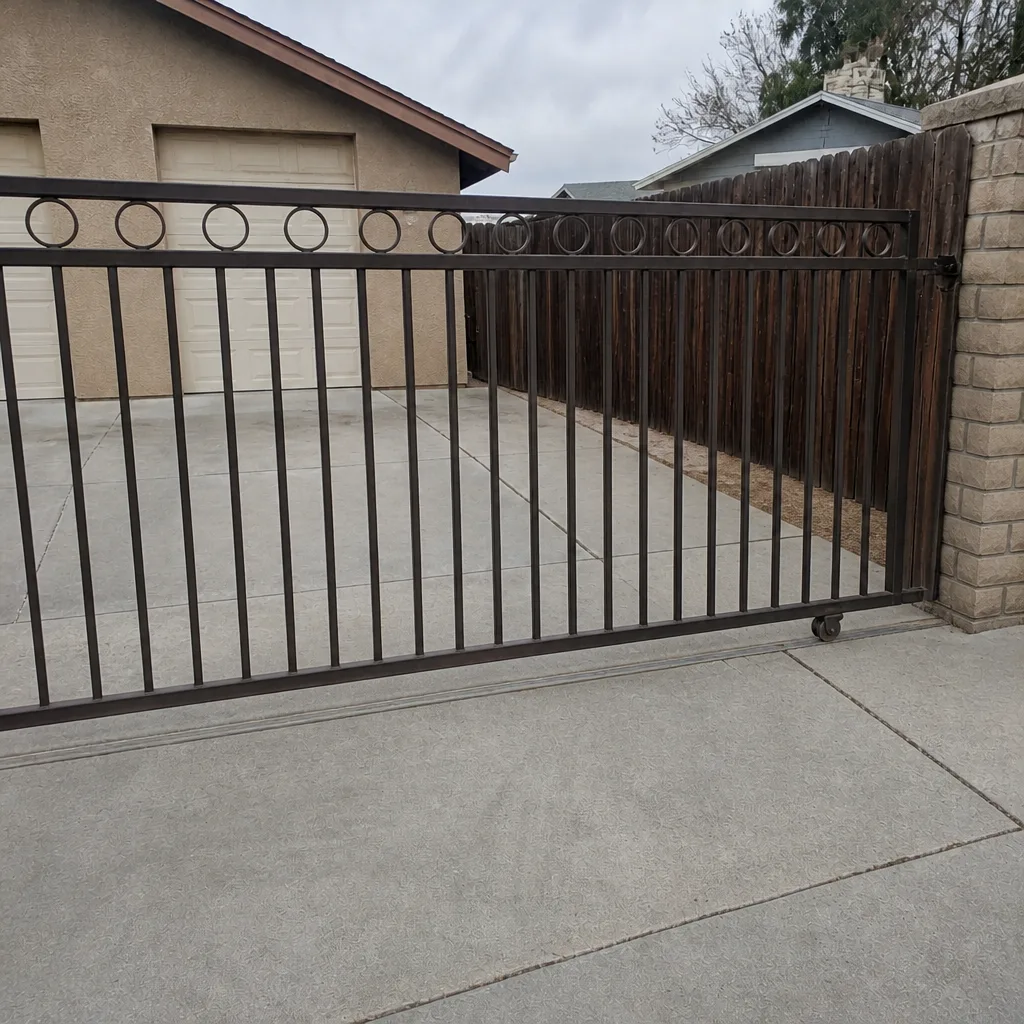
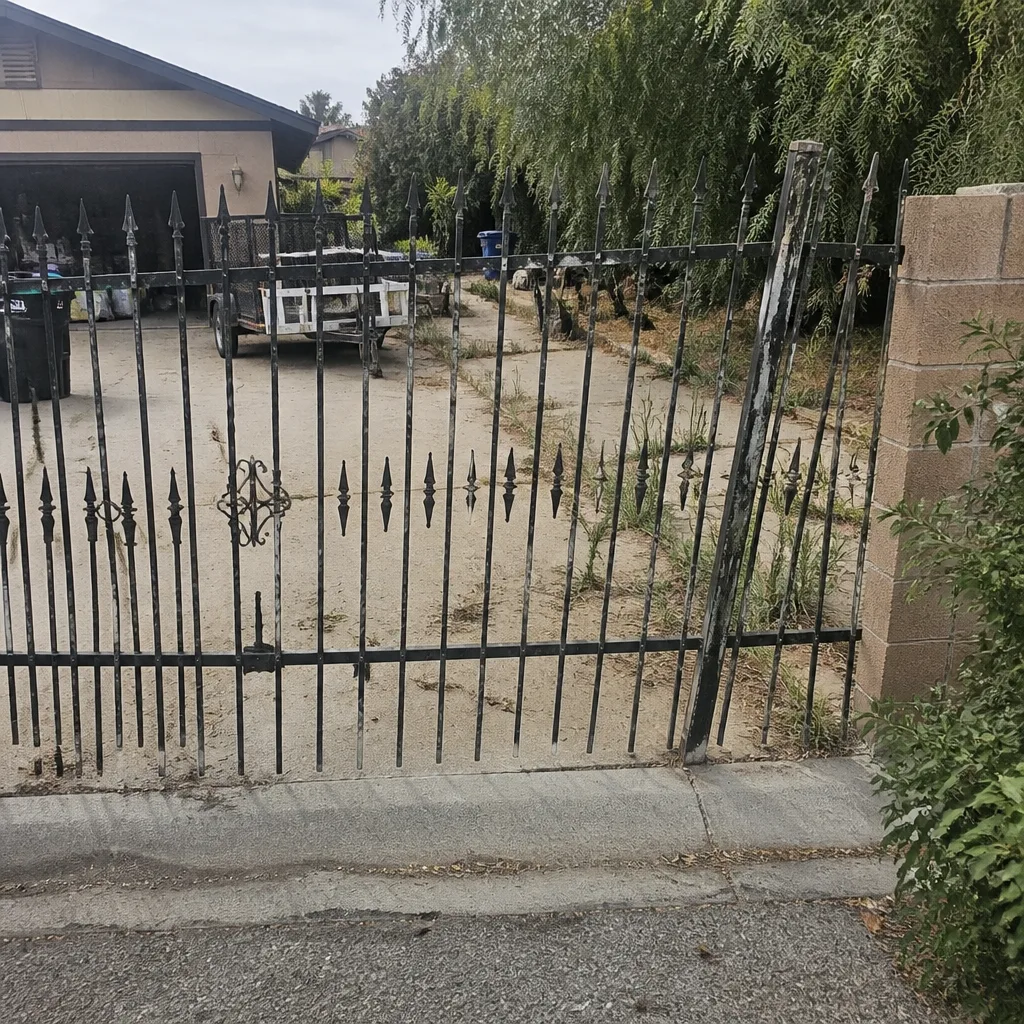
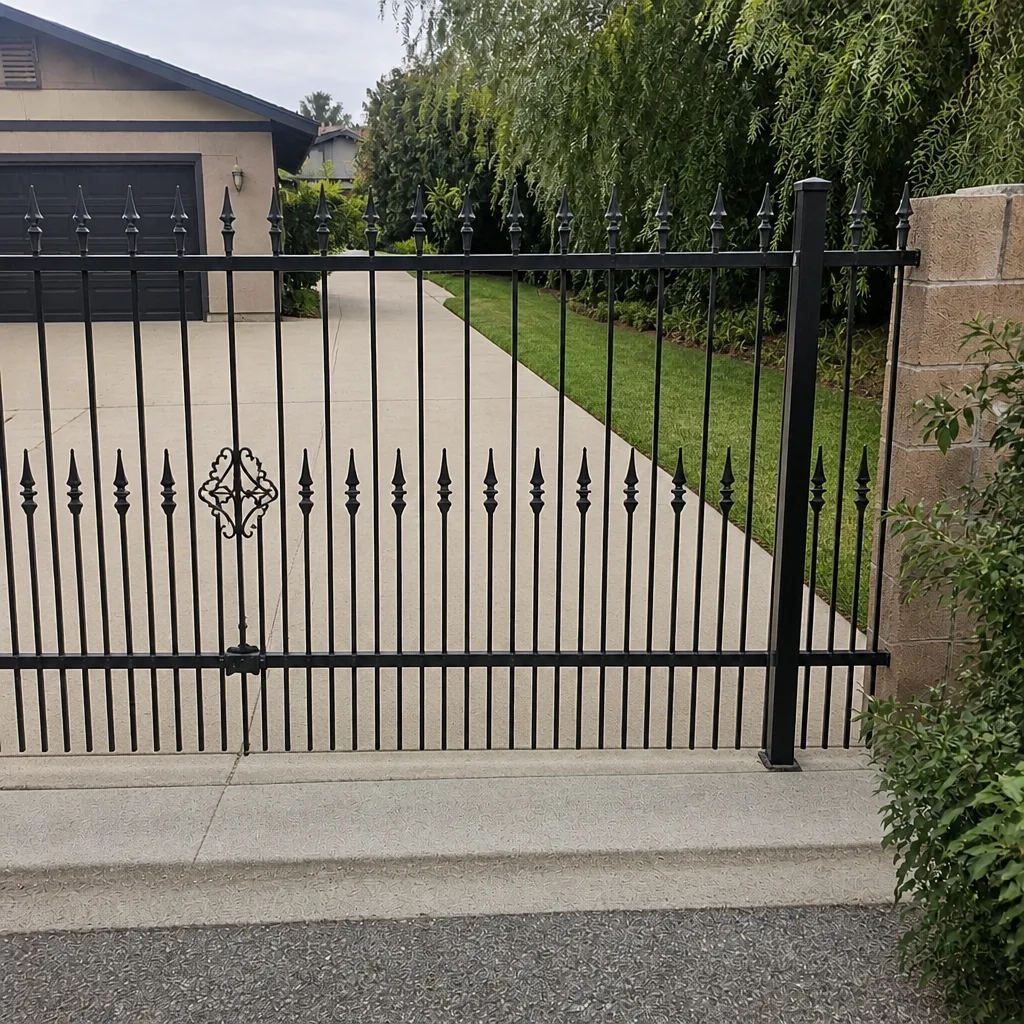
See the difference
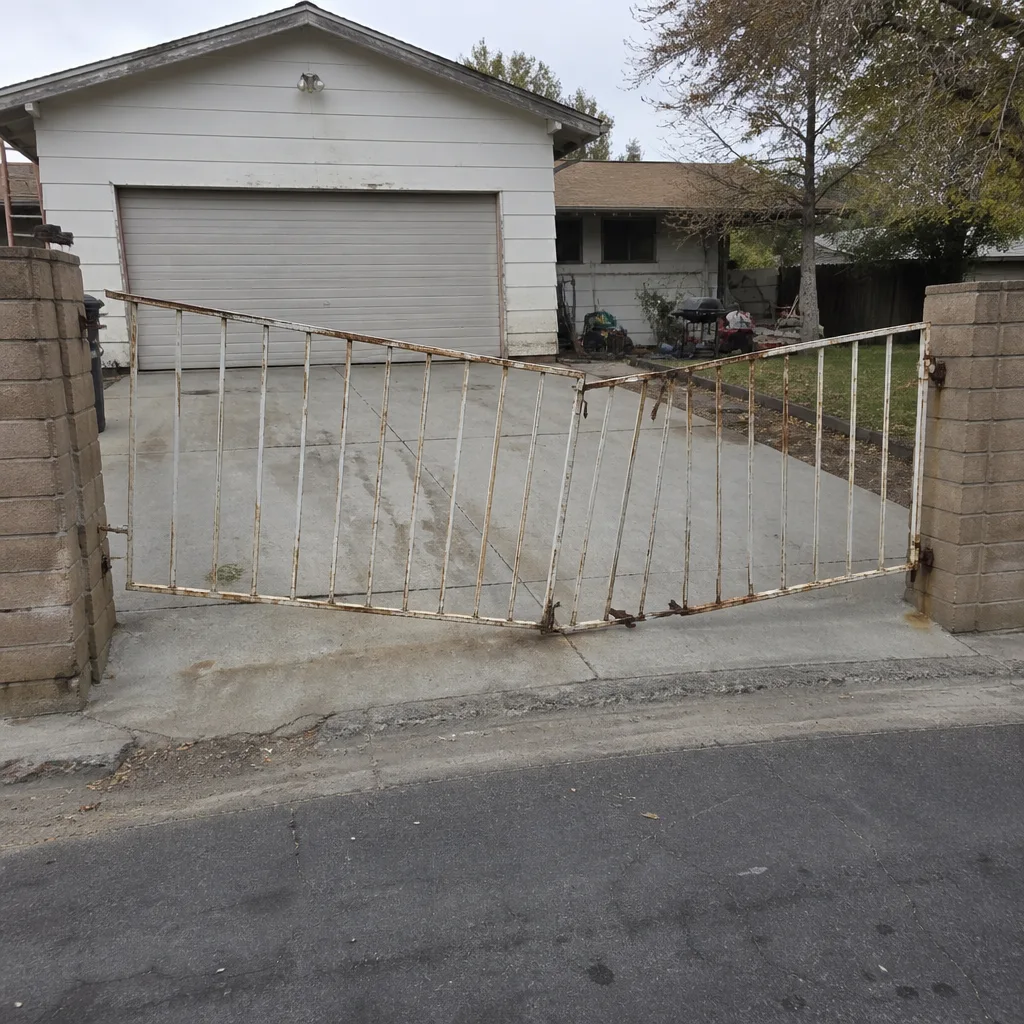 Before
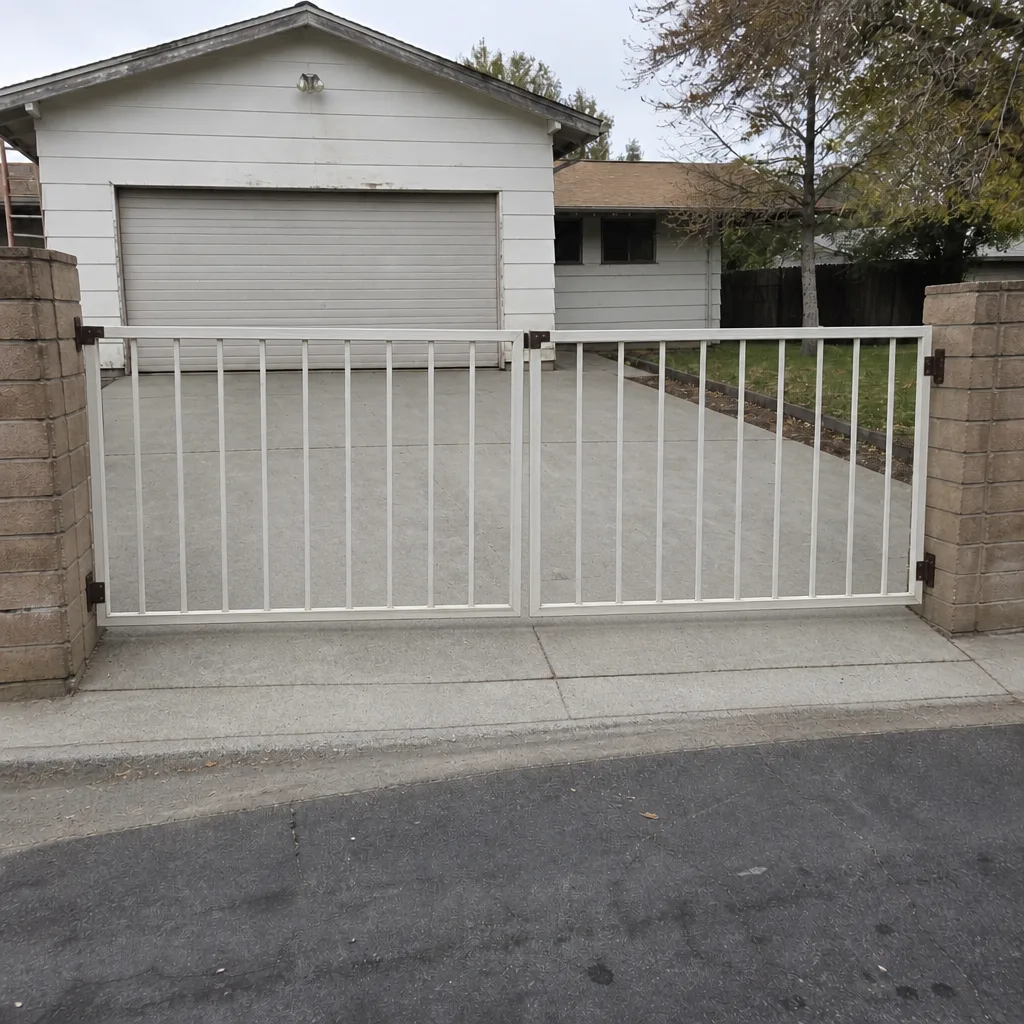 After
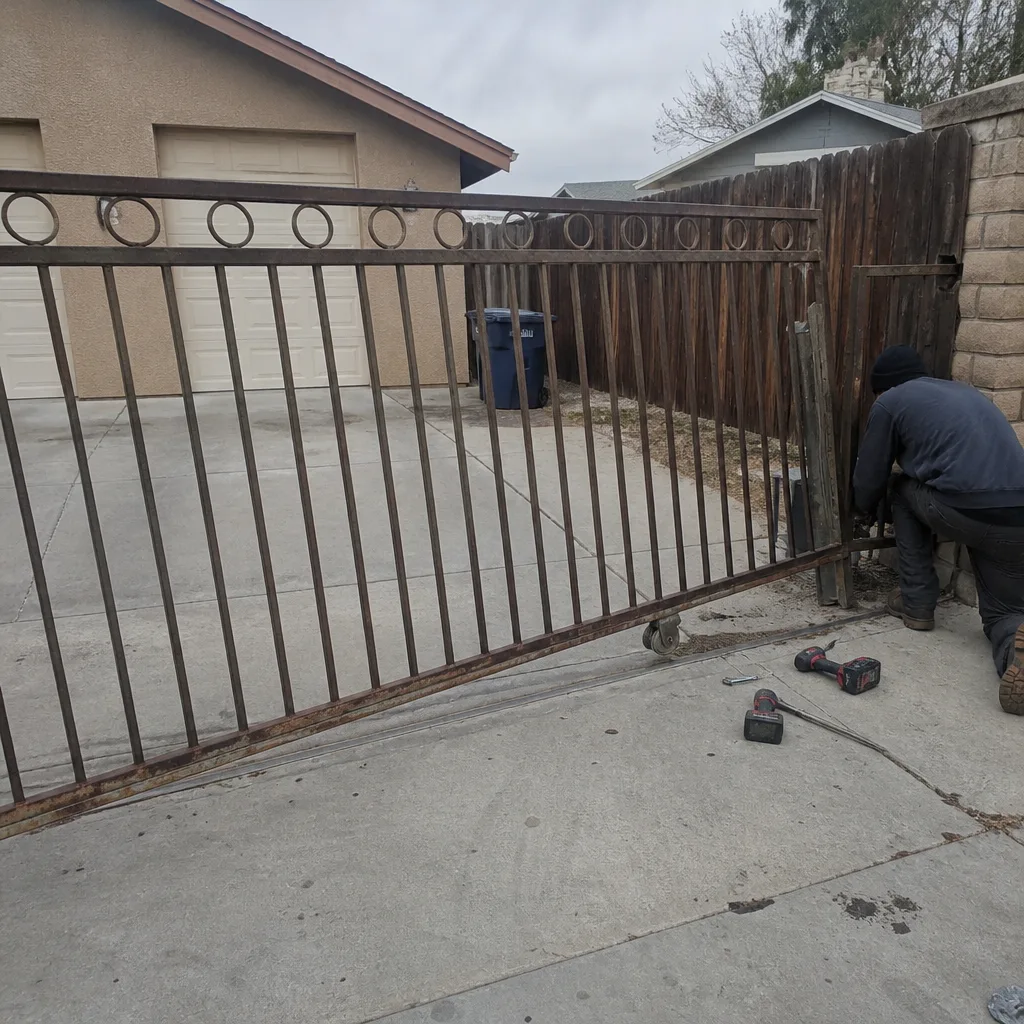 Before
 After
 Before
 After
When to Call a Professional
Call a professional if the gate binds or drags and the installing company won’t come back out, if a post has visibly tilted past a quarter inch over its height, if an operator reverses without cause, or if any electrical or safety-edge component is behaving oddly. Call right away if the gate drops, hangs up on the concrete, or if the operator closes on something in its path. That’s a safety issue, not an adjustment. Gatewood Fence & Gate Enterprise offers free estimates in Enterprise, and our technicians have up to 25 years of experience on gate repair and installation. Call (833) 780-1547 and you’ll get a live person, day or night. Every job carries the 90-Day Done Right Promise in writing, and we service the major operators including LiftMaster, FAAC, Linear, and BFT.
Frequently Asked Questions
Expect about 60 to 90 days, and in Enterprise sometimes a full season, for concrete to cure and surrounding soil to compact. A small drift in the first month is normal. Movement past three months, a visible lean, or a gate that binds harder than it did at install is not normal and deserves a documented call to the installer. Call (833) 780-1547 if you’d like a second opinion on what you’re seeing.
The most common cause is the hinge post settling slightly as the footing cures, dropping the leaf enough to hit the concrete. Second most common is a hinge that loosened after a few weeks of use. Both are fixable adjustments, not replacement. Get the installer out to re-check plumb and hinge torque before doing anything else. If they won’t come, call (833) 780-1547 and we’ll take a look.
Almost certainly not. A new operator that reverses without an obstruction is usually a limit or obstruction-sensitivity setting that was never calibrated correctly. That’s a fifteen-minute correction, not a hardware replacement. On LiftMaster and FAAC units this is the most common issue we see on new installs. If you’d rather have it set up correctly the first time, call (833) 780-1547.
For a small adjustment it helps, and for anything involving the operator, access control, or the driveway approach, yes. We need to be able to run the gate through its full travel to confirm the fix. For a walkthrough and estimate, an adult on site is enough. Call (833) 780-1547 and we’ll work out a window that fits your schedule.
Have three things handy: the original contract or written estimate, the written warranty, and any photos or video of the symptom. If the installer was a national outfit and you can’t reach them, bring whatever paperwork you have. A free second opinion on any written estimate is one of our standing offers, so bring it in and we’ll tell you straight what’s going on. Call (833) 780-1547 to set it up.
Yes, we regularly do. We repair what other companies want to replace, and we weld on site so the gate stays in your driveway instead of getting hauled off. Whether you installed it yesterday, ten years ago, or inherited it with the property, we can diagnose the issue and give you upfront pricing before any work starts. Call (833) 780-1547 for a free estimate in Enterprise.
The Bottom Line
Most new gate problems aren’t product failures. They’re installation errors that show up 30 to 90 days after the job, once the concrete has cured and the soil has settled. The gate that binds, drags, or reverses is usually telling you something specific: a post out of plumb, a hinge that loosened, a frame that racked, or an operator that was never commissioned correctly. Learn the four checks (plumb, square, gap, clearance), run them at the walkthrough, and keep your paperwork in writing. That’s what makes a warranty conversation go smoothly. And when in doubt, get someone who does this every day to look at it before you start swapping parts.
Contact
If your gate is doing something it shouldn’t, call Gatewood Fence & Gate Enterprise at (833) 780-1547 for a free estimate. A live person answers around the clock, and we’ll take a look at what you’ve got. Standing offers include $40 off any repair over $200, no trip charge inside the county, a free second opinion on any written estimate, and a permanent 10% discount for seniors and veterans. The name is on the shop, the shop is down the road, and every job carries the 90-Day Done Right Promise in writing.
Written by the team at Gatewood Fence & Gate Enterprise.