
Last updated November 18, 2026
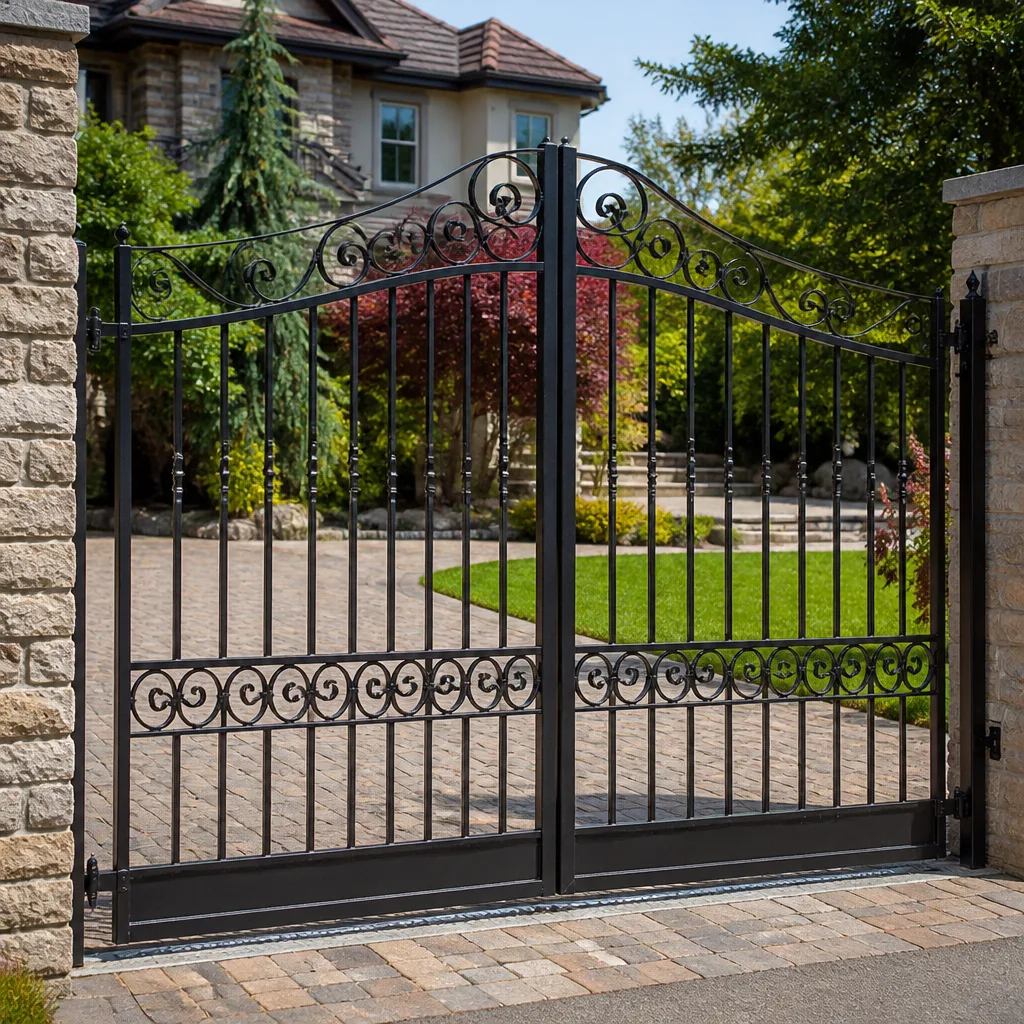 Wrought iron
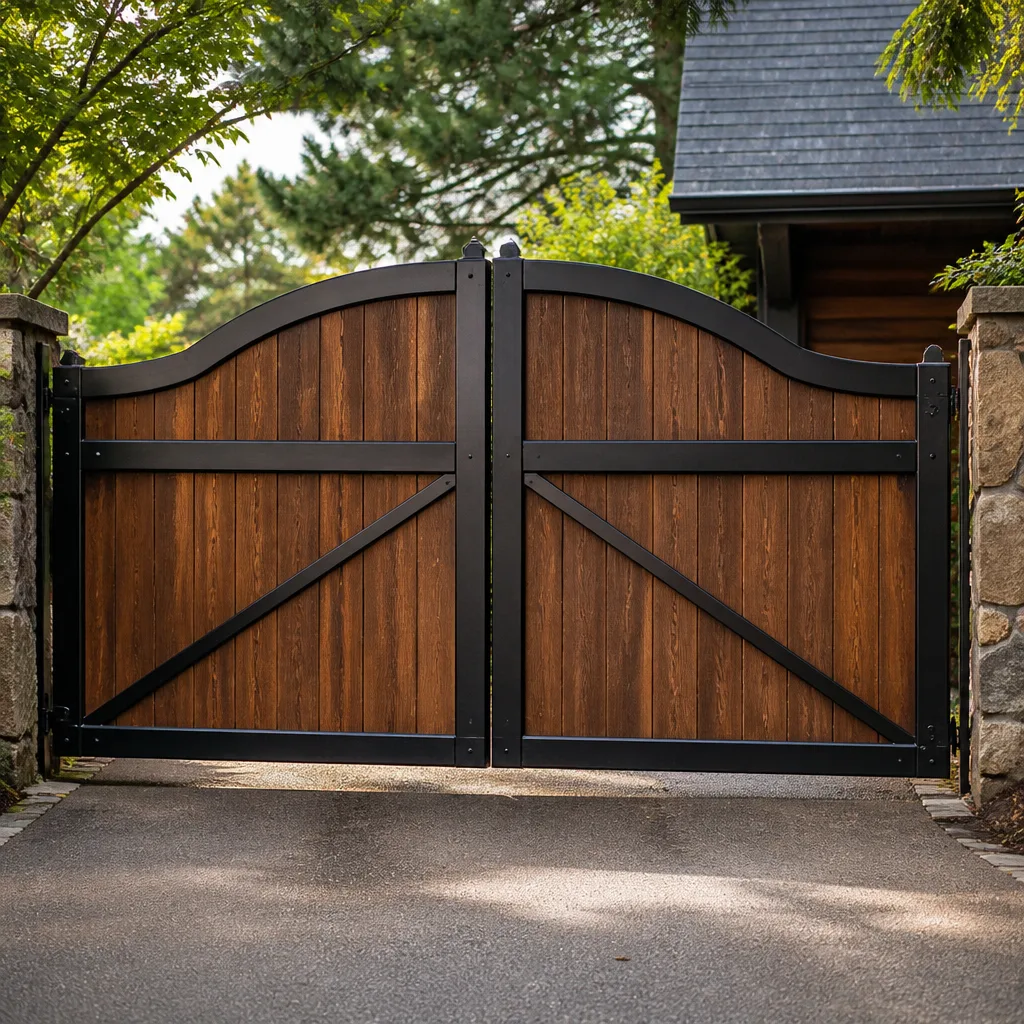 Wood & steel frame
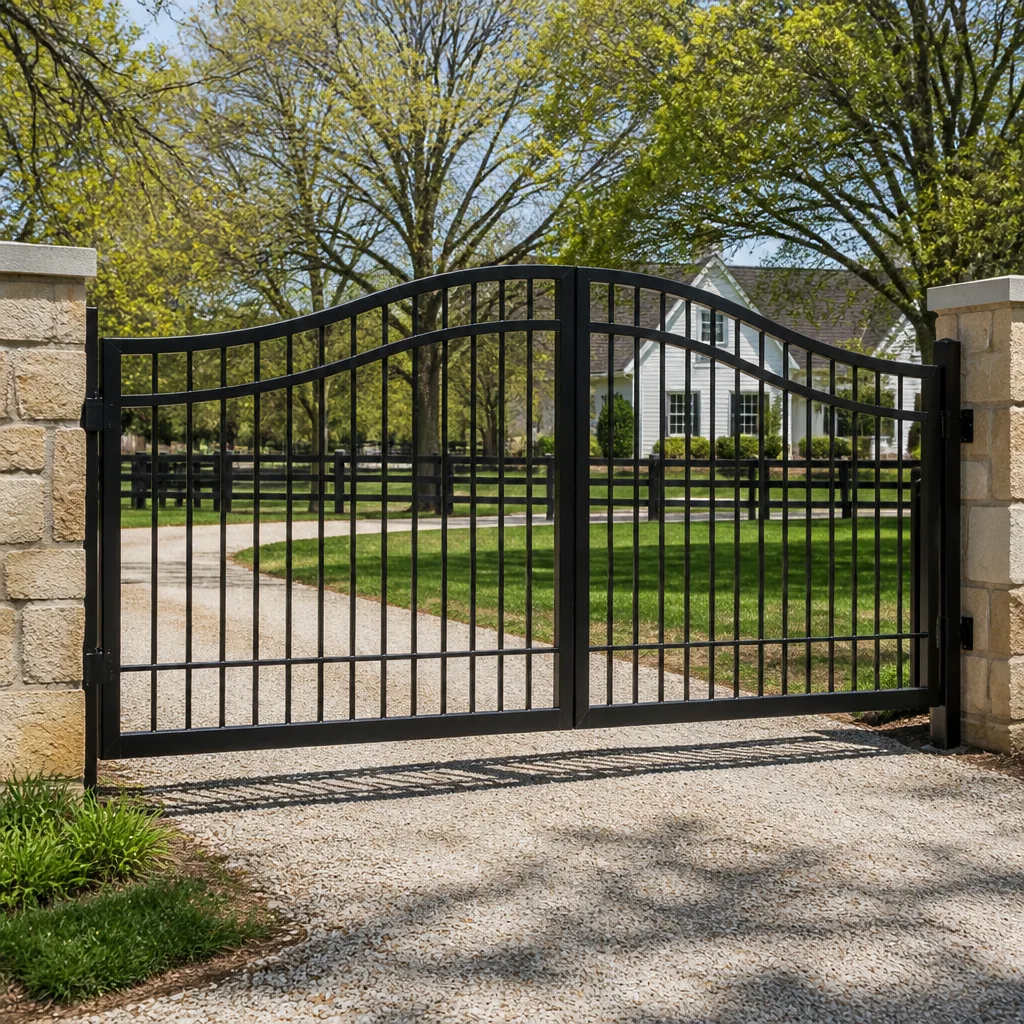 Farm & ranch
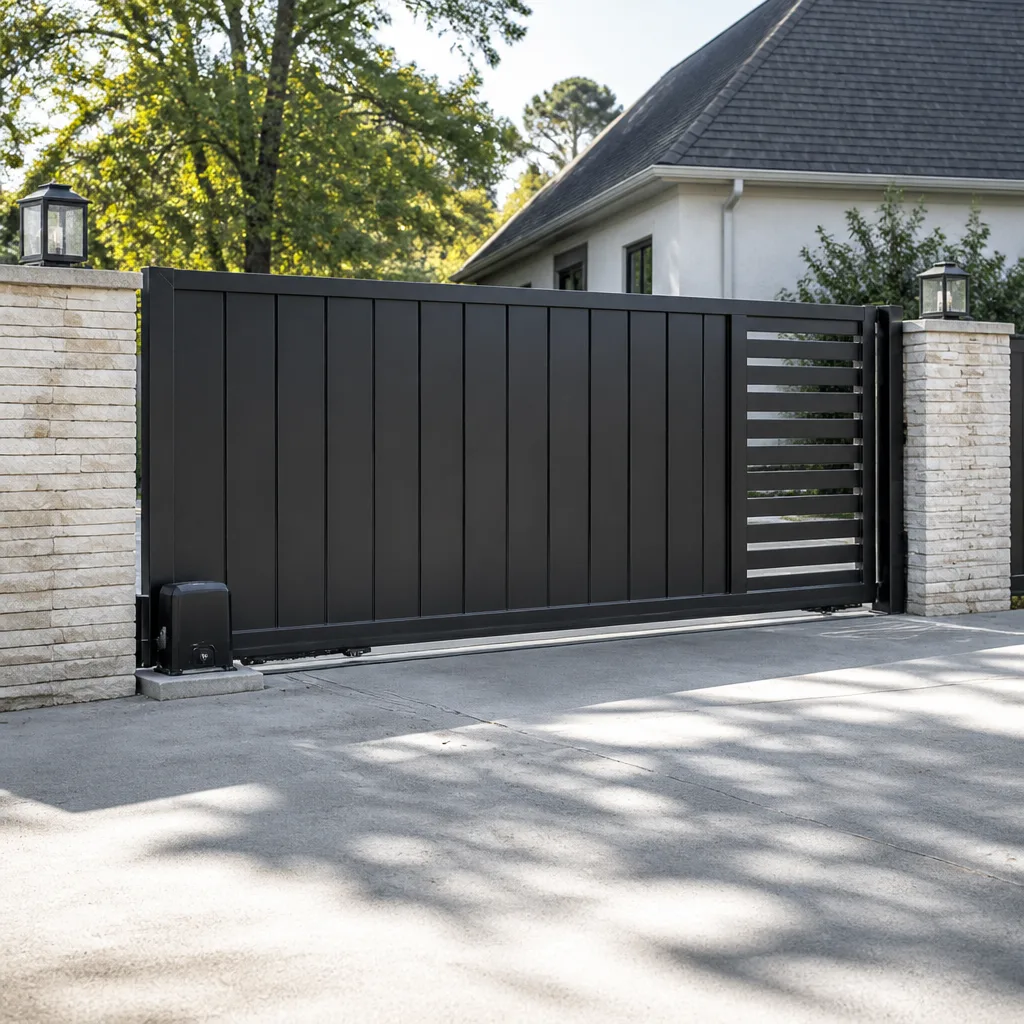 Sliding driveway gates
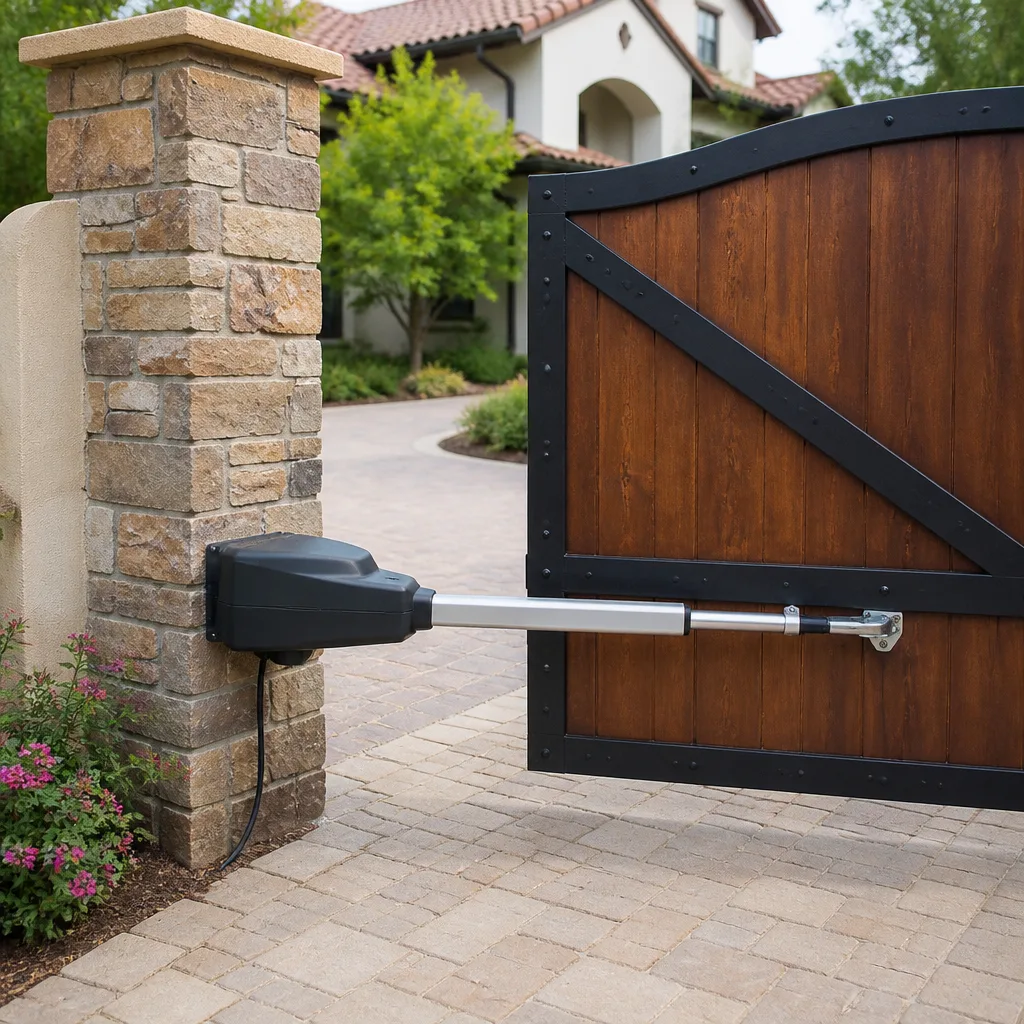 LiftMaster operators
Free on-site gate assessment - hinges, posts, and your LiftMaster or Nice gate operator checked before anything is quoted
The assessment is free and the quote is the invoice.
Get your free estimateThe Complete Gate Installation Guide for Enterprise Homeowners
Enterprise gets sustained winds that regularly hit 35 to 45 mph through certain corridors, and a gate sized and hung for calm-weather load ratings will rack and fail in its first good windstorm. The frame size and brace geometry matter more here than almost anywhere. We’ve watched gates that looked fine on install day twist themselves out of square within two seasons, all because somebody followed a set of instructions written for a suburb with soft soil and gentle weather. This guide covers what those instructions leave out: how to size a gate for real Enterprise wind loads, what Clark County actually requires, why caliche will humble a shallow footer, and which material choices survive ten years of desert sun instead of three. By the end you’ll know how to judge a gate installation quote – and how to spot the cheap shortcuts before they cost you.
Quick Answer
A gate installed correctly in Enterprise is sized for wind load (not just opening width), anchored in a footer dug through caliche to the depth your soil actually demands, built from a material that tolerates intense UV and 40-degree temperature swings, and permitted through Clark County when the code requires it. Get those four things right and the gate lasts a decade or more. Skip any one of them – usually the footer or the bracing – and you’re looking at repair work within three years.
Styles & brands we work with
- Wrought iron
- Wood & steel frame
- Farm & ranch
- Sliding driveway gates
- LiftMaster operators
Table of Contents
- Sizing a Gate for Enterprise Wind Loads
- Clark County Permits and Pool Gate Code
- Post Footers and Concrete in Caliche Soil
- Material Comparison for Desert Climate
- The Details That Decide Year 10 vs. Year 3
- Automation, Power, and Safety Edges
- Common Mistakes to Avoid
- When to Call a Professional
Sizing a Gate for Enterprise Wind Loads
Most gate failures we see in Enterprise have nothing to do with the latch or the hinges. They come from a gate that was sized for its opening and never for the wind that pushes against it. A wide gate is a sail. The wider it is relative to its height, and the more open its infill, the more surface area the wind grabs.
Here’s the ratio that matters: width to height. A gate that’s much wider than it is tall racks – meaning it twists out of square – under sustained load. The fix isn’t a heavier hinge. It’s frame geometry. On a single-swing gate in an exposed Enterprise corridor, we want a diagonal brace running from the bottom hinge side up to the top latch side, so the frame triangulates and resists the twist. That brace is what keeps the gate square, and a gate that stays square keeps its hinges and its operator happy.
What to check on any installation plan:
- Brace direction: the diagonal should pull in tension from the bottom hinge corner toward the top outer corner. A brace running the wrong way does almost nothing.
- Frame tube size: thin-walled tube looks fine on day one and bows under wind. Match tube wall thickness to the gate’s surface area, not to what’s on sale.
- Infill openness: a solid privacy panel catches far more wind than an ornamental pattern. Solid panels need a beefier frame and deeper posts.
- Double-swing gates: each leaf carries its own brace, and the meeting point needs a drop rod or an operator-rated center so the leaves don’t fight each other in the wind.
When we quote a gate installation, the brace placement and frame size get decided before a single post goes in the ground. That’s not upselling. That’s the difference between a gate that’s still true in year ten and one that’s dragging on the ground by year three.
Clark County Permits and Pool Gate Code
Here’s where a lot of homeowners get surprised. A gate is a structure, and in Clark County certain gates need a permit and certain gates don’t. The dividing lines come down to height, whether the gate is attached to a structure that’s already permitted, and whether it’s a pool barrier.
The pool code is the one people trip over. If your gate is part of a pool enclosure, it has to be self-closing and self-latching, and the latch has to sit high enough that a small child can’t reach it. That’s not a suggestion. It’s a life-safety requirement, and inspectors check it. A pool gate that swings open on its own because the spring is worn, or latches at knee height, fails inspection and, more importantly, fails the reason the code exists.
What skipping the permit actually costs you:
- Failed inspection at resale. A buyer’s inspector flags an unpermitted gate or pool barrier, and the deal stalls while you scramble to make it compliant.
- Insurance complications. An unpermitted pool barrier can complicate a claim if something goes wrong.
- Rework. If the gate has to be brought up to code after the fact, you’re paying for the install twice – once for the wrong version, once for the right one.
Before any gate goes in at an Enterprise property, we confirm whether the county wants a permit for it and whether it touches a pool enclosure. Gate installation in Enterprise done right starts with that check, not with a post hole. If you’re unsure whether your project needs one, ask before you dig.
Post Footers and Concrete in Caliche Soil
Every online guide you’ll read tells you to dig a post hole two feet deep and pour concrete. Those guides are written for normal soil. Enterprise sits on caliche – a dense, cemented layer that’s hard as a sidewalk in places and, once you break through it, can hide softer pockets that won’t hold a post the way you’d expect. A footer that’s fine in loam will heave, lean, or pull loose here.
What we account for that the generic instructions don’t:
- Depth to stable ground, not a fixed number. The footer has to reach past the caliche layer and into something that will grip. On some Enterprise lots that’s deeper than the standard recommendation; on others the caliche itself is what you anchor into.
- Bell-shaped footers on gate posts. A gate post carries the swing load and the wind load. A straight-sided hole lets the post lever itself loose over time. A wider base at the bottom resists that pull.
- Drainage. When the rare desert downpour hits, water needs somewhere to go. A footer that traps water at the base of a steel post is a rust problem waiting to happen.
- Concrete cure time before the gate goes on. Loading a post before the concrete has cured is one of the most common reasons a brand-new gate starts sagging in month two.
The hinge post carries the most load of anything on the gate, and it’s the part nobody sees once the concrete’s poured. A gate sags in the hinge post, not in the middle – and that’s where we start every install. Spend the money on the footer. It’s the cheapest insurance you’ll ever buy on a gate.
Material Comparison for Desert Climate
Enterprise is brutal on materials in a way coastal or mild-climate buyers never deal with. Intense UV, summer temperatures that bake metal, and winter nights that drop forty degrees all work together to age a gate. Here’s how the three common choices actually hold up over ten years here.
- Galvanized steel: The workhorse for desert gates. The zinc coating resists rust well, and it holds up to UV without fading or chalking the way paint does. Over ten years, expect minor surface oxidation at weld points and scratches, which is cosmetic and easy to touch up. It’s heavy, so it demands a solid footer, but it’s the most forgiving choice for wind and the easiest to weld-repair on site.
- Aluminum: Light and rust-proof, which makes it popular. The catch in Enterprise is thermal expansion – aluminum moves more with temperature swings, so welds and fasteners take more stress over a decade. A well-built aluminum gate with proper frame geometry does fine; a thin, cheap one racks faster than steel because it’s less rigid. It also dents rather than bends.
- Wrought iron: Beautiful and long-lived, but it’s the highest-maintenance choice in the desert. Iron rusts, and every scratch in the finish becomes a rust point. Over ten years it needs repainting and spot treatment, and the UV fades finishes faster than you’d expect. Worth it for the look, but budget for upkeep.
The cheapest material choice almost always becomes the most expensive one. A bargain thin-wall gate saves a few hundred up front and costs you a re-hang or a replacement frame within a few years. We’d rather build one gate that lasts than sell you two that don’t.
The Details That Decide Year 10 vs. Year 3
Two gates can use the same materials and the same posts and still have wildly different lives, because the difference is in the details – the ones you can’t see from the curb. Here’s what separates a decade-long gate from a three-year headache.
- Post plumb tolerance. A gate post that’s a quarter-inch out of plumb looks fine at first. Over a hundred openings a week, that quarter inch becomes a gate that drags, a latch that misses, and hinges that wear out early. We set posts plumb and hold them there through the cure.
- Hinge placement. Hinges belong at the structural points of the frame, not wherever it’s convenient to drill. A hinge bolted through thin infill instead of the frame tube is a hinge that wallows out its holes within a couple of seasons.
- Operator mounting position. If the gate will be automated, the operator arm and its mount get planned at install time. Bolting an operator onto a finished gate in the wrong spot puts a side-load on the frame that it was never built to take.
- Clearance at the swing. The gate needs room to swing without catching on grade, gravel, or a settling driveway. Desert ground shifts; leave the right gap.
- Latch alignment. The latch and the strike have to line up after the gate settles, not just on install day. A good install leaves room to adjust.
Show me the gate closing on its own and I’ll show you where it’s failing – that’s usually a plumb or hinge problem, not a latch problem. Get the details right on install and you’ll never see that happen.
Automation, Power, and Safety Edges
If you’re automating your gate, the decisions happen during installation, not after. Whether it’s a gate motor and opener in Enterprise for a driveway or a lighter swing operator for a pedestrian gate, the power run and the safety edges need to be planned alongside the gate itself.
Automation isn’t same-day work. It’s measured, ordered, and scheduled, because the operator has to match the gate’s weight, its swing, and its frame. We work with the major brands – LiftMaster, DoorKing, and Ghost Controls among them – and the operator is chosen for your specific gate, not pulled off a shelf. A free measure and a written price come first, then the install.
The safety edges are non-negotiable. Any automated gate needs reversing protection so it won’t close on a person, a pet, or a vehicle. That’s wiring, it’s sensors, and it’s the part a bargain installer skips. Don’t let it get skipped. When the gate is finally working and something needs a fix years down the road, gate repair in Enterprise is a call away, and we can often weld it on site rather than haul it off.
Common Mistakes to Avoid
- Digging the footer to a generic depth. The two-foot recommendation in online guides is written for normal soil and is often inadequate through Enterprise’s caliche. Measure to stable ground, not to a number.
- Bracing in the wrong direction. A diagonal brace that runs the wrong way looks structural and does nothing. The brace has to triangulate from the hinge corner.
- Choosing the cheapest post. A thin post flexes under swing load and wind, and the gate it holds goes out of square. The post is the foundation; don’t cheap out on it.
- Skipping the pool gate self-latch. A pool barrier gate that doesn’t self-close and self-latch at the right height fails inspection and, worse, fails its purpose.
- Bolting an operator to an unprepared frame. Automation added to a gate that wasn’t built for it puts a side-load on the frame and shortens its life.
- Loading the gate before concrete cures. Hanging a gate on green concrete is one of the top causes of early sag.
- Assuming the phone quote is the final price. Ask for a written, upfront number before any work starts. If a company won’t put it in writing, that tells you something.
See the difference
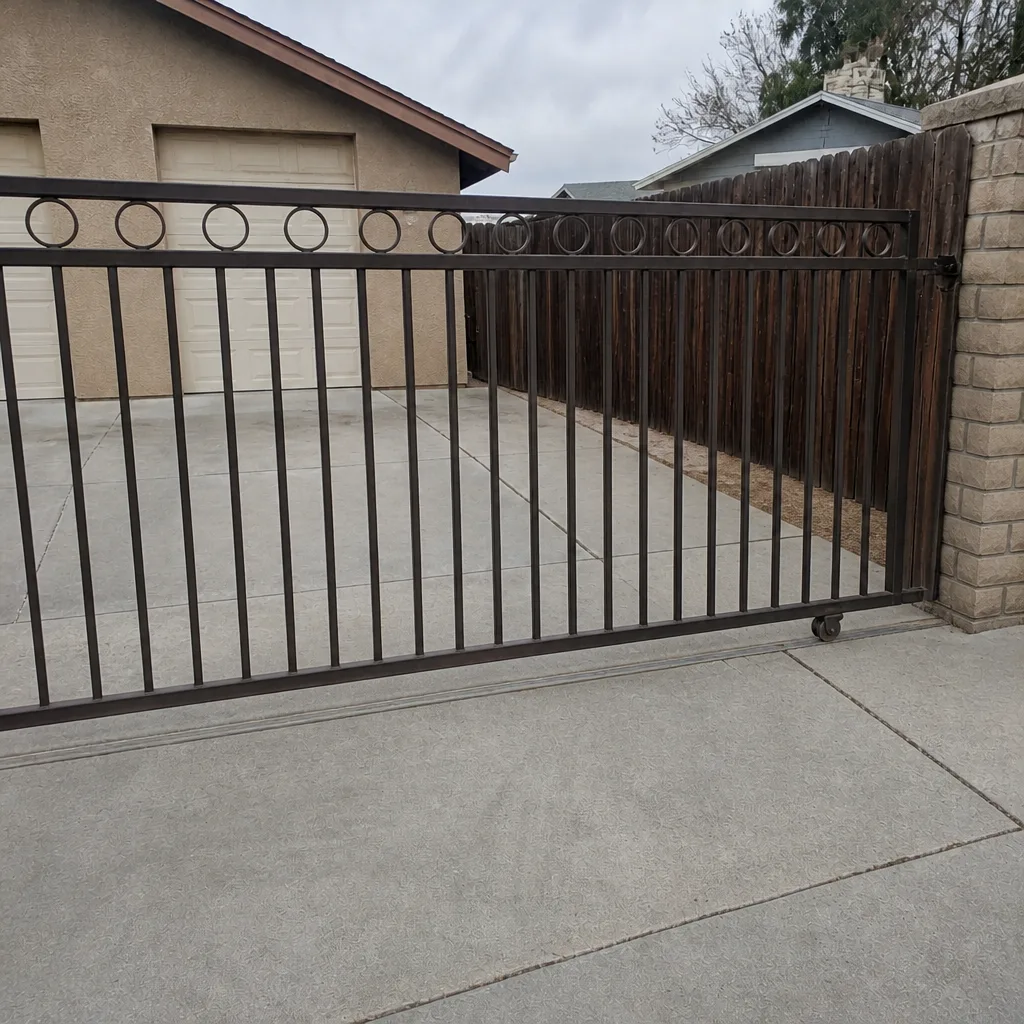
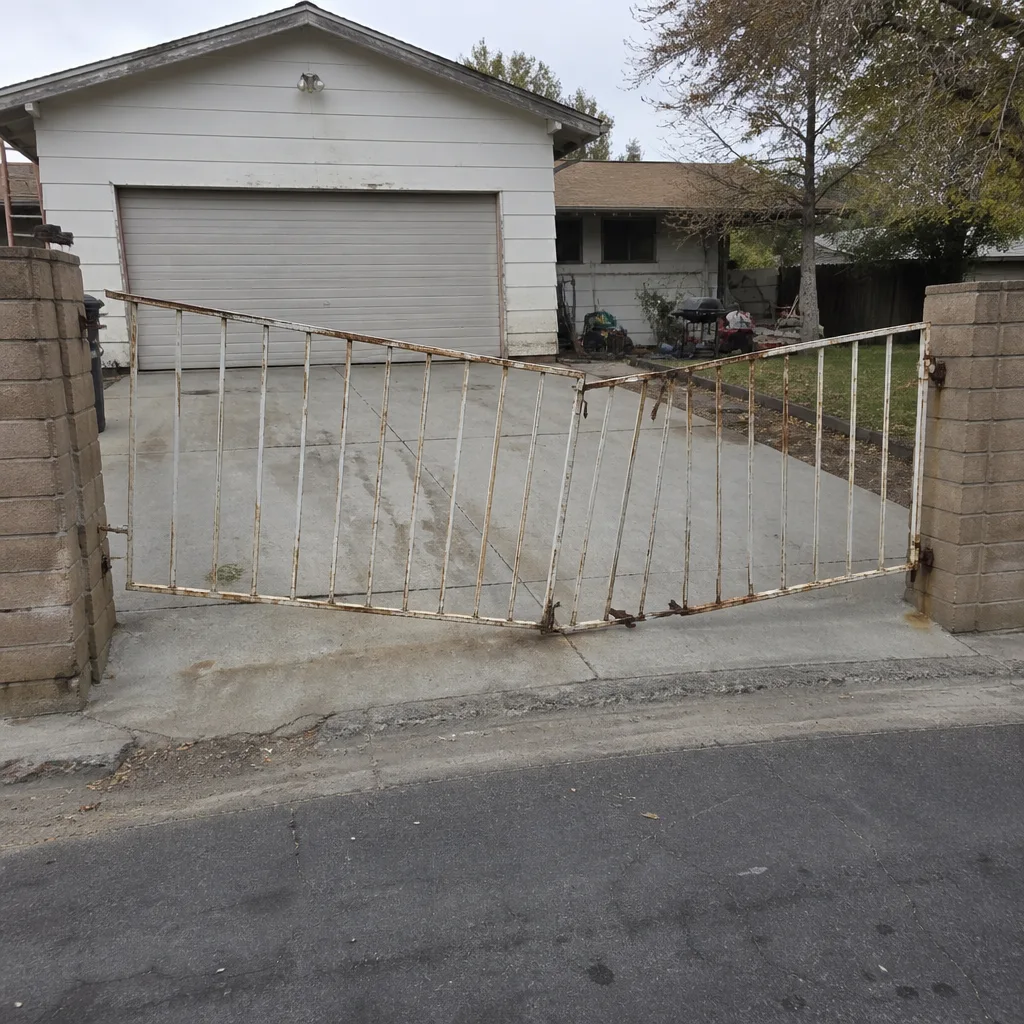 Before
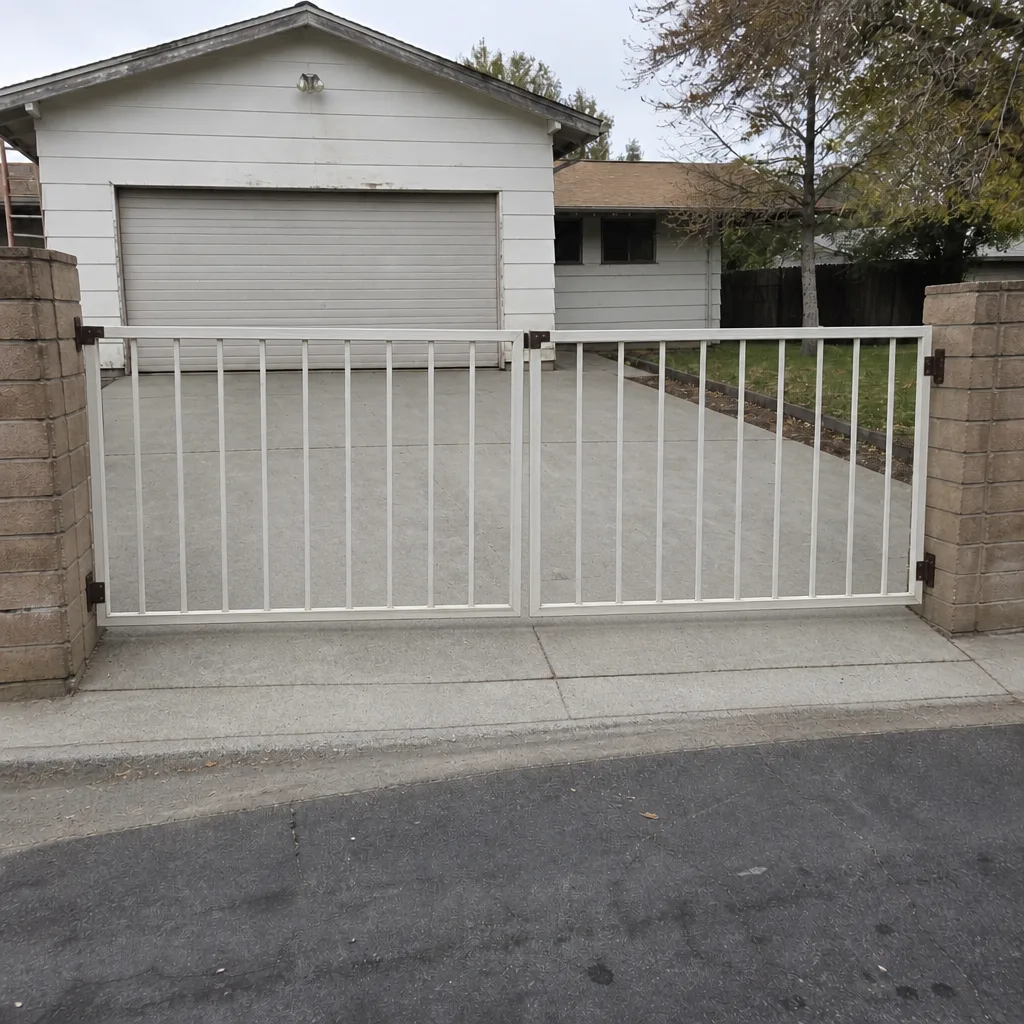 After
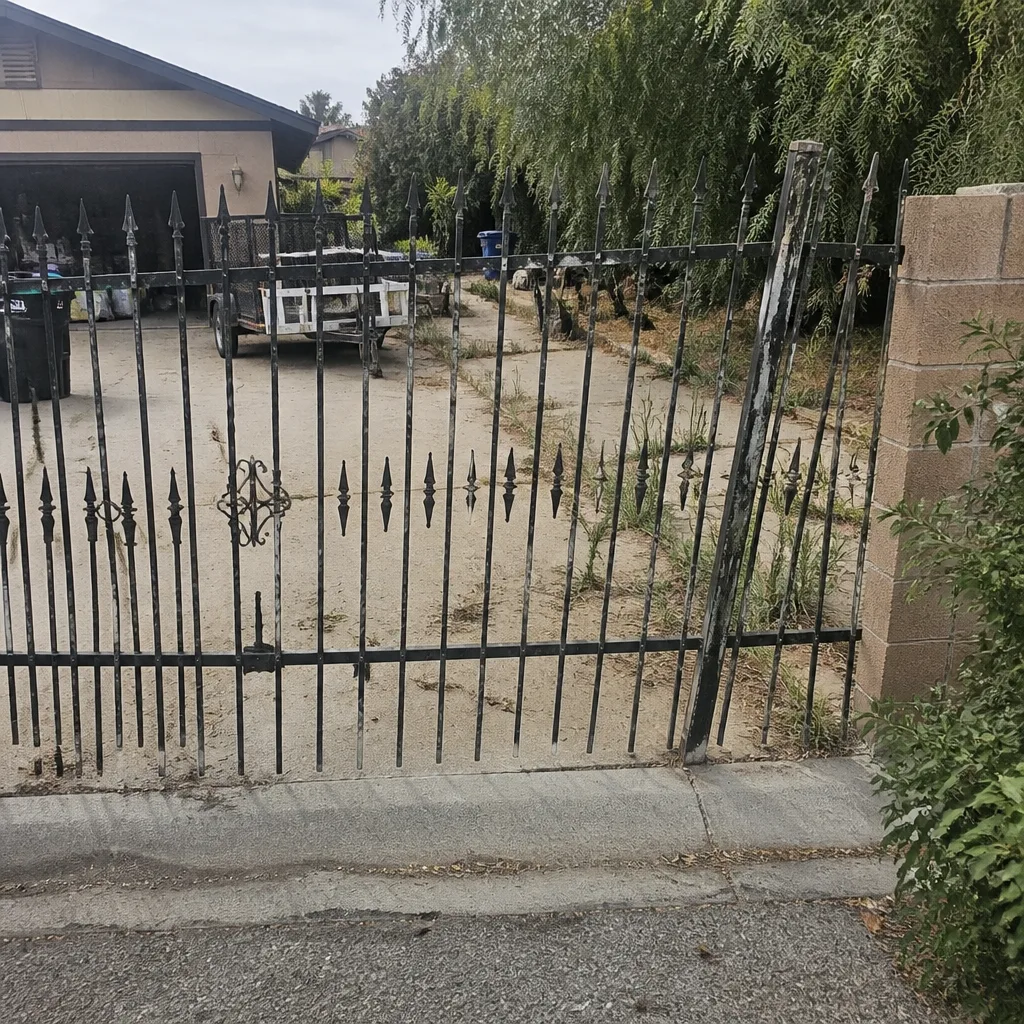
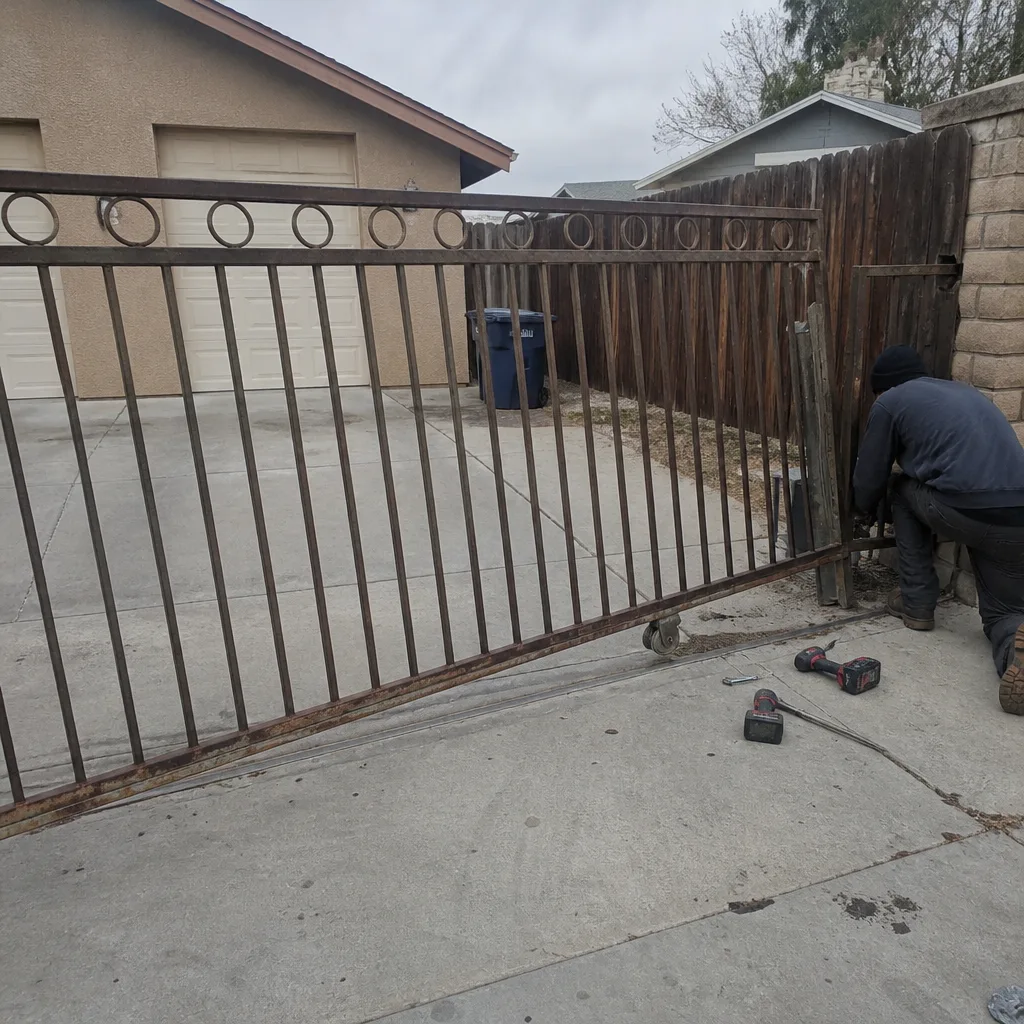 Before
 After
 Before
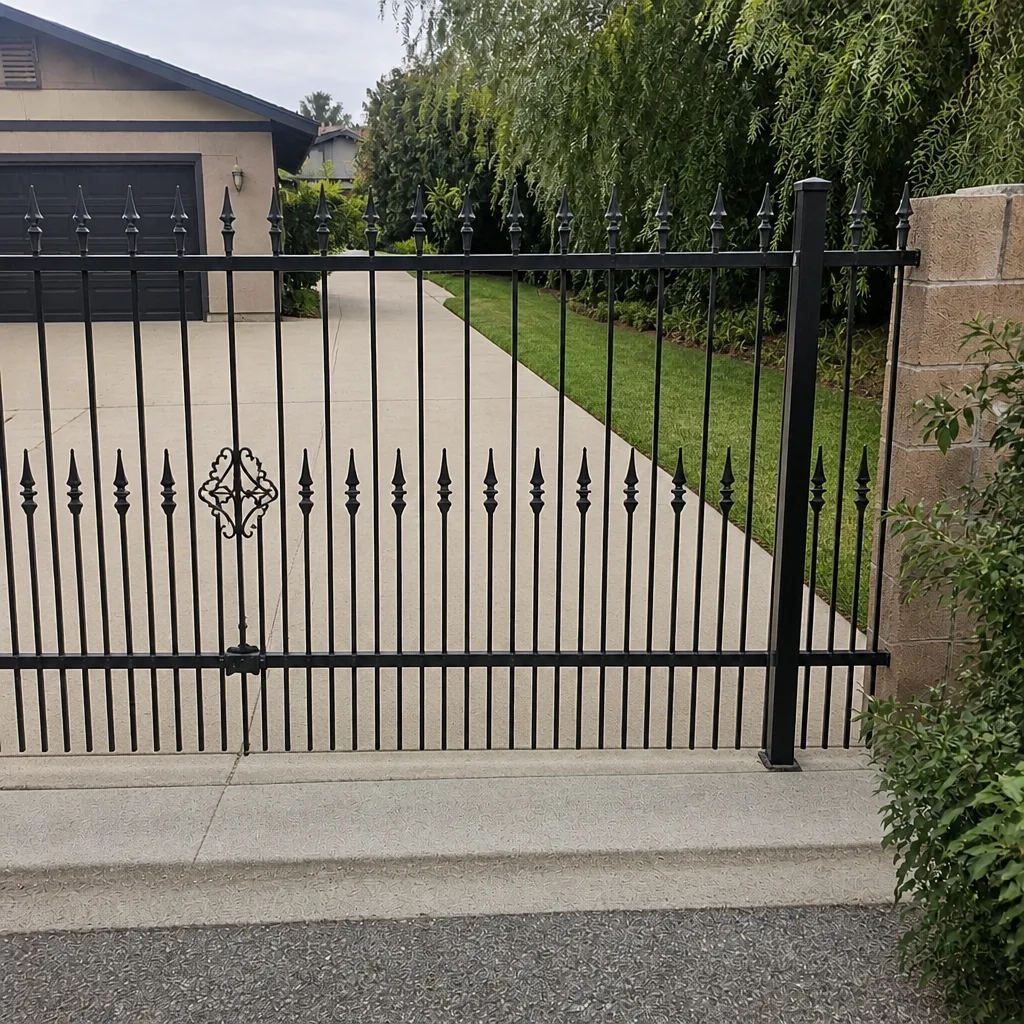 After
When to Call a Professional
Some things are worth a professional’s eyes: a footer that has to go through caliche, a pool gate that needs to pass a county inspection, a wide gate in a wind corridor, any automation with safety edges, and on-site welding for a frame that’s out of square. If your gate is a load-bearing swing carrying wind and human weight, it’s not a weekend project – the geometry and the anchoring are where the real work lives, and getting it wrong means starting over. Gatewood Fence & Gate Enterprise offers free estimates in Enterprise – call (833) 780-1547. Every job carries the 90-Day Done Right Promise in writing, and a live person answers the phone around the clock.
Frequently Asked Questions
It depends on the gate – in Clark County certain gates need a permit based on height, attachment, and whether the gate is part of a pool enclosure, while others don’t. Pool barrier gates specifically must be self-closing and self-latching to code. We check the requirement before digging on every Gatewood Fence & Gate Enterprise home project. Call (833) 780-1547 and we’ll help you sort out whether your gate needs one.
The footer has to reach past the caliche layer and into stable ground, which is often deeper than the standard two-foot recommendation written for normal soil. On many Enterprise lots a bell-shaped footer gives the gate post the resistance it needs against swing and wind load. There’s no single depth that fits every lot – it’s a site-by-site call. Call (833) 780-1547 for a free on-site look.
A sag almost always traces back to the hinge post, not the middle of the gate – if the post isn’t set plumb and solid, the gate will keep dragging no matter how many times you adjust it. Fixing the frame without fixing the post is fixing it twice. That’s the repair-first approach we take. Call (833) 780-1547 for a free second opinion on any written estimate.
Not on a same-day basis, and you shouldn’t expect a same-day promise for new installation or automation – that work is measured, ordered, and scheduled. We take a free measure, choose an operator that matches your gate’s weight and swing, and give you a written price before anything starts. Call (833) 780-1547 to set up the measure.
Galvanized steel is the most forgiving choice for wind and heat, holding up well to UV without the fading and chalking that paint suffers. Aluminum resists rust but moves more with temperature swings, and wrought iron looks best but needs periodic repainting. The frame geometry matters as much as the material. Call (833) 780-1547 and we’ll go over what fits your gate and your budget.
No – the price is quoted and agreed in writing before any work begins. Upfront pricing is a promise, not a footnote, and it’s stamped on the job. Standing offers include $40 off any repair over $200, a free second opinion on any written estimate, no trip charge inside the county, and a permanent 10% discount for seniors and veterans. Call (833) 780-1547 for a free estimate.
The Bottom Line
Installing a gate in Enterprise means building for wind load, not just opening width, anchoring through caliche to stable ground, choosing a material that survives UV and temperature swings, and confirming what Clark County requires – especially for pool barriers. The frame geometry, brace placement, footer depth, and hinge and operator positioning are the details that decide whether a gate is still true in year ten or dragging by year three. The cheapest material or the shallowest footer almost always becomes the most expensive choice. Get those right and the gate outlasts the fence around it.
If you’d rather have it done once and done right, our gate repair team in Enterprise and our install crew are one call away. Reach us at (833) 780-1547 for a free estimate – the price is quoted and agreed before any work starts, the 90-Day Done Right Promise is in writing, and a live person answers every call, day or night.
Written by the team at Gatewood Fence & Gate Enterprise.