
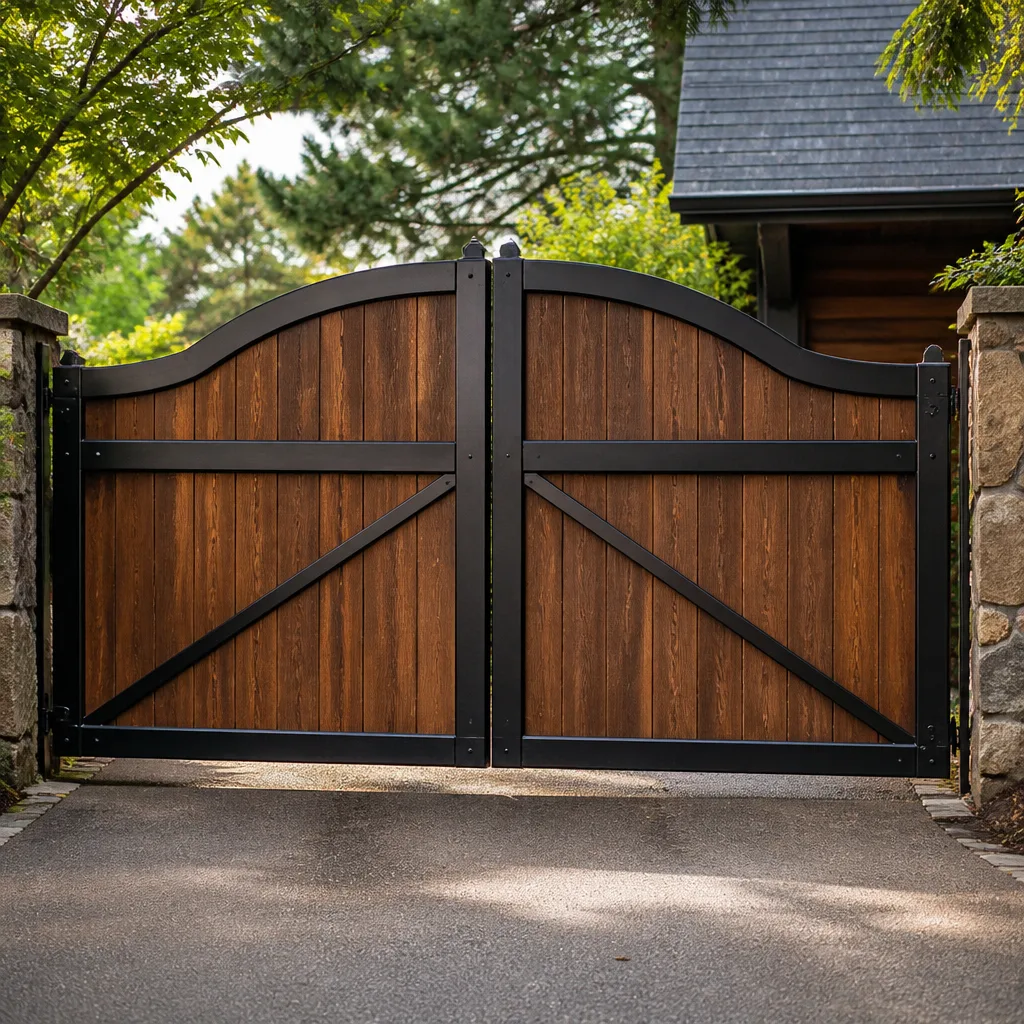
 Wood & steel frame
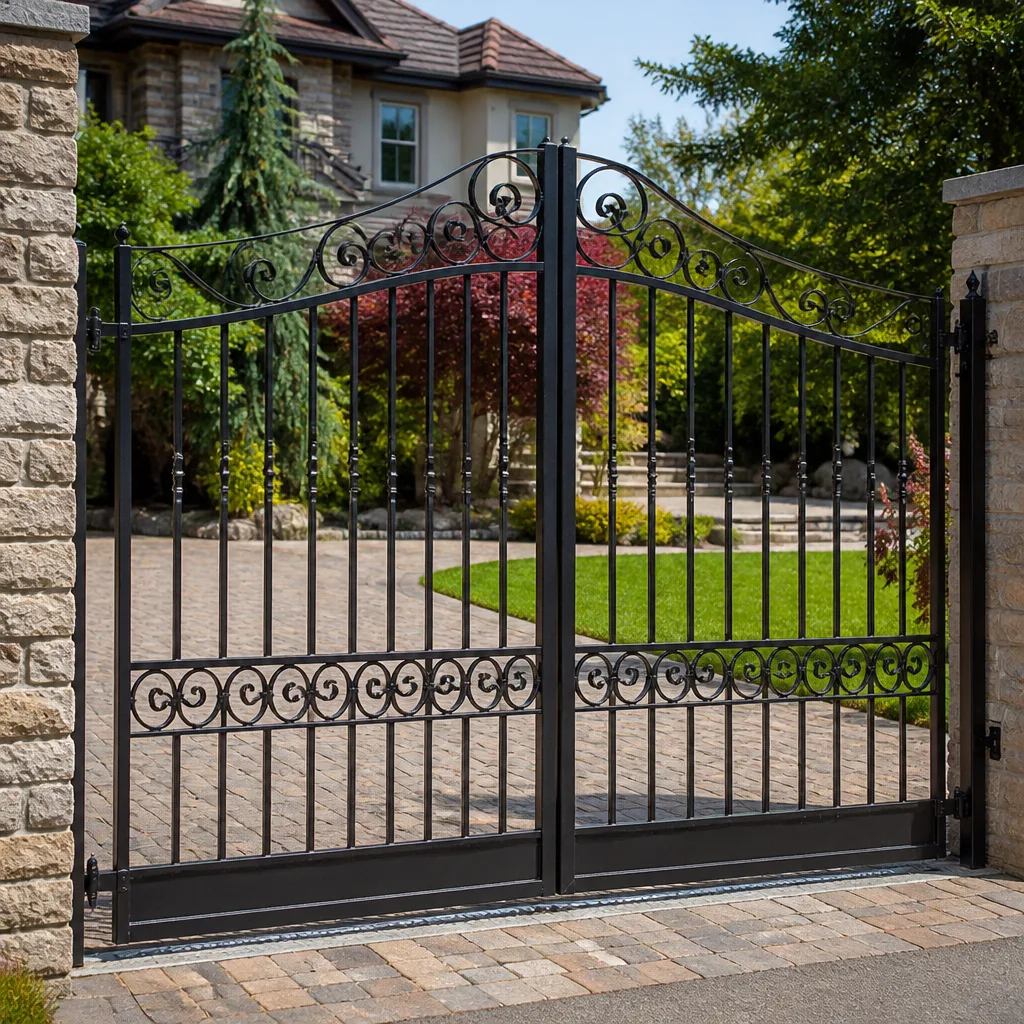 Wrought iron
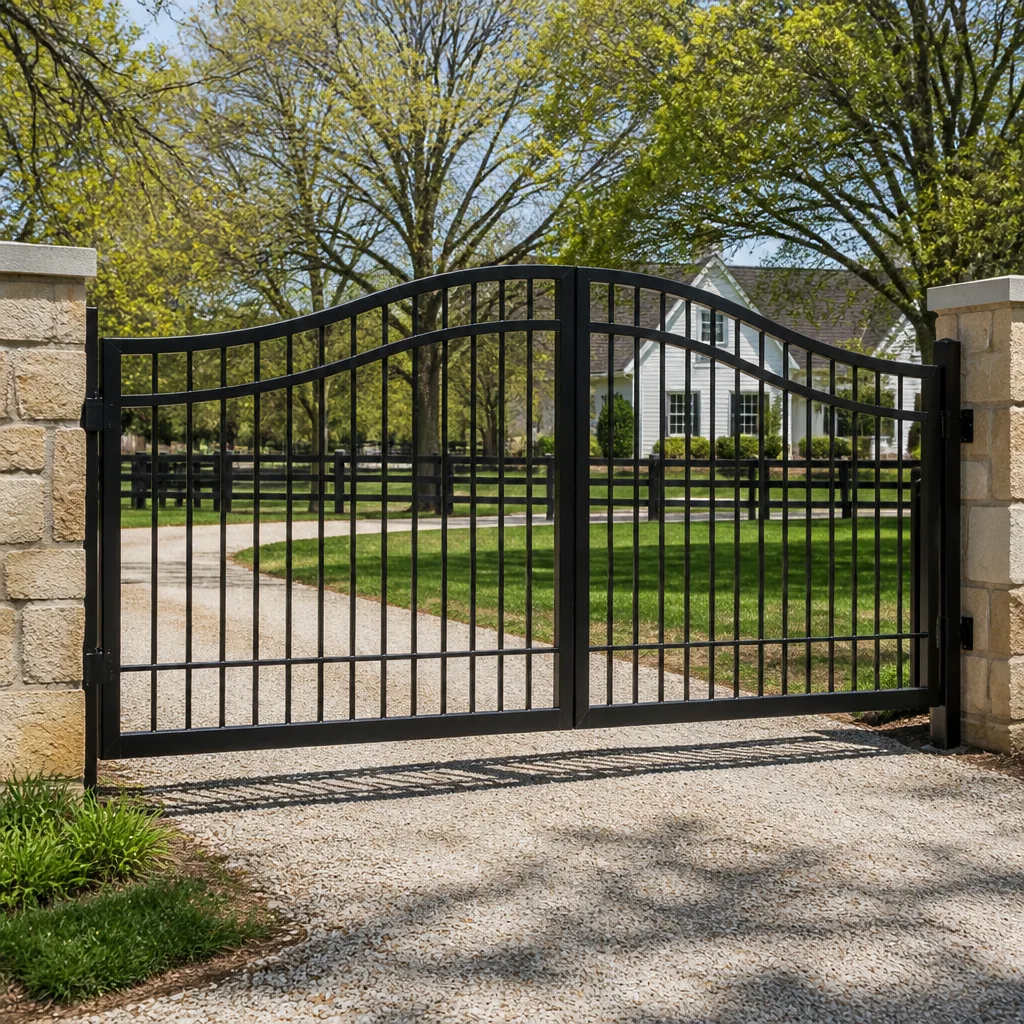 Farm & ranch
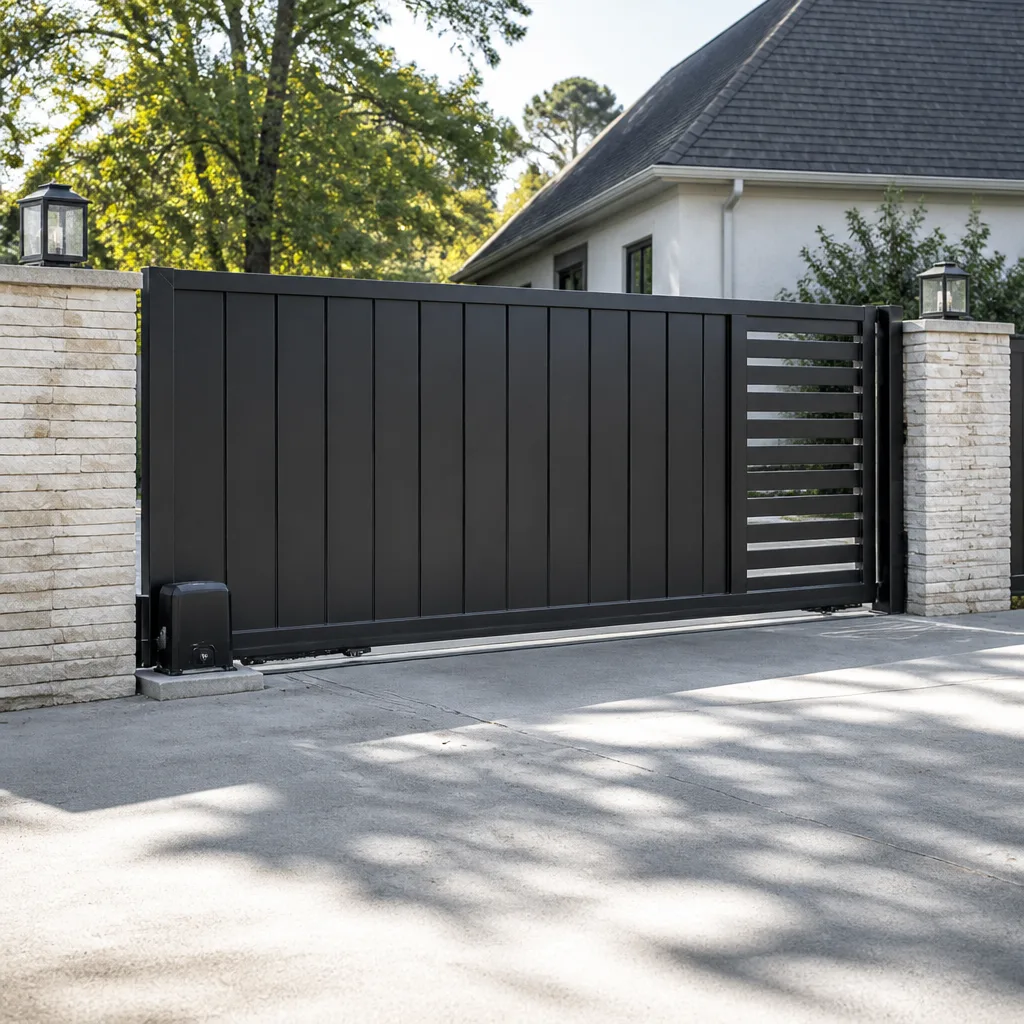 Sliding driveway gates
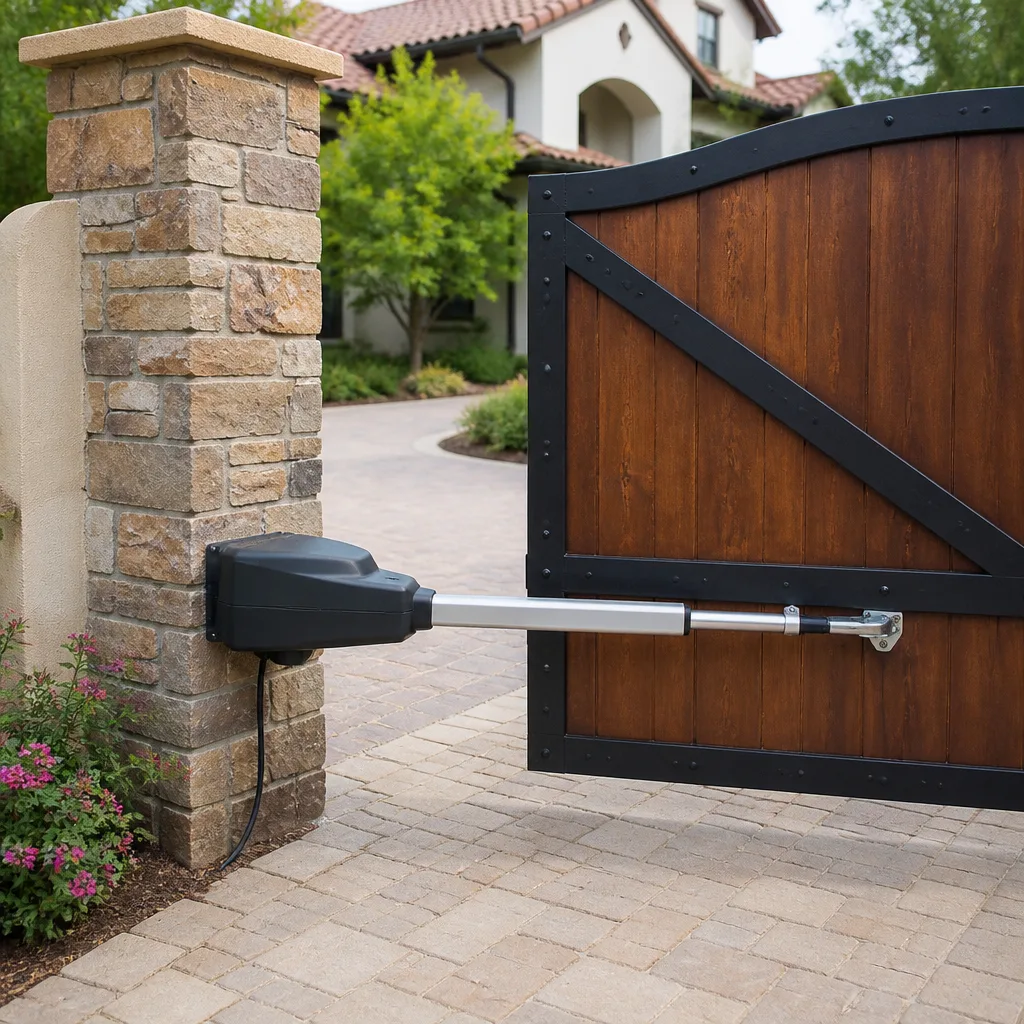 LiftMaster operators
Free on-site gate assessment - hinges, posts, and your LiftMaster or Nice gate operator checked before anything is quoted
The assessment is free and the quote is the invoice.
Get your free estimateStyles & brands we work with
- Wrought iron
- Wood & steel frame
- Farm & ranch
- Sliding driveway gates
- LiftMaster operators
See the difference
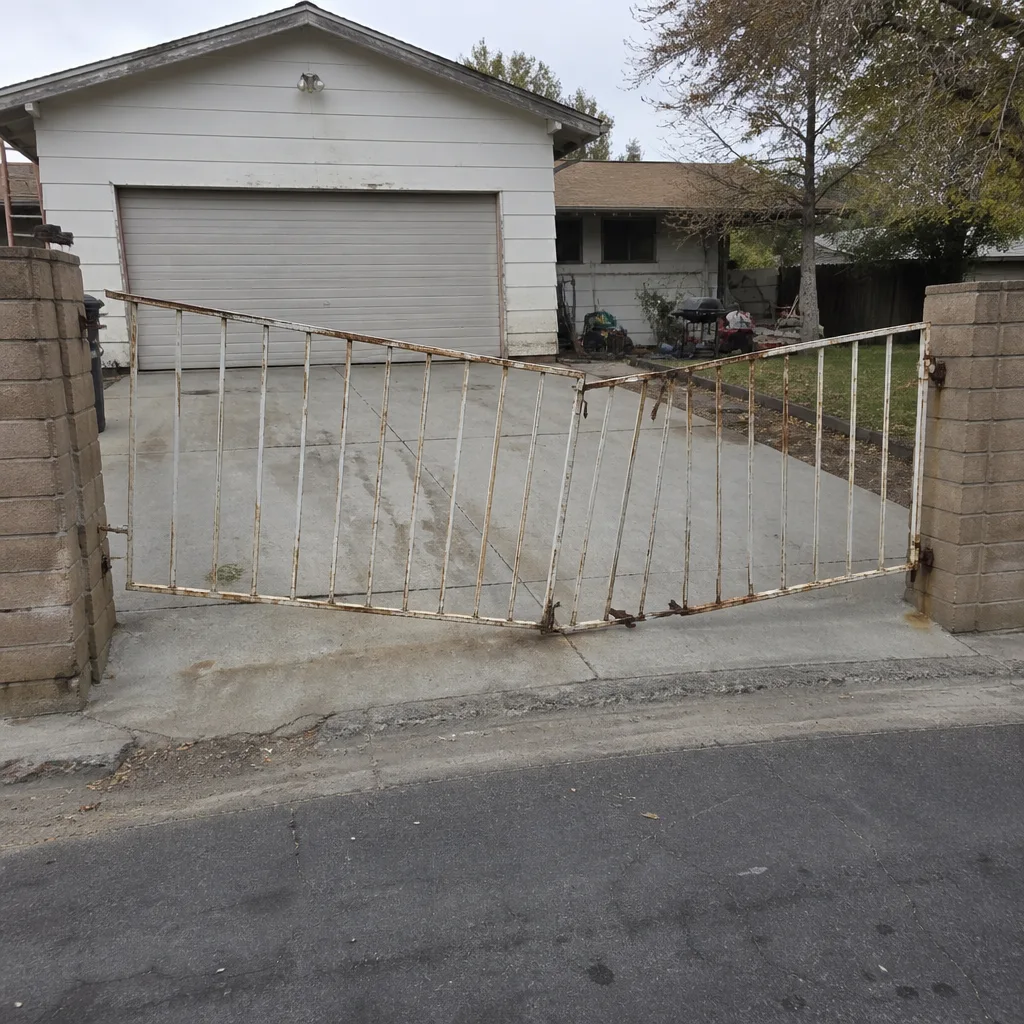 Before
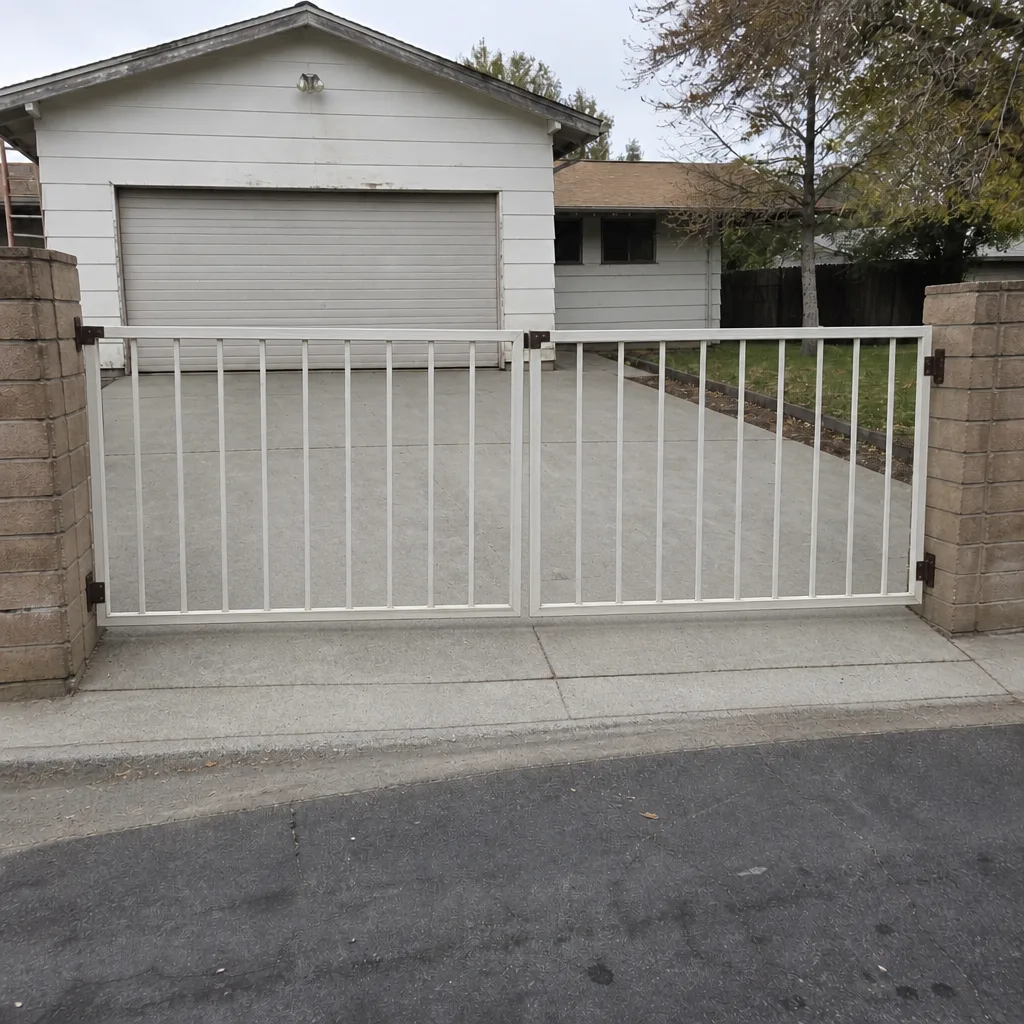 After
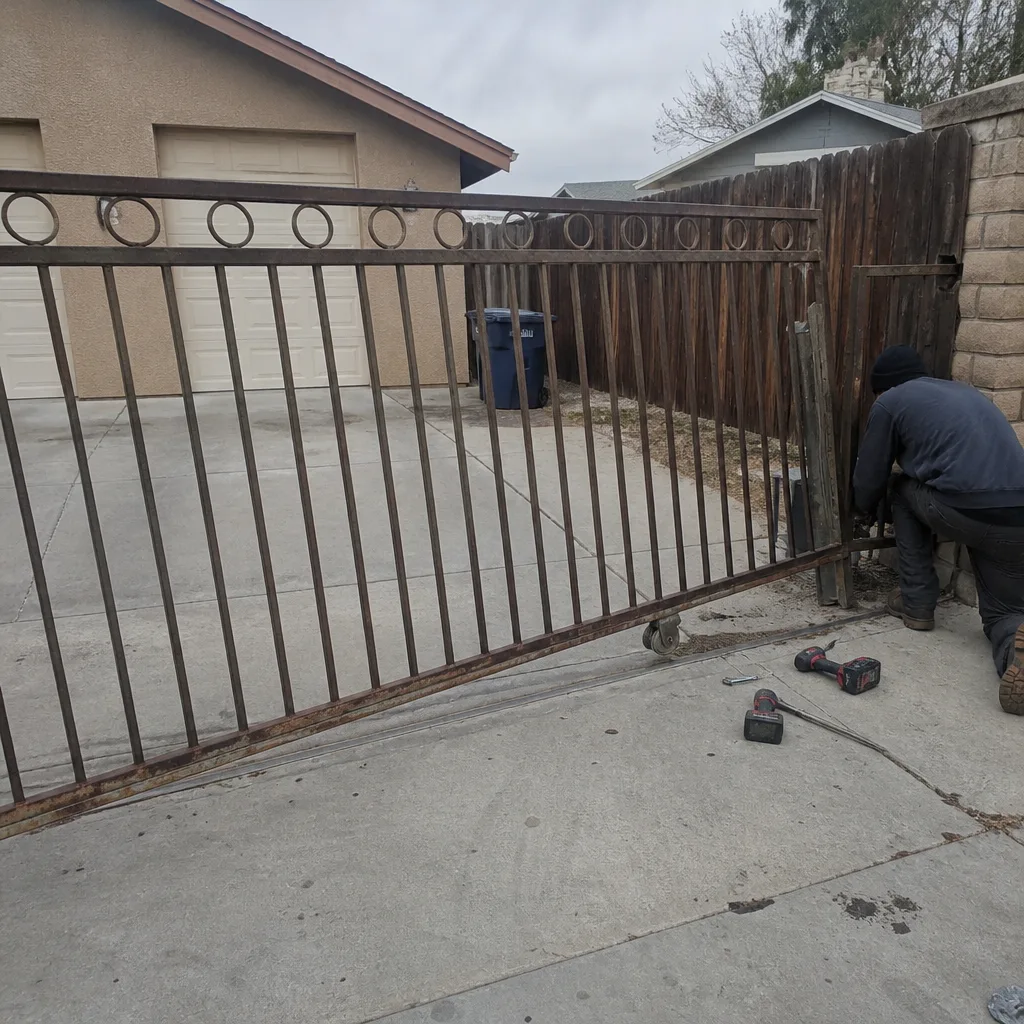 Before
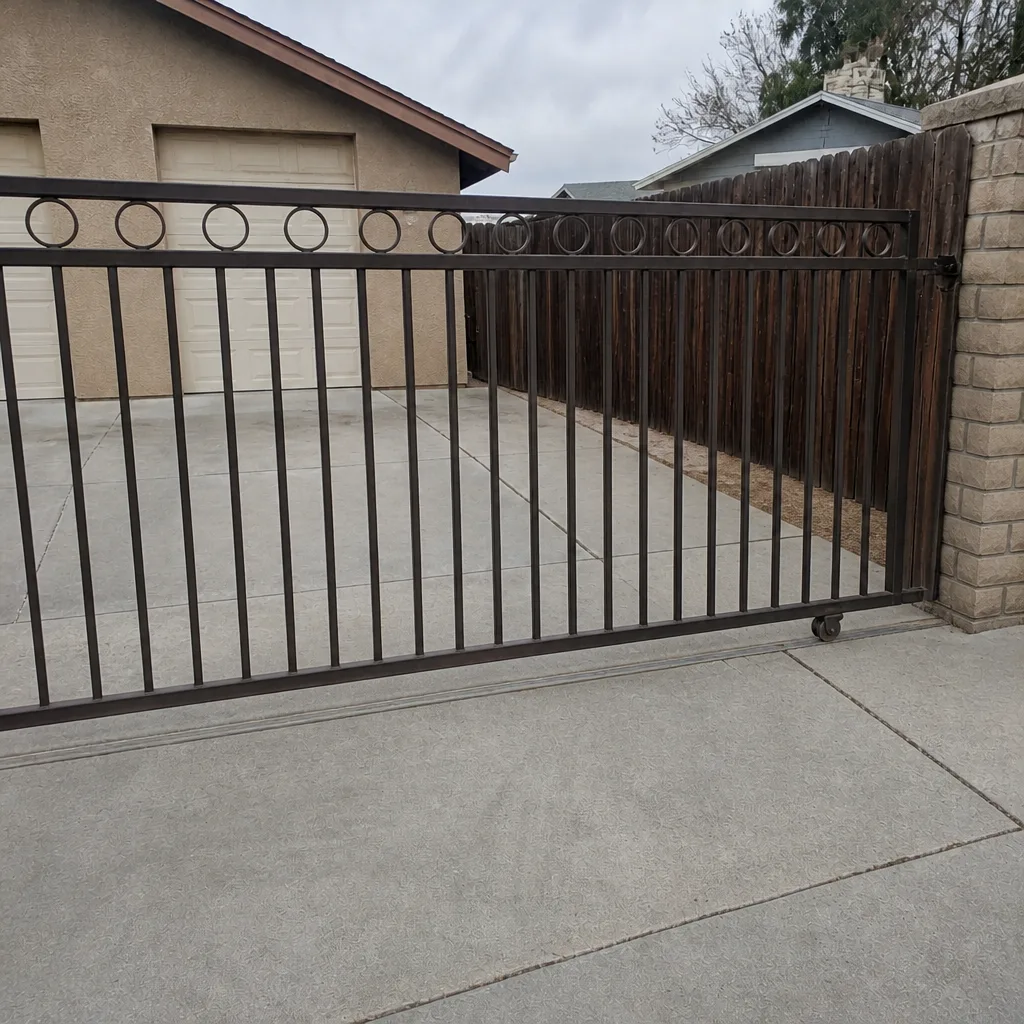 After
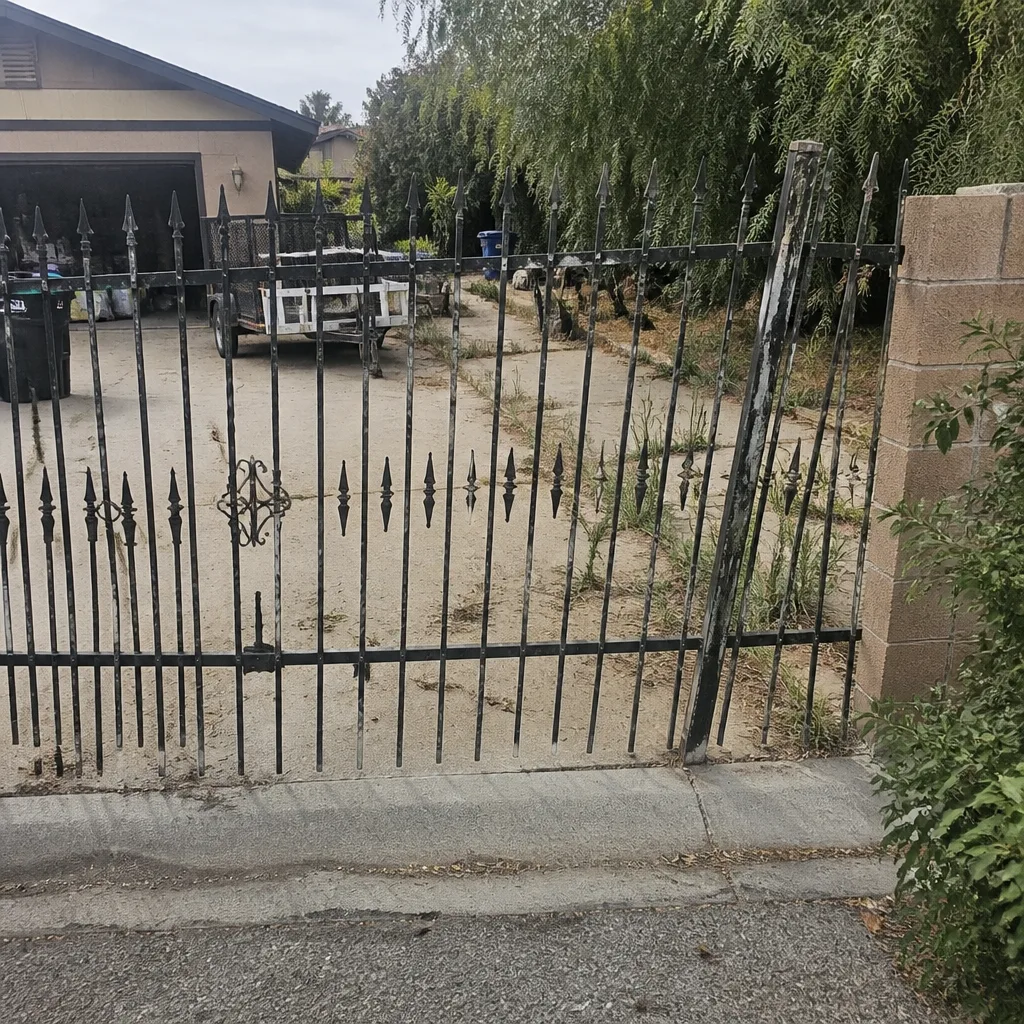 Before
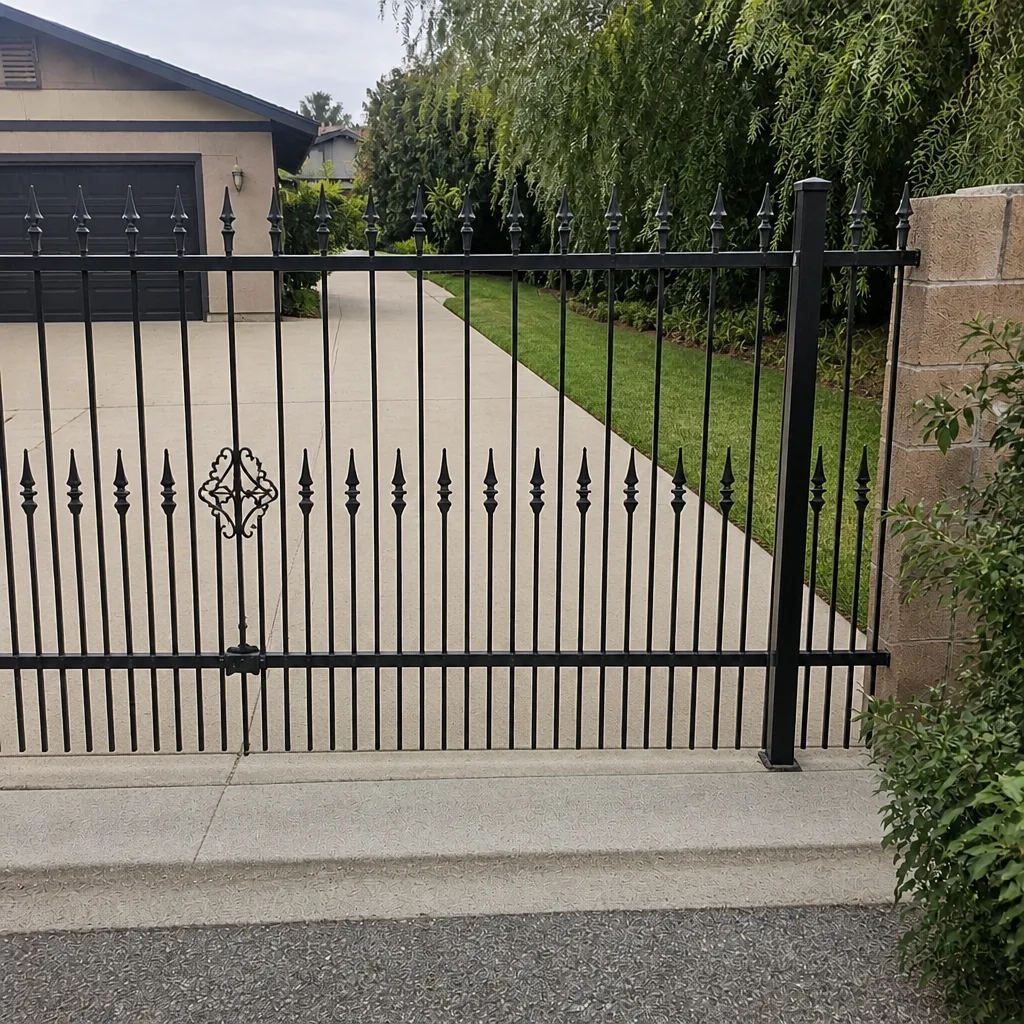 After
Swing Gate vs Sliding Gate in Enterprise, NV: Choose Sliding Unless You Have the Room and the HOA Approval for a Swing
For most Enterprise driveways, a sliding gate is the right call. That’s the bottom line. On a typical 50-foot-wide lot in a 2000s tract subdivision, a swing gate needs clear arc space equal to its width plus the operator arm travel, and with a block wall 18 inches off the driveway edge that arc lands on the sidewalk easement or HOA common space. That’s an automatic CC&R violation. Unless you’re on a wider estate lot south of the 215 with recorded approval for an ornamental swing design, sliding wins. Call (833) 780-1547 and we’ll tell you straight which one your lot can actually hold.
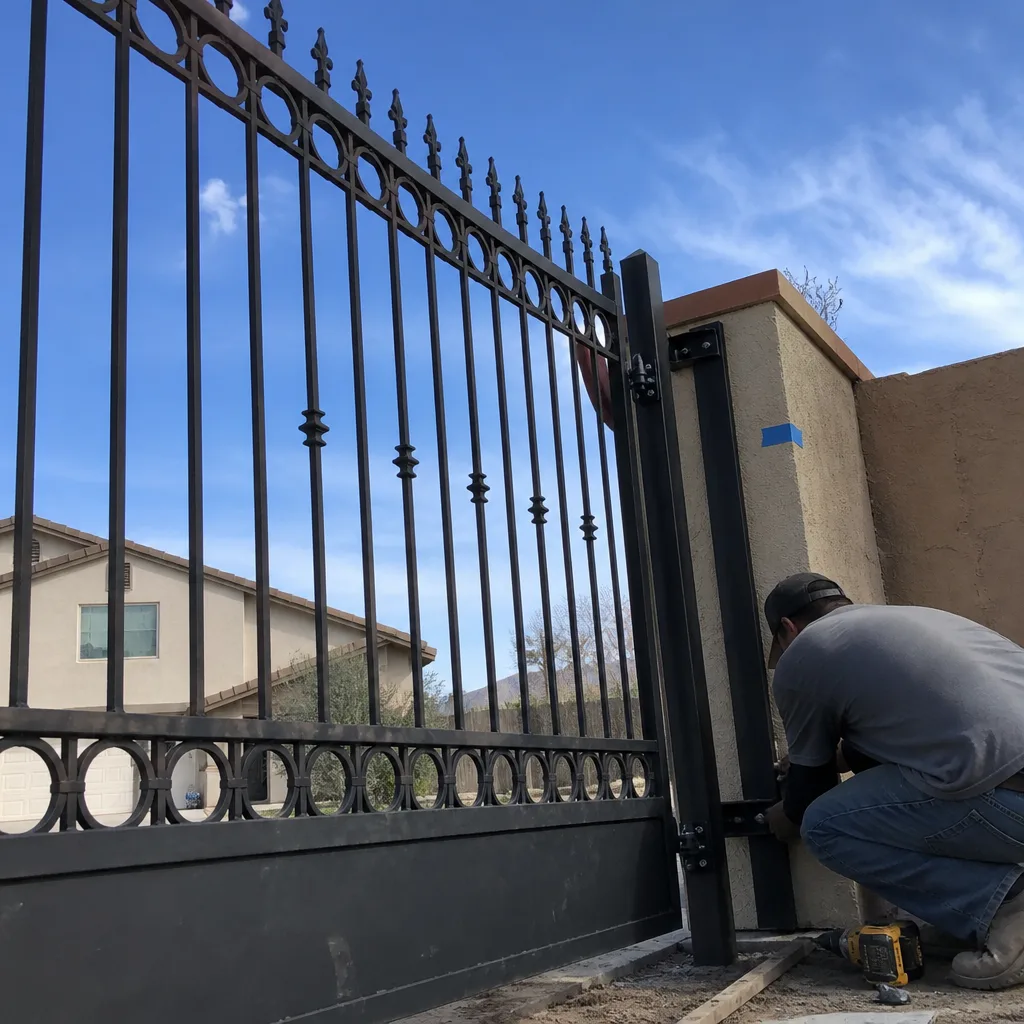
Walk any street in a 2000s Enterprise subdivision and count the swing gates. You won’t get far. Builders chose sliding gates almost universally here because the lots are narrow, the block walls sit close, and swinging iron into a parked car or a sidewalk easement is a problem the association will not let you keep. Gatewood Fence & Gate Enterprise works block after block of these identical gates, and the comparison question comes up every week.
Why Enterprise Lots Push Almost Everyone Toward Sliding Gates
The deciding factor in this town is rarely driveway length or slope. It’s the CC&Rs and the physical block-wall setback. Enterprise is a master-planned, HOA-heavy suburb of Las Vegas, and nearly every driveway gate, community gate, and side-yard gate falls under recorded covenants that dictate style, color, and placement.
Here’s the math that matters. A standard swing gate needs a clear arc roughly equal to gate width plus operator arm travel. On small-lot tracts, the block wall is often 18 inches off the driveway edge. Push an arc out from there and it crosses the sidewalk easement or shared HOA common space. Once it does, the repair isn’t the problem anymore, the compliance is.
- Sliding gates travel parallel to the wall. No arc, no easement encroachment, no argument with the association.
- Swing gates need that lateral arc free and clear, every time the gate opens, for the life of the gate.
That’s why tract builders here defaulted to sliding on nearly every single-family driveway. It wasn’t style. It was geometry and covenants.
Swing Gate vs Sliding Gate: A Straight Comparison
If you’re weighing the two, here’s how they actually line up on an Enterprise property. Pay attention to the repair column, because that’s where the surprise usually lives.
| Factor | Swing Gate | Sliding Gate |
|---|---|---|
| Space needed | Arc equal to gate width plus arm travel | Wall run parallel to gate; no arc |
| Typical Enterprise fit | Estate lots, wider drives | Small-lot tracts, most driveways |
| HOA risk | Arc often crosses easements | Stays within the property line |
| Common failure cause | Hinge posts, arms, buried rams | Rollers, tracks, rack-and-pinion, sand |
| Repair access | Buried operators may need trenching permits and HOA approval first | Entirely above grade |
| Recurring maintenance | Less sand intrusion if the drive is enclosed | Roller and rack wear from Mojave sand |
Our recommendation: sliding for the vast majority of Enterprise lots. Swing when the lot is genuinely wide, the association has approved the design in writing, and the arc clears everything. Anything else is a fight you’ll lose at inspection.
What Sliding Gates Cost You in Maintenance Here
Sliding gates dominate Enterprise’s housing stock, and that shapes repair costs in a predictable way. The track, roller carriage, and rack-and-pinion drive sit exposed to Mojave sand year-round. Wind-blown grit grinds the rollers and wears the rack teeth. Recurring roller and rack replacement is a known maintenance cost, not a surprise. Budget for it the way you’d budget for brake pads.
That same sand-and-wind combo is a known killer of photo-eye sensors. And because so many gates are HOA-controlled, the fix usually has to match the association’s exact approved style and color, not just make the gate move again. A worn Linear or Viking operator on one driveway often shows up a few doors down within a season, since these tracts were built fast and share the same hardware.
Why repair-first saves real money on sliding gates
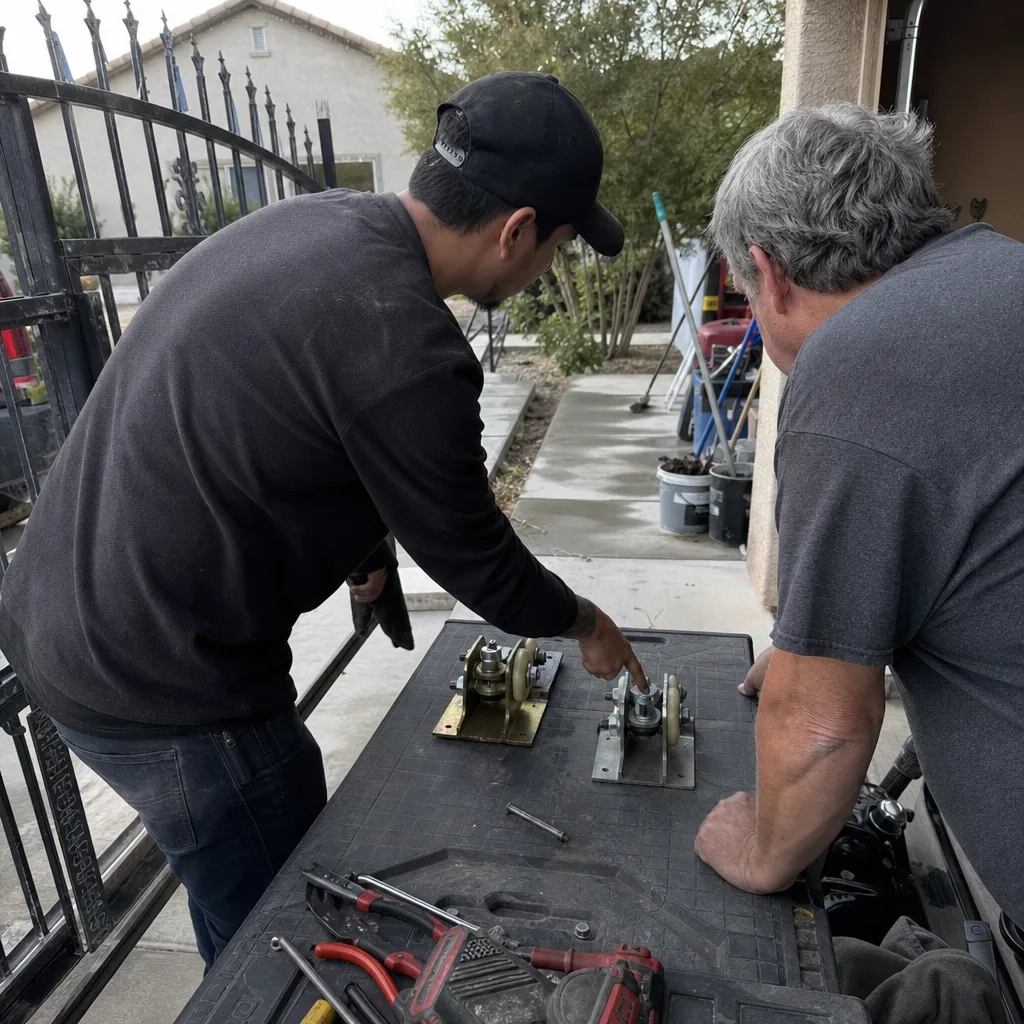
This is where the approach matters most. Many companies quote a full track-and-operator replacement the moment a carriage cracks or a few rack teeth strip. We don’t. We weld cracked roller carriages and replace individual rack teeth on-site. That often saves homeowners several hundred dollars on a repair a generic outfit would call “not worth fixing.”
The one real case for swing gates in Enterprise
Estate-style homes on larger lots, particularly south of the 215 near Mountain’s Edge, where the driveway is wide and the HOA approved ornamental swing designs, are the legitimate swing-gate properties. In those spots the drive mechanism is typically enclosed, so sand intrusion is less of a factor and the operator tends to fail from age and heat rather than grit. If you’re on a lot like that, swing is a fine choice.
Why Swing Gate Repairs Can Cost More Than They Look
People assume swing gates are simpler and cheaper to fix. In HOA communities, often they aren’t. A swing gate with a buried hydraulic ram or underground operator requires trenching permits and HOA approval before the person who shows up can even open the ground. That’s time and paperwork before a single part moves. Sliding gate repairs happen entirely above grade, which keeps both the schedule and the bill shorter.
Upfront pricing is a promise here, not a footnote. Standing offers don’t require haggling: $40 off any repair over $200, no trip charge inside the county, a free second opinion on any written estimate, and a permanent 10% discount for seniors and veterans. If the fix is a welded carriage and a set of teeth, that’s what you pay for. You can also drive to the shop and look us in the eye before anyone touches your gate.
How We Approach a Gate Repair: Step by Step
- Identify the gate type and its constraints. Sliding or swing, and what the CC&Rs allow for style, color, and placement.
- Check the hinge post and frame, not just the surface. A gate sags in the hinge post, not in the middle, and that’s where we start.
- Inspect the drive. Rollers, track, rack-and-pinion, or the arm and ram, whichever applies, plus the operator and control board.
- Test the safety eyes and sensors. Silt, sand, and heat all misalign photo-eyes; we confirm they read correctly before calling it done.
- Repair, don’t replace, wherever the part can be saved. On-site welding and individual part replacement keep the gate in your driveway and the cost down.
- Confirm the gate closes on its own and clears the full travel. Show me the gate closing on its own and I’ll show you where it’s failing; we don’t leave until it runs clean.
When a gate has genuinely reached the end of its life, that’s a different conversation, handled through Gate Installation in Enterprise. For brands like DoorKing on community entries or Ghost Controls on residential drives, we service what’s there before recommending anything new.
FAQs
A sliding gate is better for most Enterprise HOA lots. The narrow lots and close block walls mean a swing gate’s arc usually crosses a sidewalk easement or HOA common space, which is a CC&R violation. Swing only makes sense on wider estate lots with written HOA approval for the design. Call (833) 780-1547 and we’ll check your specific lot and covenants before you decide.
Most sliding gate repairs in Enterprise run in the low hundreds for roller, carriage, or rack work, and several hundred more when an operator or control board is involved. Exact pricing depends on the gate and the part, and estimates are free and upfront. Call (833) 780-1547 for an exact quote, and ask about $40 off any repair over $200.
Sometimes, but expect steps before the ground opens. A buried ram or underground operator usually requires trenching permits and HOA approval before work starts, which adds time to the job. We’ll tell you upfront whether it’s worth doing versus converting. Call (833) 780-1547 for a second opinion on any written estimate.
Wind-blown Mojave sand grinds the rollers, track, and rack teeth year-round, and summer heat bakes the operator and control board. That sand also misaligns photo-eye sensors. It’s normal wear for the climate, and it’s why we weld cracked carriages and replace individual rack teeth on-site instead of quoting a whole new track. Call (833) 780-1547 to get yours looked at.
If you’d rather have it looked at than guess, Gatewood Fence & Gate Enterprise offers a no-pressure assessment in Enterprise. A live person answers every call, and on-site welding means the gate stays in your driveway. Call (833) 780-1547 for a free estimate. Every job carries the 90-Day Done Right Promise in writing.
Written by the team at Gatewood Fence & Gate Enterprise, serving Enterprise, NV.