
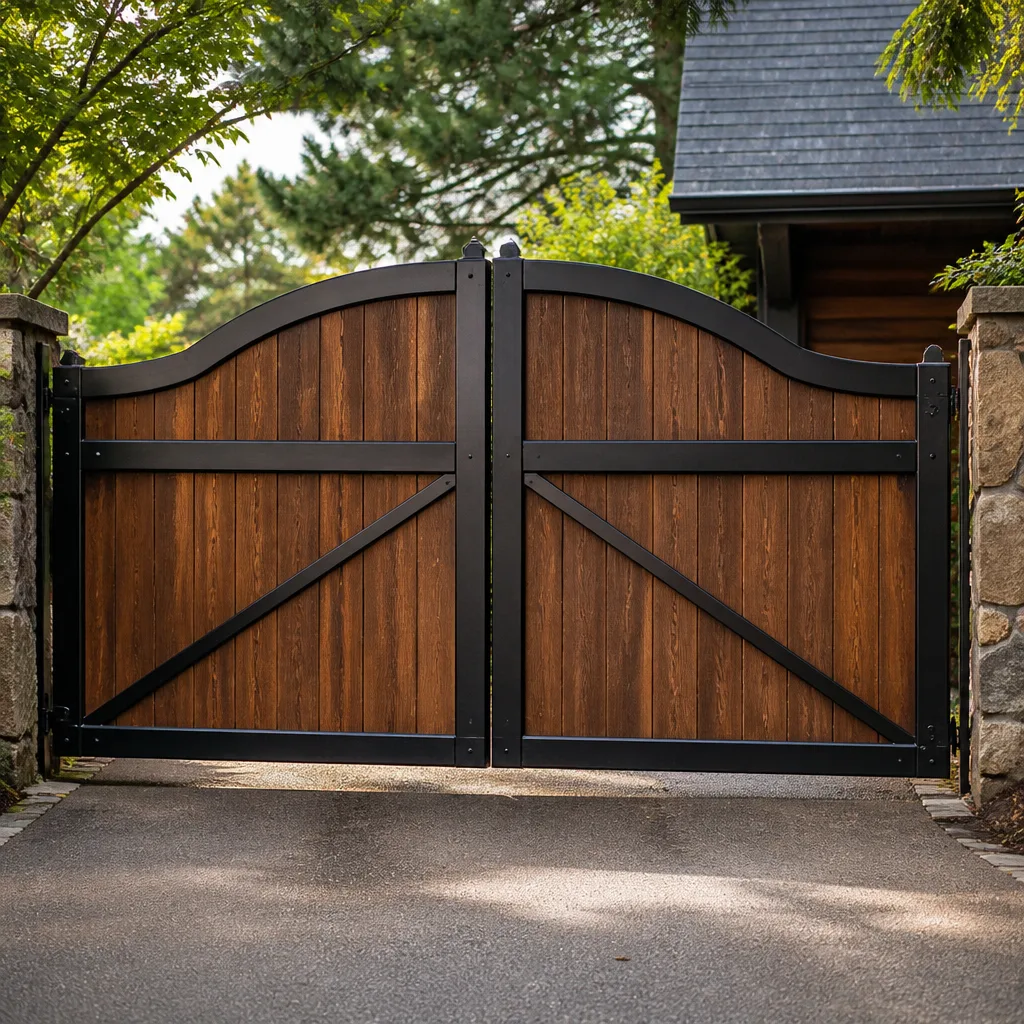
 Wood & steel frame
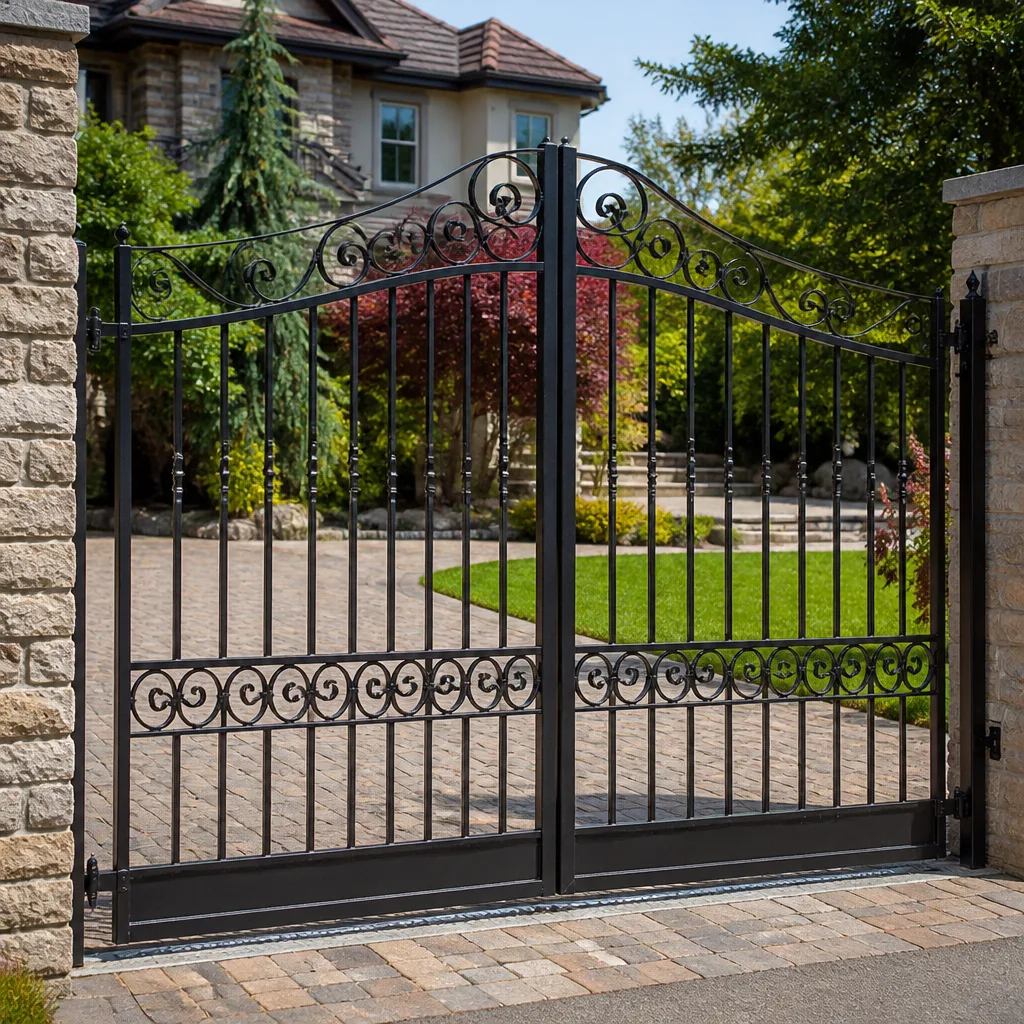 Wrought iron
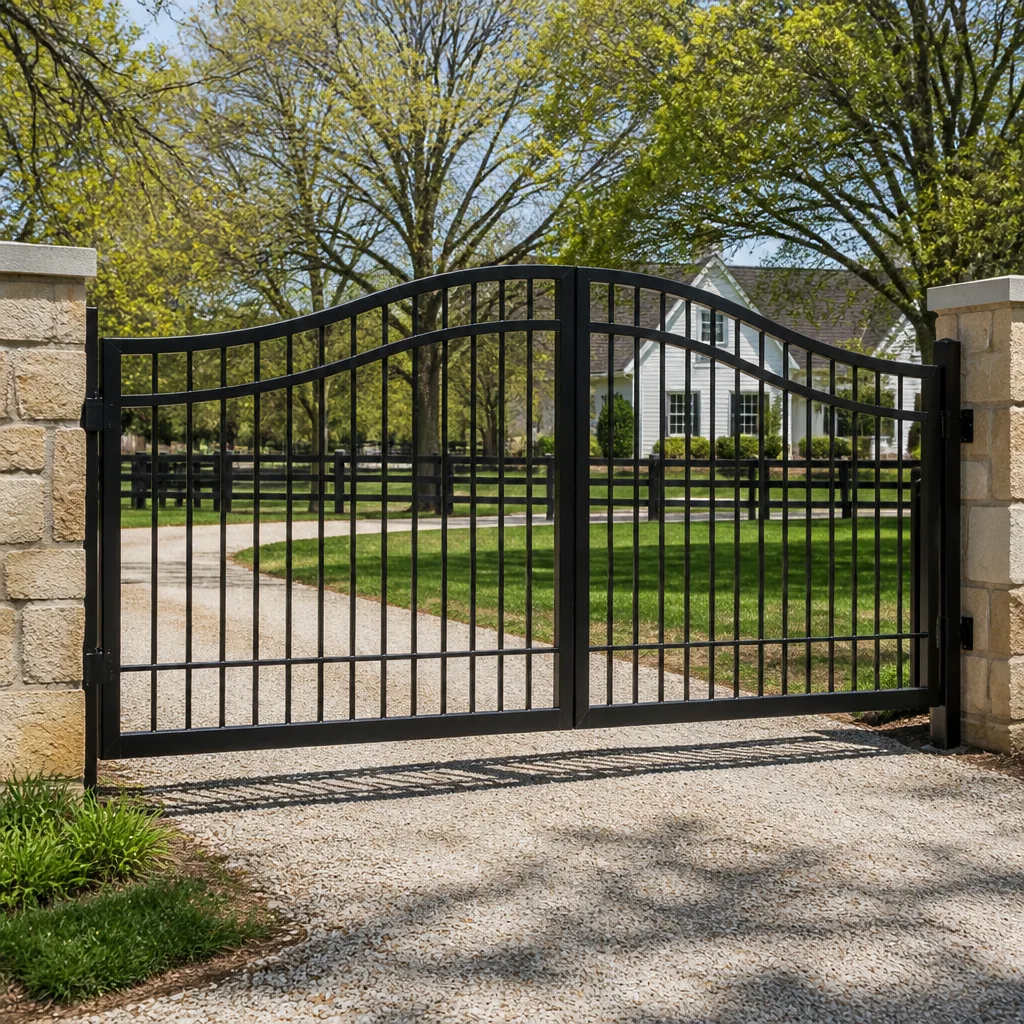 Farm & ranch
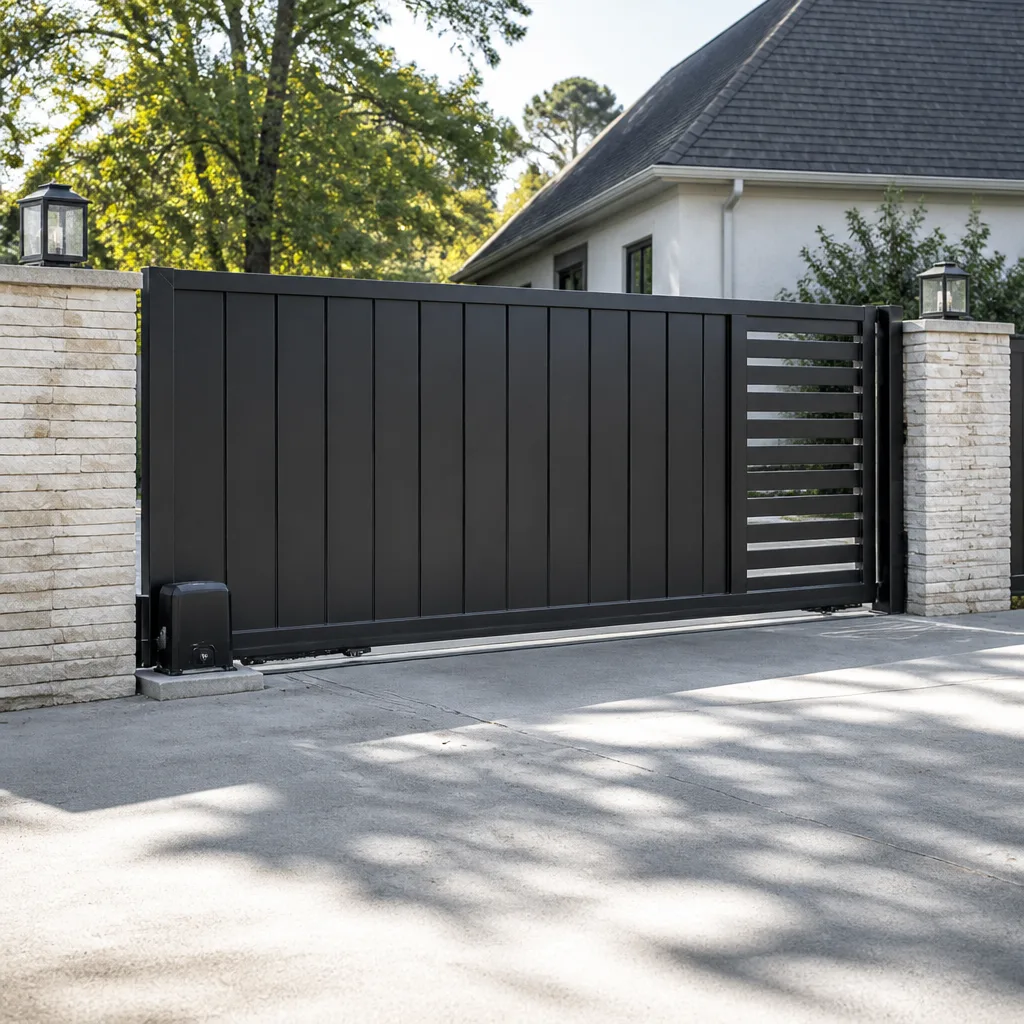 Sliding driveway gates
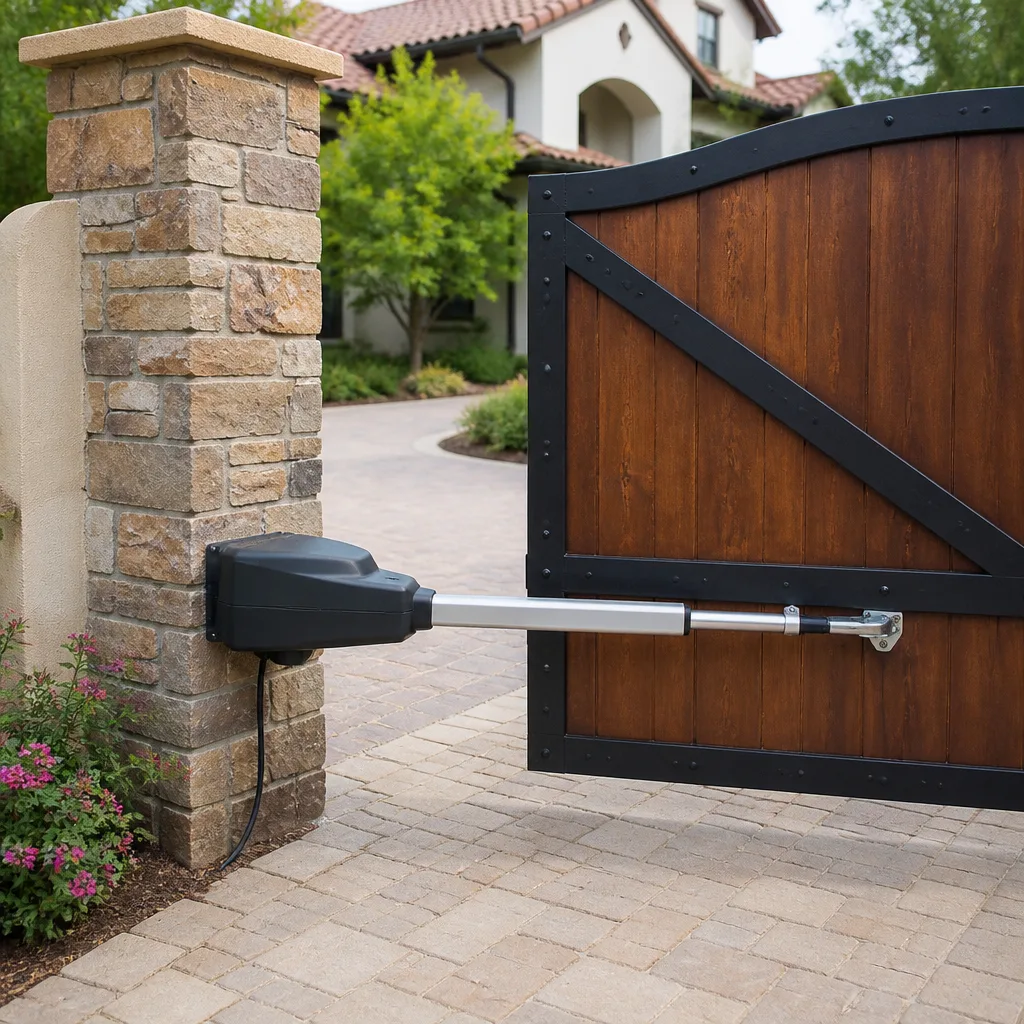 LiftMaster operators
Free on-site gate assessment - hinges, posts, and your LiftMaster or Nice gate operator checked before anything is quoted
The assessment is free and the quote is the invoice.
Get your free estimateStyles & brands we work with
- Wrought iron
- Wood & steel frame
- Farm & ranch
- Sliding driveway gates
- LiftMaster operators
See the difference
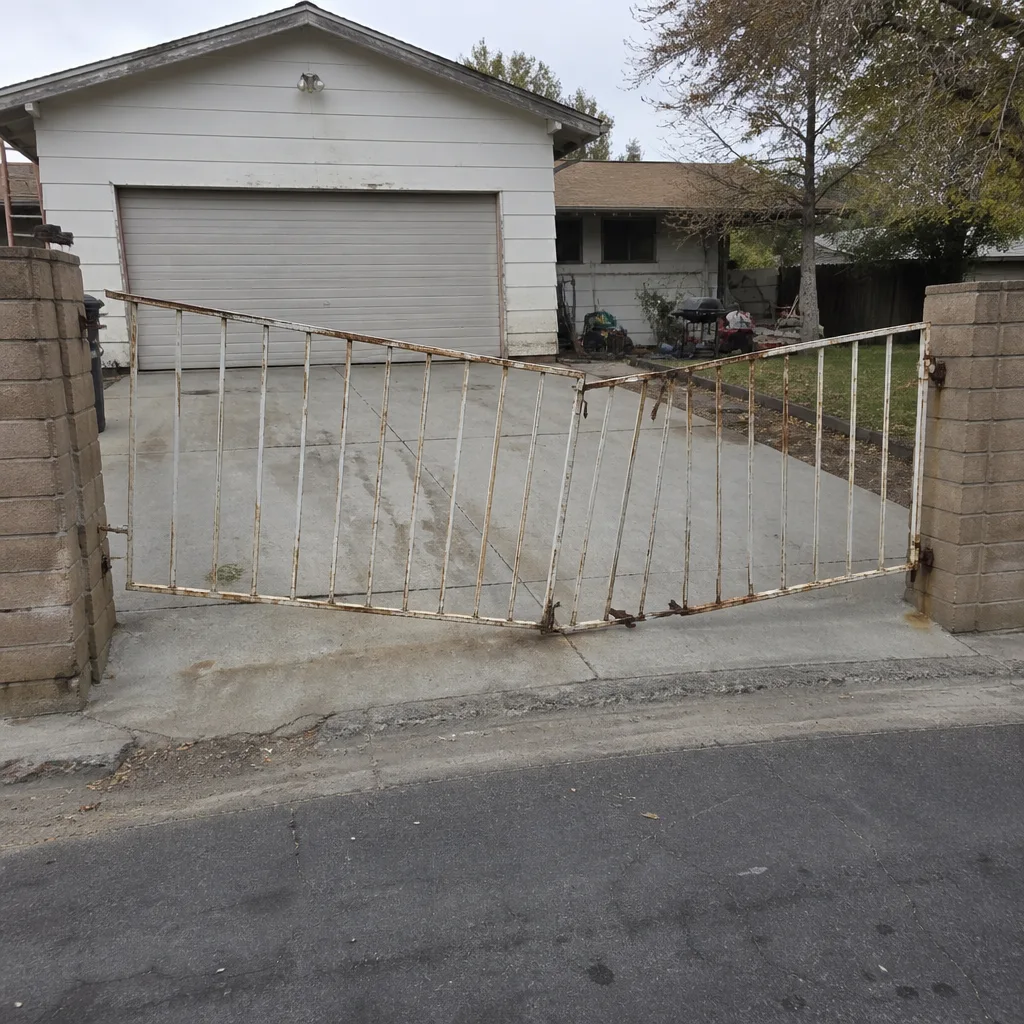 Before
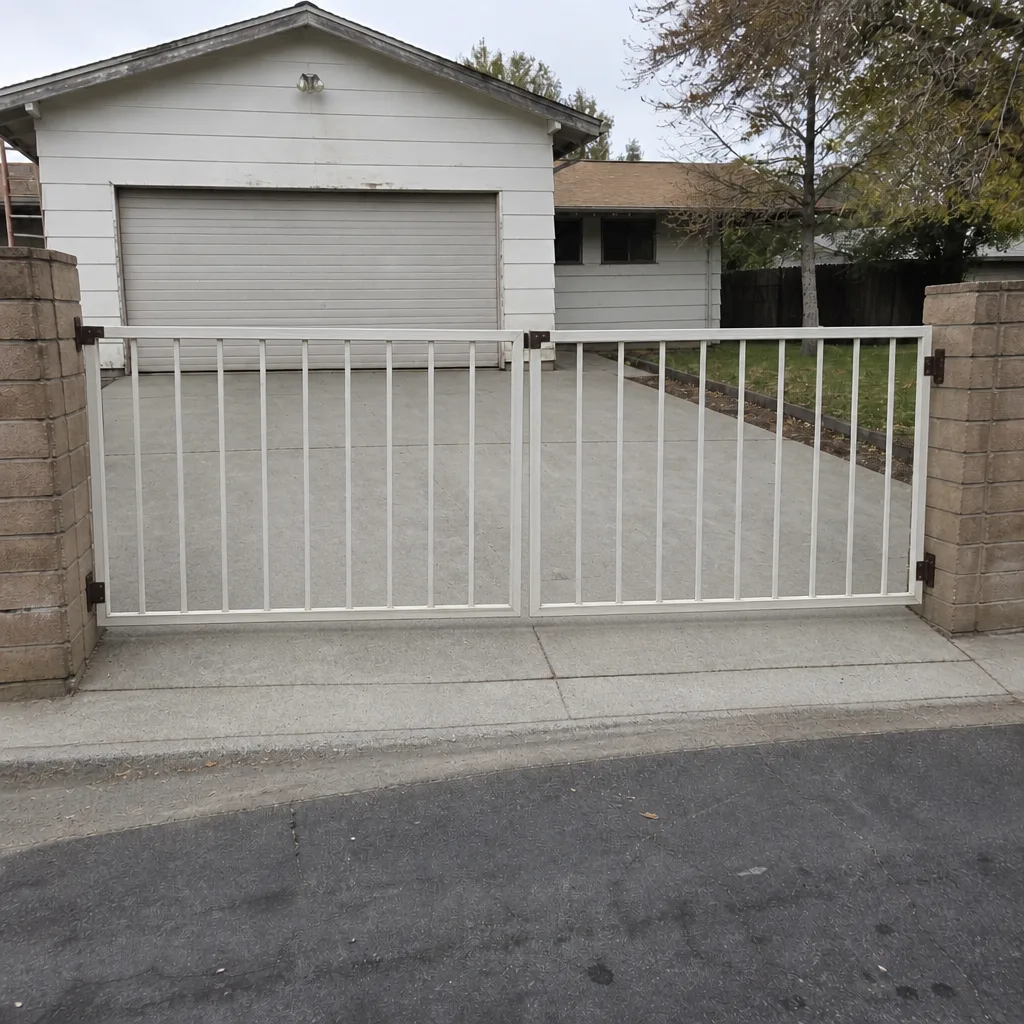 After
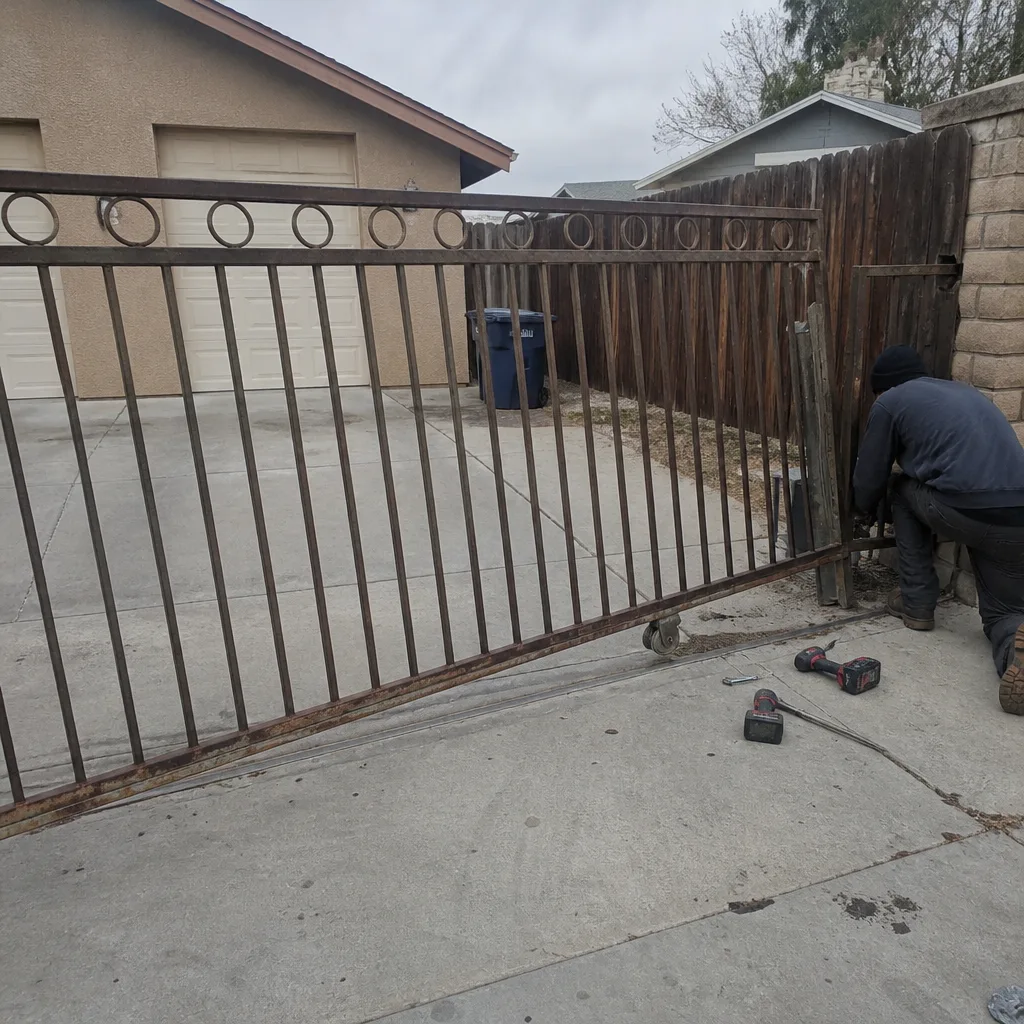 Before
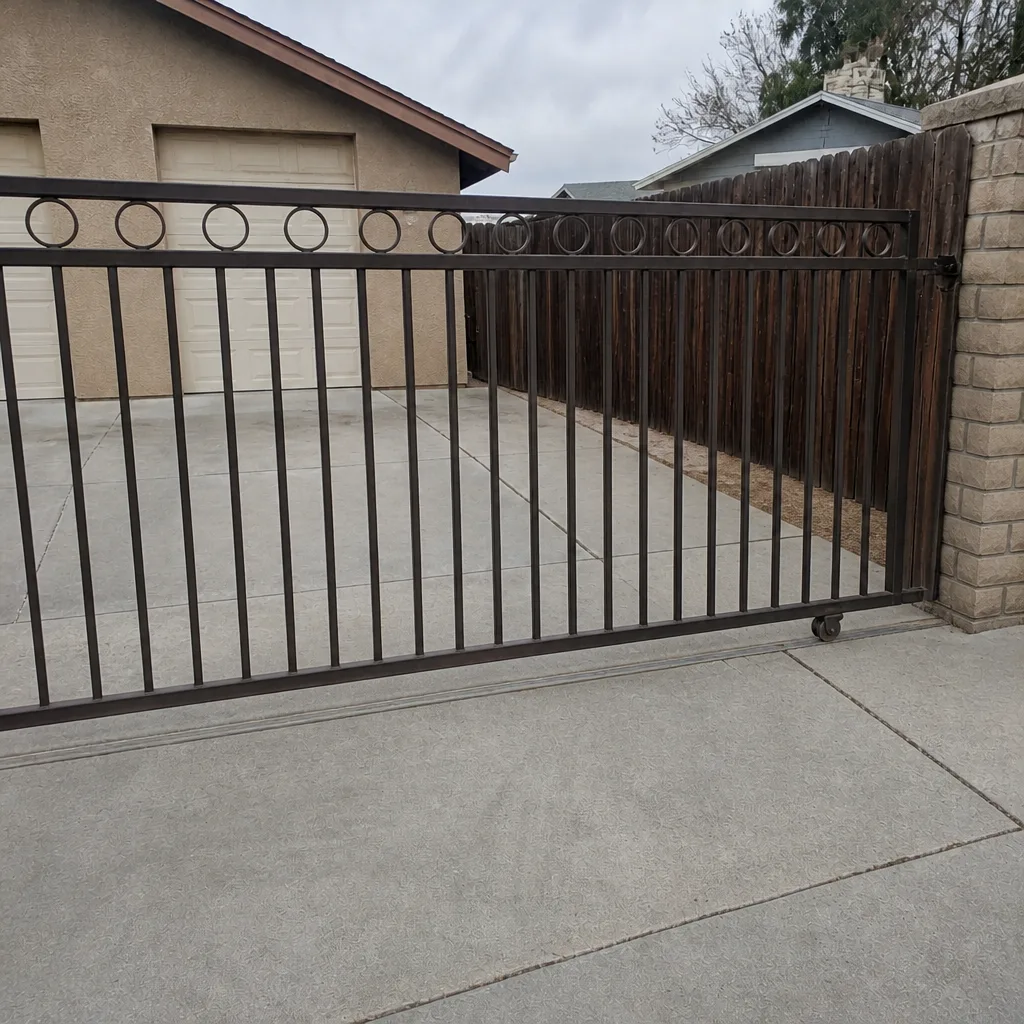 After
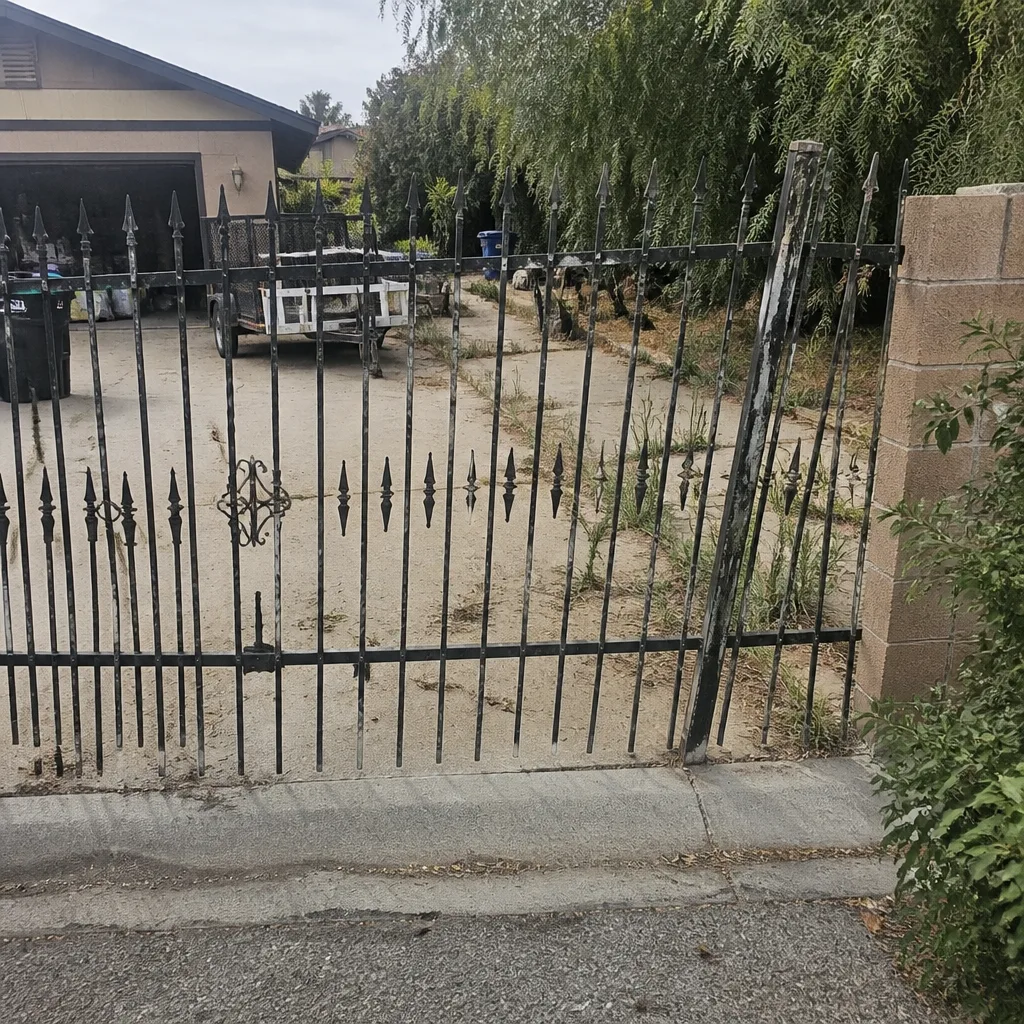 Before
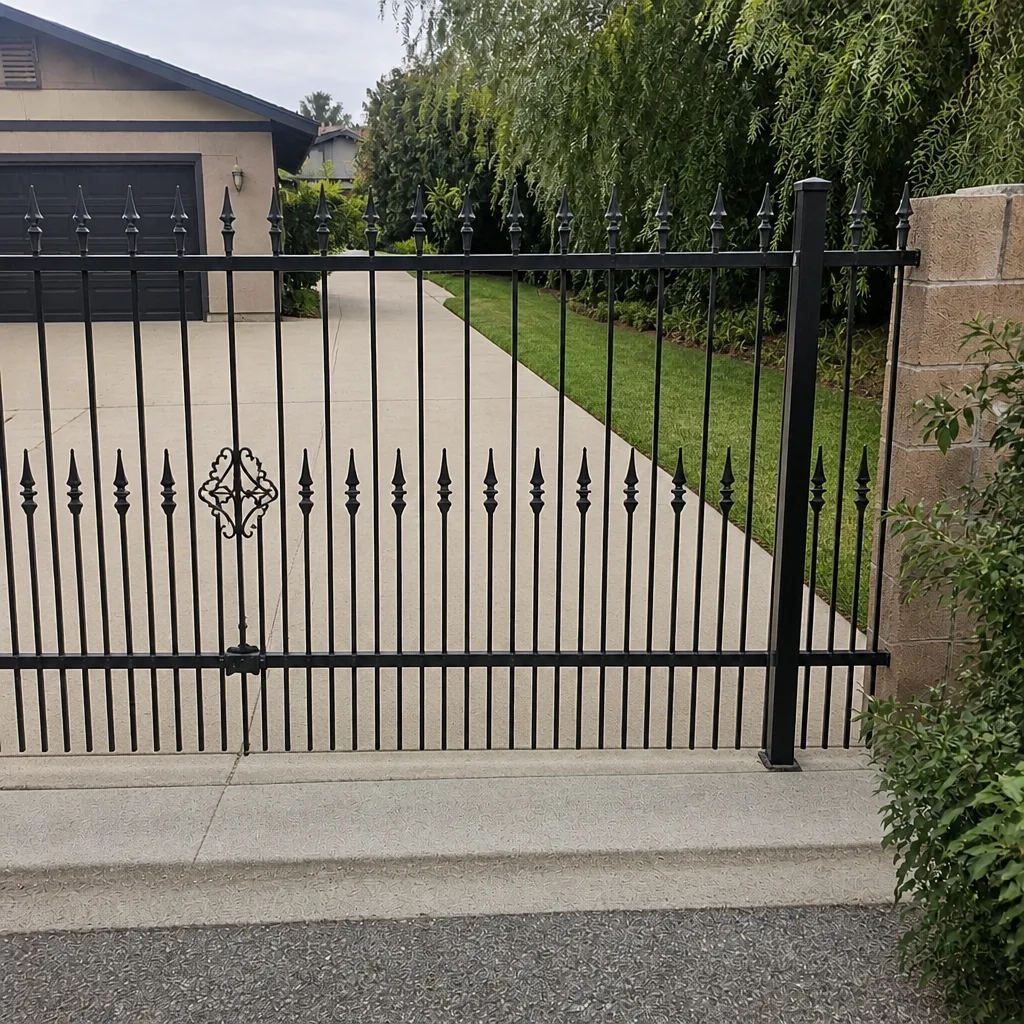 After
How an Automatic Gate Opener Works in Enterprise, NV: Five Systems and the Heat That Wears Them Down
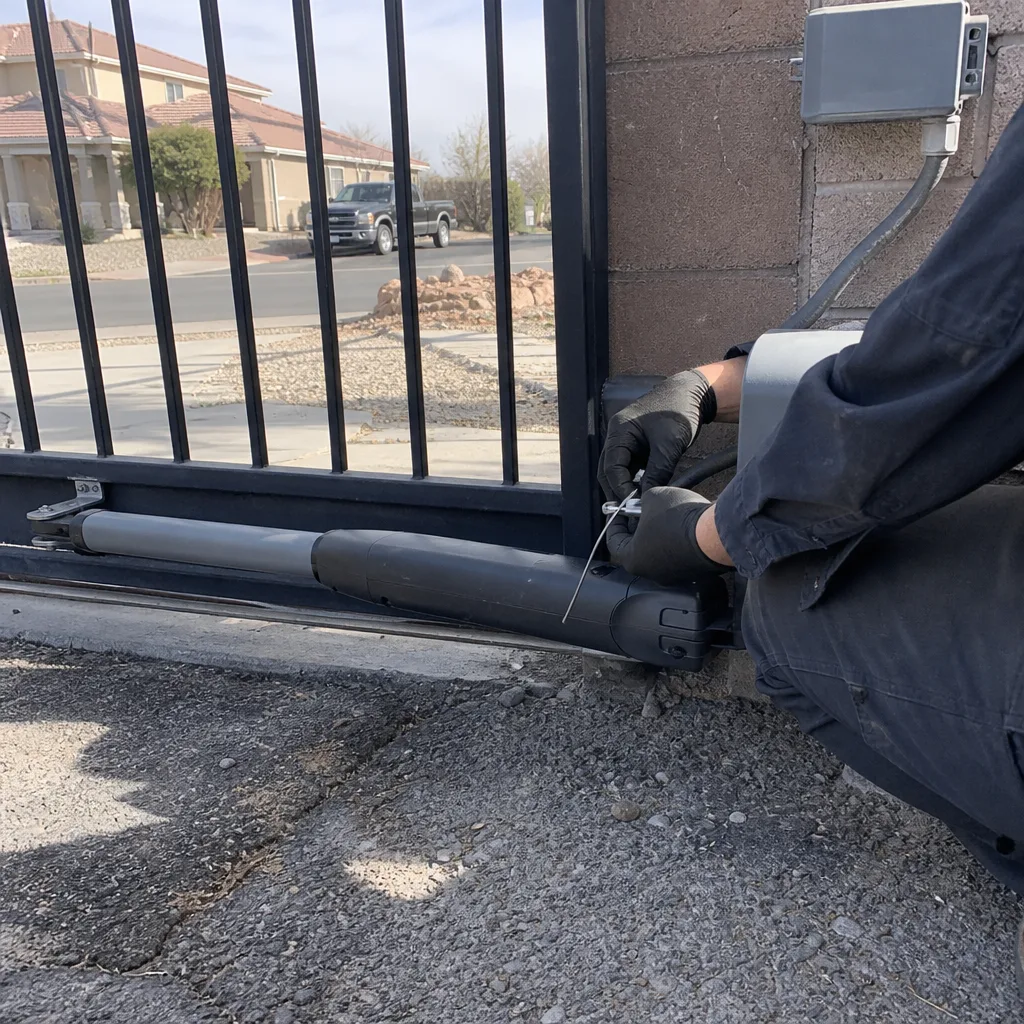
An automatic gate opener works by combining five systems: a power source (AC line or solar/battery), a control board that sequences the command, a motor and drive mechanism that physically moves the gate, safety devices (photo-eyes and edge sensors) that stop it, and access devices (remote, keypad, call-box) that tell it when to open. In Enterprise, NV, summer highs routinely top 100°F, and every one of those five systems has its own specific failure mode when heat, dust, and wind-blown sand work on it for years. Most gate problems we see in our home service area trace to one of those systems, not to a mysterious “the gate just died” event. If you’d like a straight answer on yours, call (833) 780-1547 for a free estimate.
Key Takeaways
- An opener is five sub-systems, not one box. A dead gate usually means one failed piece, not all five.
- Enterprise’s 110°F days stress control boards (solder fatigue), batteries (capacity loss above 95°F), photo-eye lenses (static-charged dust film), and solar panels (roughly 0.5% efficiency lost per degree above 77°F).
- A sliding gate that grinds means sand in the rack teeth. Ignore it and you’ll strip the drive gear.
- A gate that refuses to move at all with a good battery is most often a safety-circuit lockout, not a dead motor.
The Five Systems, in Plain Terms
Think of the opener the way you’d think about a car. Power is fuel, the control board is the computer, the motor is the engine, the safety devices are the brakes that refuse to let the car move when something’s in the way, and the remotes and keypads are the keys. One dies and the whole thing stops, but which one died tells you whether it’s a half-hour fix or a haul-back-to-the-shop job.
1. Power source
Most sliding driveway gates in Enterprise run on standard 120V AC, either run out to the operator in conduit or stepped down from a nearby source. Solar and battery setups show up on gates set far from a power drop, and on some community gates built during the 1990s-2000s tract-home boom. Solar is where Mojave heat bites hardest. A panel loses about 0.5% of its output for every degree above 77°F, so a panel that’s “rated” for the system on paper is undersized on a 108°F afternoon, and a battery that holds charge fine in a milder climate loses capacity faster above 95°F.
2. Control board
The board is the brains. It reads your remote, sequences the motor, watches the safety circuit, and stops the gate when the auto-close timer runs out. In sustained heat, the solder joints on older boards fatigue - the classic symptom is a gate that works in the cool morning and quits by 2 p.m. A board that only fails when it’s hot is almost always a board problem, not a motor problem.
3. Motor and drive mechanism
Sliding gates use rack-and-pinion: a gear on the motor rides a toothed rack bolted along the gate, and the motor walks the gate open and shut. Swing gates use an arm drive that pushes the gate leaf through an arc. Rack-and-pinion is the most common setup on Enterprise driveway gates, and it’s also the most sand-exposed - wind-blown grit from the open desert edges off the valley collects in the rack teeth, and a grind you can hear from the house means the drive gear is eating itself a little at a time. Catch it early and it’s a clean-and-lube job. Ignore it past the point where teeth go flat and you’re replacing the operator. That’s the kind of fix Hal has been doing on these exact builds since 2001, block by block through the master-planned subdivisions.
4. Safety devices
Photo-eyes are the two little sensors across the driveway - one shoots an invisible beam, the other listens. Break the beam and the board stops or reverses the gate on purpose. If the receiver’s signal gets weak, the board cannot tell the difference between “beam broken” and “beam missing,” so it locks the motor out entirely. That fail-safe is why so many “dead gate” calls turn out to be a dirty or misaligned photo-eye. In dry desert air, lenses collect a static-charged dust film that scatters the beam. A quick wipe fixes it; a permanent fog can mean a realign or a bad receiver. We do not suggest homeowners rewire or disassemble safety circuits themselves - a gate that reverses on a person is not a system to experiment with. Call a trained pro.
5. Access devices
Remotes, wireless keypads, and call-boxes (DoorKing units are common on community gates) are the front door to the system. If a remote quits but the wall button still works, the board and motor are fine and the problem is the receiver or remote pairing. That single test tells a lot.
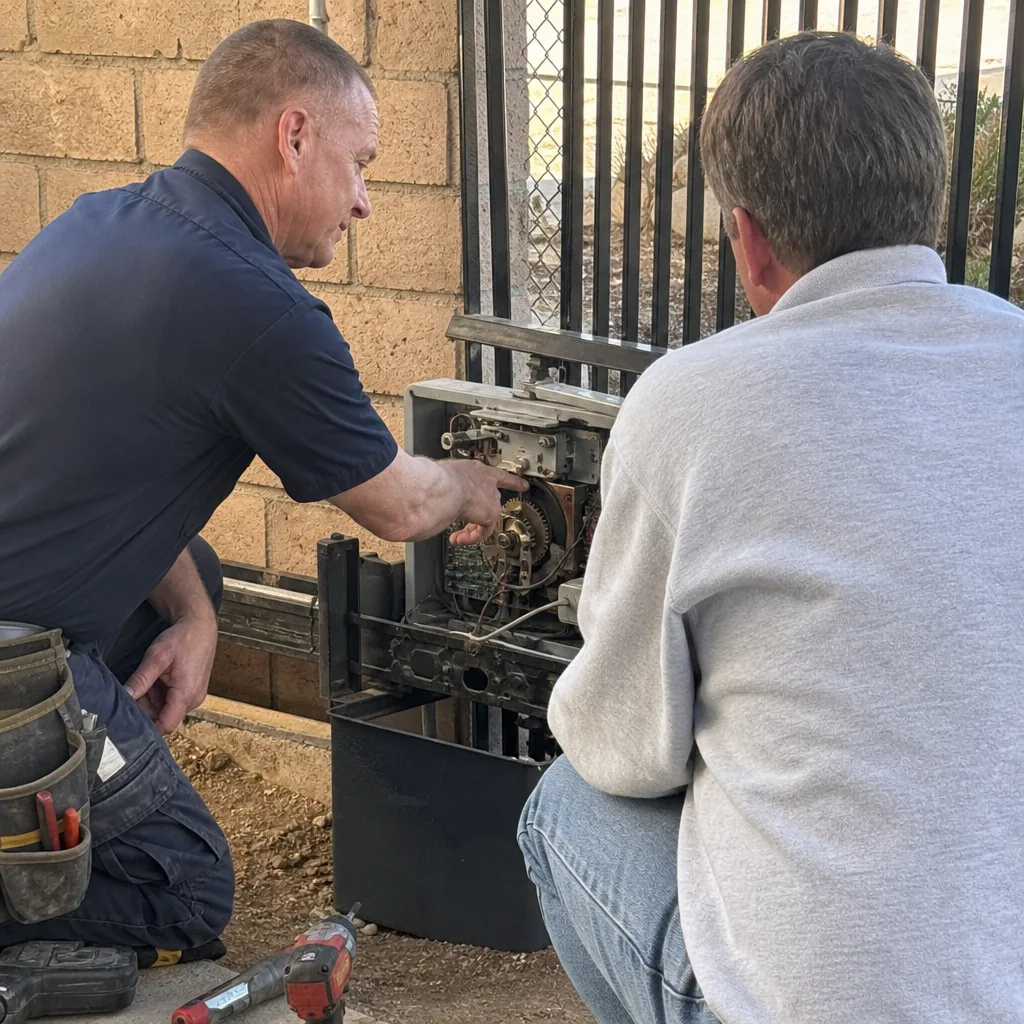
What to Look For: Sliding Drive vs. Swing Arm
| Feature | Rack-and-Pinion (sliding) | Arm Drive (swing) |
|---|---|---|
| Most common in Enterprise | Yes - driveway and community gates | Some side-yard and entry gates |
| Typical failure | Sand in rack teeth, stripped drive gear | Arm wear, limit switch drift |
| Warning sign | Grinding or hesitation at start | Gate stops mid-arc or slams shut |
| Fix vs. replace | Often clean, lube, realign | Often arm or limit adjustment |
The right first move depends on which drive you have. For a closer look at the operators themselves, see our page on Gate Motor & Opener. When your gate is HOA-controlled - and in a subdivision like Enterprise, most are - the repair also has to match the association’s approved iron or vinyl color and style, so “make it work” and “make it compliant” are two jobs. We handle both.
Why the Photo-Eye Is the Most Misread “Failure” in the Valley
If your gate won’t move at all and the lights on the operator are blinking a pattern you don’t recognize, the single most likely cause is a safety-circuit lockout, not a dead motor. The photo-eye circuit is designed so that a missing or weak signal equals a full stop. Homeowners see a still gate and assume the motor burned out. A technician checks the beam, cleans the lens, and the gate runs.
Here’s the order we’d walk a homeowner through before calling, and it’s safe because it involves no tools:
- Look at the two photo-eye lenses on either side of the driveway. Are they dusty, foggy, or knocked off aim at each other?
- Wipe each lens with a dry cloth and press your remote again.
- Try the wall-mounted control button instead of the remote. If it moves the gate, the motor is fine and the receiver or remote is the suspect.
- Check the operator’s LED blink code against the manual (DoorKing, Elite, and LiftMaster all print a code table).
- If the gate still won’t move, stop and call. Do not bypass safety devices or reach into the operator housing.
FAQs
An automatic gate opener knows when to stop using limit switches or an encoder inside the operator that count the gate’s travel, plus the auto-close timer on the control board. When the board reaches its set position or its set time, it cuts power to the motor. In heat, older limit switches drift, which is why a gate that used to stop cleanly now overshoots or slams - an adjustment, not usually a replacement. If yours has started overshooting, call (833) 780-1547 for a same-day look and a free estimate.
A gate that works in the morning and fails in the afternoon is almost always showing you heat-related control-board or battery trouble, because those are the components that change behavior as the day heats up. Solder-joint fatigue on the board and battery capacity loss above 95°F both surface when the enclosure soaks up the afternoon sun. That pattern is a repair call, not a wait-and-see. Call (833) 780-1547 and we’ll diagnose it without guesswork.
Repair is cheaper than replacement in most cases, especially when the failed part is a photo-eye, a battery, a rack section, or a control board, and the motor itself is sound. Replacement makes sense mainly when the drive gear is stripped, the motor windings are gone, or parts for an older unit are no longer made. We repair first and only recommend replacing what’s truly done. If you have a written estimate from someone else, we’ll give you a free second opinion before you spend a dime. Call (833) 780-1547.
Dust and sand are one of the top causes of false gate failures around Enterprise, because they coat the photo-eye lenses in a static-charged film that weakens the beam and locks out the motor, and they grind into sliding-gate rack teeth and rollers. A dry-cloth wipe and a rack cleaning handle most of it. When grit has worked into the drive repeatedly, the fix is a realign and a proper lube with the right product - not WD-40. Call (833) 780-1547 for a no-trip-charge visit inside the county.
When It’s Time to Call
Know the five systems and you can usually tell a five-minute lens wipe from a stripped gear. When it’s the latter, or when the gate won’t move and the safety circuit is locked out, that’s the point to stop. Gatewood Fence & Gate Enterprise offers a no-pressure assessment in Enterprise - upfront pricing, a live person on the line, and every job backed by our 90-Day Done Right Promise in writing. We service LiftMaster, DoorKing, Elite, and Mighty Mule units among others. Call (833) 780-1547 for a free estimate.
Written by the team at Gatewood Fence & Gate Enterprise, serving Enterprise, NV.