
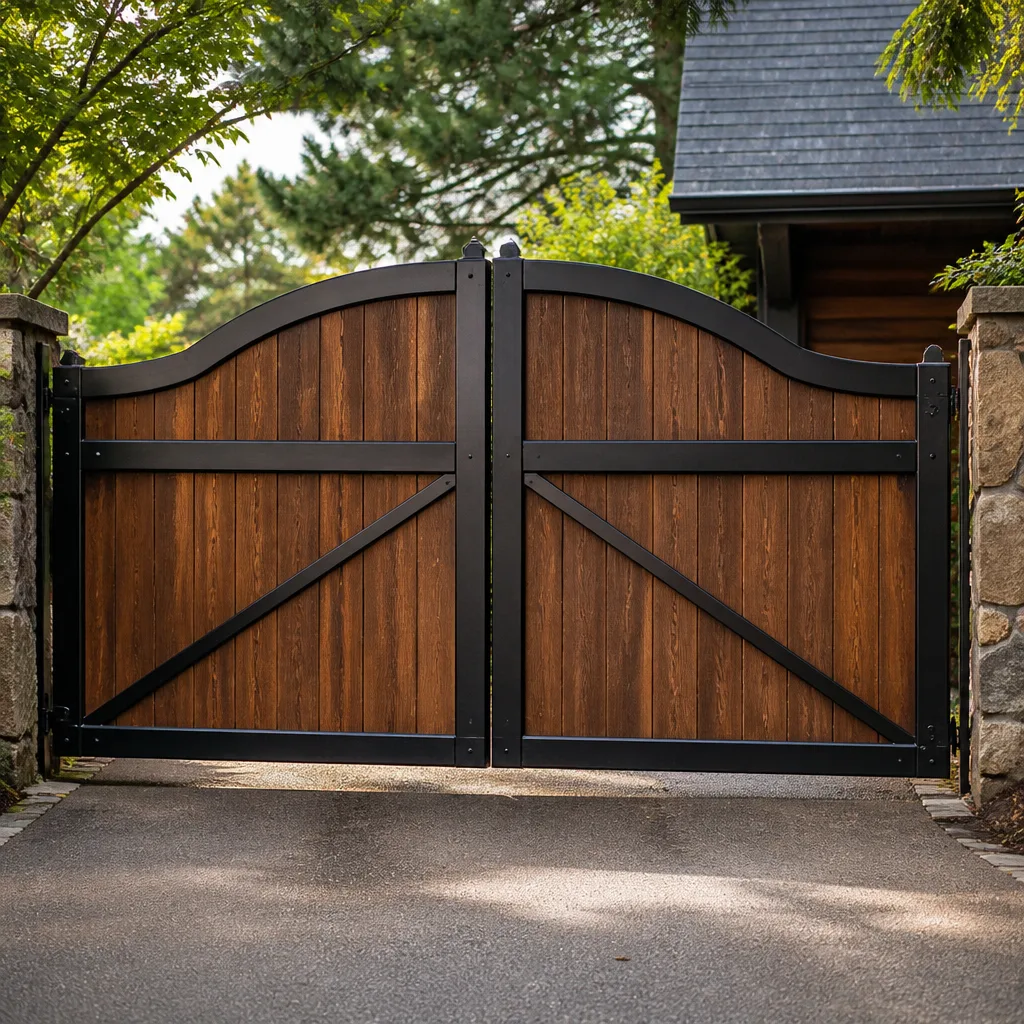
 Wood & steel frame
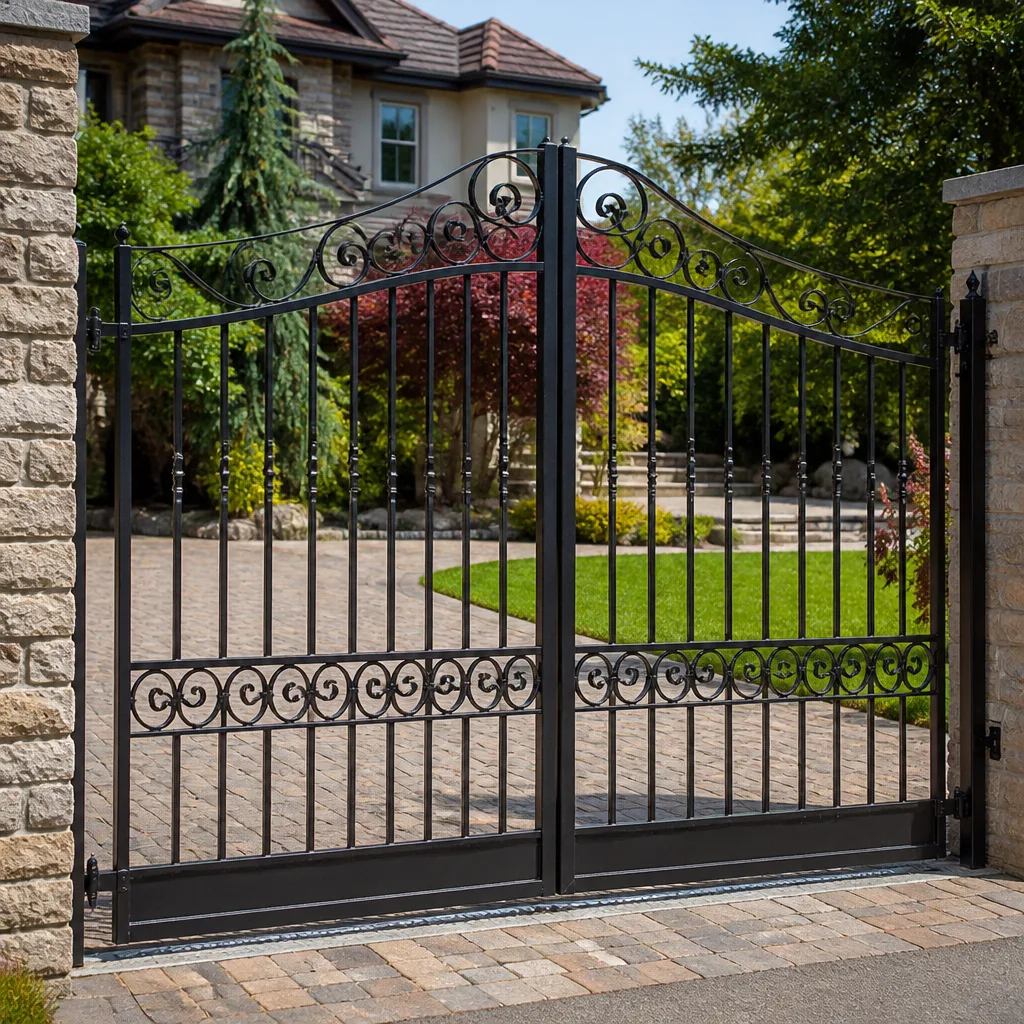 Wrought iron
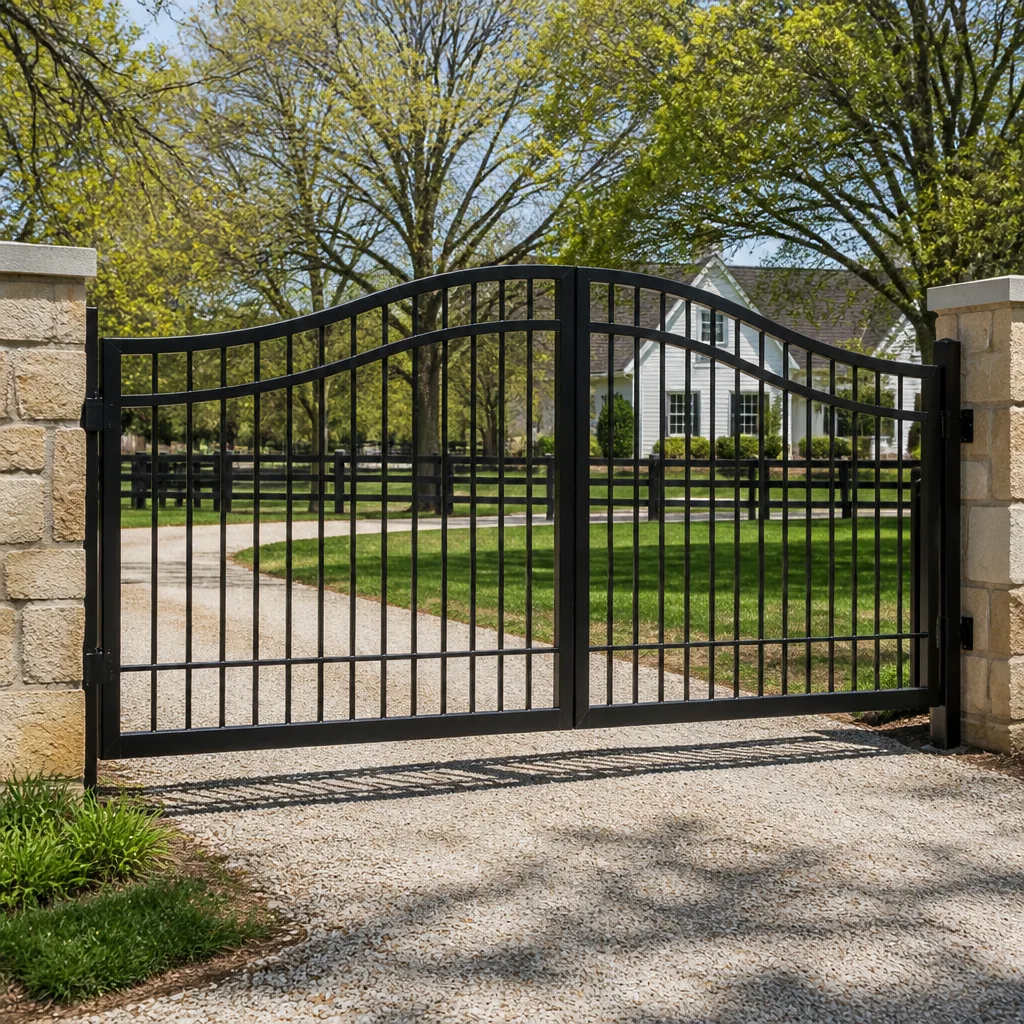 Farm & ranch
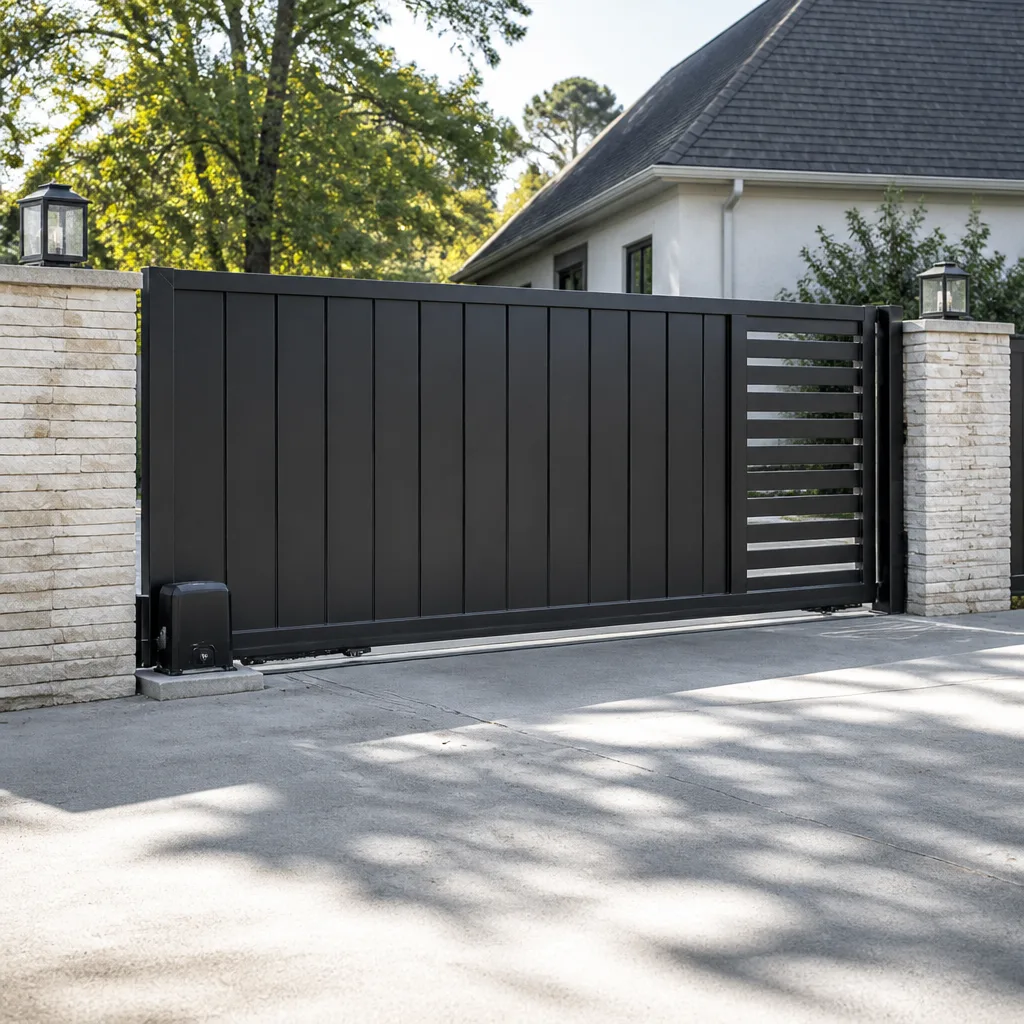 Sliding driveway gates
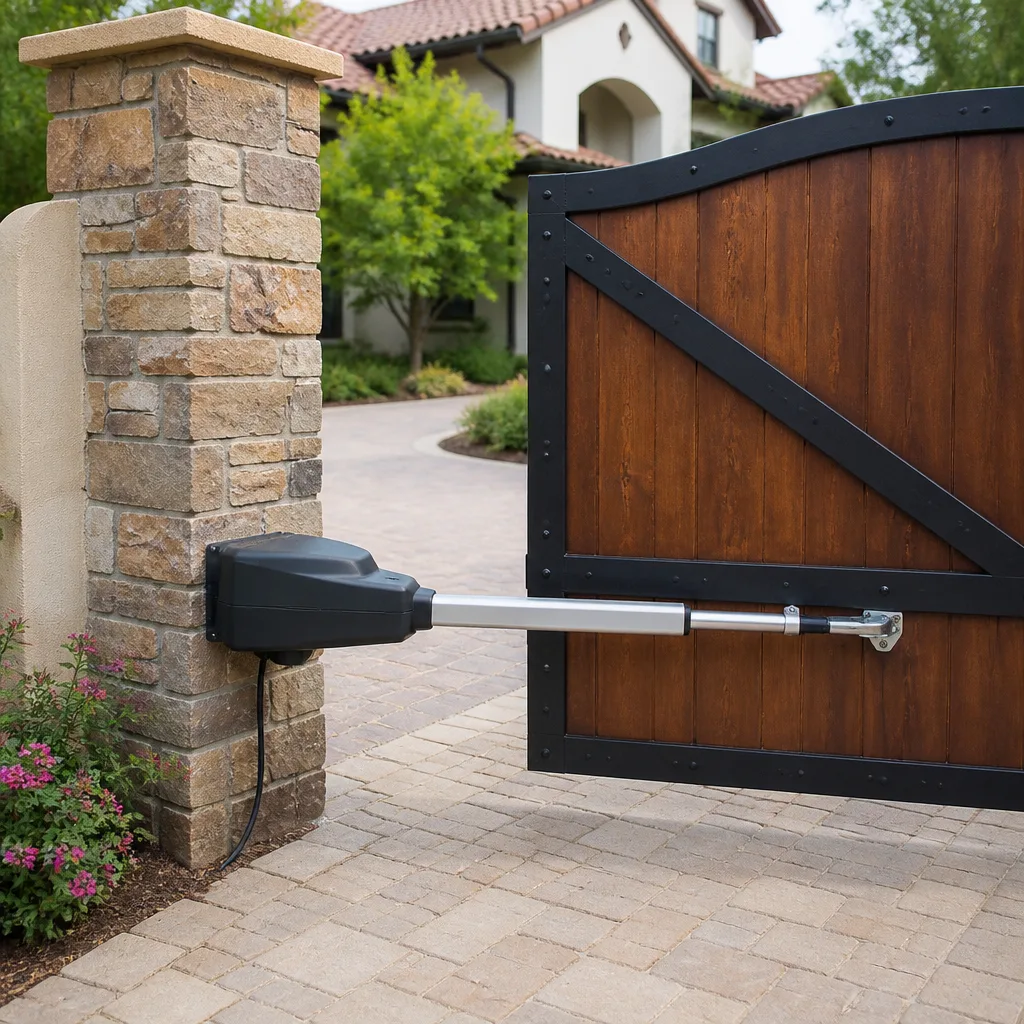 LiftMaster operators
Free on-site gate assessment - hinges, posts, and your LiftMaster or Nice gate operator checked before anything is quoted
The assessment is free and the quote is the invoice.
Get your free estimateStyles & brands we work with
- Wrought iron
- Wood & steel frame
- Farm & ranch
- Sliding driveway gates
- LiftMaster operators
See the difference
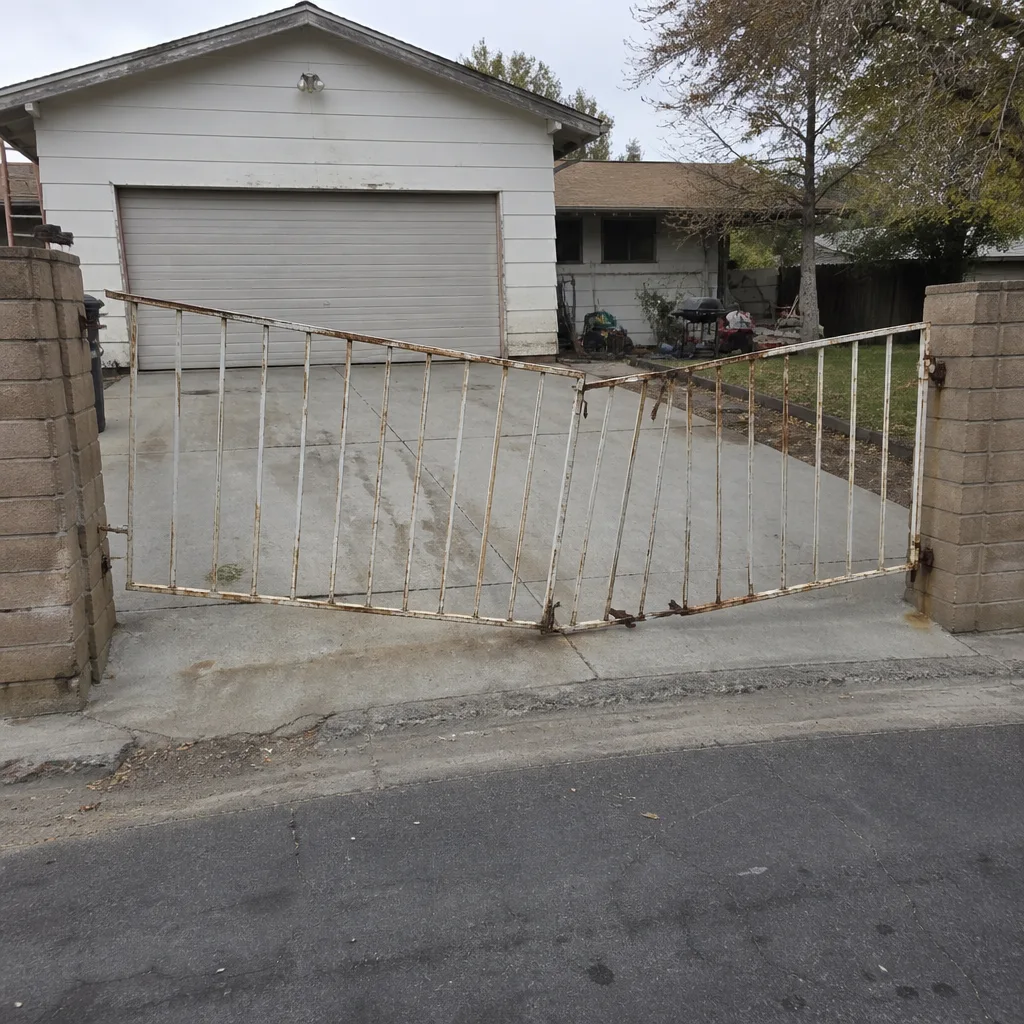 Before
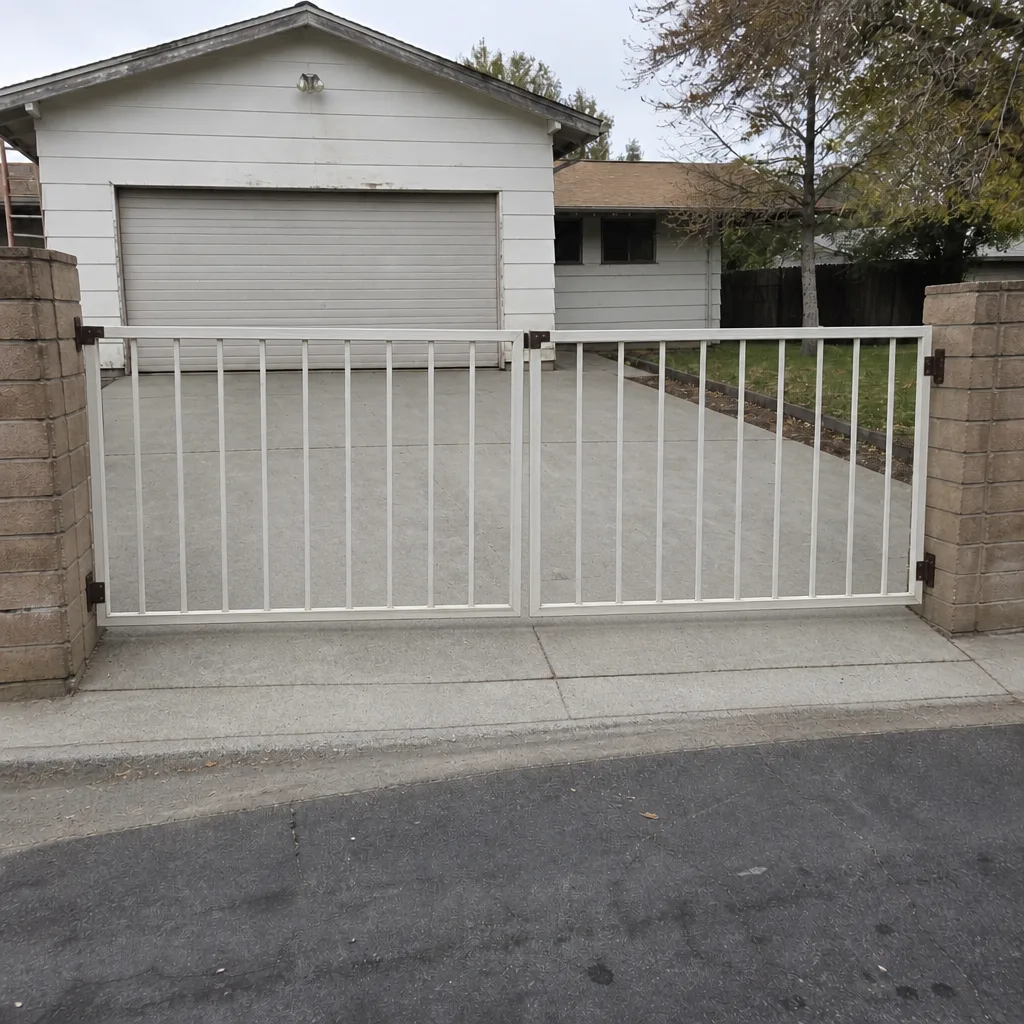 After
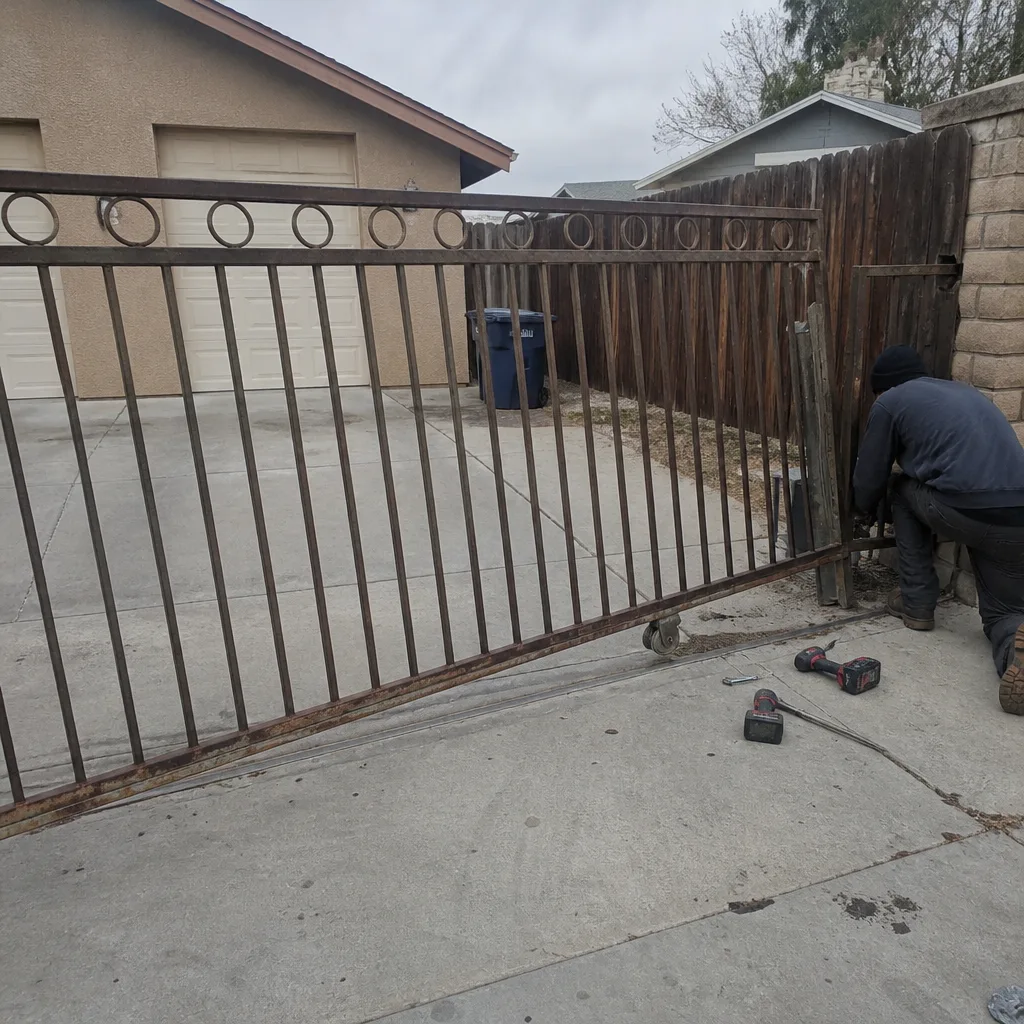 Before
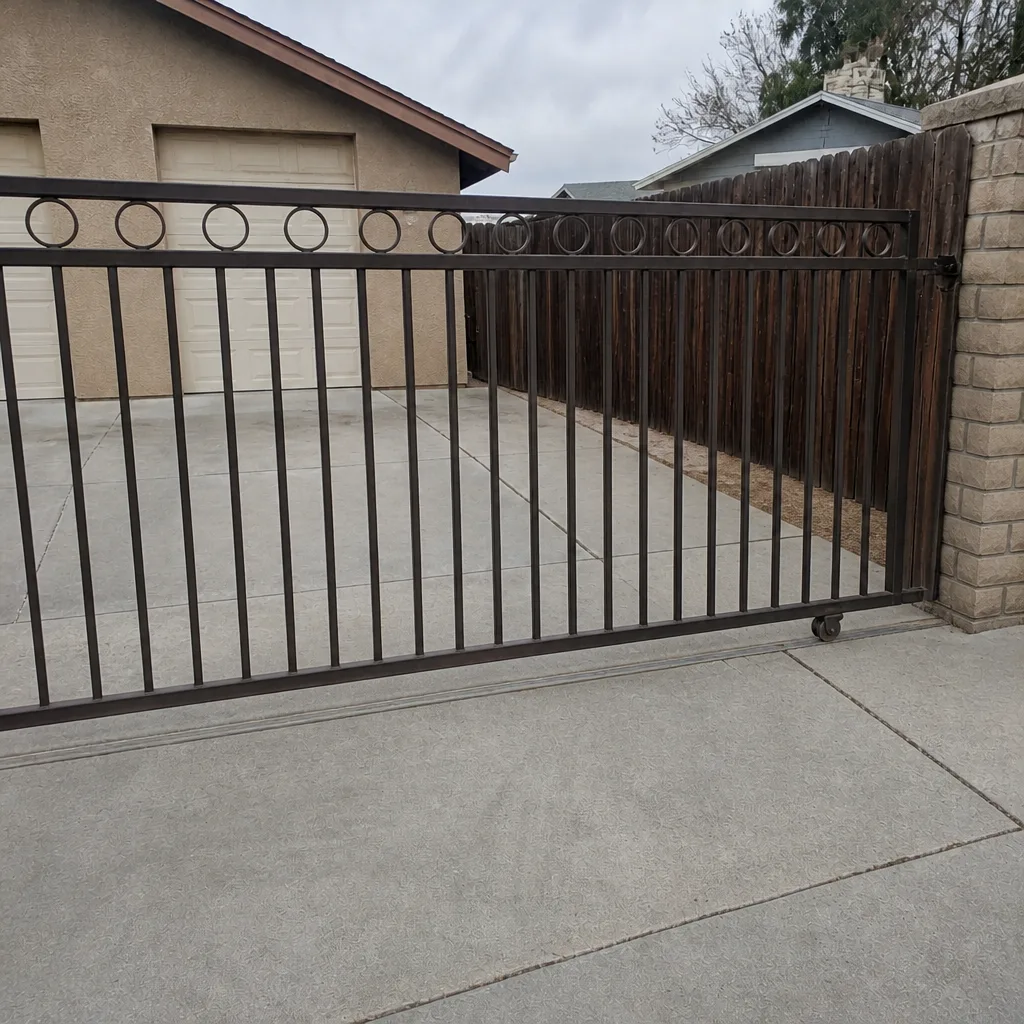 After
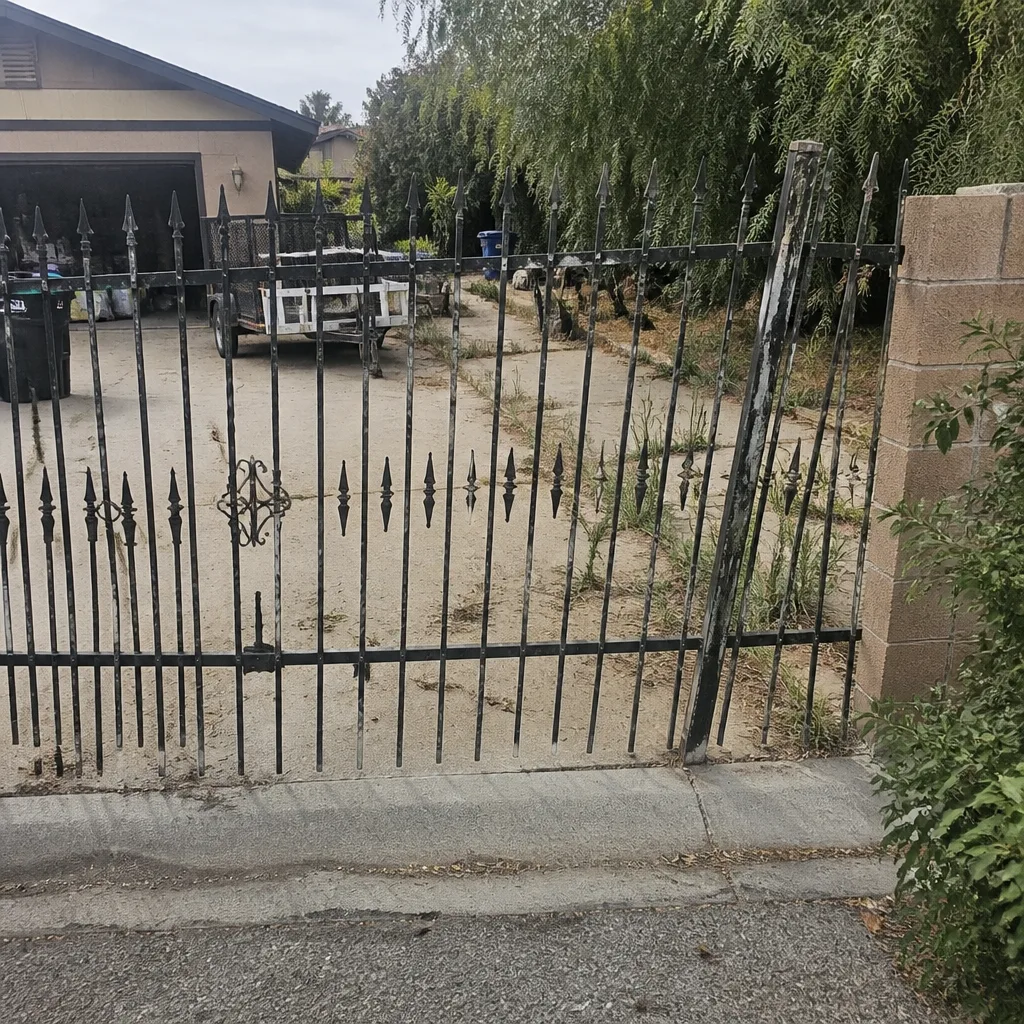 Before
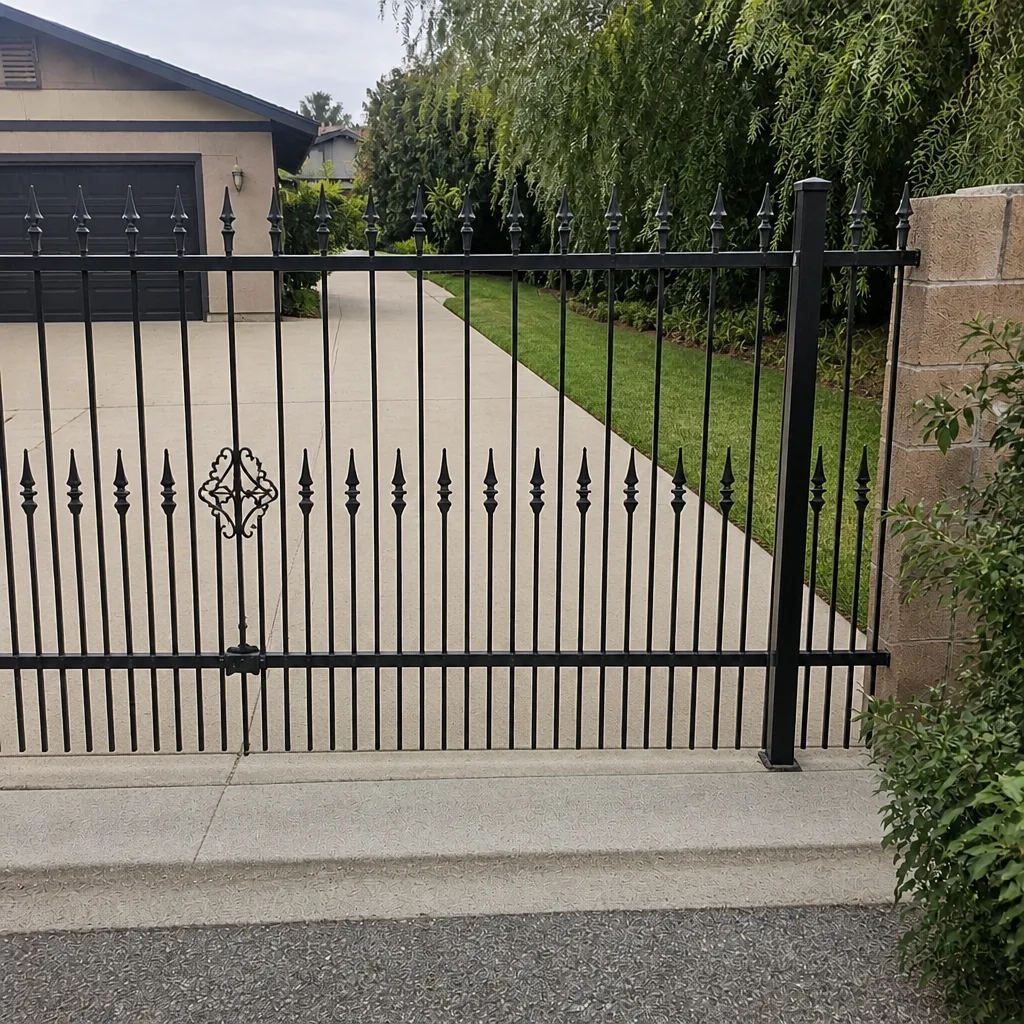 After
Why Won’t My Automatic Gate Open in Enterprise, NV? Check the Photo-Eyes First
The most likely reason your automatic gate won’t open is a fouled or misaligned photo-eye sensor, not a dead motor. Before you assume the operator is finished, go look at the two little sensors mounted low on the gate posts. If one is crusted in desert dust or even slightly tilted out of line, the gate’s safety circuit reads it as an obstruction and refuses to move. That two-minute check has saved a lot of Enterprise homeowners the cost of a motor they never needed. Call (833) 780-1547 if you’d rather have someone walk it with you.
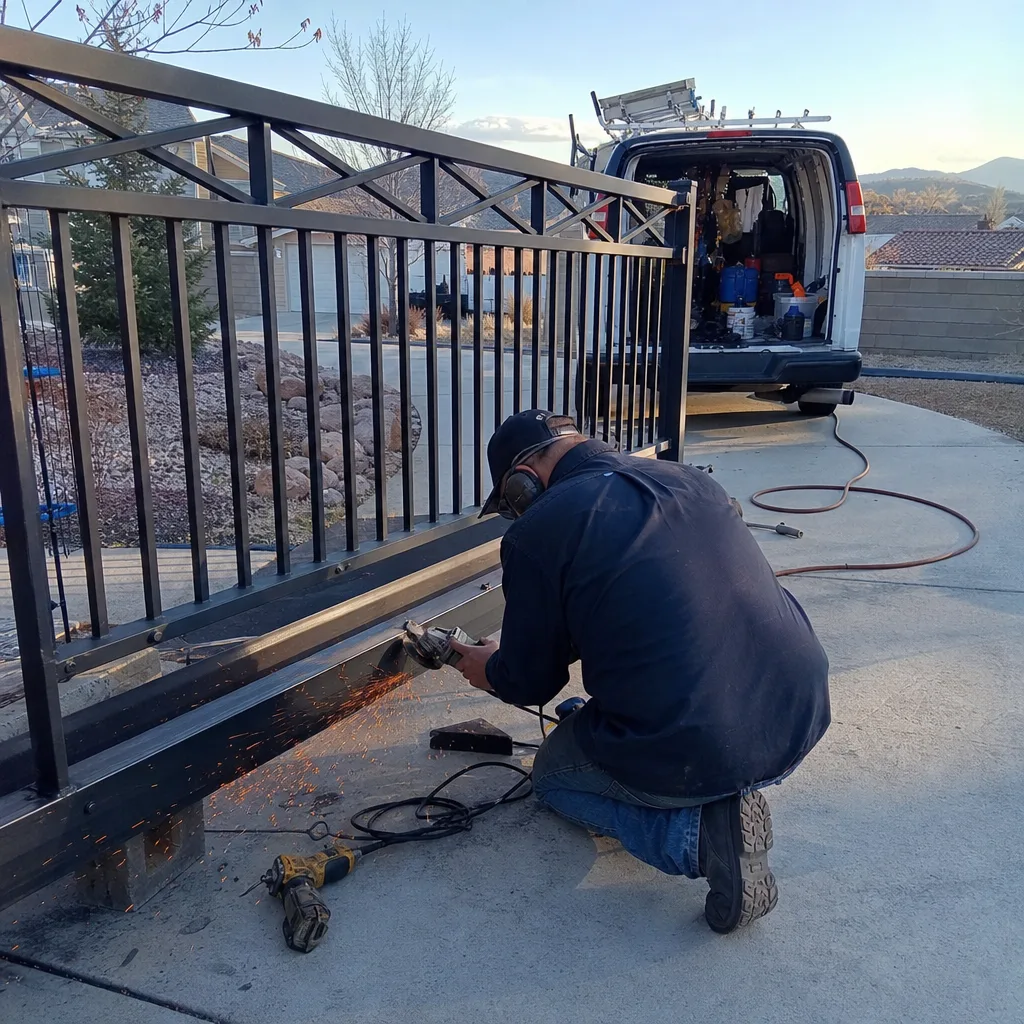
The Mojave Wind-and-Sand Problem Nobody Diagnoses First
Enterprise sits in the Mojave Desert, and the wind that comes off the open desert edges carries grit that settles exactly where the photo-eyes live: low on the gate posts, a few inches off the ground. We see this block after block in the 1990s and 2000s tract-home clusters that make up most of Enterprise. A technician working these subdivisions often finds the same worn roller or knocked sensor replicated across neighbors’ identical gates, because they were all installed when the tracts were built.
Here’s what actually happens. The photo-eyes send an infrared beam across the opening. When the gate is closing or opening and something breaks that beam, the safety system stops the travel. Dust coats the lens, wind tilts one sensor a few degrees off center, and the gate behaves exactly like a motor failure. It clicks, it beeps, it does nothing, or it opens an inch and reverses. Homeowners replace the battery first. Then the motor. Then they call us and find out it was the lens.
Wiping the lenses with a dry cloth is the first free diagnostic step, and it costs nothing to try. A soft cloth, no spray cleaner, no scraping. If the gate works after a wipe, you’ve found your culprit. If it works for a week and quits again after the next wind event, the alignment needs to be set properly, not just cleaned.
What to Look For, In Order of Likelihood
When a gate in Enterprise won’t open, we work through the causes the same way every time, from most common to least. Here’s the order, so you can follow along at home.
- Fouled or misaligned photo-eyes. Most common after any wind event. Dirty lenses or a sensor tilted off the beam line trip the safety circuit. Free to clean, cheap to realign.
- A heat-latched control board in fault mode. Most common in July and August, when highs in Enterprise routinely pass 100°F and bake the operator housing. The board shuts down to protect itself and stays in fault until reset.
- A dead or low backup battery. Especially after a power interruption. The gate may run once on battery reserve and quit.
- An obstruction in the roller track. Sand and grit accumulate in the track and stop the gate from rolling freely. The operator senses the resistance and refuses to move.
- A failed limit switch. Thermal expansion in the desert heat can knock the limit out of tolerance, so the gate loses its reference point and won’t complete the open cycle.
Resetting the Control Board (and What It Tells You)
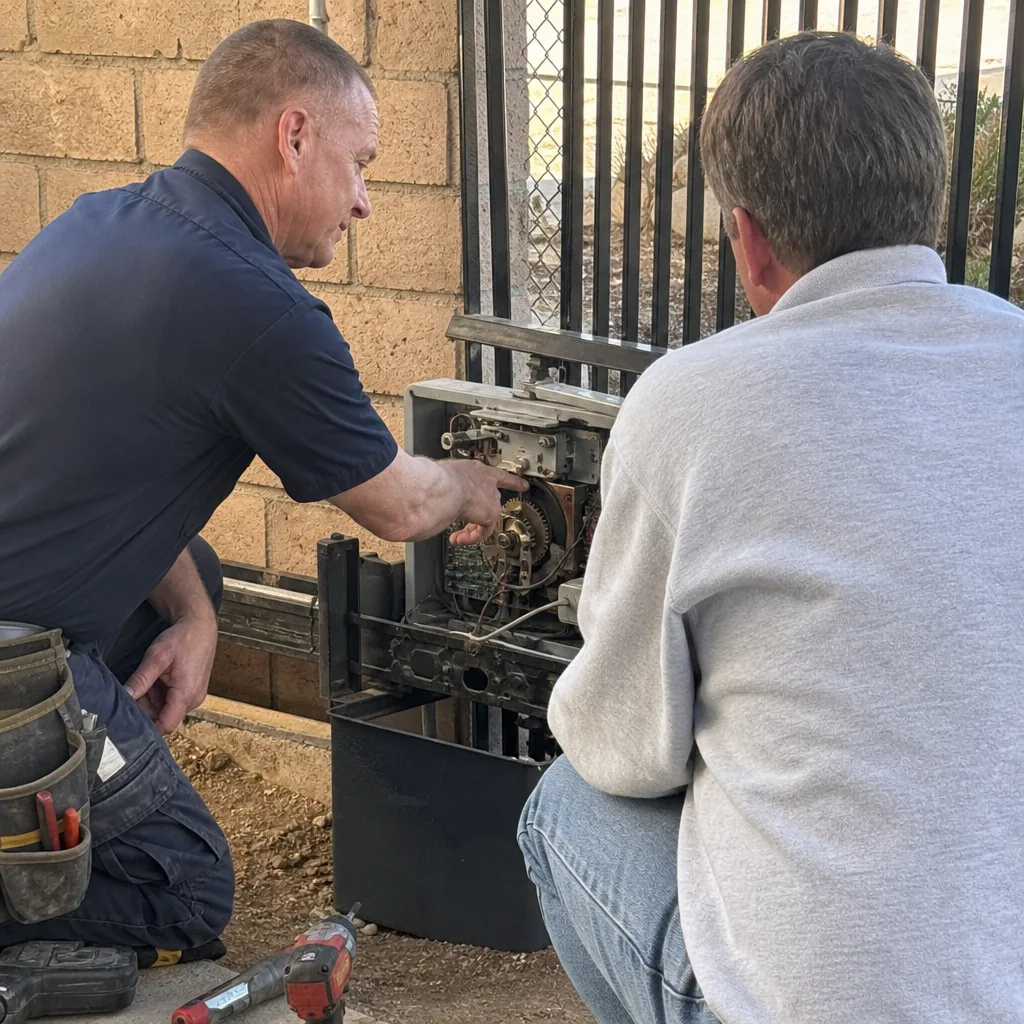
Most operators in Enterprise’s tract homes are LiftMaster units, or something close, mounted on the side of the gate or tucked under a housing near the post. If you’ve cleaned the photo-eyes and the gate still won’t move, the control board may be sitting in fault mode. A reset is the next step.
Open the operator cover and look for the reset button on the control board, or follow the reset procedure printed inside the housing lid. Press it and watch what the gate does. If it opens once and then stops again on the next cycle, you have a persistent fault, not a fixed one. That means something is still tripping the system, and it needs a trained eye to trace. A gate that opens cleanly and keeps working has reset properly.
When to Stop and Call Before You Force It
Every automatic operator has a manual release, usually a lever or key that disengages the motor so you can move the gate by hand. It’s there for power outages and emergencies. It is not the tool to grab when a gate is acting up.
Forcing a seized manual release on an older operator can snap the release arm, and then you’re looking at a repair on top of the original problem. If the lever has never been exercised and feels stiff, stop and call before you break it. This is the same reason we don’t hand out step-by-step instructions for cracking open a control board or chasing a live circuit: a gate operator carries real force and stores energy, and the wrong move can hurt you or wreck the mechanism. A trained technician with up to 25 years of experience knows the difference between a stiff release and a broken one without guessing.
What Gate Repair in Enterprise Actually Costs
Upfront pricing is a promise, not a footnote, so here’s roughly what each of these fixes runs in the Enterprise market. No surprises at the door.
| Problem | Typical Range | Notes |
|---|---|---|
| Photo-eye clean and realign | $95-$175 | Often bundled with a service call |
| Control board reset / fault trace | $125-$260 | Higher if the board needs replacement |
| Backup battery replacement | $85-$160 | Common after a power interruption |
| Roller or track clearing and service | $120-$240 | Sand and grit in the track |
| Limit switch adjustment | $110-$200 | Thermal drift after summer heat |
| Full operator or motor replacement | $600-$1,400+ | Only when repair genuinely won’t hold |
Standing offers make this easier. We knock $40 off any repair over $200, there’s no trip charge inside the county, and seniors and veterans get a permanent 10% discount. Every job carries the 90-Day Done Right Promise in writing: if it’s not done right, we make it right, one call brings us back, no runaround.
Repair First, Replace Only When It’s Honest
Here’s the part that matters most to us. Gatewood Fence & Gate Enterprise fixes the gate in your driveway rather than hauling it off or swapping parts that don’t need swapping. A lot of the “you need a new motor” quotes we get called out on turn out to be a dirty photo-eye or a heat-latched board. If another company has already told you the operator is finished, bring us the written estimate and we’ll look at the same gate and give you an honest second read at no charge.
The same thinking applies to the HOA side of things. Many gates in Enterprise fall under recorded CC&Rs that dictate style, color, and placement, so a repair has to match the association’s approved iron or vinyl design, not just make the gate work. That’s part of the job, not an upsell. When you want the full scope of what we handle, see our Gate Repair page, or check Gate Repair in Enterprise for what’s available close to home. You can also start from our home page.
FAQs
The most likely cause is a fouled or misaligned photo-eye sensor tripping the safety circuit, followed by a heat-latched control board in the summer and a dead backup battery after a power interruption. Clean the lenses first, then reset the board. If the gate still won’t move, call (833) 780-1547 for a diagnosis, estimates are free.
Wind-blown sand and grit coat the photo-eye lenses and can tilt a sensor off its beam line, which the gate reads as an obstruction and locks it down. That’s why gates go down right after a wind event in Enterprise. Realigning the sensors properly, not just wiping them, keeps them working through the next round. Call us if it keeps happening.
Often, yes. A live person answers every call, 24 hours a day, seven days a week, so you’re not leaving a voicemail or waiting on a queue. Tell us what the gate is doing and we’ll give you an upfront price and a window you can count on. Call (833) 780-1547 to get on the schedule.
Repair is usually the cheaper path, and it’s the honest one when the motor is fine, which it often is. A dirty photo-eye or a heat-latched board runs well under a motor replacement. We only recommend a new operator when the old one genuinely won’t hold, and we tell you why.
No, and you shouldn’t force it. A stiff manual release on an older operator can break the release arm if you pull it hard, turning a small fix into a bigger repair. If the lever feels stuck, leave it and call (833) 780-1547 before you snap it.
If you’d rather have it looked at, Gatewood Fence & Gate Enterprise offers a no-pressure assessment in Enterprise. We’ll check the photo-eyes, the board, and the track, tell you what’s actually wrong, and hand you a price before any work starts. Call (833) 780-1547 for a free estimate.
Written by the team at Gatewood Fence & Gate Enterprise, serving Enterprise, NV.