
Last updated November 18, 2026
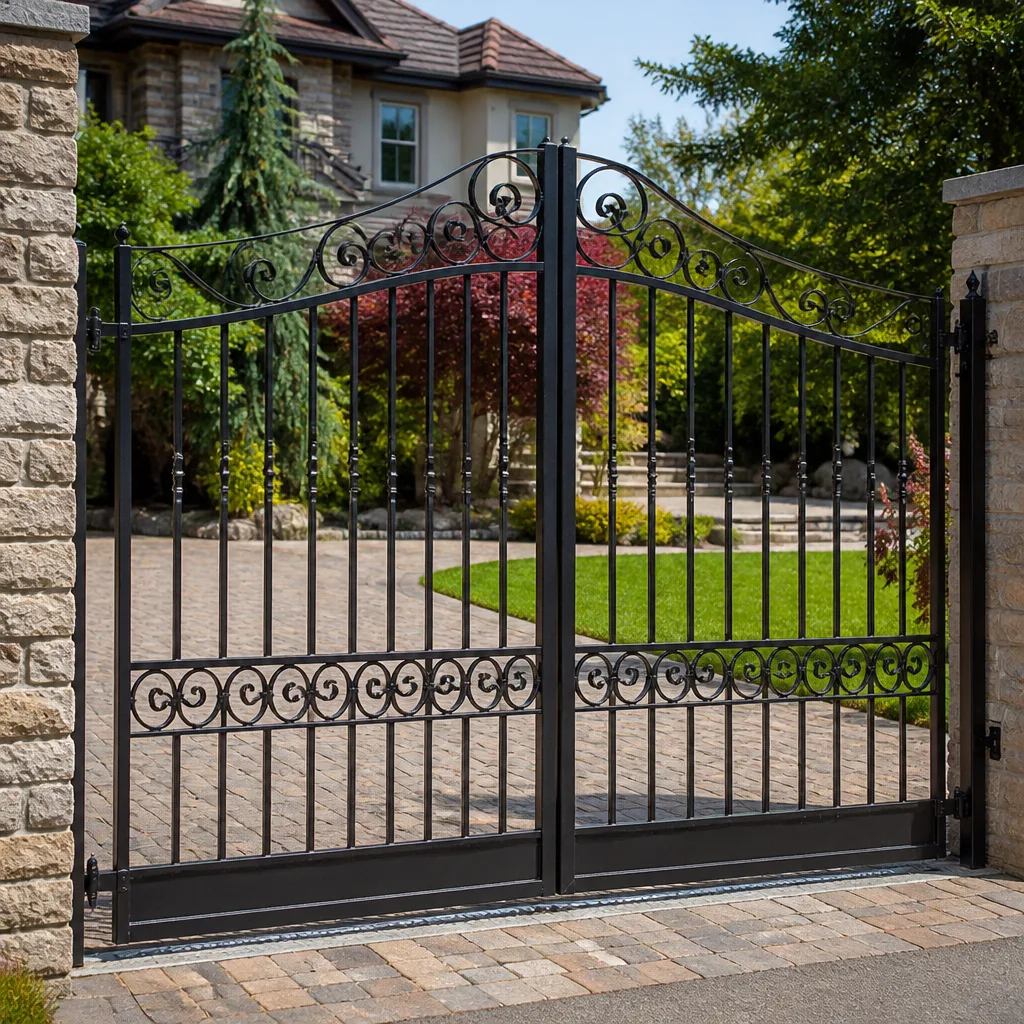 Wrought iron
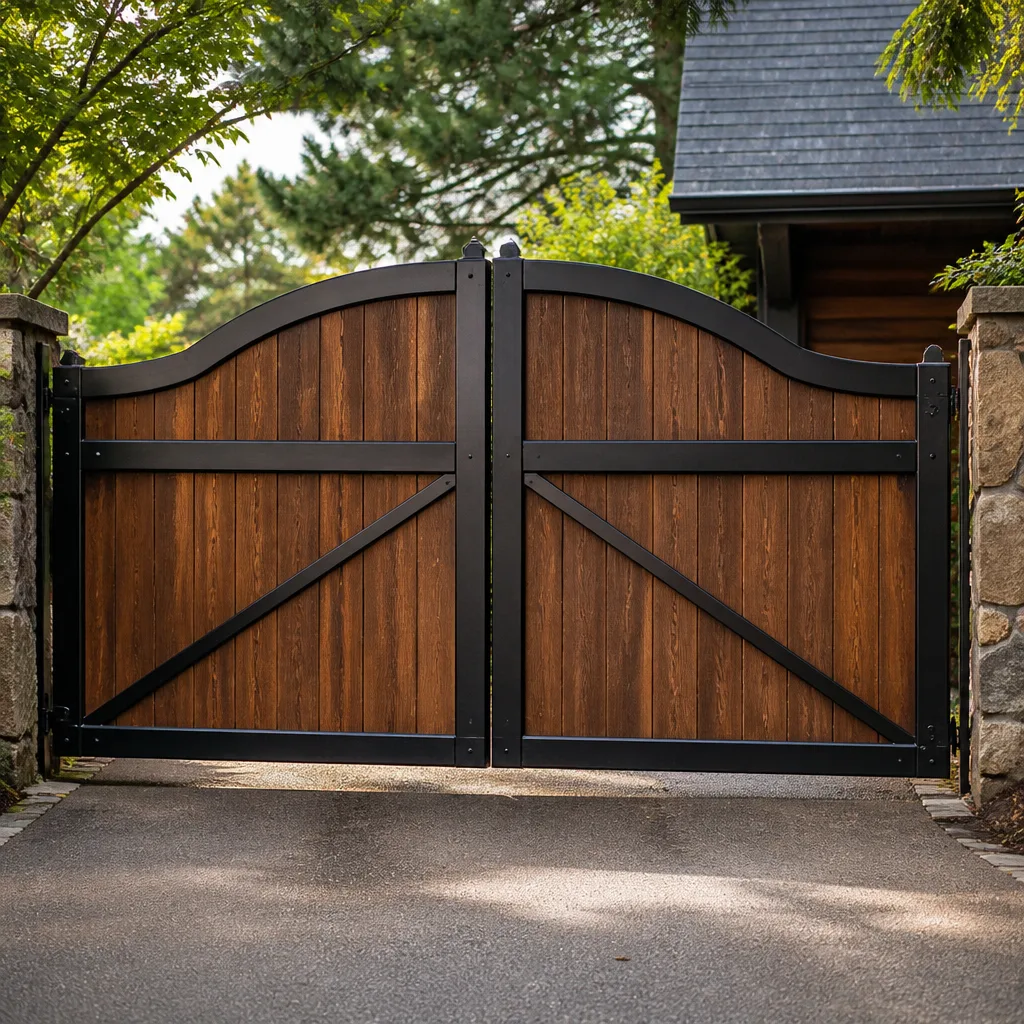 Wood & steel frame
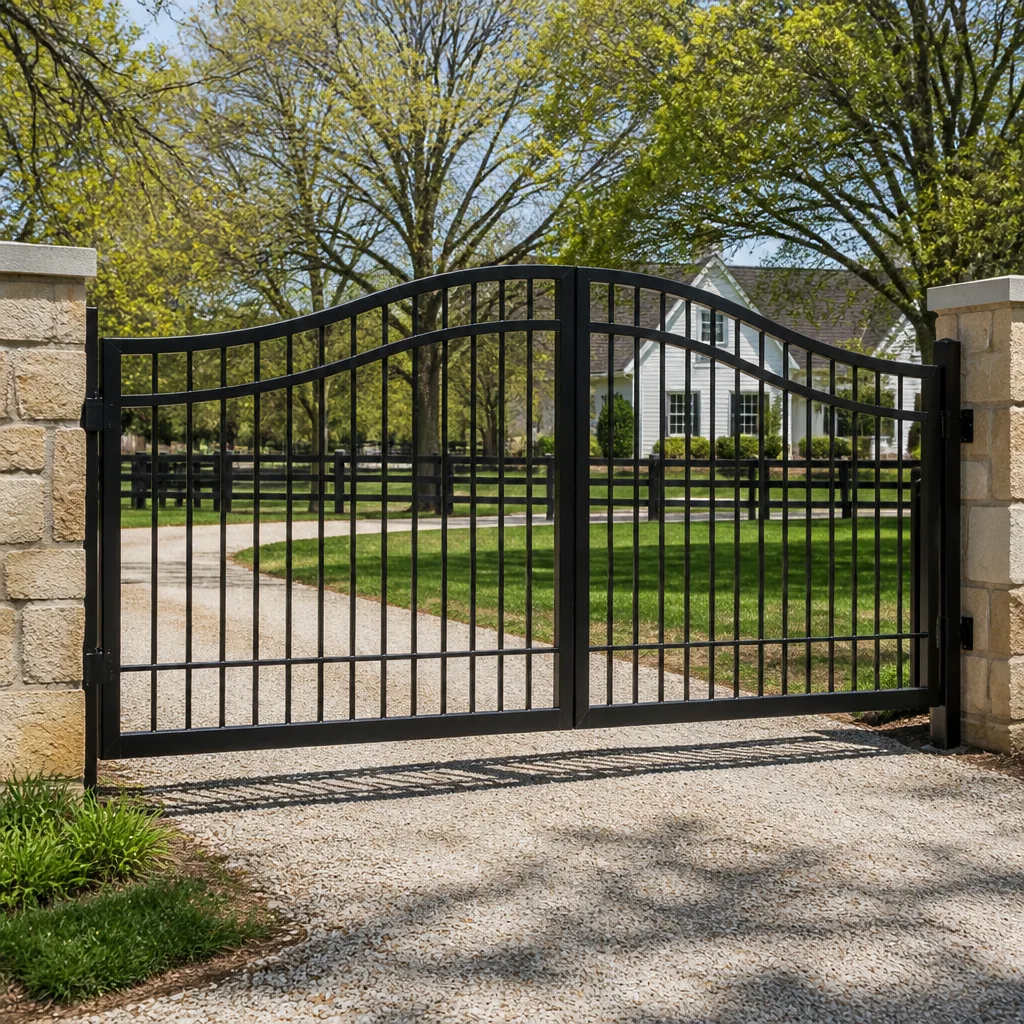 Farm & ranch
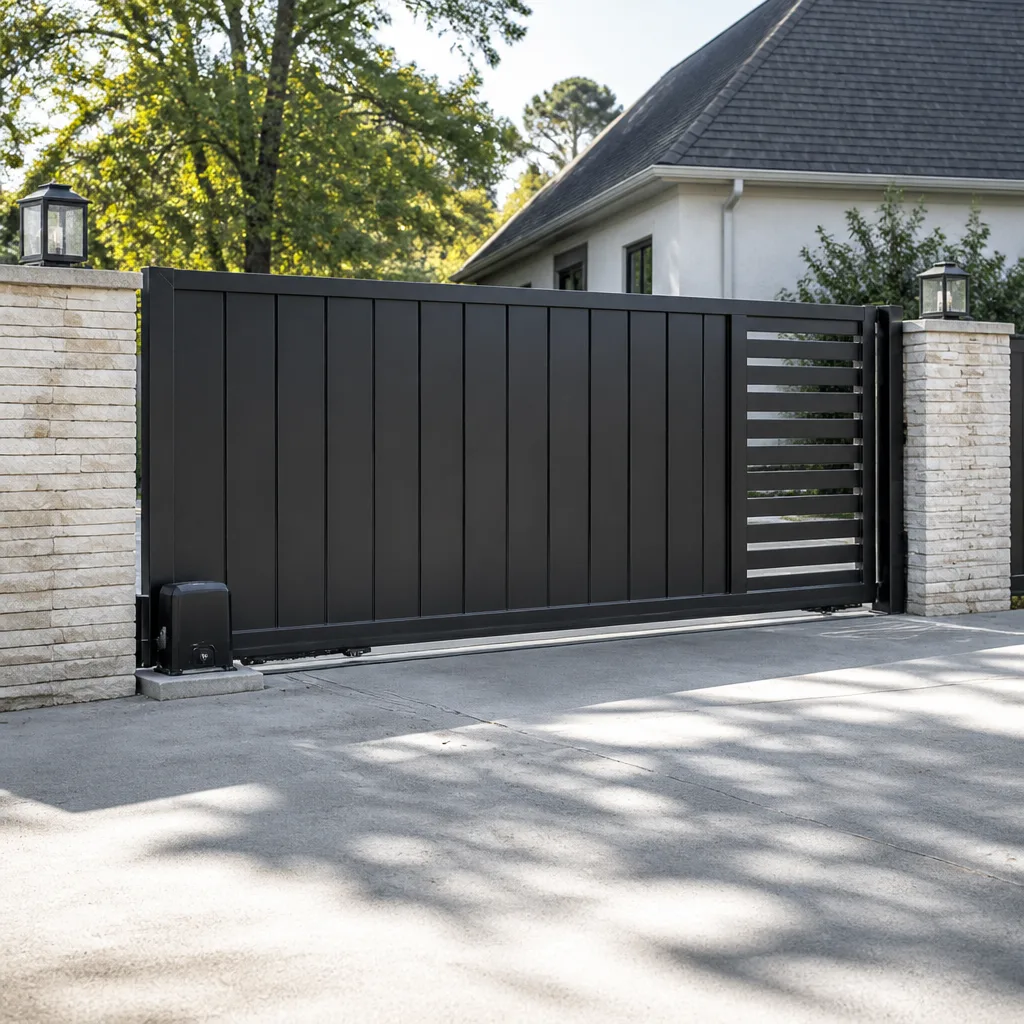 Sliding driveway gates
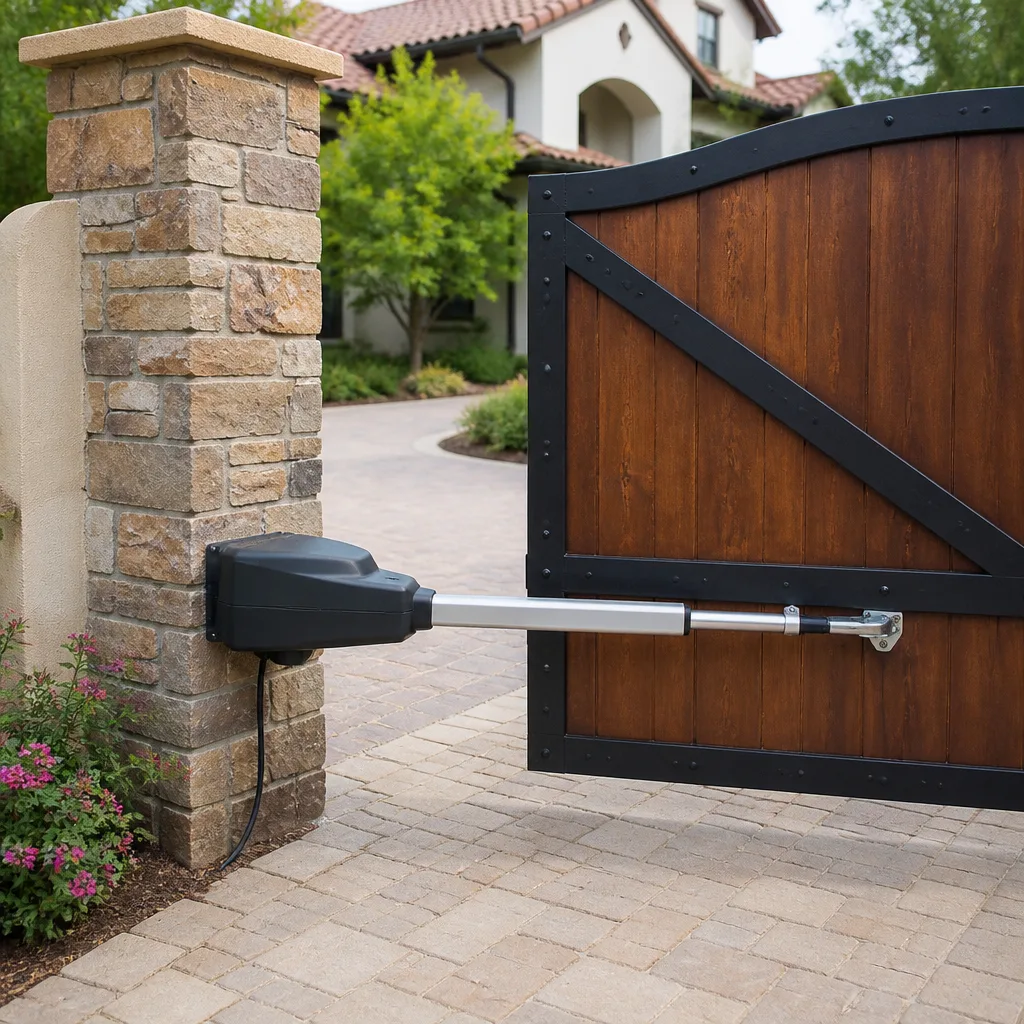 LiftMaster operators
Free on-site gate assessment - hinges, posts, and your LiftMaster or Nice gate operator checked before anything is quoted
The assessment is free and the quote is the invoice.
Get your free estimateGate Parts & Welding Troubleshooting: Common Problems and How to Fix Them
Nine times out of ten, when someone tells us their hinge weld broke, we get out there and find the weld is fine. The lag bolt the last installer used to anchor the hinge plate to a wood post has pulled through the wood. That’s not a welding problem. That’s a fastener problem, and it’s a ten-dollar fix we won’t charge you two hundred dollars for. Chasing the wrong cause doubles the bill every time. This guide lays out a symptom-to-cause map for the gate problems we see most around Enterprise, how to tell a real weld crack from a fastener failure in about five minutes, and which problems get worse fast versus which will hold for a season.
Quick Answer
Most gate problems blamed on broken welds are actually fastener, alignment, or post-movement failures. The fix is usually hardware, adjustment, or re-anchoring, not welding. A two-minute string-line test on the post tells you whether the real problem is post movement before you spend a dime on parts. Only a genuine fatigue crack or a never-fused weld needs on-site welding, and a trained welder should do it.
Styles & brands we work with
- Wrought iron
- Wood & steel frame
- Farm & ranch
- Sliding driveway gates
- LiftMaster operators
Table of Contents
- Why Most “Weld Failures” Aren’t Weld Failures
- Gate Sagging at the Latch End: Hinge, Post, or Weld?
- Gate Dragging on the Ground: Frame Warp vs. Post Shift
- Gate Not Latching: Three Different Causes, Three Fixes
- Cracked Under Stress vs. Never Fully Fused
- The Shoddy Welding Shortcuts We Actually Find
- The Two-Minute String-Line Test
- Which Problems Get Worse Fast, and Which Can Wait
Why Most “Weld Failures” Aren’t Weld Failures
When a gate sags or sticks, the eye goes to the nearest visible crack. That’s a crack in the paint, or a shadow, or the seam where two pieces of metal meet. The actual failure is usually somewhere less dramatic, and often not metal at all. In our experience, the four most common real causes of what gets reported as a “broken weld” are:
- Lag bolts pulling out of a wood post. Wood shrinks, rots at the base, or was never sound enough to hold the plate. The hinge plate stays perfectly welded to the frame, then torques sideways as the bolt loosens.
- Post lean or frost heave. A post that was plumb on install day shifts a quarter inch over a couple of winters. The gate drops and everything downstream suddenly looks broken.
- Hinge pin wear. The barrel of a hinge wears oval over years of use, opening up play that feels exactly like a structural failure when you shake the gate.
- Frame twist from being kicked, hit, or leaned on. A gate that gets forced open past its stop bends at a corner, and the frame no longer sits square.
Here in Enterprise, the swing from dry summer heat to cold winter nights works on wood and metal both. A plate that was tight in July can be rattling loose by February. That’s why we start every diagnosis at the hinge post, not at the crack. If you want the full picture of how repair work gets scoped, our guide to gate repair in Enterprise walks through how a service call turns into a plan.
Gate Sagging at the Latch End: Hinge, Post, or Weld?
A gate that sags at the latch end is the single most common call we get. The drop can come from three places, and they call for three different fixes. Here’s how to sort them out before anyone touches a welder.
- Check the hinge post for plumb. Hold a four-foot level against the post on two faces. If it leans, the gate is following the post, and the fix is the post, not the gate.
- Lift the gate at the latch end and watch the top hinge. If the whole hinge plate rocks away from the post, the lag bolts are pulling out. If the gate stays put and only the hinge barrel moves, it’s pin wear.
- Look closely at the weld bead itself. Run your thumb along the weld where the hinge plate meets the frame. A true fatigue crack will be a clean, bright line across the bead. A missing weld will be a gap with paint over it and no bead at all.
If the post is plumb and the weld is intact, the fix is re-anchoring the plate with heavier lags or through-bolts and a fresh hinge. That’s often a same-week fix and a small one. If the post itself has shifted, no amount of hinge work will hold for long, because a sagging gate pulls in one direction forever. In Enterprise, where a lot of posts sit in clay-heavy soil that swells and shrinks with the seasons, we see more post movement than metal failures by a wide margin. Fix the panel without the post and you’ll fix it twice.
Gate Dragging on the Ground: Frame Warp vs. Post Shift
A gate that drags on the ground has either flattened frame or a post that has moved. The two look the same from the driveway and cost very different amounts to fix.
Start with the post. If the hinge post has sunk or leaned, the whole gate drops with it, and the bottom of the panel scrapes. This is a post problem and needs the post addressed first. Second, check the frame for twist. Sight down the top rail from one end to the other. A warped frame shows a gentle S-curve or a bow you can see with your eye held at the rail level. A frame twist usually comes from the gate being forced past its stop, or from the frame rails being too light for the panel’s span.
Third, check the diagonals. On a rectangular frame, measure corner to corner. If the two diagonal measurements don’t match within about an eighth of an inch, the frame is out of square, which is almost always a weld or fastener failure at a corner joint. A gate with a proper diagonal brace and a square frame rarely drags unless the post has moved. Gates we install and service around Enterprise using LiftMaster and Elite operators are set to keep a small ground clearance, so a gate that starts scraping usually tells you the post has changed, not that the frame gave out.
Gate Not Latching: Three Different Causes, Three Fixes
A gate that won’t stay shut is a security and convenience problem at the same time. The three causes we see most:
- Strike misalignment. The catch on the fixed post has drifted out of line with the latch on the gate. A quarter inch of drift is enough to make a latch miss. This is an adjustment, not a repair, and it’s quick.
- Frame twist. A gate that was square when it was installed can twist a little, and the latch moves with it while the strike stays put. This usually shows up at the same time a gate starts dragging.
- Latch hardware failure. The spring or the mechanical strike on a self-latching gate wears out, or the strike bar gets bent. DoorKing and Mighty Mule latch assemblies both fail in their own way, and both are straightforward to replace.
There’s a shortcut that makes this easy: watch the gate close on its own. If it drifts and then fails to catch, you’re looking at alignment or twist. If it closes square and the latch just won’t engage, the hardware is the cause. Standing in Enterprise on a cold morning, we can watch a gate close and tell in seconds whether the frame, the post, or the hardware is at fault. That’s not expertise, it’s just having looked at a few hundred gates and knowing what a square close looks like.
Cracked Under Stress vs. Never Fully Fused
There are two kinds of bad welds, and they tell you very different things about the gate. A weld that cracked under stress was probably a decent weld once. A weld that was never fully fused was bad on day one and has been waiting.
Cracked under stress looks like a clean line across the bead, often with a little rust trail along it from moisture getting into the gap. The surrounding metal often shows a slight bend or distortion from the force that broke it. This is a fatigue failure, and it usually follows a gate being overloaded, hit, or worked hard for many years.
Never fully fused looks different. The bead sits on top of the metal like a caterpillar on a leaf. There’s no penetration, and if you look at the joint from underneath, you can often see the two pieces of metal never actually joined. This is sloppy original work. It looks fine from the street and fails when the gate is first loaded or first moved. If you see spider-webbing under a bead, or a bead that sits only on one side of a corner joint, that joint was never welded correctly to begin with.
Both call for a trained welder, and both are the kind of work we do on site. High-tension gate hardware and structural welds carry real load; a gate that fails under load can swing or fall without warning, so we don’t recommend anyone try to grind, prep, and re-weld a load-bearing gate joint themselves.
The Shoddy Welding Shortcuts We Actually Find
The welds we end up repairing usually come down to a handful of shortcuts. If you’ve hired gate work before and were less than happy, one of these is probably the reason.
- MIG wire on galvanized steel without grinding the coating off. Galvanized steel gives off a toxic plume when welded, and the zinc coating also prevents the weld from fusing properly. A good welder grinds the coating back to bare steel before laying a bead. A shortcut welder welds right over the galvanized surface and leaves you with a joint that was never going to hold.
- Skip welds on frame rails. A frame rail with tack welds every few inches looks fine on inspection day and holds together for about a season before the panel starts to hinge at the frame joints. The weld should be continuous, or at least well-alternated on both sides.
- Tack welds left as final welds on load-bearing joints. A tack weld is a temporary weld that’s supposed to be burned in fully once the joint is aligned. On a load-bearing joint, a tack weld left as a final weld is a failure waiting to happen, and it usually happens in the second year.
- No gussets on a frame corner. Any frame corner that carries load should have a gusset or a diagonal brace to spread force. A bare corner joint is a stress riser, and the weld will crack eventually no matter how good it was when it was laid.
We’ve pulled gates apart in Enterprise where the frame was tacked at every corner and painted over like a finished product. That’s not a weld failure. That’s a shortcut from day one. A good weld on a gate is a lot like a good gate repair: it takes a minute to do right and it only costs once.
The Two-Minute String-Line Test
Before you buy a single part, run this test. It tells you whether the gate is leaning because the post has moved, which changes everything about the diagnosis.
- Pick a reference line. If the gate is on a fence line, tie a string between the hinge post and the next post down the same run, pulled tight. If the gate is freestanding, hang a plumb bob from the top of the hinge post and let it come to rest.
- Look at the gap. For the string between posts, sight down the line. If the hinge post is off the line by more than about an eighth of an inch, it has moved. For a plumb bob, lay a four-foot level on the post face and check the bubble at the top and bottom.
- Compare to the bottom of the post. If the post is plumb at the base and leaning at the top, it was never set straight. If the whole post leans, the ground has moved or the post footing has failed.
- Note the direction. If the lean is toward the gate opening, the post is being worked loose by the gate’s weight. If the lean is sideways, the post was under-set or has been knocked.
That’s the whole test. Two minutes, no money spent. If the post has moved, hardware and hinge replacements won’t hold, because a moving gate keeps pulling in the same direction. In Enterprise, a lot of the post movement we see traces back to footings that were dug too shallow for the soil and never set deep enough for a gate that carries any real weight.
Which Problems Get Worse Fast, and Which Can Wait
Not every gate problem is an emergency. Some will hold for a season, and knowing which is which saves you from panicking at the wrong time or, worse, ignoring something that fails faster than you expect. Here are the ones we’d prioritize around Enterprise, sorted by urgency.
Address these first, because they get worse fast:
- Loose post footing. A post that has started to move keeps moving. Every day the gate swings, the post leans another fraction, and the repair gets bigger. Left long enough, the post has to be re-set in new concrete, which is a real job.
- Latch hardware failure on a security gate. A gate that won’t stay shut is an open invitation. Fix it before the gate has a chance to come open on its own.
- Cracks at load-bearing weld joints. A fatigue crack in a corner of a load-bearing frame spreads. It will not stop spreading on its own.
These can wait a season if you have to:
- Hinge pin wear. It’s annoying and noisy, but a worn hinge barrel won’t fail catastrophically unless the gate is very heavy.
- Cosmetic weld rust on a painted gate. Rust on a weld is worth addressing, but a little surface rust doesn’t mean the weld has failed.
- Latch misalignment on a small gate. It’s a trip hazard and a nuisance for a manual gate, but the fix isn’t urgent unless the gate is automated, where the operator will fight the misalignment and put more load on the motor.
The one caveat is any gate tied to an automatic operator. A gate with a stubborn motor that keeps binding can burn out a LiftMaster or FAAC unit faster than a manual gate would fail, because the motor is doing the work your arm would otherwise do. If your gate motor and opener is fighting the gate, that’s a priority fix even if the gate itself looks fine.
Common Mistakes to Avoid
- Welding the crack without checking the post first. If the post has moved, welding the crack just means the same crack reappears two months later. Check the post before the metal.
- Replacing the whole hinge assembly when the lag bolts were the problem. The hinge is usually fine. The bolts anchoring it to the post are the point of failure. If the wood is sound, through-bolts will fix it.
- Using a smaller gauge bolt to save money. A gate plate is only as strong as its anchor. In Enterprise, the weight and wind load will find every undersized bolt before too long.
- Welding over galvanized steel without grinding the coating off. The weld won’t fuse, and the zinc plume is toxic to breathe. Both are good reasons to let a trained welder handle it.
- Trusting a fresh paint job over a weld. Paint hides the two things you need to see most: a bead that never fused, and a crack that’s about to spread.
- Ignoring a gate that drags on a season-to-season basis. Dragging isn’t a cosmetic issue. It’s a sign the frame or post has changed, and it’s the cheapest thing to fix before the gate has warped further.
- Assuming a “weld issue” on a new gate means the whole gate is bad. Often it means the last install used short lags on a post that should have been replaced. It’s a fixable scope, not a replacement.
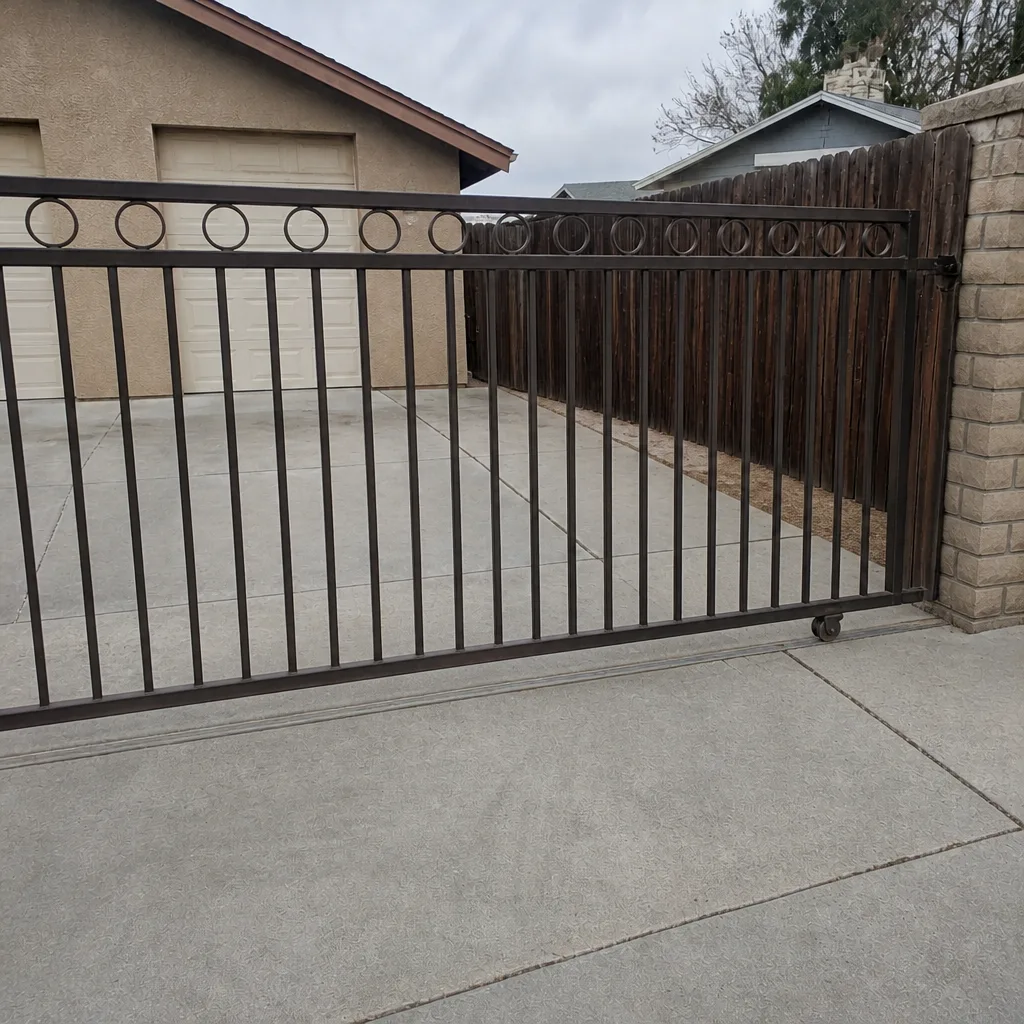
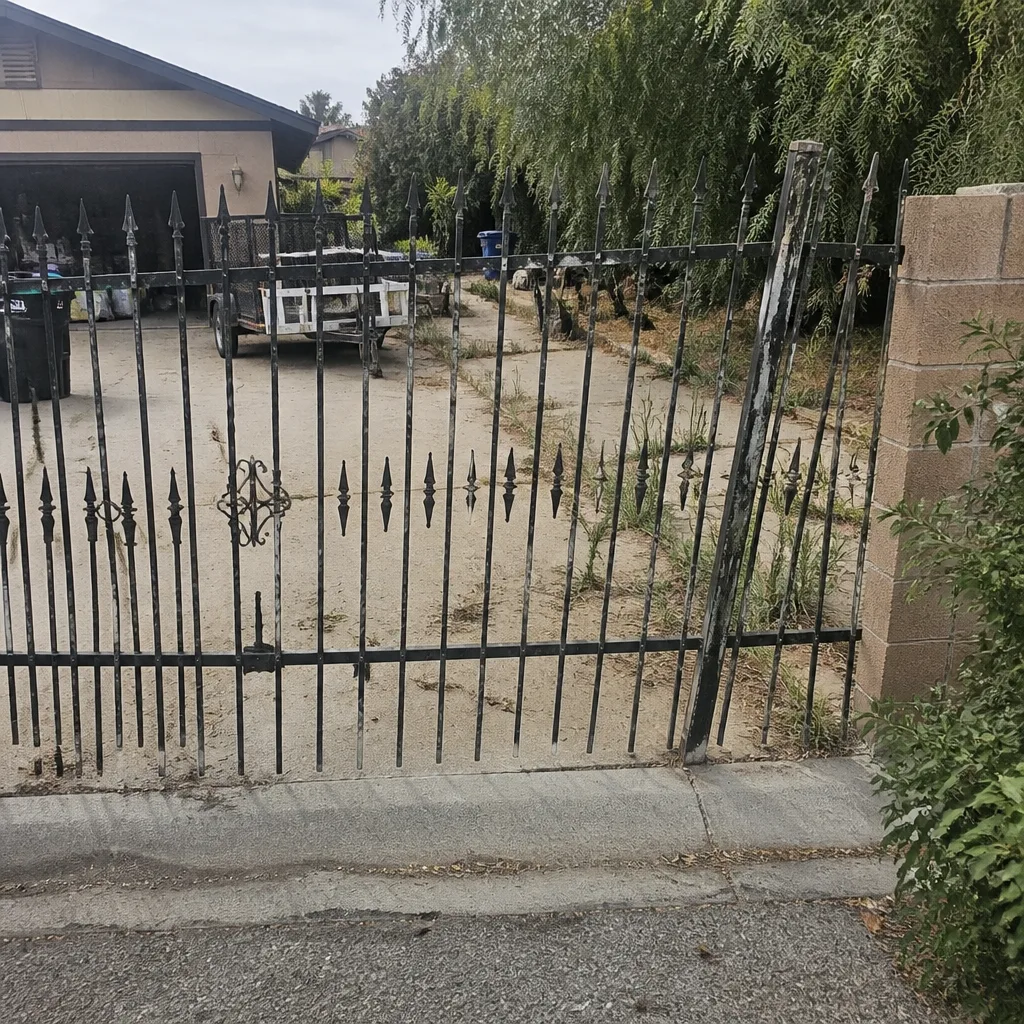
See the difference
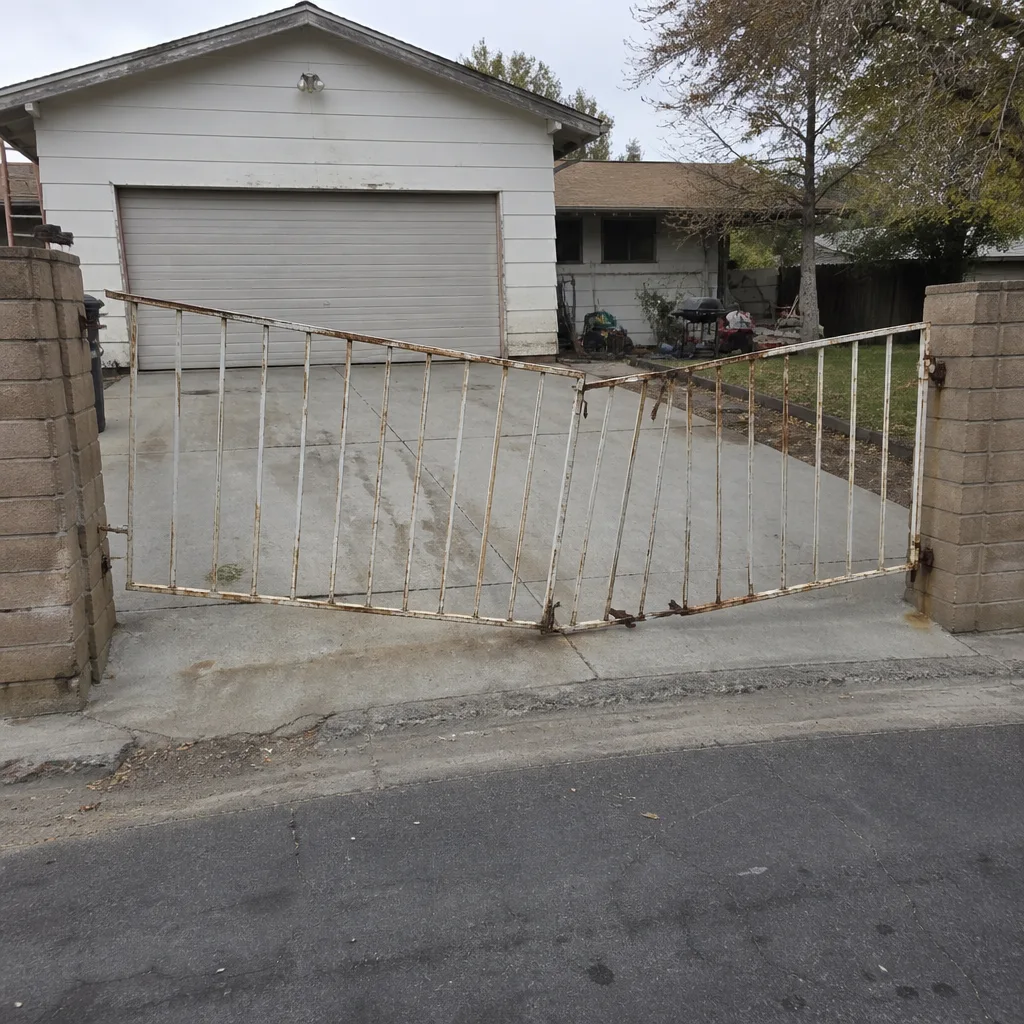 Before
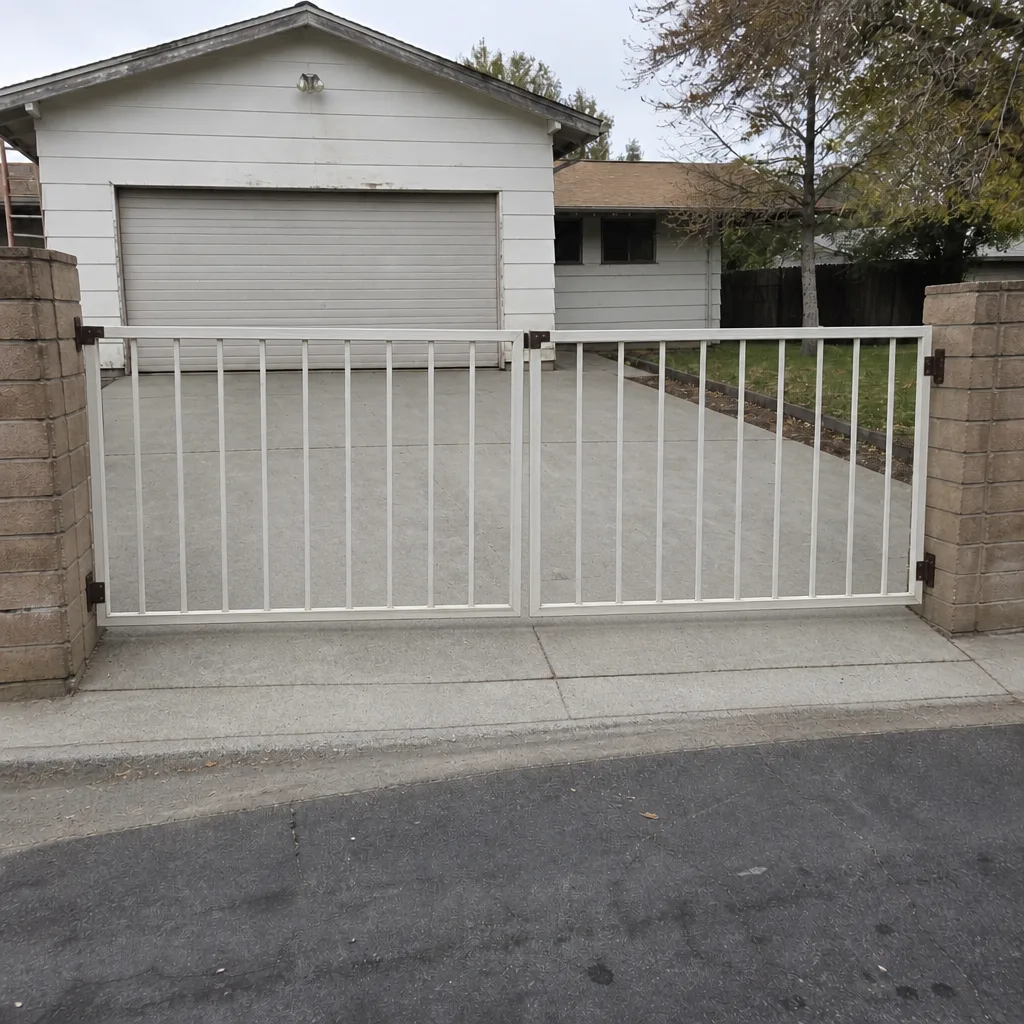 After
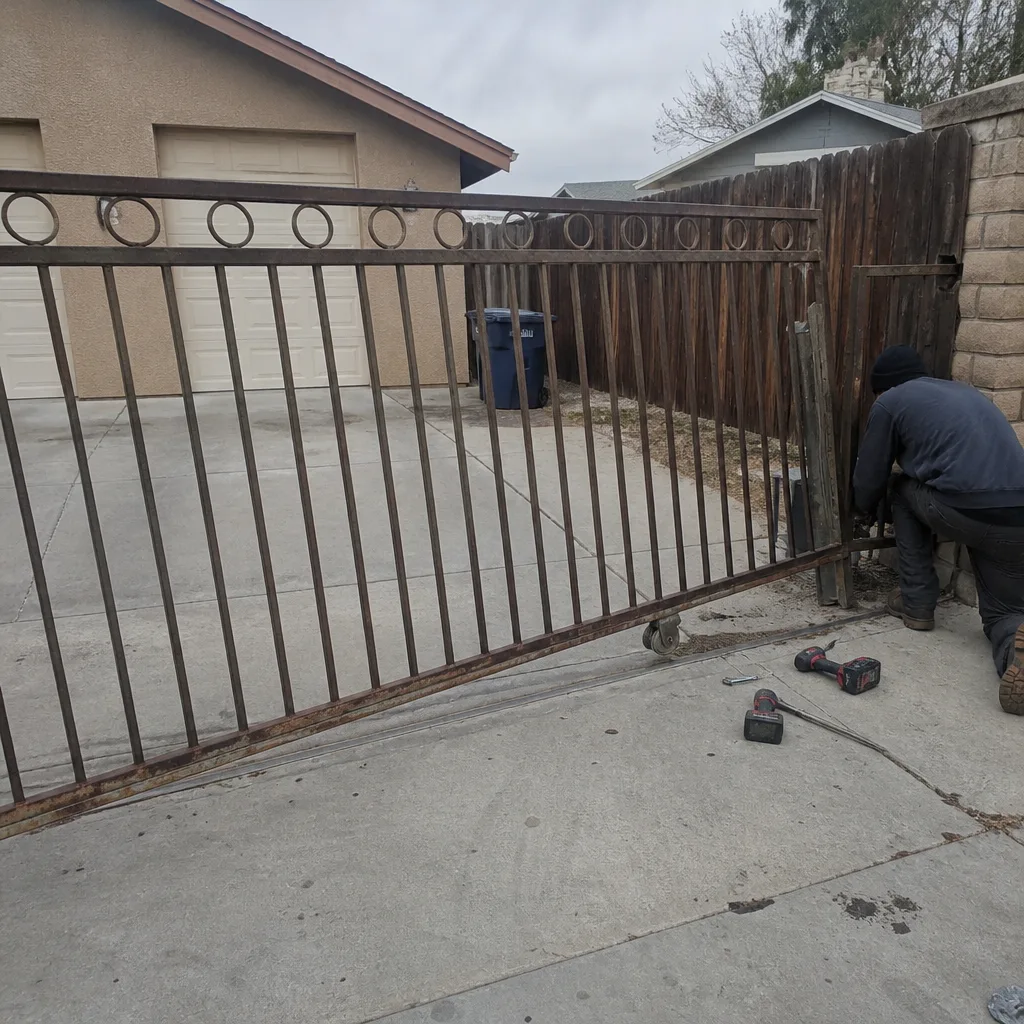 Before
 After
 Before
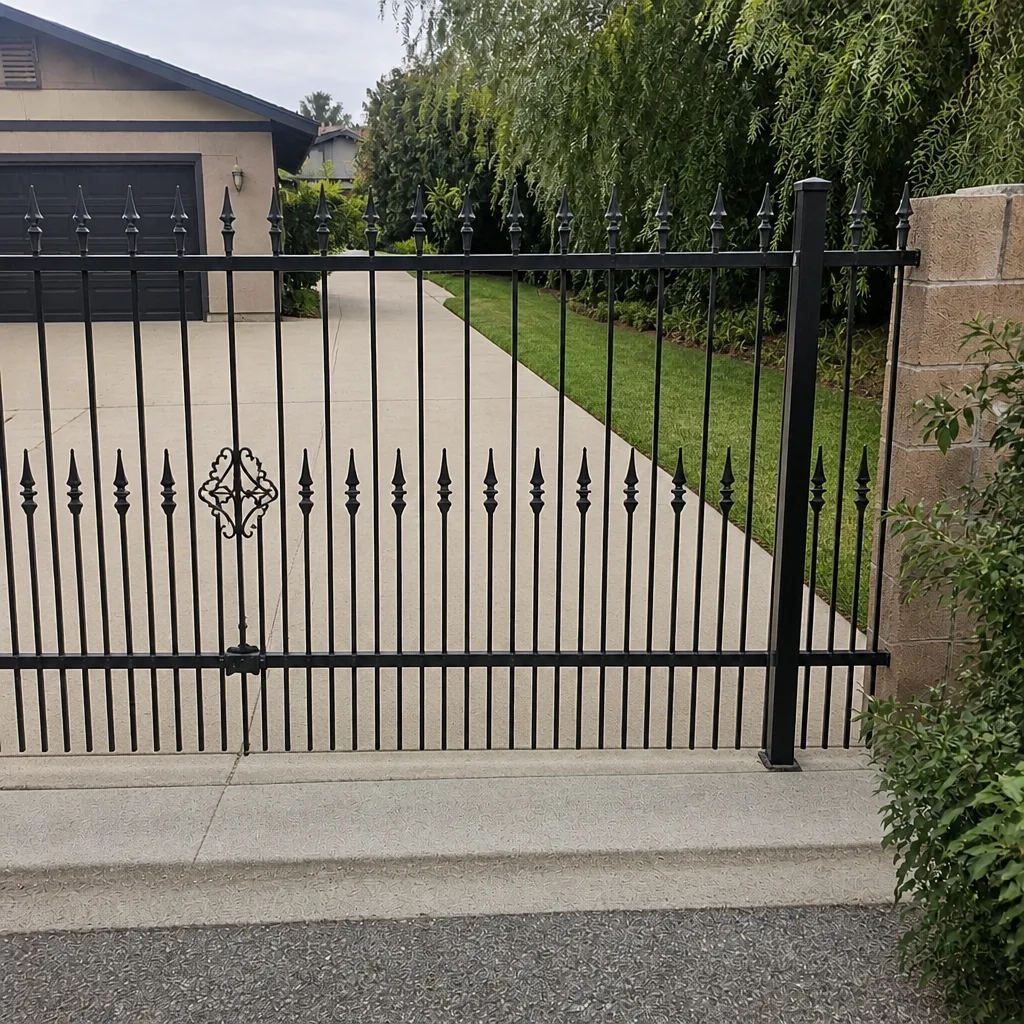 After
When to Call a Professional
If the gate’s hinge post has moved, if the frame is out of square, or if you can see a crack in a load-bearing weld, that’s the point to call. On-site welding and post repair take tools, and neither is safe to attempt on a gate that carries real weight. A gate that has swung or fallen can cause an injury fast. If you’re at all unsure whether the cause is the post, the weld, or the hardware, that’s exactly the kind of second opinion we give free. Gatewood Fence & Gate Enterprise offers free estimates in Enterprise – call (833) 780-1547. We’ll come out, run the tests, and tell you honestly whether you’re looking at a fastener fix or a weld repair. If it’s the ten-dollar fix, that’s the one we’ll quote you.
Frequently Asked Questions
Run your thumb along the weld where the hinge plate meets the gate frame. If you feel a clean bright line across the bead, that’s a real crack. If the bead has no gap and the hinge still rocks when you lift the gate, it’s the lag bolts in the post, not the weld. In Enterprise we find the fastener cause nine times out of ten, and it’s a much cheaper fix. Call us if you want a free second opinion before you spend money on parts.
Yes, if it’s done correctly. On-site welding is the right answer for a fatigue crack or a joint that never fully fused, because it lets the gate stay in the driveway instead of being dragged off. High-tension gate hardware carries real load, so we don’t recommend anyone try to re-weld a load-bearing joint themselves. A trained welder can grind, prep, and lay a proper bead, and the 90-Day Done Right Promise covers the repair in writing. Call (833) 780-1547 for an exact quote.
Small on-site weld repairs in Enterprise usually run in the low hundreds, and a full frame joint or post re-anchor can run higher depending on what’s involved. We quote it upfront before any work starts, so you’ll know the price and agree to it before a tool is picked up. There’s no trip charge inside the county, and our permanent 10% discount for seniors and veterans applies. Call (833) 780-1547 for an exact quote – estimates are free.
A properly prepped and fused weld on a sound post and frame will hold for the life of the gate. A weld that was laid over galvanized coating without grinding, or tacked and left, will fail within a season or two. That’s why the prep matters as much as the weld. We stand behind every repair with the 90-Day Done Right Promise in writing, so if a weld we laid comes apart, one call brings us back. Call us to talk through your gate before you commit to a repair.
We service the major brands you’re likely to have. That includes DoorKing, Elite, Mighty Mule, LiftMaster, FAAC, BFT, Linear, Viking, and Ghost Controls. If your gate has an operator and you’re not sure of the brand, we can usually identify it from the control box or the model plate. Give us a call and we’ll tell you straight if we can help.
Most latch problems are an adjustment, and adjustments cost less than a replacement part. If the latch hardware itself has failed, the part and the labor are usually a small job. Latch misalignment on a small manual gate is the least expensive kind of fix we do. Whatever the cause, we price it before we start and you’ll agree to the number first. Call (833) 780-1547 for a free estimate.
The Bottom Line
When a gate fails, the eye goes to the nearest crack. The fix usually lives somewhere else: the lag bolts, the post, the alignment, the hinge pin, or the latch. Do the string-line test before you buy a single part. Fix the cause, not the symptom. If you’re looking at a real weld crack on a load-bearing joint, or the post has moved, that’s the point to bring in a pro. We fix what other companies want to replace, we weld on site so the gate stays in your driveway, and we tell you the truth about whether you’re looking at a ten-dollar fix or a bigger job. The name is on the shop, and the shop is down the road. If you found this guide useful, take a look at our gate installation work in Enterprise, our gate repair service, and the gate motor and opener page, along with our Gatewood Fence & Gate Enterprise home page.
If your gate needs a look, call Gatewood Fence & Gate Enterprise at (833) 780-1547 for a free estimate. A live person answers every call, 24 hours a day. We’ll come out, run the tests, and quote the fix upfront – and if it’s a fastener problem, we’ll tell you so.
Written by the team at Gatewood Fence & Gate Enterprise.