
Last updated November 18, 2026
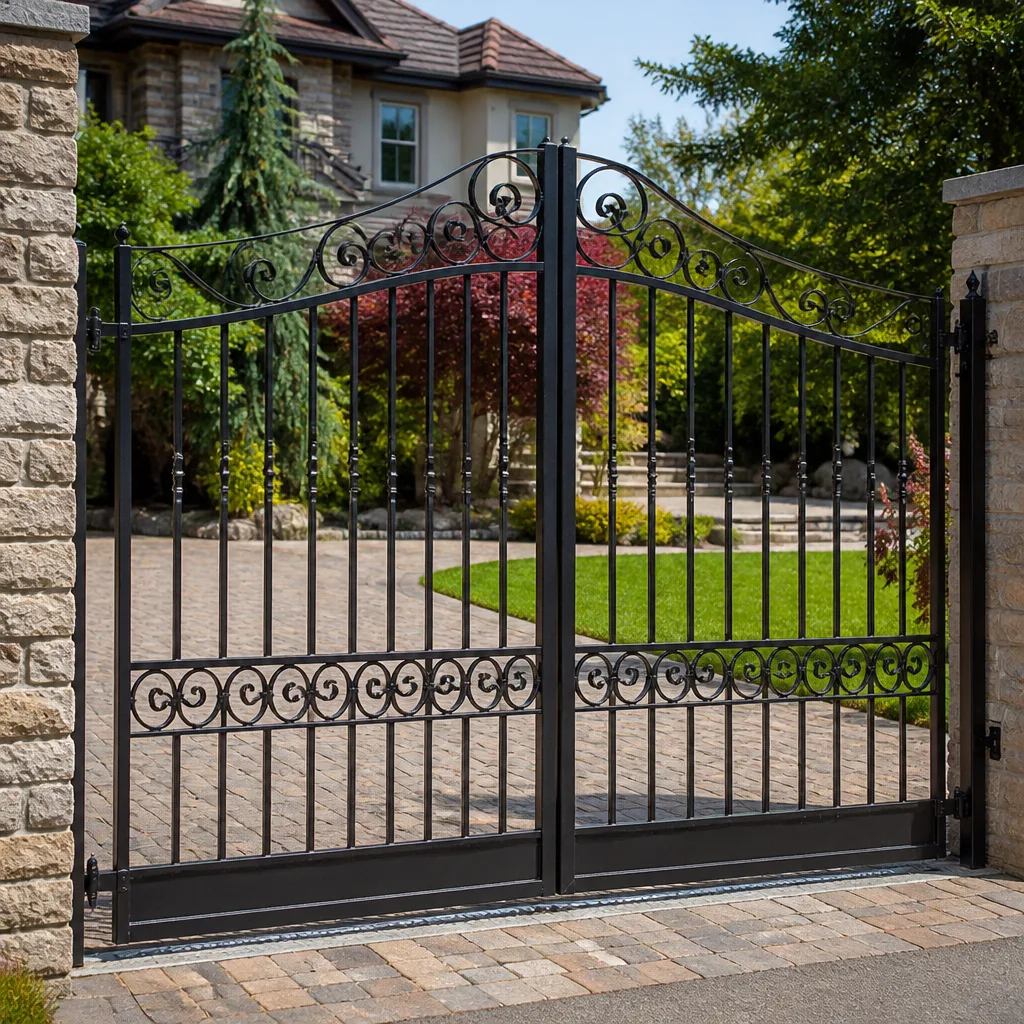 Wrought iron
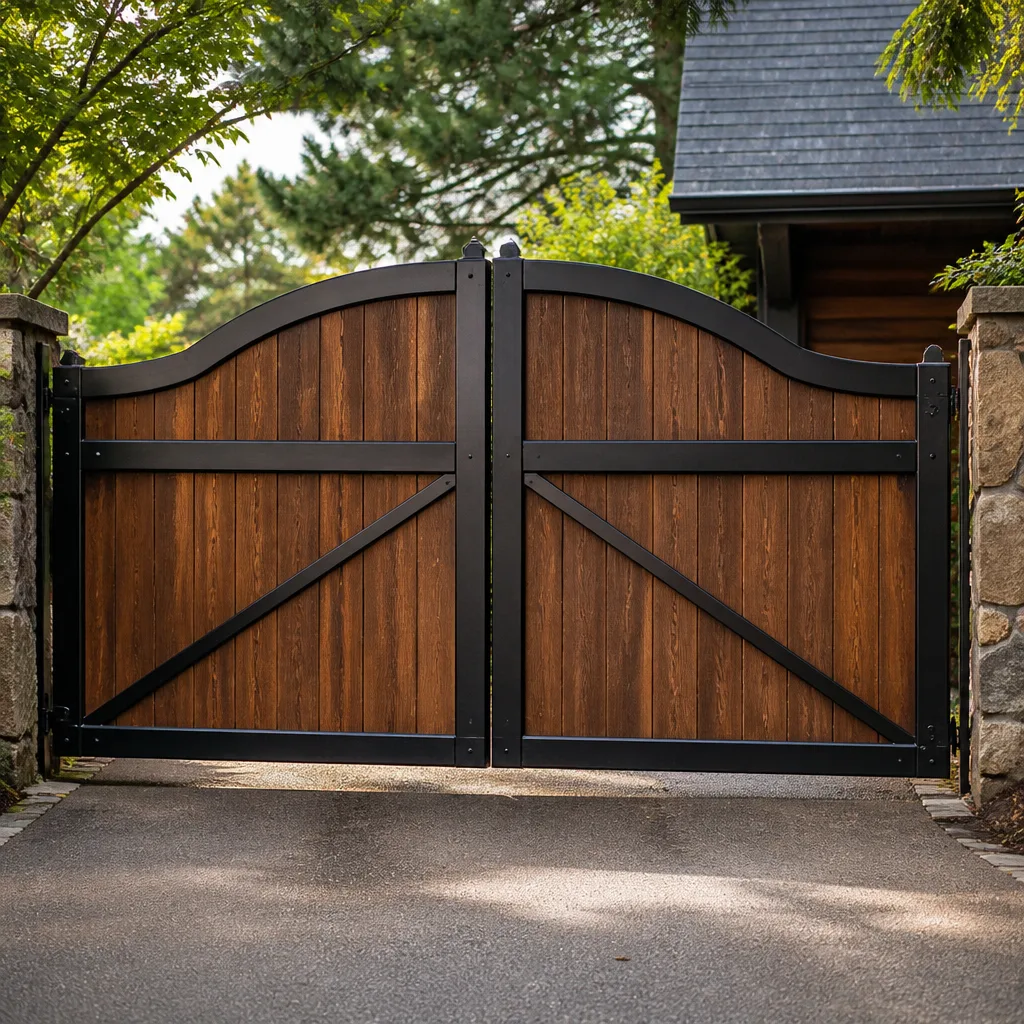 Wood & steel frame
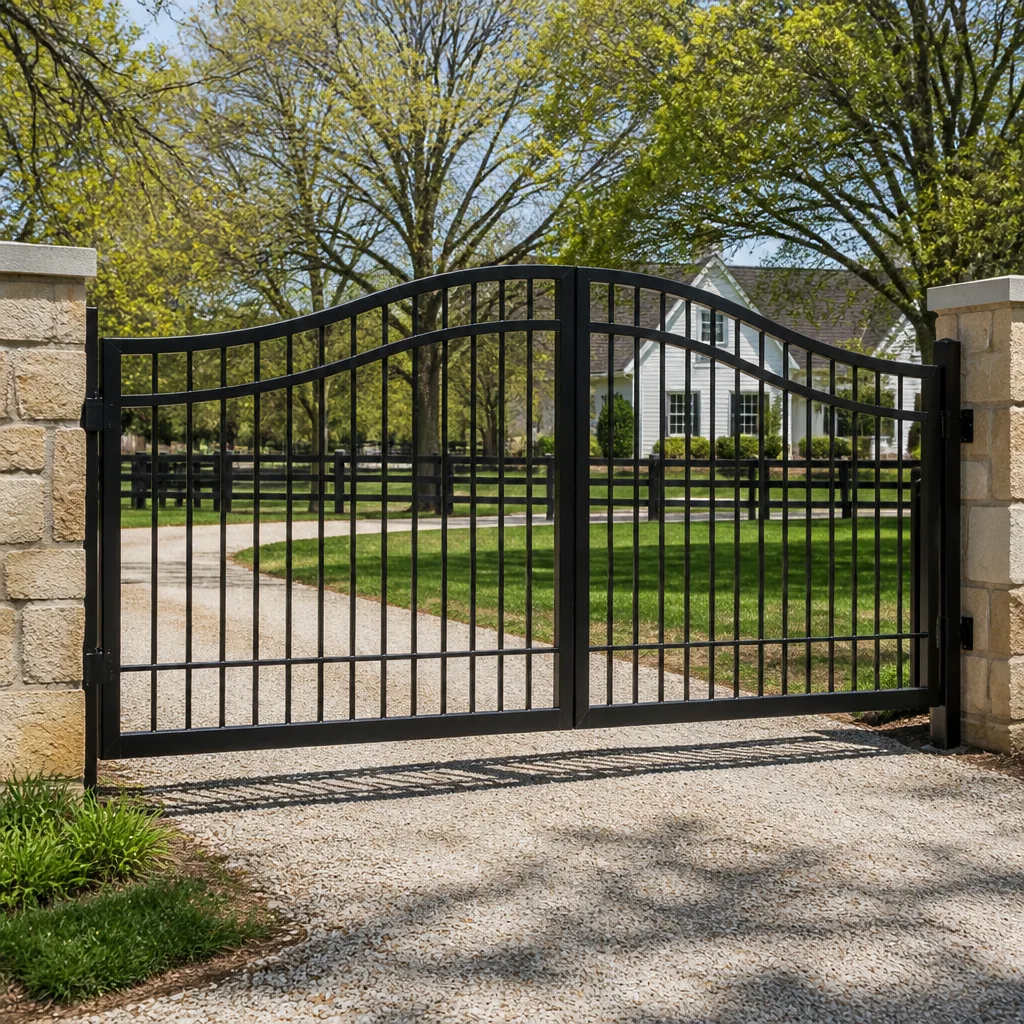 Farm & ranch
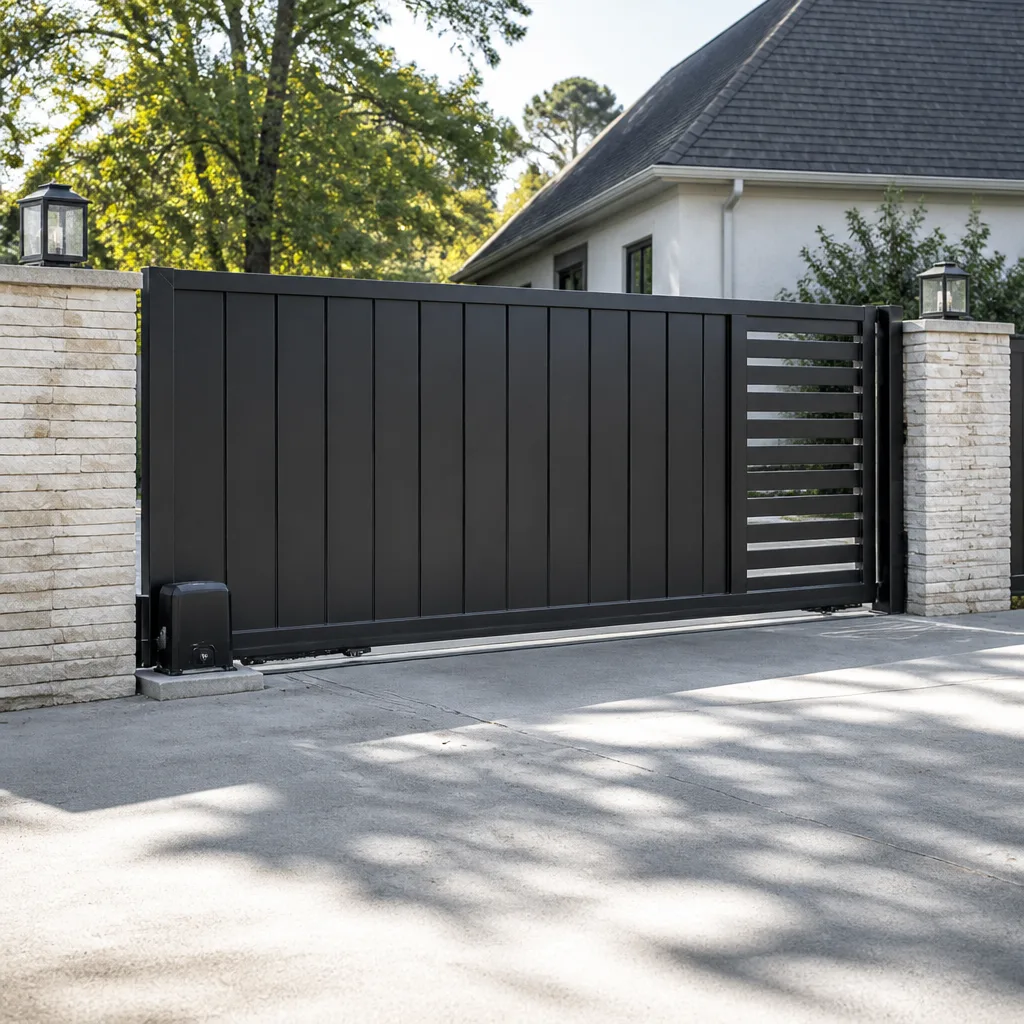 Sliding driveway gates
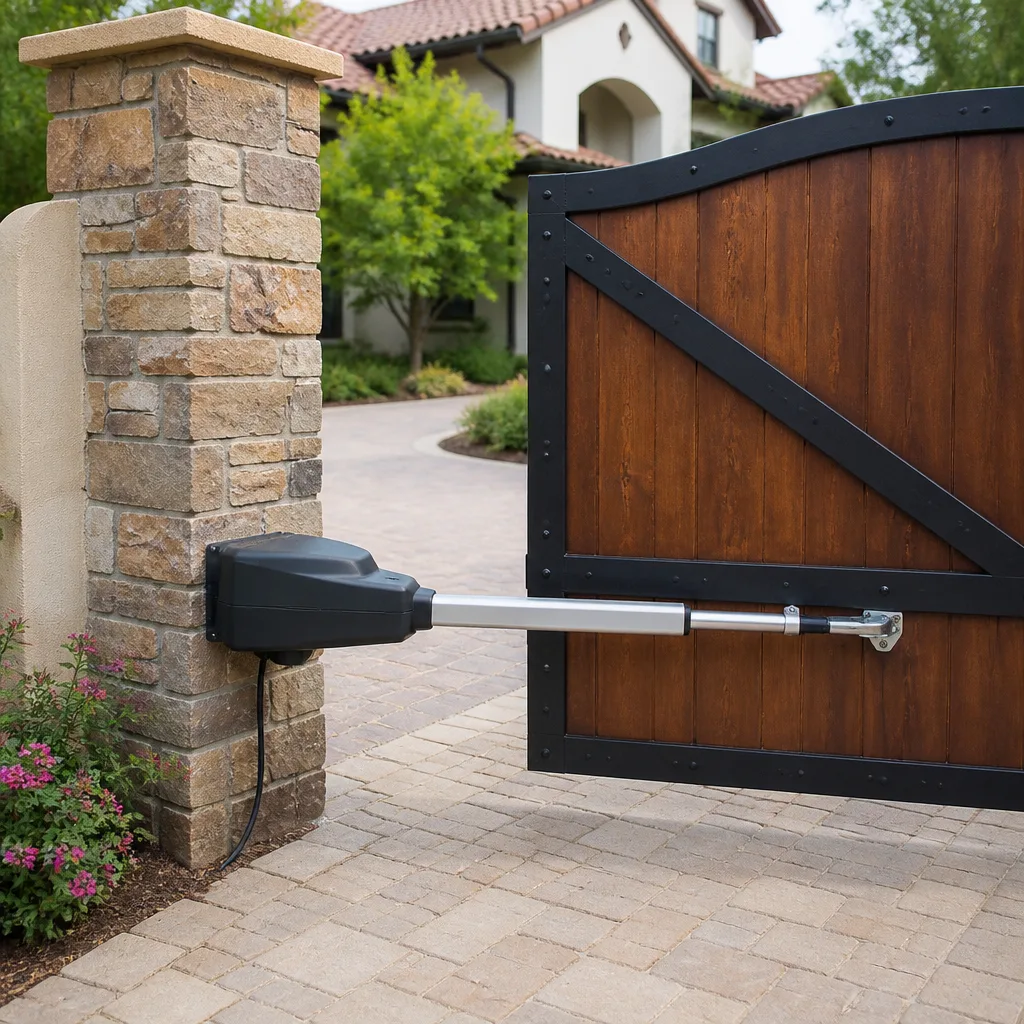 LiftMaster operators
Free on-site gate assessment - hinges, posts, and your LiftMaster or Nice gate operator checked before anything is quoted
The assessment is free and the quote is the invoice.
Get your free estimateGate Repair Maintenance Schedule: What to Do and When
If you do gate maintenance in January and call it done, you’ve missed the two seasons that do the most damage in Enterprise: the 110-degree summer that bakes lubricants out of hinges and warps aluminum frames, and the August monsoon that pushes water into every gap you didn’t seal. A gate that gets one even-handed tune-up a year tends to fail in July or September, right at the edge of the extremes. The schedule in this guide is built backward from Enterprise weather instead of forward from a calendar. You’ll get a pre-summer checklist, a post-monsoon checklist, a battery-backup testing rhythm most homeowners skip, and a simple log that holds up when you sell the house or file a claim.
Quick Answer
For a gate in Enterprise, NV, the right maintenance schedule is front-loaded, not evenly spread: do the heavy service in April and May before the heat arrives, do a post-monsoon inspection in September after the rains stop, and check the operator’s battery backup every six months because most gate batteries lose meaningful capacity by 18 months even while the gate still opens. Lubricate high-heat months more often than cool ones, and keep a dated written log of every check.
Styles & brands we work with
- Wrought iron
- Wood & steel frame
- Farm & ranch
- Sliding driveway gates
- LiftMaster operators
Table of Contents
- Why an Enterprise gate schedule looks different
- The pre-summer checklist (April and May)
- The post-monsoon checklist (September)
- Battery backup: the check almost everyone skips
- What you can do yourself and what you shouldn’t
- Keeping a maintenance log that actually counts
- Common mistakes to avoid
- When to call a professional
Why an Enterprise gate schedule looks different
Most gate maintenance advice you’ll find online was written for a mild four-season climate. It tells you to do a little of everything each quarter and calls that a schedule. In Enterprise that approach misses the point. Our year splits into two punishing halves, and the gate takes its real hits at the transitions between them.
From roughly June through September, surface temperatures on a dark metal gate can climb well past the air temperature. That heat does two things. It thins and evaporates light lubricants, so hinges, latches, and the operator’s drive chain start wearing metal on metal. And it makes aluminum and steel frames move. A gate installed to tight tolerances in February will expand in July, and if a swing gate doesn’t have the correct gap at the latch or frame, it binds, the operator strains, and a $40 sensor starts doing the work of a $900 motor.
Then the monsoon arrives in late summer. Water gets into hinge posts, weld seams, operator housings, and the low spots where the gate meets the ground. It sits there. In Enterprise a wet gate post doesn’t dry out the way it would in a coastal climate; it stews, and by the next spring you’re looking at rust bloom and a post that’s lost its footing. So the two checks that matter most are the one before the heat and the one after the water. Everything else is maintenance in the ordinary sense. Those two are the ones that decide whether your gate lasts fifteen years or gets replaced at eight. If you want a sense of how we think about repairs on this equipment, our Gate Repair in Enterprise page walks through what we actually find in the field.
The pre-summer checklist (April and May)
This is the most important service window of the year in Enterprise. You want everything tightened, lubricated, and checked for expansion gaps before the first real heat wave, not after the gate starts dragging in June. Here’s the order we work in:
- Walk the full travel of the gate. Open and close it by hand (with the operator disengaged) and listen. A grind, a scrape, or a spot where it hesitates tells you where the bind is before the motor has to fight it in the heat.
- Check every hinge and pivot for play. Grab the gate and try to rock it. Any wobble at a hinge means worn bushings, and worn bushings get worse fast once the lubricant thins in summer.
- Lubricate with a high-temp product. Light spray lubricants and thin oils evaporate off a hot gate. Use a high-temperature lithium or moly-based grease on hinges, latches, and pivot points, and apply it before the heat, not during it. Grease that stays put is the whole game.
- Check thermal expansion gaps at the latch, frame, and stops. Metal frames grow in July. If the gate clears its latch by a quarter inch in April, that’s usually right. If it’s already touching, it will bind once the heat hits.
- Inspect the operator’s moving parts. On a chain-drive unit, check chain tension and lube. On a swing operator, check the arm and the linkage for wear. If you’re running a Ghost Controls or Mighty Mule residential unit, those arms and limits are worth a look every spring.
- Test the safety reverse and the photo-eye. Put an object in the gate’s path and confirm it stops and reverses. This is a safety item first and a convenience item second.
- Clear the tracks and the sweep. On a sliding gate, sweep grit and gravel out of the track. On a swing gate, clear vegetation and rock away from the arc.
Two of those steps, the lubrication and the visual walk-around, are genuinely DIY. The expansion-gap check and the operator inspection are the ones where a trained eye catches a problem before it costs you a motor.
The post-monsoon checklist (September)
Once the August rains pass, the job changes from protecting against heat to finding water damage before it spreads. Water intrusion in a gate doesn’t announce itself. It shows up quietly, and by the time you see rust bloom on the surface, the weld behind it has been wet for weeks. This is the checklist we run on Gate Motor & Opener setups and manual gates alike after the monsoon.
- Look at the operator housing for standing water or mineral staining. A waterline inside the housing means the seal has failed. Do not just wipe it dry and move on; the electronics behind it have already seen moisture.
- Check the bottom of every hinge post and footing for soft soil or a sunken base. A post that took on water will settle. If the gate is suddenly sagging at the hinge side, water in the footing is often the cause.
- Inspect weld seams and the bottom rail for rust bloom. Surface rust that appears within a month of the rains is a warning. Left alone through the dry season, it becomes corrosion that eats the metal from the inside.
- Test the ground-fault protection and any low-voltage wiring at the gate. Water in a conduit or a splice is a shock hazard and a nuisance-trip waiting to happen.
- Re-check the lubricant. The pre-summer grease has done its job; the monsoon may have washed some off the exposed points. A light re-grease on hinges and the latch is cheap insurance.
- Run the gate through a full cycle and watch the limits. If the operator is stopping short or over-traveling, water in a limit switch or a slipping clutch is a common culprit on DoorKing and Elite units.
The point of September is early detection. A little rust bloom caught now is a wire-brush and a coat of paint. The same rust caught next spring is a weld repair on a post that’s already compromised.
Battery backup: the check almost everyone skips
Here’s a fact worth putting on the fridge: a gate operator’s battery backup can lose a large share of its capacity by the time it’s about 18 months old and the gate will still open fine on shore power, so you’d never know. The battery only reveals itself the day the power goes out, and that’s the day you need the gate to work. In Enterprise, where summer brownouts and monsoon outages are both real, this is the single most overlooked item on any maintenance schedule.
Test it like this:
- Confirm nobody needs to get through the gate for the next few minutes.
- Kill power at the dedicated breaker that feeds the operator (not the whole house).
- Trigger the gate and watch a full open and close cycle on battery alone. Note whether it moves at normal speed or drags.
- Time how long the battery has to sit before the gate won’t complete a cycle. A healthy battery carries the gate through a normal outage; a tired one gives you one or two cycles.
- Restore power and confirm the operator recharges and resumes normal limits.
On most residential operators, plan to replace the backup battery every 18 to 24 months regardless of what the tester says. On commercial-grade units like a DoorKing, the battery packs are bigger and last longer, but the testing rhythm is the same. Write the replacement date on the battery itself with a marker. You will not remember in two years, and neither will we unless it’s logged.
What you can do yourself and what you shouldn’t
We’re not in the business of talking homeowners out of a job they can handle. There’s a real line, though, and crossing it is how a $60 afternoon turns into a $700 repair. Here’s where we draw it.
Realistic DIY:
- Wiping down the gate and clearing debris from the track and swing arc.
- Applying high-temp grease to exposed hinges, latches, and pivots.
- Testing the safety reverse and photo-eye by walking an object into the path.
- Running the battery backup test and logging the result.
- Visual checks: rust spots, loose bolts, a gate that sags, a post that looks wet.
- Tightening a loose hinge bolt or a latch screw that’s backed off.
Leave these to a trained hand:
- Any welding, including a cracked hinge, a separated bottom rail, or a broken weld at the post.
- Adjusting the operator’s limits, force, and clutch settings. Get these wrong and the gate either won’t close or it closes on something and doesn’t stop.
- Working inside the operator housing or the control board.
- Anything involving the low-voltage wiring, the power run, or the safety edges.
- Replacing a hinge post, resetting a footing, or correcting a sag at the hinge side. Fix the panel without the post and you’ll fix it twice.
A gate spring under tension, a powered operator that can move while you’re in its path, and a sagging post are all things that hurt people who get them wrong. Know your line and stay on the safe side of it. We handle the rest.
Keeping a maintenance log that actually counts
A maintenance log isn’t busywork. It’s the one document that turns a well-kept gate into a selling point and a justified claim. When a buyer looks at a property or an adjuster looks at a storm-damaged gate, a dated log answers the question they’re actually asking: was this thing cared for?
Keep it simple and keep it somewhere you’ll find it. A spiral notebook in the garage, or a note on your phone, both work. For each entry write the date, what you did (greased hinges, tested battery, inspected post), what you found (light rust at bottom rail, slight play at top hinge), and what you decided. Note who did the work if it wasn’t you, and keep the written estimate and invoice stapled or scanned with the log.
The entries that carry the most weight:
- Battery replacement dates. These prove the operator was maintained, not just used.
- Repairs and who did them. A dated invoice from a licensed local company is worth more than a receipt from a big-box store.
- Post-monsoon findings. Note any rust or water you found and how you dealt with it. If a claim ever comes up, this shows you caught and addressed issues in a timely way.
- Photos. A dated photo of the gate on the day you inspected it is the cheapest documentation there is.
If you’ve had a repair, the 90-Day Done Right Promise is stamped in writing on the job, so the paper trail starts there. Keep it with the log.
Common Mistakes to Avoid
- Doing one big service in the fall and calling it a year. In Enterprise, fall is too late for the summer heat and too early to catch the post-monsoon water. The two windows that matter are spring and early fall.
- Using a light spray lubricant on a hot gate. It feels like it’s working, then evaporates off by July and leaves the hinge dry. Use a high-temperature grease.
- Ignoring the battery because the gate still opens. A gate on shore power will open fine right up until the power goes out. Test the backup every six months and replace it in the 18 to 24 month range.
- Painting over rust without treating it. Paint over rust bloom seals the moisture in and the corrosion keeps going under the paint. Wire-brush down to bare metal, treat it, then paint.
- Adjusting the operator’s force setting to fix a binding gate. Turning up the force hides a mechanical problem and stresses the motor. Find the bind and fix it.
- Washing out a wet hinge post with the hose and hoping it dries. In Enterprise a wet post doesn’t dry quickly. Wet posts need to be inspected and often re-set, not rinsed.
- Not keeping any record. A gate with no log is a gate with no history. Buyers and adjusters notice.
When to Call a Professional
Call us when the problem is beyond a grease gun and a rag. That means a sagging gate (the hinge post is almost always the cause), a gate that binds in the heat, a weld that’s cracked or a rail that’s separated, a motor that’s straining or failing to complete a cycle, or water inside the operator housing. It also means anything involving the electrical run, the safety edges, or the low-voltage wiring, which are not places to improvise. If you’ve had a big-box company out and the gate’s still wrong, we’ll give you a free second opinion on any written estimate you’ve got. Gatewood Fence & Gate Enterprise offers free estimates in Enterprise, and you can reach the shop through our home page or call (833) 780-1547. When you’re ready for a new gate or a full replacement, our Gate Installation in Enterprise page covers what a proper install looks like so your maintenance schedule starts from a solid base.
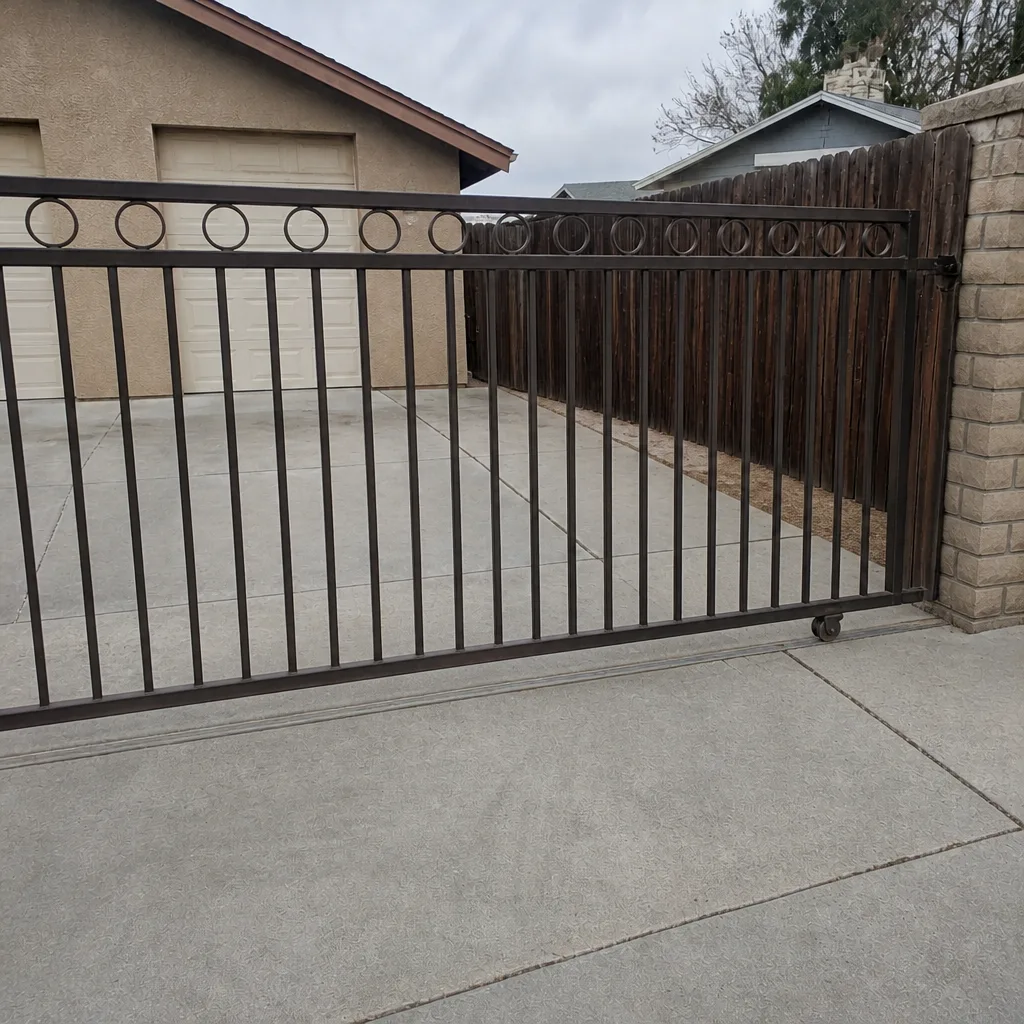
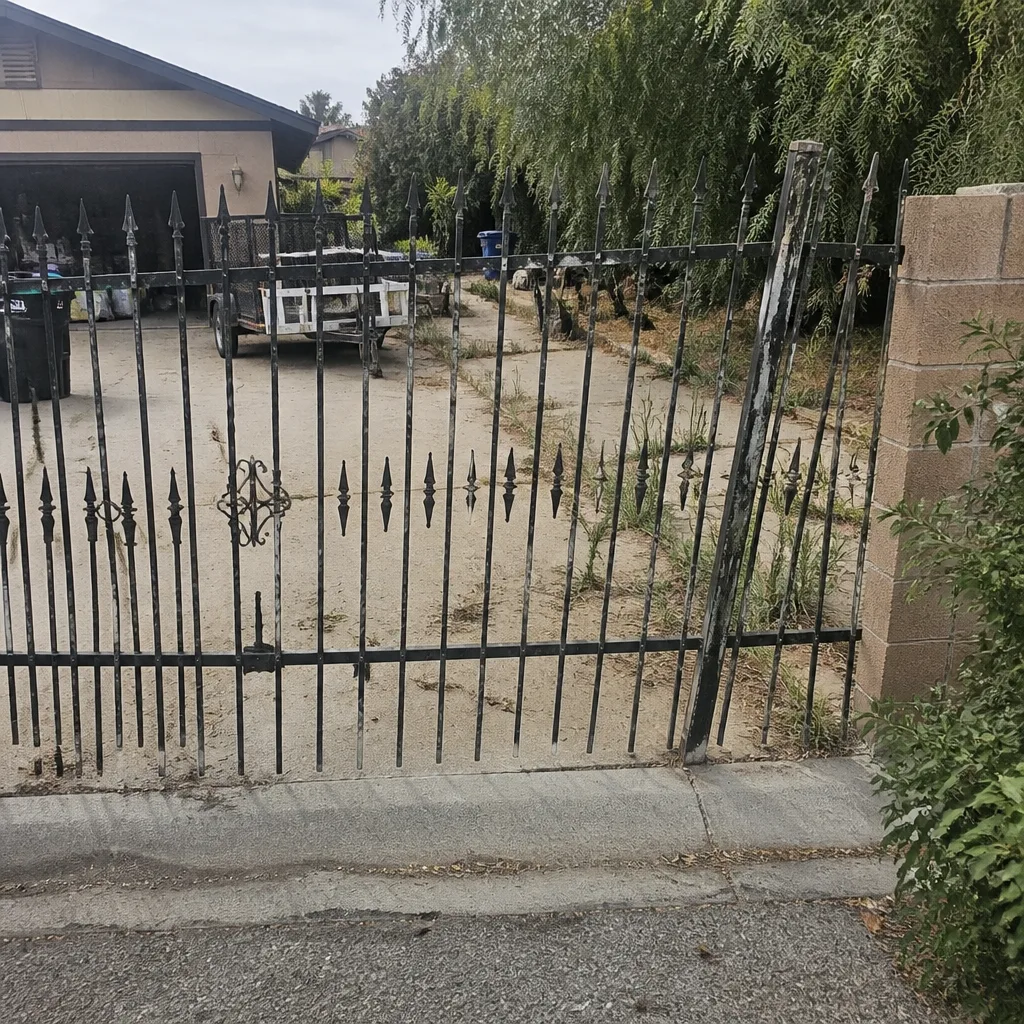
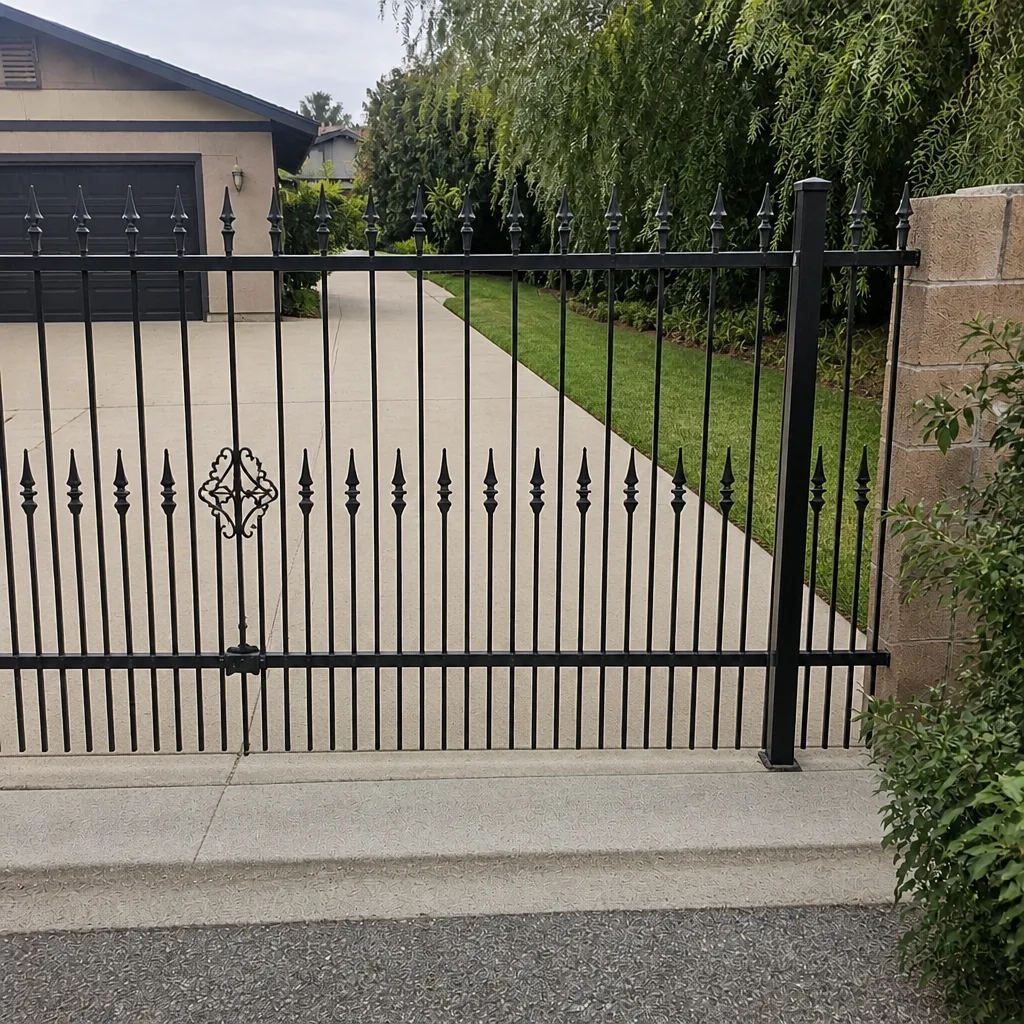
See the difference
 Before
 After
 Before
 After
 Before
 After
Frequently Asked Questions
Every two to three months in the hot season (roughly May through September) and every four to six months the rest of the year. The heat bakes light lubricants out fast, so a gate that gets greased twice a year in a mild climate needs more frequent attention in Enterprise. Use a high-temperature grease, not a thin spray.
April and May, before the heat arrives, and again in September after the monsoon. Those two windows catch the season’s damage at the point where it’s still cheap to fix. A single fall service misses both.
On most residential operators, plan on 18 to 24 months, even if the gate still opens fine on shore power. The battery only reveals its true condition when the power goes out. Test it every six months by killing the breaker and running a full cycle, and replace it on the 18 to 24 month rhythm regardless.
Lubrication, cleaning, safety-reverse tests, and the battery check are all reasonable DIY. Welding, operator limit and force adjustments, anything inside the control housing, and the electrical and safety-edge wiring are not. Those require the right tools and the training to not make the problem worse. Our technicians have up to 25 years of experience on exactly this equipment, and that matters most on the operator side.
In Enterprise we regularly service Ghost Controls, DoorKing, Elite, and Mighty Mule operators, along with LiftMaster, FAAC, BFT, Linear, and Viking. If you’re not sure what you have, the brand and model are usually stamped on the housing or the control board. Call (833) 780-1547 and we’ll help you identify it.
The 90-Day Done Right Promise is stamped in writing on the job. If it’s not done right, we make it right, and one call brings us back. That’s the whole guarantee, stated plainly, with no fine print and no runaround.
The Bottom Line
Build your gate maintenance schedule around Enterprise weather, not a generic calendar. Front-load the work into April and May to protect against the heat, do a thorough post-monsoon inspection in September to catch water before it rusts, and test the battery backup every six months so the gate works when the power doesn’t. Keep a simple dated log of every check and repair. Do the DIY items yourself and hand off the welding, operator adjustments, and electrical work. A gate that gets this rhythm will outlast one that gets an even, one-size-fits-all tune-up, and you’ll have the paper trail to prove it.
Contact
If your gate is overdue for the spring or fall check, or if you’ve found something the checklist turned up that you’d rather hand to someone who does this every day, call Gatewood Fence & Gate Enterprise at (833) 780-1547 for a free estimate in Enterprise. We’re locally owned and owner-operated, we answer the phone with a live person around the clock, and every job carries the 90-Day Done Right Promise in writing. Repairs over $200 get $40 off, there’s no trip charge inside the county, and seniors and veterans keep a permanent 10% discount.
Written by the team at Gatewood Fence & Gate Enterprise.