
Last updated November 18, 2026
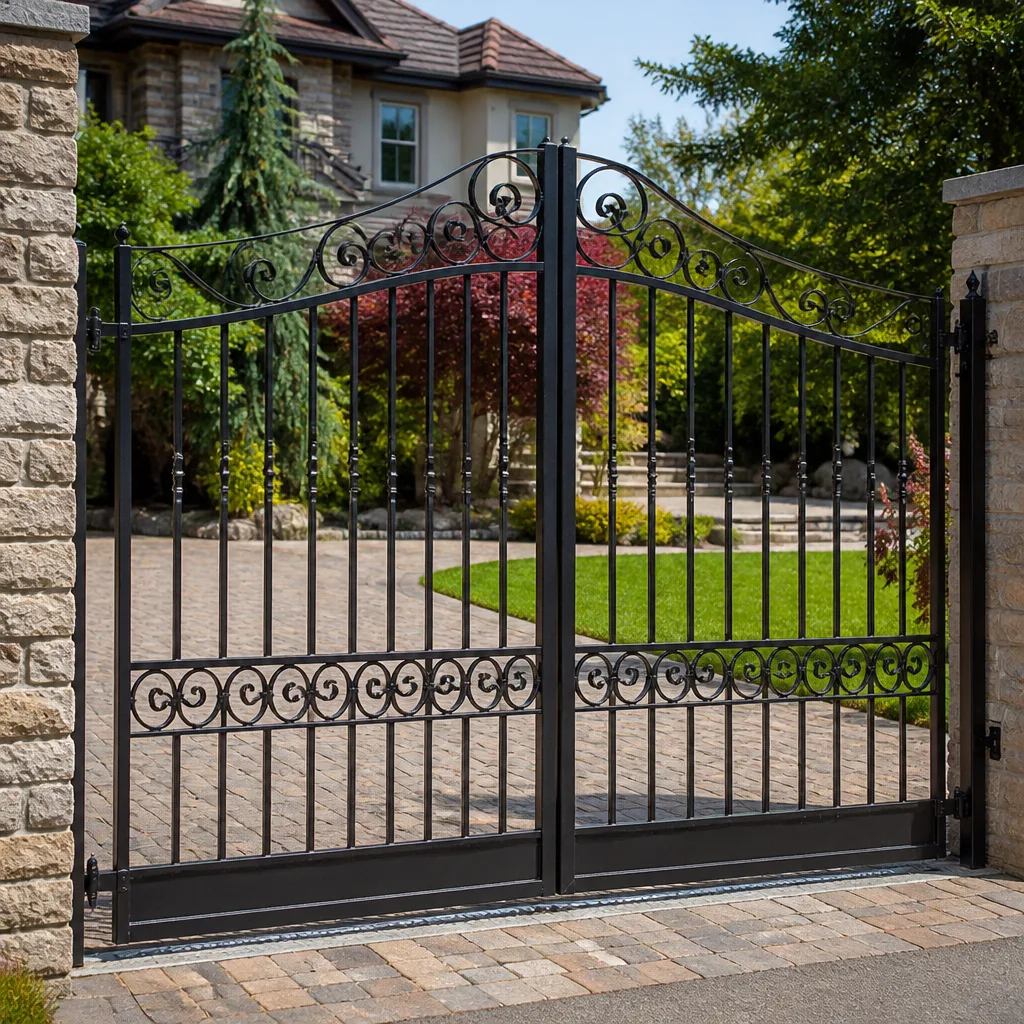 Wrought iron
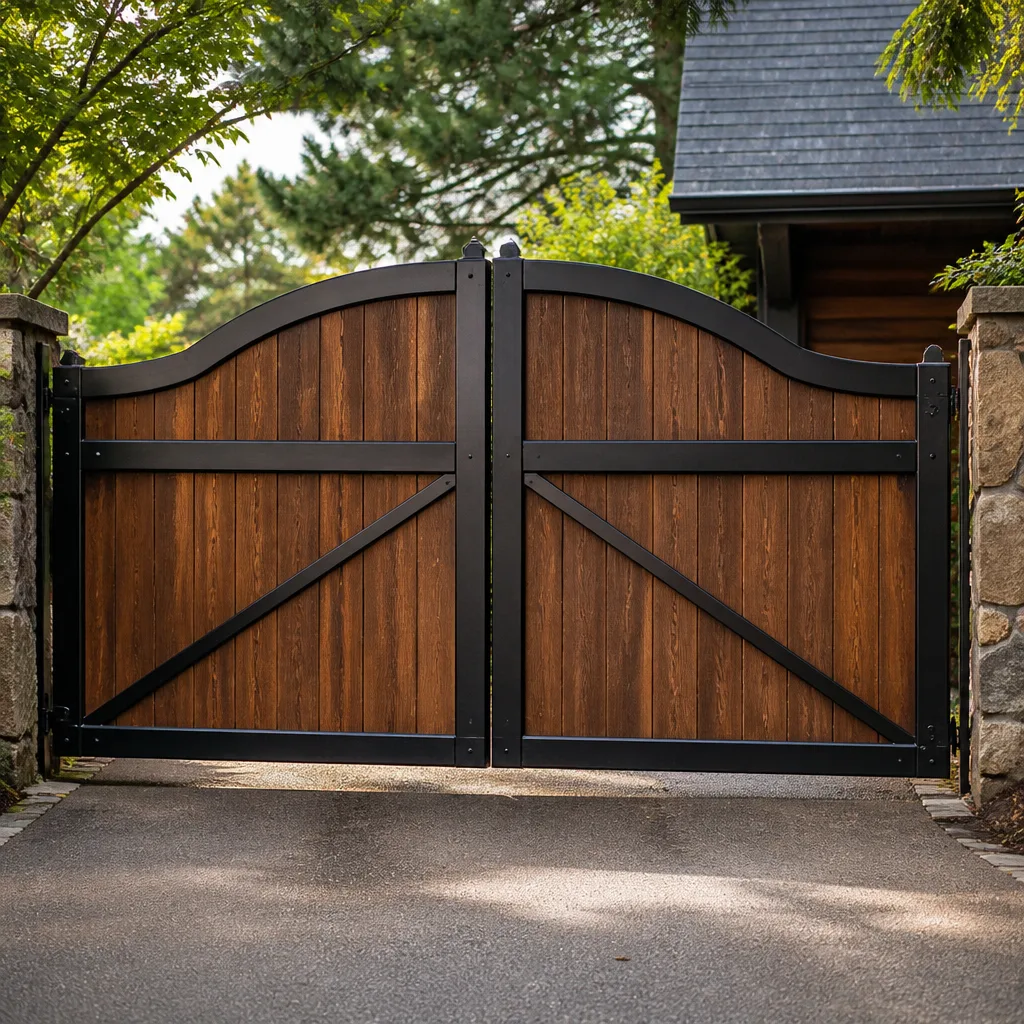 Wood & steel frame
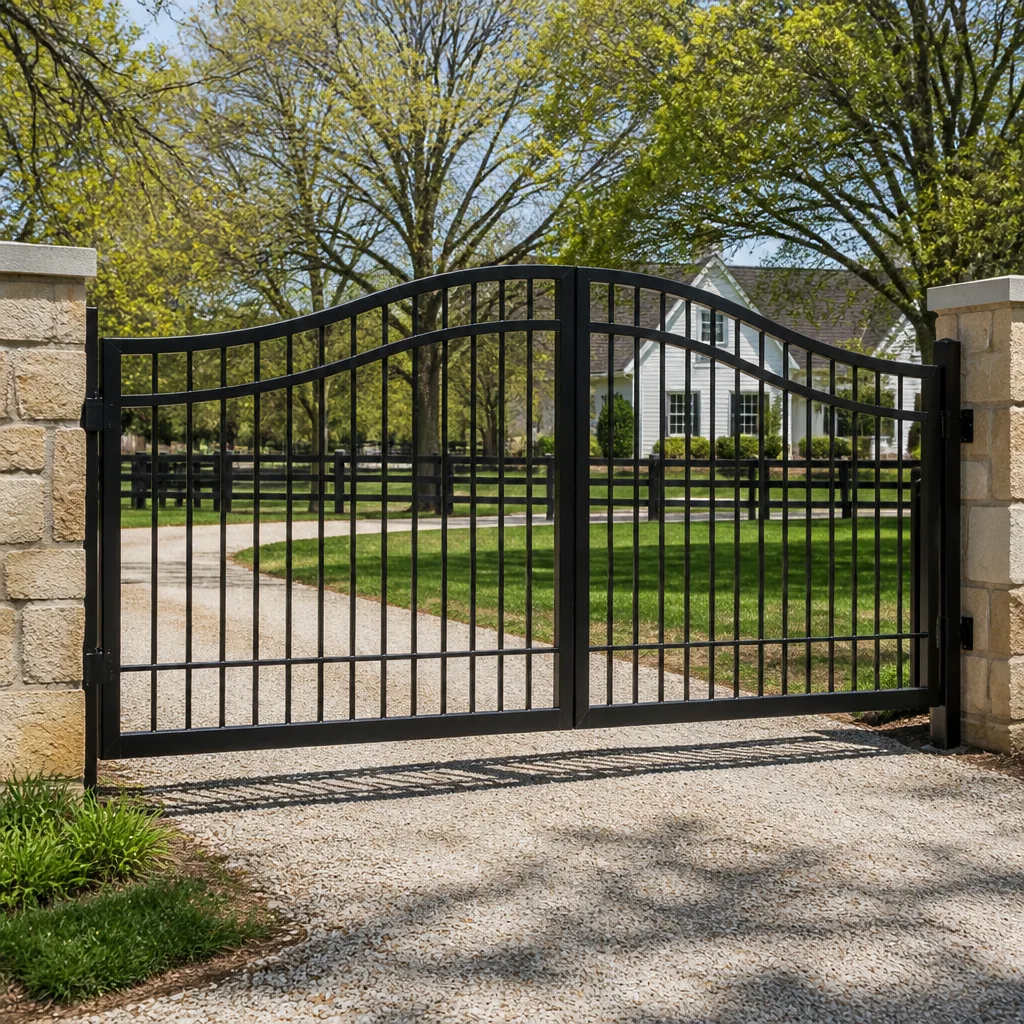 Farm & ranch
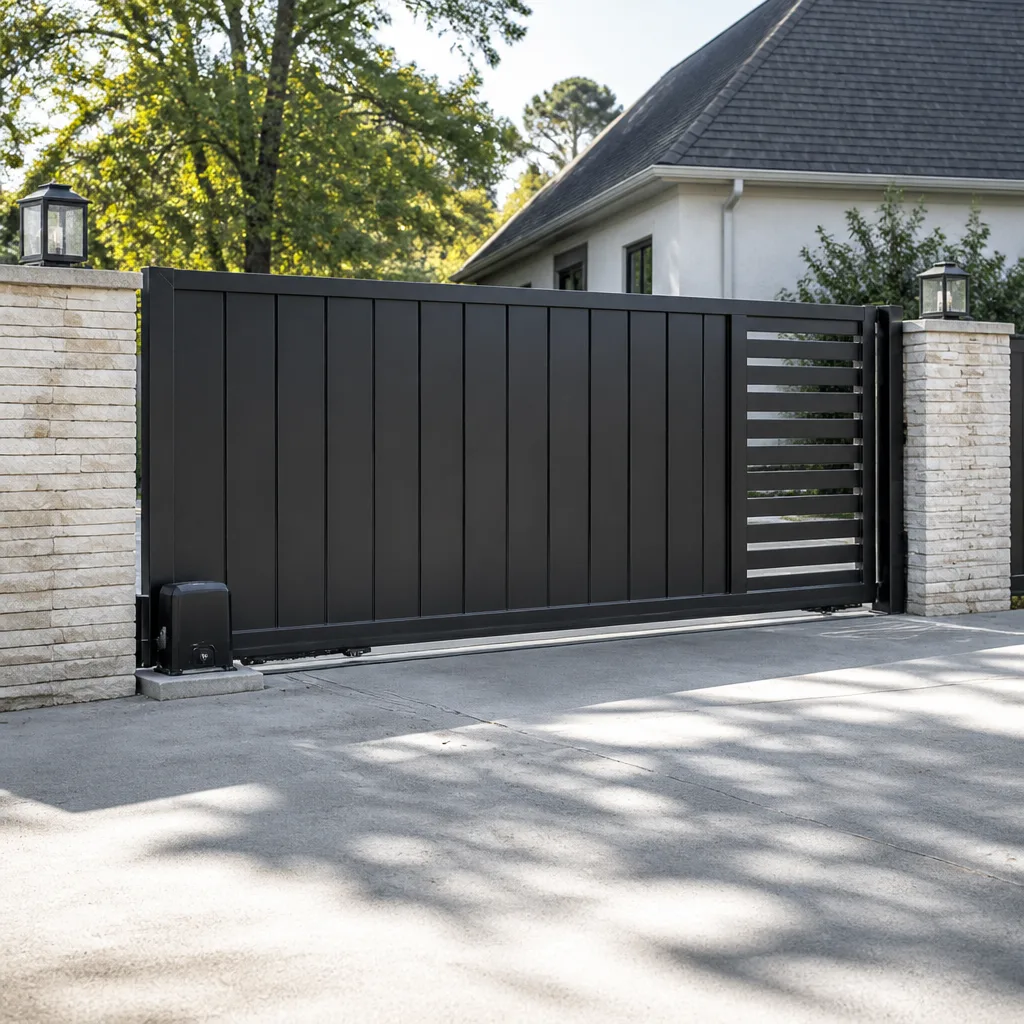 Sliding driveway gates
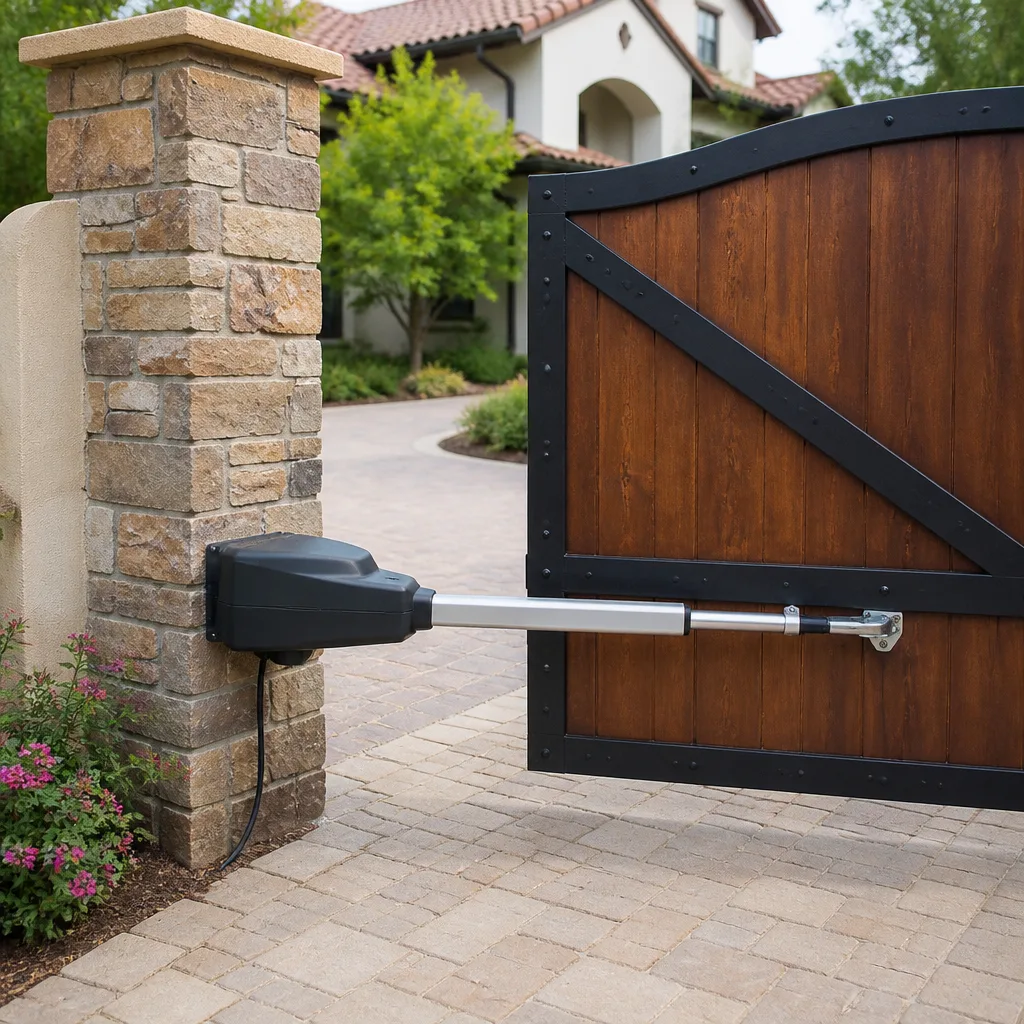 LiftMaster operators
Free on-site gate assessment - hinges, posts, and your LiftMaster or Nice gate operator checked before anything is quoted
The assessment is free and the quote is the invoice.
Get your free estimateGate Repair Emergency Preparedness Guide for Enterprise Homes
Most gate emergency calls we get at 2am aren’t that way because gates fail more often at night. They’re that way because nobody thought about what to do when one did. A gate stuck open at 11pm, a vehicle trapped behind a gate that won’t retract, an operator dead in the water the night before a storm rolls through Enterprise – these become emergencies in the worst sense when the homeowner is standing in the dark with a flashlight, guessing. This guide is built so you’re not guessing. We’ll walk through manual releases, real temporary security, what to tell a repair tech before they roll, and how to tell a genuine safety issue from a nuisance call.
Quick Answer
For a gate emergency in Enterprise, the first two moves are always the same: get any vehicle clear of the gate and stop using the system until it’s been looked at. If you need to move a car now, most automatic operators have a manual release key or lever – usually at the motor housing – and we walk you through it below. Then call a 24-hour repair line with the model, the symptom, and your cross street so the tech arrives with the right parts instead of making a second trip.
Styles & brands we work with
- Wrought iron
- Wood & steel frame
- Farm & ranch
- Sliding driveway gates
- LiftMaster operators
Table of Contents
- How to Manually Release a Stuck Automatic Gate
- When Not to Force It
- Temporary Security That Actually Works When a Gate Is Stuck Open
- What to Have Ready Before You Call a 24-Hour Gate Repair
- Safety Emergency or Nuisance? How to Tell
- Why You Want Your Gate Tech’s Number Saved in Your Phone
- The Two-Minute Drill Every Enterprise Household Should Run
- What We’ve Learned on Night Calls in Enterprise
How to Manually Release a Stuck Automatic Gate
Nearly every residential swing gate operator we service has some form of manual release, and knowing where yours is takes about 20 seconds in daylight and saves you two hours at midnight. The method varies by brand, so the mapping below covers what we see on most Enterprise properties.
FAAC operators typically use a key release on the motor housing. You turn the key, lift or pull the release lever, and then push the gate by hand. BFT operators use a similar keyed release, usually at the rear of the motor housing. Linear and Viking slide-gate operators often have a lever under the housing cover you pull to disengage the pinion from the rack. On swing gates, look for a manual release lock just below the arm.
Here’s the general sequence that applies to almost all of them:
- Cut power at the breaker or the operator’s disconnect switch first. Not because the release requires it, but because you don’t want the motor re-engaging mid-release.
- Find the release key – it usually shipped with the paperwork in the original install kit. If you don’t have it, most replacement keys are standard cut and available same day.
- Insert the key, turn, and move the release lever or pull the pin. You should feel the gate go slack immediately.
- Push the gate open or closed by hand, slowly. If it fights you, stop and go back to power off, key in, lever fully seated.
- Once the vehicle is clear, leave the gate in the released state until your tech has been out. Re-engaging a stuck operator can burn the motor board or snap a drive arm.
Sliding gates: the release is usually a lever on the motor that disengages the gear. If the gate is jammed on a track obstruction, releasing the motor won’t help – the gate is physically stuck, and you’ll need to clear the track runner before it moves.
When Not to Force It
Hal has been called out to more than one gate where the homeowner did exactly what the manual release instructions said, and the gate still didn’t move. That’s when forcing it becomes dangerous. A few rules to keep in mind:
- If the gate moves a few inches and grabs, stop. That’s a mechanical bind – a bent track, a dropped hinge post, a snapped drive arm. Pushing harder bends more parts and can torque the gate into the frame.
- If the operator housing smells hot or buzzes when you touch it, cut the breaker, don’t key the release. That’s an electrical issue, and a motor that’s been running against a jam can hold a lot of heat.
- If the gate is off its track or hanging, don’t stand under it. A 300-pound slide gate that drops the last few inches is a hospital trip. This is a stop-and-wait situation.
- If you hear a spring or cable snap, back away. Tensioned components in a gate frame store real energy – that’s true for garage doors and it’s true for swing gate hardware.
- If the gate has visible vehicle-contact damage, don’t cycle it. The post may be bent at the base, and any automation you run against a bent post makes the fix bigger.
In every one of those cases the right answer is: power off, vehicle clear via a side path or secondary gate if you have one, and call. This is where a free second opinion on a written estimate is worth having, because what looks like a total replacement is often a hinge post and a drive arm.
Temporary Security That Actually Works When a Gate Is Stuck Open
A gate stuck open overnight in Enterprise is a real security hole. Half the “solutions” people reach for don’t close it. Here’s what actually works versus what just feels like it does.
What works
- Park one vehicle across the opening, angled. This is the single most effective overnight measure. A car parked gate-width blocks a vehicle entry and forces a person on foot to squeeze past, which is the deterrent you want.
- Chain the gate leaf to its hinge post with a heavy chain and padlock if you can still manually push the leaf to a closed position. This is the safest option when the gate hasn’t lost its track or hinge integrity.
- Increase lighting on the driveway. Even a couple of battery-powered motion lights aimed at the gap make the open gate look occupied, and occupancy is what matters at 2am.
- Lock the man-gate or pedestrian door if you have one – that’s the gate piece burglars actually use, and it’s often left unlocked when the vehicle gate is the only thing people think about.
What doesn’t really work
- Traffic cones, trash cans, or folding lawn furniture across the gap. They signal “unoccupied house with a broken gate” more than they block anything.
- Yellow caution tape. Same issue plus a wind problem.
- Leaving the gate open and trusting your alarm system to cover an exterior approach. Gate security and door security are two different problems.
What to Have Ready Before You Call a 24-Hour Gate Repair
The difference between a tech solving the problem on the first visit and making a second trip is mostly what you tell them on the phone. We ask the same six questions on every nighttime call, and having the answers ready saves the trip.
- Brand and model of the operator. Most motor covers have a label. LiftMaster, FAAC, BFT, Linear, Viking, DoorKing, Ghost Controls, Elite, Mighty Mule – we’re certified on all nine, and knowing which one you have tells us what parts to load.
- Exactly what the gate is doing, in plain words. “Won’t open when I hit the remote” is different from “opens an inch and stops” which is different from “opened fine last night, dead this morning.” The symptom points at the diagnosis.
- Whether the gate is stuck open or stuck closed. This changes what we bring and what tools come out first.
- Any sounds. Click from the motor with no movement, hum with no movement, buzzing alarm, or silence – all four mean different things on the board.
- Where you are. Cross streets help. So does the gate type – slide, single swing, double swing – and whether it’s on a keypad, a remote, or both.
- What’s changed recently. New batteries in the remote, a power flicker from a windstorm, a recent landscaping hit on the track, a visitor’s car against the gate. All of those narrow the likely cause.
One more thing worth having on hand: the original install paperwork, if it survived. We can work without it, but the manual tells us which release variant you have and what the pre-programmed travel limits should be.
Safety Emergency or Nuisance? How to Tell
Not every gate failure deserves a midnight call. Some do. Here’s the split we use on the phone.
Treat as a safety emergency – power off, stop use, call now
- The gate came off its track or a hinge post has visibly bent.
- There’s been vehicle contact with the gate or operator.
- You smell something electrical, see scorch marks, or the operator housing is hot to the touch.
- The gate closed on a person, a pet, or a vehicle – even lightly. Safety reverse features on modern operators are supposed to catch that, and if they didn’t, the whole system needs a look.
- Anyone in the household needs gate access for medical or emergency vehicle reasons.
Can wait until morning
- The remote stopped working, and the keypad works fine. (Usually a remote battery or pairing issue.)
- One gate leaf on a double gate drags or sticks but the other one operates normally.
- Theming is off by a few inches or the gate closes slow.
- Any gate that still opens and closes cleanly on a keypad – that’s a nuisance, not an emergency. That’s a free second opinion on a written estimate worth scheduling in the daytime.
If your gate situation is in the middle – stuck open overnight, but the household is safe – call now anyway. Most nights we can at least get a temporary solution in place so you’re not vulnerable. For a stuck gate that’s more nuisance than danger, gate repair in Enterprise handles the daytime calls just as well as the late ones.
Why You Want Your Gate Tech’s Number Saved in Your Phone
The most common story we hear at 2am is “I called the number on the gate motor sticker and got a dispatch center three states away that couldn’t tell me what to do.” That’s a real thing, and it’s the difference between a gate that’s fixed by 3am and one that’s still stuck at noon the next day.
What separates the two: whether “answering service” means a live person or a call queue. A call queue at midnight gets you a case number and a promise to call back. A live person at midnight gets you the manual release walk-through while you’re standing at the gate, and a bean-counted inventory of what parts to bring. Here at Gatewood Fence & Gate, a live person answers every call, 24 hours a day, seven days a week – that’s the whole point of the phone number.
Before you need it:
- Save your gate tech’s number in your phone and label it something you can find in the dark. “Gate repair 24hr” beats a first name you might scroll past.
- Write the operator brand and model on the inside of the gate motor cover in sharpie. Takes 10 seconds and it’s the single most useful thing on the wall when a tech asks.
- Save the original install paperwork in a plastic bag zip-tied inside the housing, or in a folder in the house labeled “gate.”
- Keep the manual release key on your car keys or the same hook as the house keys. Not in the drawer you can’t find.
- Note the approximate location of the gate’s circuit breaker – a night fix goes faster when someone can kill the circuit instead of hunting.
This is why we publish our address and license number – the name is on the shop and the shop is down the road. Gatewood Fence & Gate Enterprise home lists it all, and it’s not going to disappear on a web search when you need it from a dark driveway.
The Two-Minute Drill Every Enterprise Household Should Run
Once a year, in daylight, with good shoes on, run this. It takes two minutes and it’s the difference between a bad hour and a bad night.
- Find the manual release on your gate operator. Read the label. Note the brand.
- Locate your manual release key. If it’s missing, order a replacement now, not at midnight.
- Kill the breaker that feeds the operator. Then turn it back on. Confirm the gate cycles normally.
- Unlock the man-gate and verify the latch and hinges are in good shape.
- Write your gate tech’s number on a sticky note and put it inside the motor cover or on the key hook.
- Note any new sounds, drag, or slow spots while the gate is cycling. Bring them up on the next scheduled service.
If a gate can’t complete this drill in daylight, it’s time for a service call before it fails on its own schedule. Our technicians have up to 25 years of experience on residential and commercial gates, and often the fix is a hinge adjustment rather than a replacement motor. “Fix the panel without the post and you’ll fix it twice” is a phrase Hal uses a lot, and it applies here.
What We’ve Learned on Night Calls in Enterprise
Enterprise sits where high-desert wind converges with some genuinely hot summer afternoons, and we see the pattern repeat. Spring and fall wind events are when most operator arms snap and gate frames drift out of square. Summer heat is when motor boards run hot and fail under load – especially if the housing hasn’t been off in a few years and dust is layered across the board. Winter cold snaps crack the older Linear and Viking drive bushings we see on gates that were installed a decade-plus ago.
What that means for a preparedness plan: schedule a service visit in March and again in September, before wind season. Check the operator housing isn’t holding a season of dust. If a gate is more than 10 years old, budget for a hinge-post inspection at the same visit. Most emergency calls we get on Enterprise drives were preventable with a scheduled check six weeks earlier.
When the gate itself is the problem – not the operator – gate installation in Enterprise covers replacement options when repair no longer makes sense. For motor and operator issues specifically, gate motor & opener in Enterprise has the install and service details.
Common Mistakes to Avoid
- Holding the remote down and hoping. Repeatedly pressing a remote against a stuck gate burns the motor board faster than anything else. If it didn’t move on the second press, it’s not going to move on the tenth – stop and diagnose.
- Releasing the manual lock without killing power. Most of the time it works fine, but if the operator re-engages mid-release you can snap a drive arm or strip the gear rack. Pull the breaker first.
- Calling a national dispatch line for a nighttime gate problem. You’ll get a case number and a call-back window, not a manual-release walkthrough. The difference shows up at 2am.
- Leaving the gate open all night “because it’s already broken.” The gate is one layer of your home security, and a stuck-open gate advertises that layer is down. A parked car angled across the opening costs nothing.
- Waiting for twice-failed repair on a hinge post. If a gate was already adjusted once and it’s drifted again, the post is the problem. Throwing parts at it is the most expensive route, and it’s one we see a lot.
- Skipping the second opinion because the first quote sounded reasonable. A free second opinion on a written estimate is exactly what stops the “quoted one price, charged another at the door” story. Get it in writing twice.
- Forgetting to note the operator brand. Rebuilding a fix around a guessed model costs a second trip. Five seconds with a sharpie saves that.
See the difference
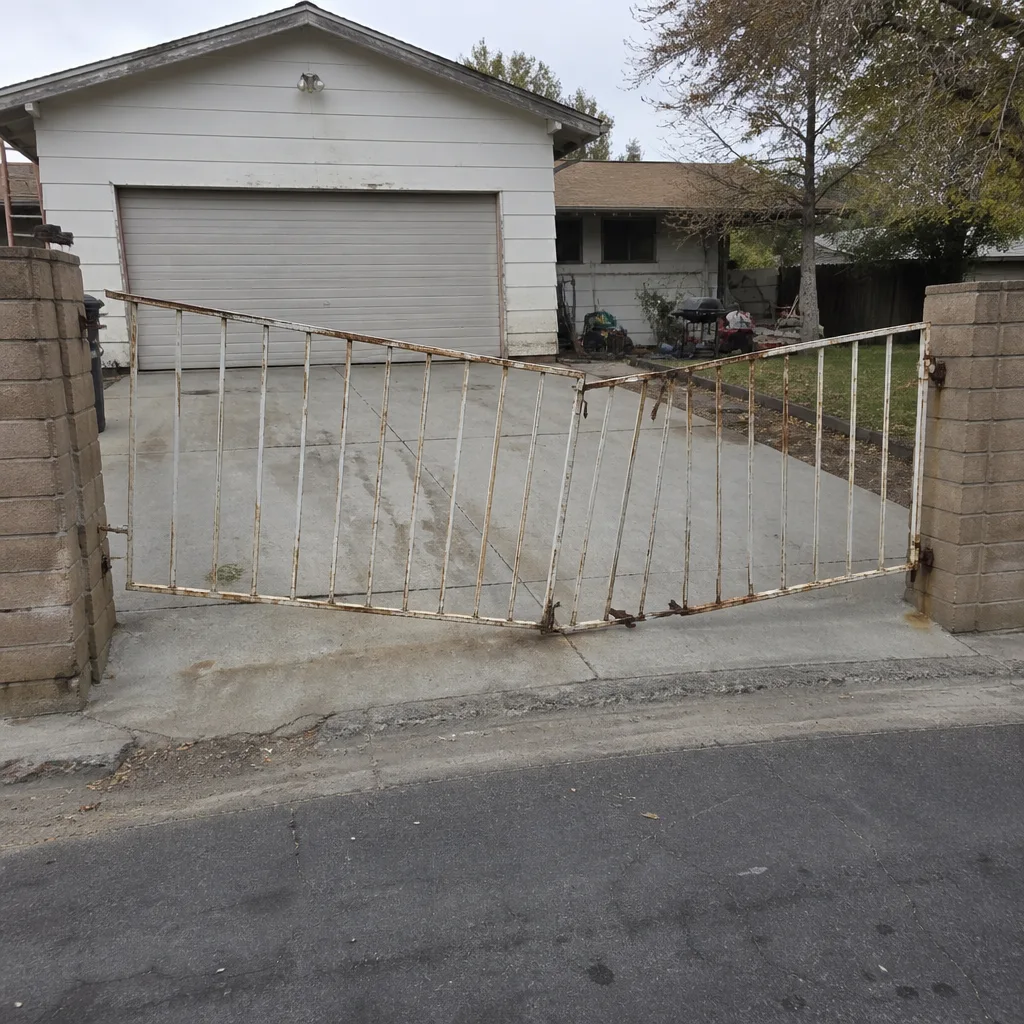 Before
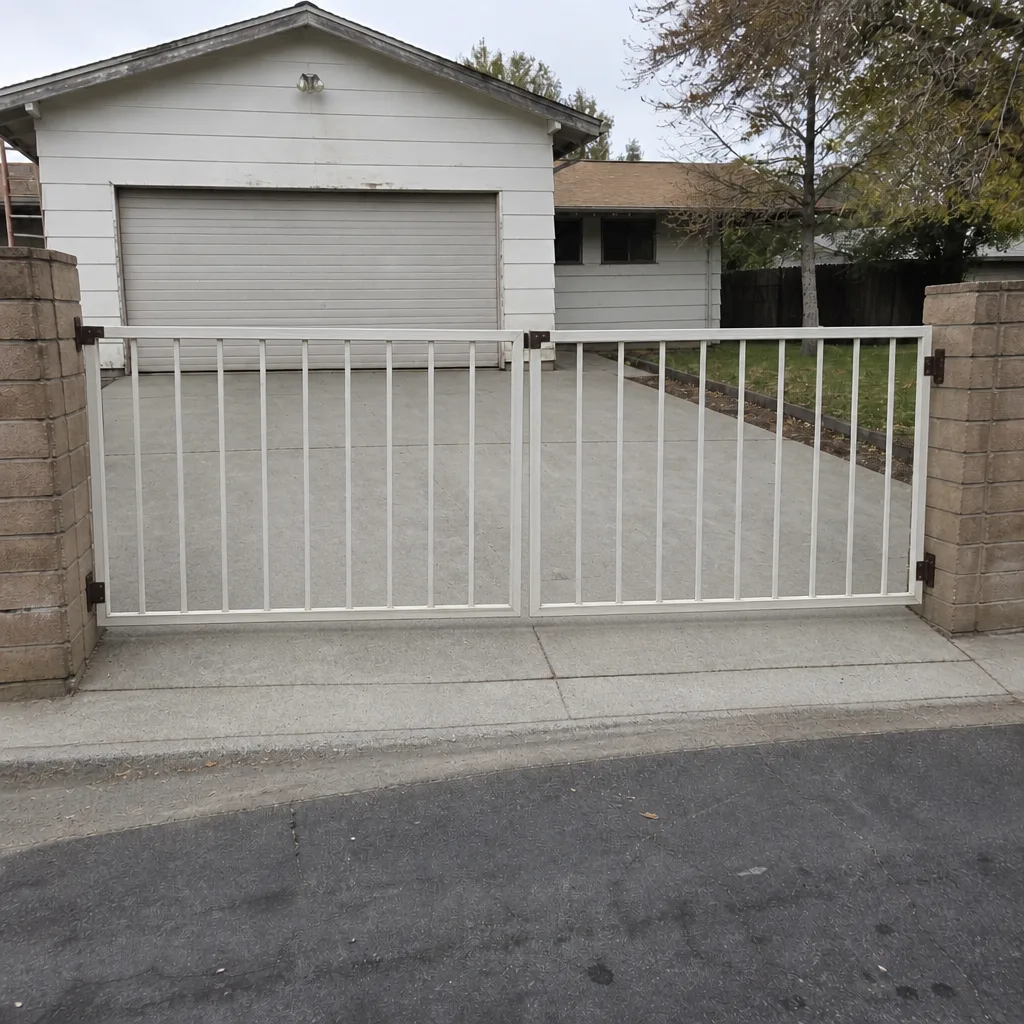 After
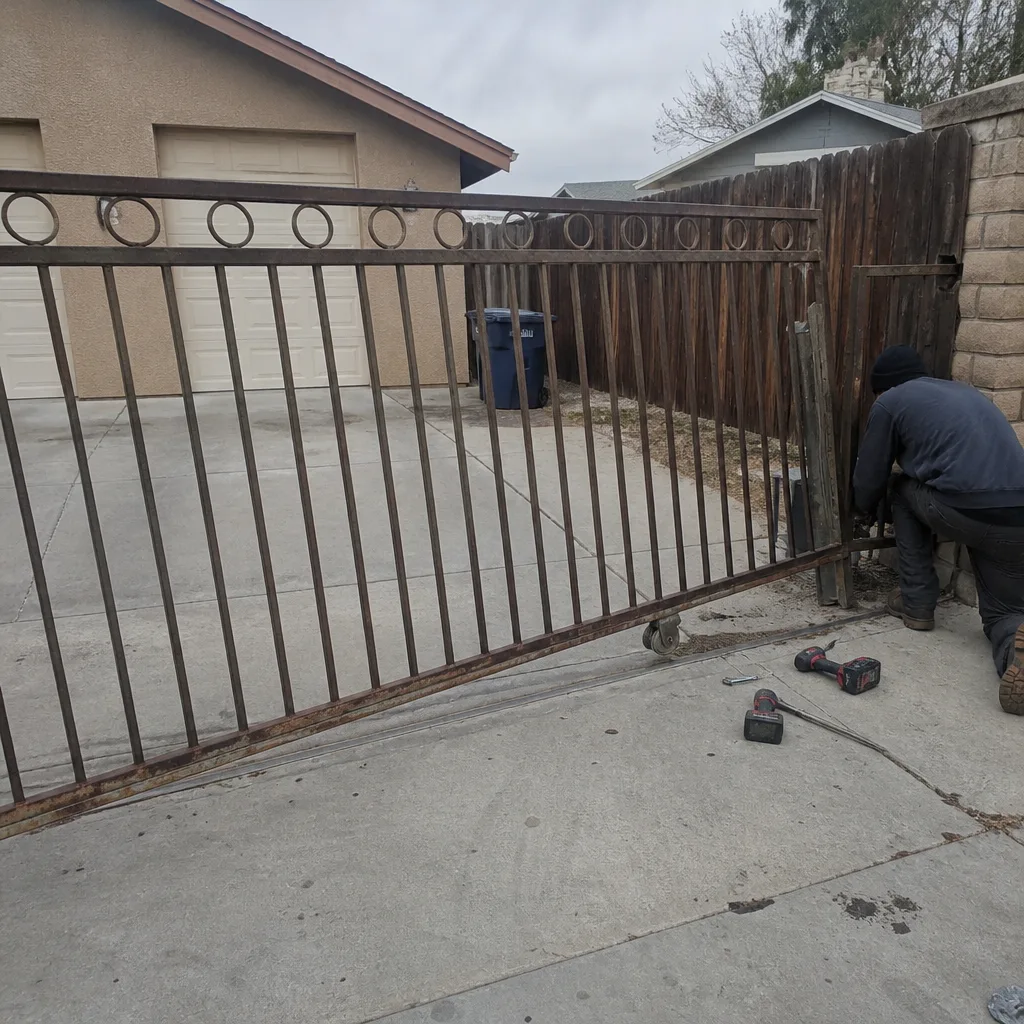 Before
 After
 Before
 After
When to Call a Professional
Call for anything electrical in the operator – hums, clicks with no movement, alarms, hot housing, scorch marks, or a house breaker that keeps tripping after a windstorm. Call for anything structural – a hinge post that’s bent, a gate that’s off its track, or vehicle contact damage. Call for any gate failure where a vehicle is trapped or a household member can’t get in or out. And call for any safety-reverse failure – the safety edges and photoelectric sensors are the gate’s protective layer and they don’t fail loudly. The dangerous pieces in a gate system – high-torque drive arms, tensioned springs on some swing gates, the operator’s mains feed – are not a homeowner fix, and we’d rather you didn’t try. Gatewood Fence & Gate Enterprise offers free estimates in Enterprise – call (833) 780-1547 and a live person answers.
Frequently Asked Questions
Most emergency gate repair calls in Enterprise land in the $180 to $420 range for the visit plus the common parts – a remote, a photoelectric sensor pair, a drive arm, or a control board. Operator motor replacement runs higher and depends on the brand and gate type. You’ll get a written price before any work starts, and our standing offers – $40 off any repair over $200 and no trip charge inside the county – come off that written number, not added to it. Call (833) 780-1547 for an exact quote – estimates are free.
Yes – a live person answers our line 24 hours a day, seven days a week, and we handle nighttime gate calls in Enterprise. Before you call, do what you can to secure the opening: angle a vehicle across it, chain the gate leaf if it manually closes, and turn on the driveway lights. If you can safely reach the manual release, walk us through what you’re seeing on the phone and we’ll talk you through the release before we head your way. Call (833) 780-1547 and someone picks up.
A full installation covers the gate and posts, the operator, the drive mechanism, the safety edges, and the access control – keypad, remotes, or entry panel. It includes the power run, the safety-reverse testing, and the travel-limit calibration. Installations are scheduled work, not same-day – we measure the property, order the right operator for your gate weight and swing or slide type, and install on an agreed date. Free measure and a written price up front. Call (833) 780-1547 to schedule a site measure.
Yes. The power run and the safety edges are part of the install, and both are why we don’t cut corners on a same-day install. The electrical feed to a gate operator runs at line voltage and needs to be done to code with the right conduit and a proper disconnect. Safety edges – photoelectric sensors, resistive edges, and reverse-on-obstruction settings – get tested on every install and on most service calls, because those are the pieces that protect a person or pet from a closing gate. Call (833) 780-1547 and we’ll walk you through what your property needs.
We’re certified on nine major brands: LiftMaster, FAAC, BFT, Linear, Viking, Ghost Controls, DoorKing, Elite, and Mighty Mule. That covers almost every residential swing and slide operator in Enterprise. Knowing the brand and model up front tells us what parts to load, whether the manual release is a key or a lever, and whether a control board swap is even in the picture. Call (833) 780-1547 with the model if you can read it – it saves a trip.
If the work isn’t done right, we come back and make it right, within 90 days of the repair – and it’s stated on every job in writing, not buried in fine print. No “up to,” no “in most cases.” One call brings us back. It’s the piece of a repair that stays fixed even when the weather tries to undo it. Call (833) 780-1547 for a free estimate and you’ll see the promise on the paperwork before we touch the gate.
The Bottom Line
A gate emergency in Enterprise is manageable if you’ve thought about it once, in daylight. Know where your manual release is and which key or lever you have. Know which gate failures are a stop-and-call versus a morning job. Have the operator brand, model, and symptoms ready on the phone so the tech shows up with the right parts. Secure the opening overnight – a vehicle angled across it, a chained leaf, good lighting – while you wait. And save a number that rings a live person, not a queue. If you don’t have one, ours is (833) 780-1547. That’s what we’re for.
Gatewood Fence & Gate calls? (833) 780-1547. Free estimates, upfront written pricing, free second opinion on any written estimate, $40 off any repair over $200, no trip charge inside the county, and a permanent 10% discount for seniors and veterans. A live person answers 24/7. If the gate won’t fix itself and you’d rather not find out at midnight, call us today and let’s get ahead of it.
Written by the team at Gatewood Fence & Gate Enterprise.