
Last updated November 18, 2026
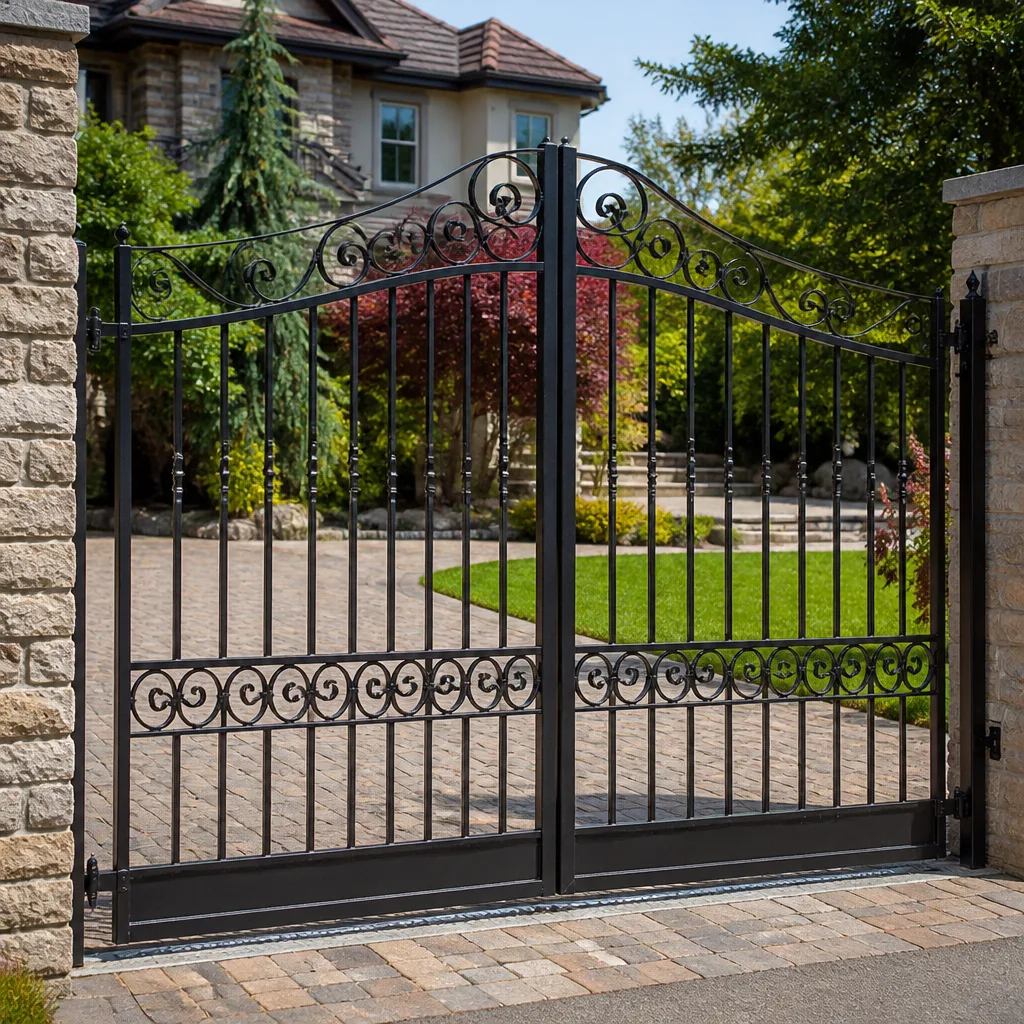 Wrought iron
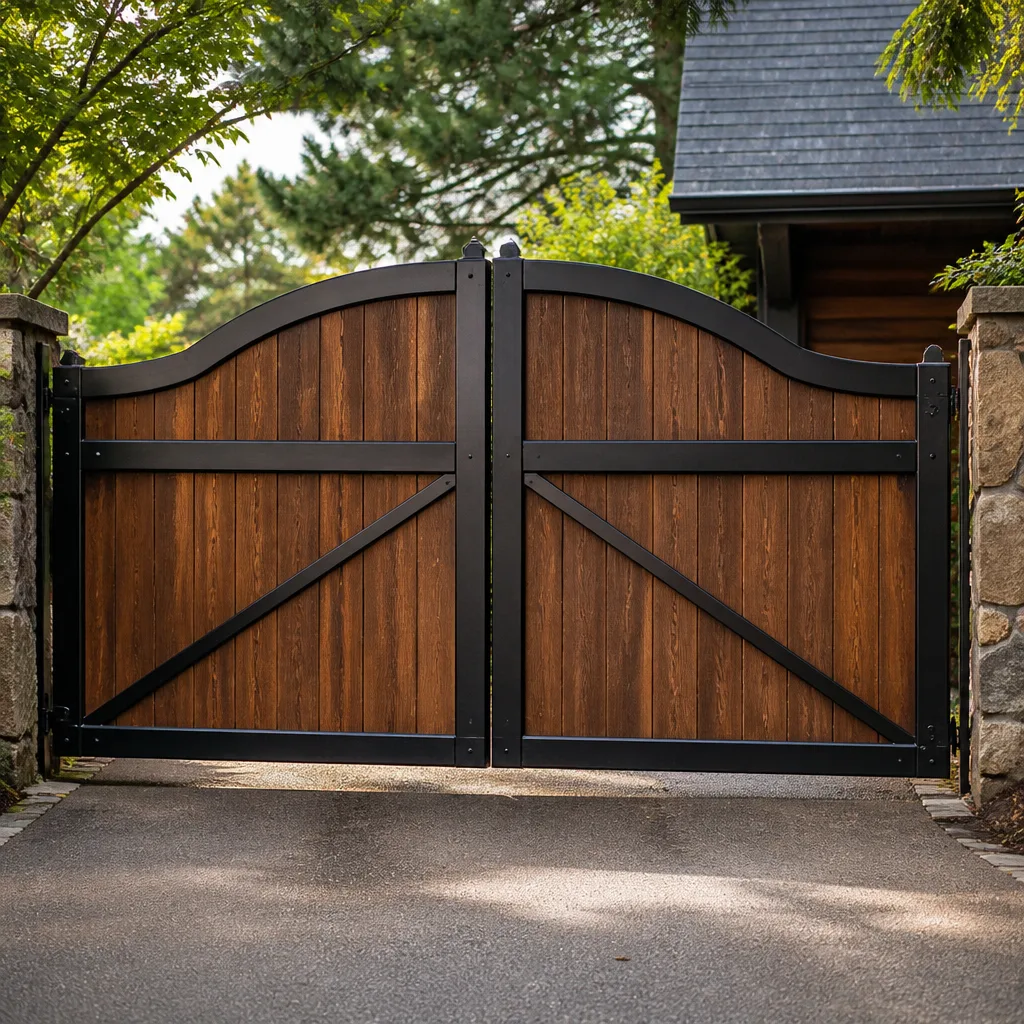 Wood & steel frame
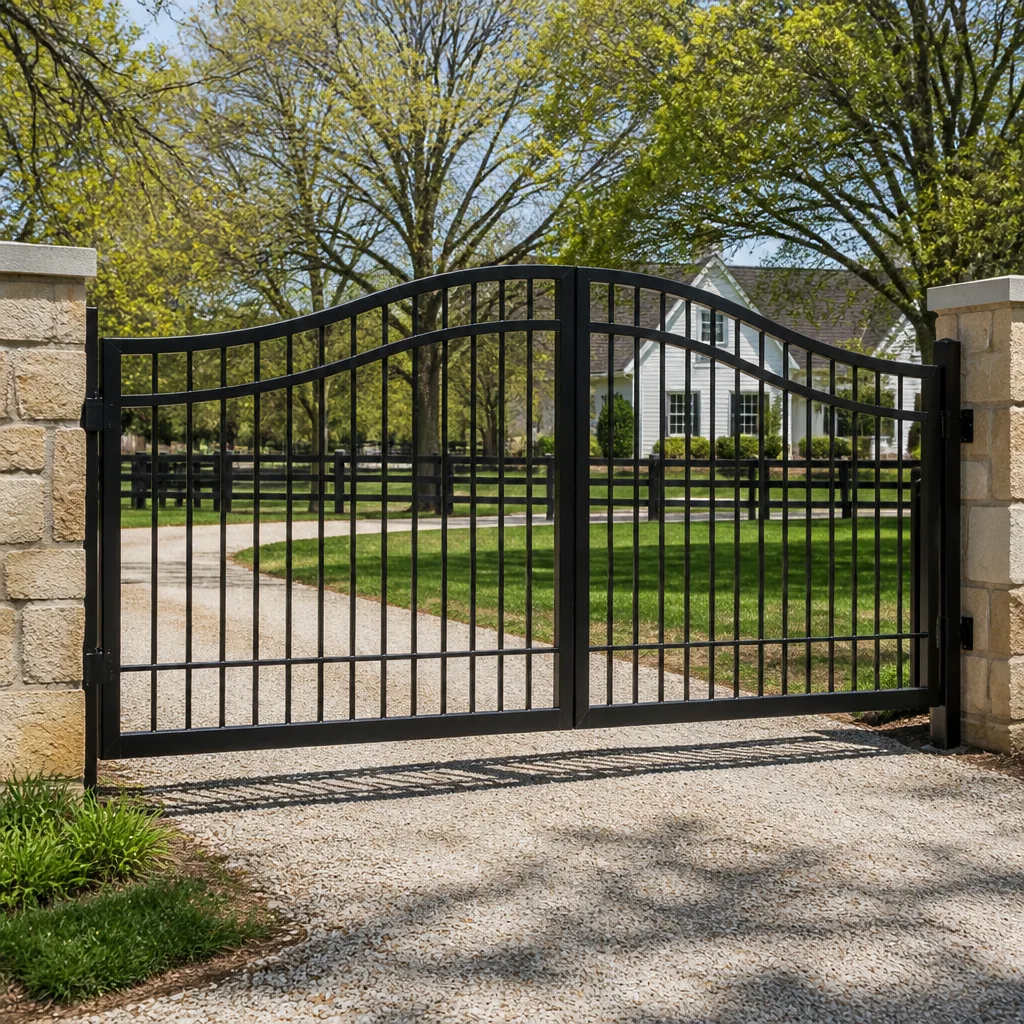 Farm & ranch
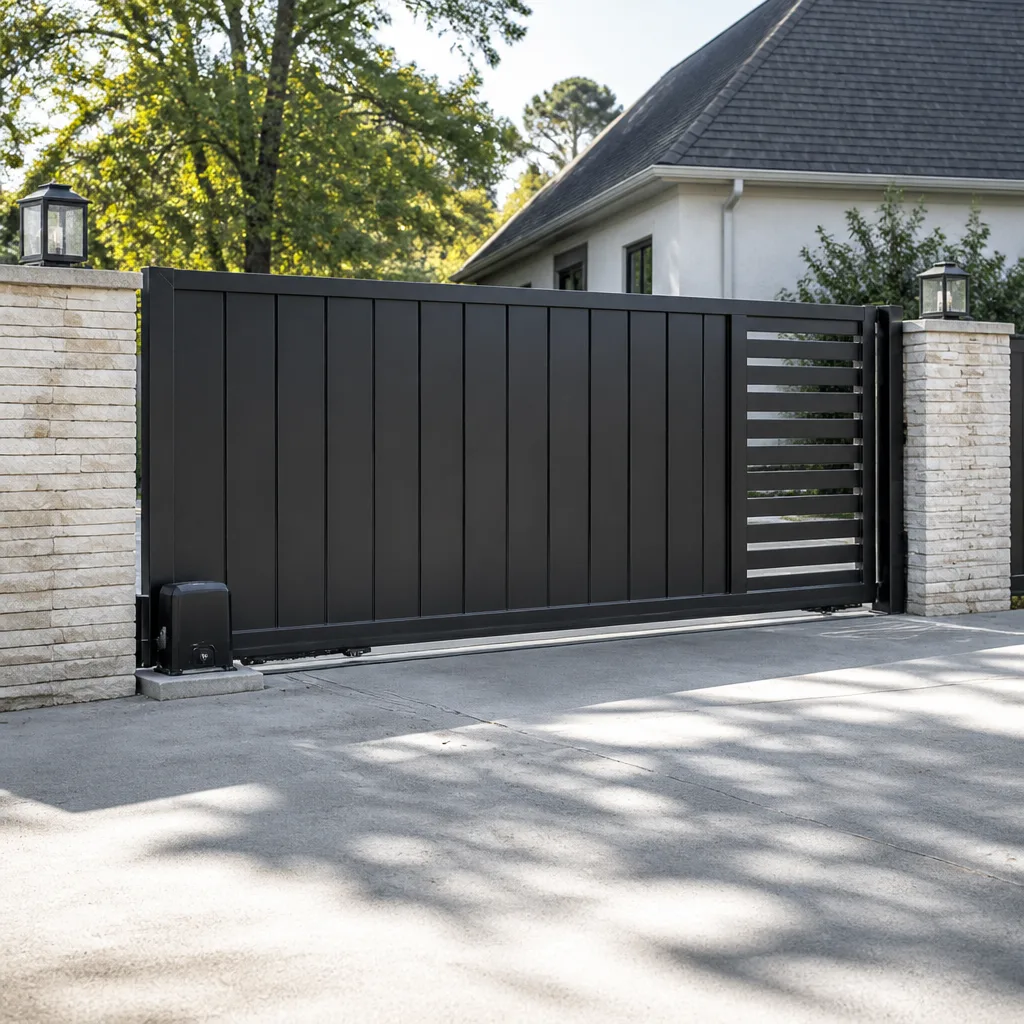 Sliding driveway gates
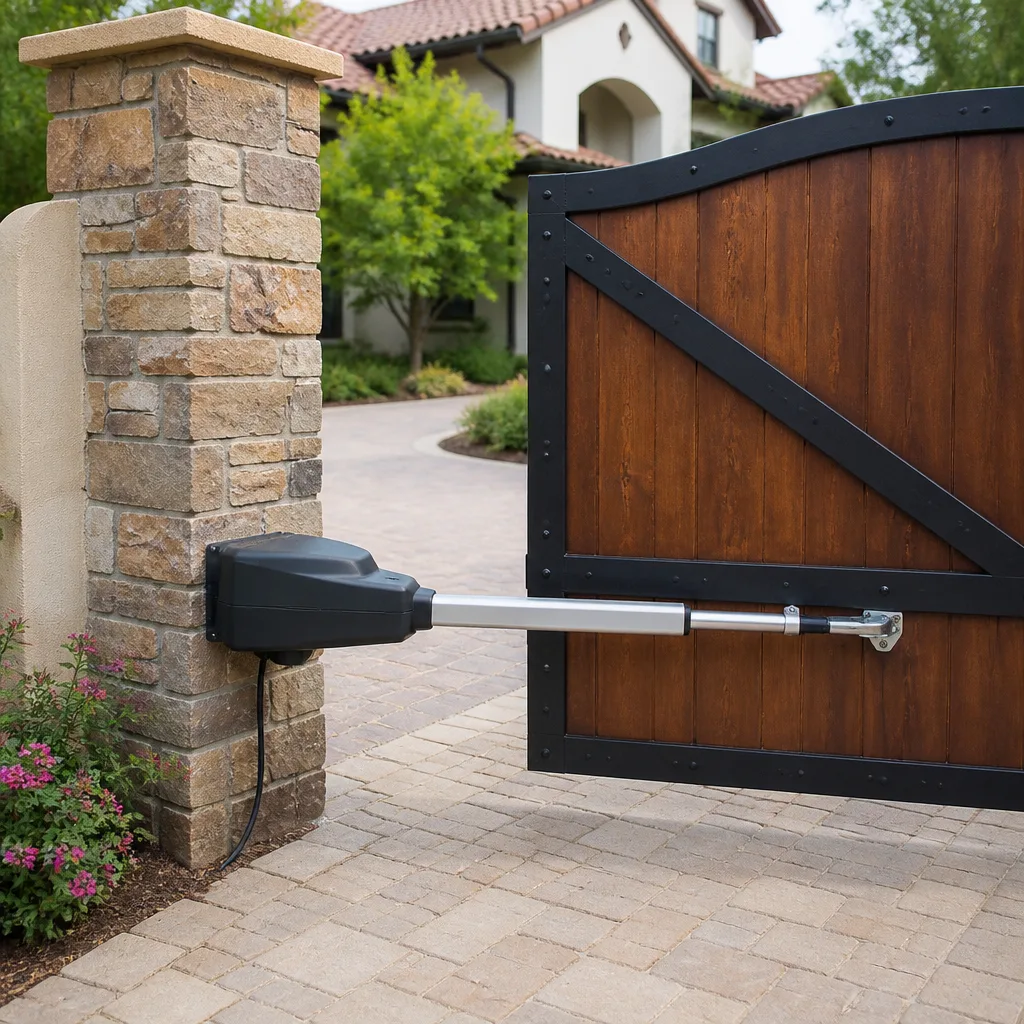 LiftMaster operators
Free on-site gate assessment - hinges, posts, and your LiftMaster or Nice gate operator checked before anything is quoted
The assessment is free and the quote is the invoice.
Get your free estimateDIY vs Professional Gate Repair: The Enterprise Homeowner’s Decision Guide
Hal isn’t trying to talk you out of a screwdriver. He’s fixed enough “I already tried to fix it” gates to know exactly where the line sits between a YouTube job and a call-the-guy job. Here’s the surprising part: a lot of what breaks on a gate in Enterprise really is something you can handle yourself, and we’ll happily tell you which parts. But the small handful of jobs that aren’t homeowner work are the same ones where a wrong turn turns a $150 repair into a $600 one. This guide walks you through both sides so you can decide with your eyes open.
Quick Answer
Lubricating hinges, tightening visible bolts, clearing debris from the track, and resetting limit screws on some operators are genuinely safe for a homeowner to do. Post repair, structural welding, operator wiring, and anything that requires the gate to be plumb and level are not. Those jobs need a trained professional with the right equipment, because a wrong attempt can cost two to three times what the original repair would have. In Enterprise, we quote the price before any work starts, so there’s never a bill that surprises you at the door.
Styles & brands we work with
- Wrought iron
- Wood & steel frame
- Farm & ranch
- Sliding driveway gates
- LiftMaster operators
Table of Contents
- What’s Actually Safe to Do Yourself
- The Jobs That Make Things Worse
- Surface Problem or Structural Problem?
- The Hidden Costs of a DIY Attempt That Doesn’t Work
- When Professional Repair Is Cheaper Than DIY
- Safety First: Where the Real Danger Lives
- Enterprise Climate and What It Does to Gates
- Common Mistakes to Avoid
What’s Actually Safe to Do Yourself
We’re not in the business of scaring homeowners off a wrench. Some of what goes wrong with a gate in Enterprise is straightforward maintenance, and you’ll save real money by doing it yourself. Here’s what we genuinely encourage:
- Lubricating hinges and pivots. A dry hinge on a steel gate dries out quickly in the desert heat. A few drops of a good lithium or silicone lubricant on each hinge every few months keeps the gate swinging smoothly and stops that graunching sound before it starts.
- Tightening visible hardware. Bolts on the hinge plates, brackets, and latch hardware work loose over time. A quick pass with a socket set once a season is fine, as long as you’re tightening something that’s already in the right position.
- Adjusting limit screws on some operators. Many residential gate openers, including most LiftMaster and Mighty Mule models, have limit screws that control where the gate stops opening and closing. If your gate starts stopping a few inches short of full travel, tightening the limit is often a five-minute adjustment.
- Clearing the track and the wheels. On a rolling gate, debris, packed soil, or a fallen branch in the track is the most common reason a gate won’t slide. Clearing it doesn’t require any tools at all.
- Checking the battery in the keypad or remote. Half the “my gate won’t open” calls we get are a dead remote battery. Swap it before you call anyone.
None of that requires special training. If the problem is one of those, do it, save the trip charge, and feel good about it.
The Jobs That Make Things Worse
Here’s where the honest line is. These jobs aren’t homeowner territory, and it’s not about being precious about our trade. It’s that the failure modes are expensive or dangerous:
- Post repair. A gate that’s sagging or leaning is almost always a hinge post problem, not a gate problem. We’ve seen more than one homeowner in Enterprise try to shore up a sagging gate with a 2×4 and a Simpson tie, only to find the post had actually shifted in the ground and the whole frame needed to be reset. The temporary fix lasted two months and cost more to undo than the original repair.
- Structural weld work. Cracks in a weld or a broken hinge mount need a proper weld, and that means a welder with the right equipment on site. A cold repair with a bolt and a bracket might hold for a season, but you’ve changed the load path on the gate and it will fail in a different spot later. We weld on site so the gate never has to leave your driveway.
- Operator wiring. Low-voltage wiring looks simple until it isn’t. A miswired opener can fry a control board that costs more than the repair itself. This is one of the most common DIY misses we see and one of the reasons we ask what changed before we arrive.
- Anything involving plumb or level. If the gate isn’t hanging true, no amount of new hinges will fix it. The gate has to be plumb and the post has to be level before any hardware gets swapped. Adjusting one corner without checking the others just moves the sag.
Surface Problem or Structural Problem?
Before you decide which category you’re in, you need to know what you’re looking at. Here’s a straightforward way to check:
- Open the gate halfway and let go. If it stays where you put it, the hinges and post are likely fine. If it swings closed on its own or drops, the post or hinge is the culprit.
- Sight down the gate frame from one end. You’re looking for a bow or twist. A straight gate with a wobble is a hinge problem. A bowed gate is a structural problem.
- Push on the hinge post at ground level. If the post moves in the ground, no amount of hinge tightening will fix it. That’s a post repair.
- Look at the welds. A hairline crack at the base of a hinge or a joint is a weld repair every time. A rusted bolt is a bolt replacement.
- Listen for the operator. If the motor struggles, grinds, or stops partway, the issue may be the operator or the gate binding. That’s a diagnosis you’ll want a trained eye on.
Five minutes with those checks tells you whether you’re looking at a tightening job or a call-the-guy job. Do the checks before you buy parts.
The Hidden Costs of a DIY Attempt That Doesn’t Work
The repair that fails quietly costs more than the repair that never got tried. Here’s what a homeowner doesn’t see on the receipt:
- Wasted materials. A new hinge set, a set of bolts, a tube of construction adhesive, a replacement control board: none of that gets refunded when the fix doesn’t hold. In Enterprise, we’ve seen more than one homeowner spend $80 to $200 in parts before calling us.
- Extra diagnostic time. When we walk up to a gate that’s already been worked on, we spend the first part of the call figuring out what was changed rather than what broke. That’s time we’d rather spend on the actual repair. It’s not billed by the hour for us, but it costs the homeowner an extra visit in many cases.
- Damage that wasn’t there before. Cross-threaded bolts, stripped hinge mount holes, a control board fried by a miswired remote, a post that was overset with a sledge. Any of these turns a basic service call into a more involved job. In our experience, the make-it-worse category is where a $150 repair quietly becomes a $600 one.
- The second call. When a fix fails after a few weeks, the homeowner is back where they started with less budget and more frustration. That’s the worst outcome of a DIY attempt.
None of this is a knock on trying. It’s the reason we’re honest about which parts of the job belong to you.
When Professional Repair Is Cheaper Than DIY
Most homeowners assume professional repair is the expensive option. Often it’s the cheaper one, and here’s why:
- You don’t own the equipment. Structural welding on a gate in Enterprise needs a welder, rods, a grinder, and a truck to haul them. Buying that setup for one repair costs more than the repair itself. Renting it is a half-day project before you’ve touched the gate.
- You don’t have the diagnostics. A gate that won’t open is often a control board, a limit switch, a photo eye, a battery, or a wiring connector. The parts are cheap. Knowing which one to replace is the value. We’ve had homeowners buy a $180 lift motor because they assumed that was the failure, only to find the actual problem was a $6 battery in the remote.
- You don’t have the specialty parts. Many gate operators (LiftMaster, FAAC, Elite, DoorKing) use brand-specific parts that aren’t on the shelf at a hardware store. Ordering the wrong one is easy and nonrefundable in many cases.
- You can’t see the whole failure. Gates fail in sequence. A sagging gate strains the operator, which burns out the motor, which takes out the control board. Fix the sag and you save the motor. Fix the motor and you’ll be back next year.
For most Enterprise homeowners without welding equipment or electrical training, professional repair is cheaper on the first visit, before we even talk about time spent.
Safety First: Where the Real Danger Lives
This is the part we won’t soft-pedal. Gate operators carry real force, and a miswired opener or a bypassed safety edge can seriously hurt someone, especially a child or a pet. The safety edges and photo eyes that come with a modern gate system in Enterprise are there for a reason, and they need to be working every time the gate cycles. If your gate has an operator and the safety edges are damaged, disconnected, or bypassed, that’s not a homeowner job. We’re trained to check those systems, and we’d rather you call before the gate moves than after.
On a swing gate, high-tension springs (on some systems) and the counterbalance weights carry stored energy. Trying to disassemble or adjust them without the right tools and training can cause serious injury. Same with a steel gate that’s under load: an unsecured gate can swing or fall on the person working on it. We’re not telling you all this to get a service call out of you. We’re telling you because we’ve seen what happens when a homeowner guesses wrong on this part of the system.
Enterprise Climate and What It Does to Gates
Enterprise weather isn’t hard on gates the way a coastal climate is, but it’s not nothing. The swings from cold desert nights to hot afternoons work the metal, and the dry air pulls moisture out of wood posts and welds alike. Two things we see regularly on Enterprise gates:
First, post movement. The soil in many Enterprise neighborhoods is a mix of sand and caliche, which is fine for a post that’s set correctly but unforgiving if the concrete was undersized. A post that shifts in the ground shows up as a sagging gate, and it’s a post repair, not a hinge replacement.
Second, operator strain. When temperatures climb, gate operators run hotter and the motors work harder, especially older Mighty Mule and Linear units that have seen a lot of cycles. If your gate has started stalling in the afternoon and works fine in the morning, it may be a motor or control board issue rather than a gate issue. That’s not a DIY call.
If you’re in an area of Enterprise with a lot of new construction, you may also run into gates that were installed before final grading was done. Grading moves the soil under the post over time, and the gate settles out of alignment. Same diagnosis: check the post first, then the hinges.
Common Mistakes to Avoid
- Buying parts before diagnosing. We’ve had plenty of homeowners in Enterprise call us after replacing the whole opener motor when the actual problem was a $6 remote battery or a stuck limit switch. Diagnose first, buy second.
- Tightening hinges when the post is the problem. If the post has shifted, hinge tightening just masks it for a few weeks. Push on the post at ground level before you grab the socket set.
- Using a wood screw where a machine bolt belongs. Hinge hardware on a steel gate needs a bolt and nut, not a wood screw. A wood screw will pull out under load, and it usually strips the hole on the way.
- Bypassing the safety edges. If the photo eye or safety edge is giving you trouble, don’t disconnect it. That’s the system that stops the gate from closing on a child. Call us instead, because bypassing it isn’t a fix.
- Wiring in the rain or with the power on. Low-voltage wiring still needs the correct connector and the correct polarity. Live wiring, even low-voltage, can fry a control board or worse.
- Assuming the sag is in the gate. A gate sags in the hinge post, not in the middle. That’s where we start every repair. If you’re not starting there, you’re chasing the wrong problem.
- Doing a second attempt on your own before checking the first. If a DIY fix failed, don’t try a different fix without letting a trained eye look at it. The second attempt on top of the first is where most homeowner calls turn from a quick repair into a bigger one.
When to Call a Professional
Call a professional the moment you’re looking at one of these: a gate that’s sagging or leaning, a gate that won’t close or opens on its own, cracked or broken welds, operator problems (no power, motor stalling, control board errors), or damaged safety edges. Also call if the previous fix didn’t stick, because the second look needs to start from a clean diagnosis rather than on top of a guess. Gatewood Fence & Gate Enterprise offers free estimates in Enterprise – call (833) 780-1547 and we’ll walk you through what’s likely going on before we show up. If you want to see how we handle the common problems, you can read our Gate Repair in Enterprise page, or for installation questions check out Gate Installation in Enterprise.
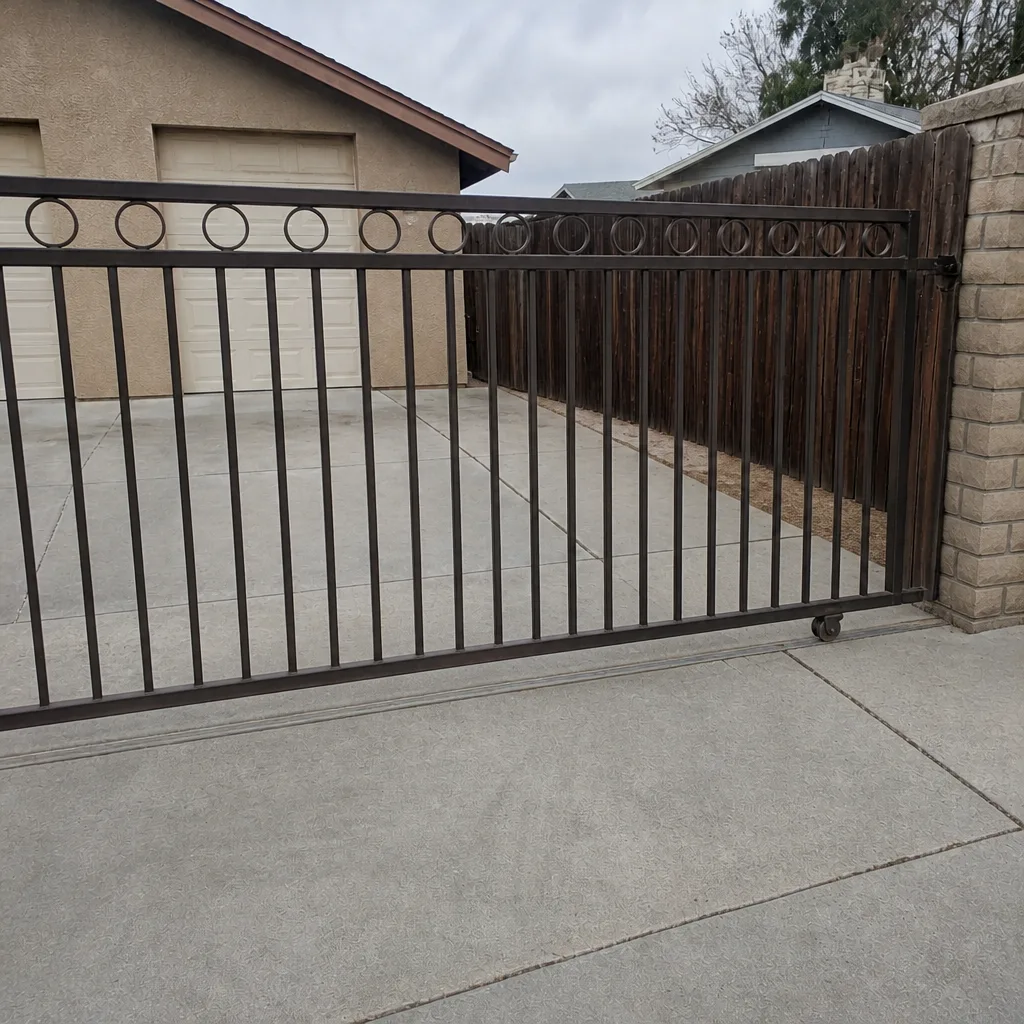
See the difference
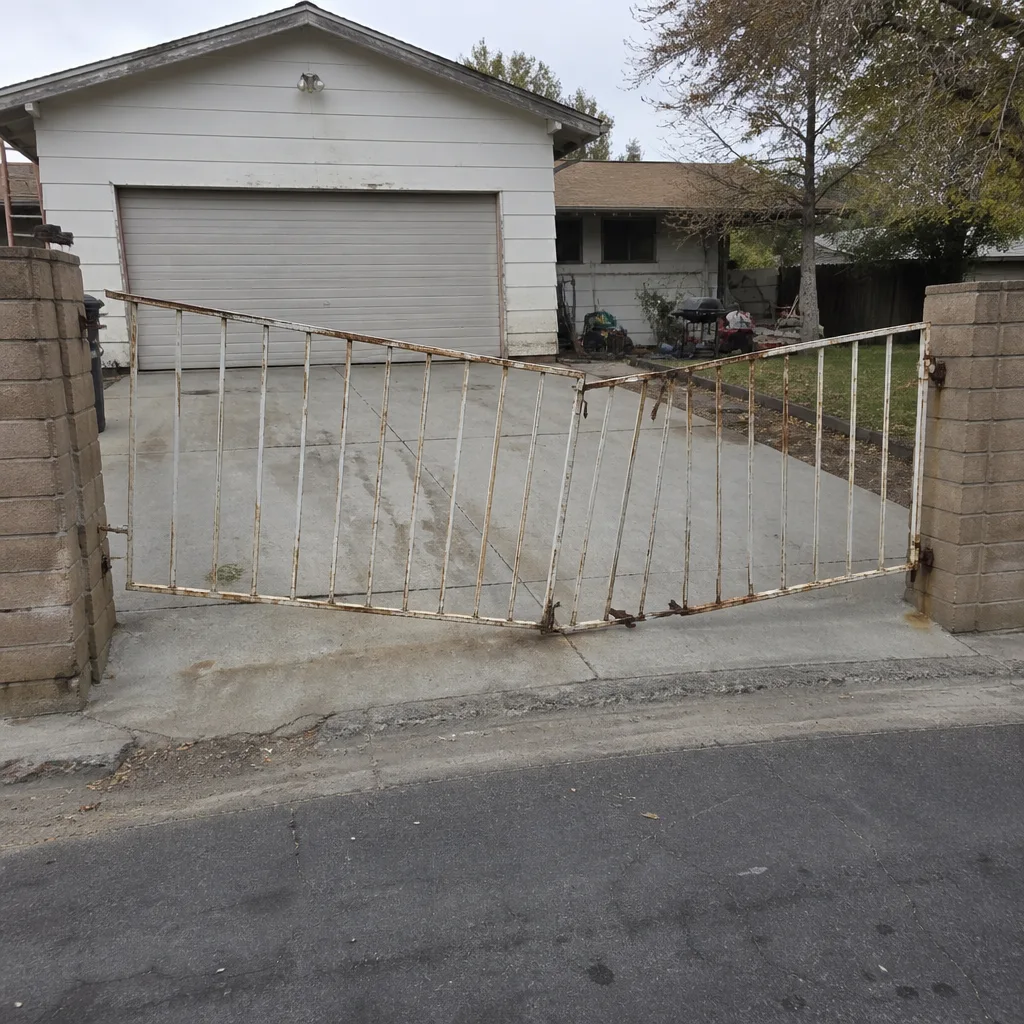 Before
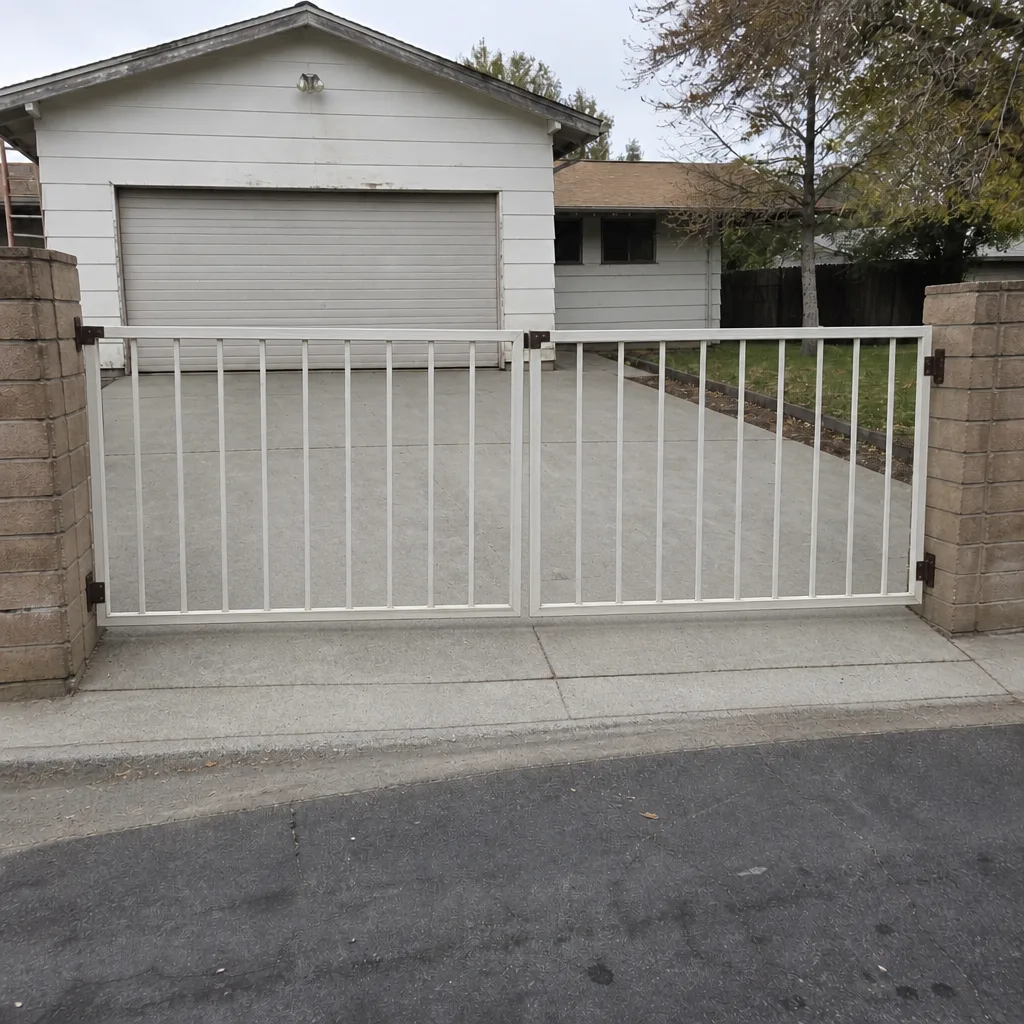 After
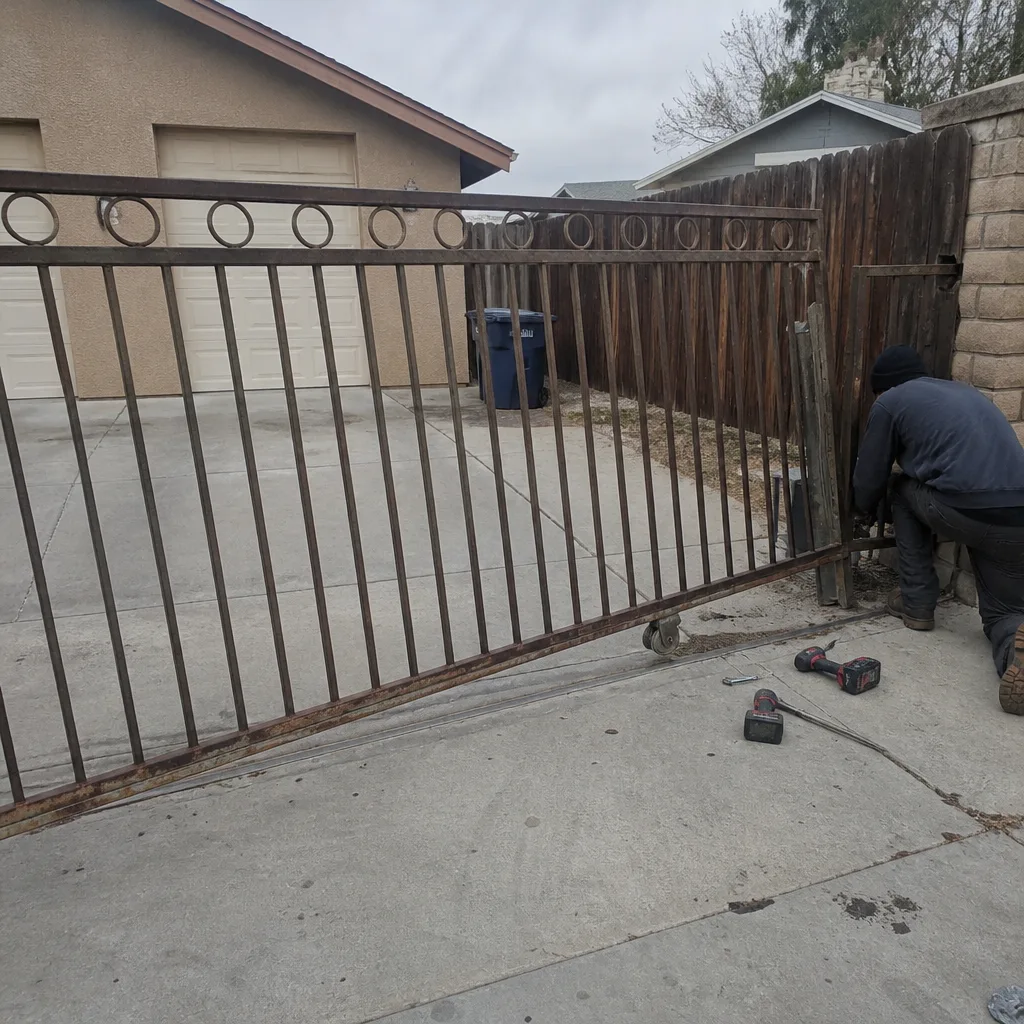 Before
 After
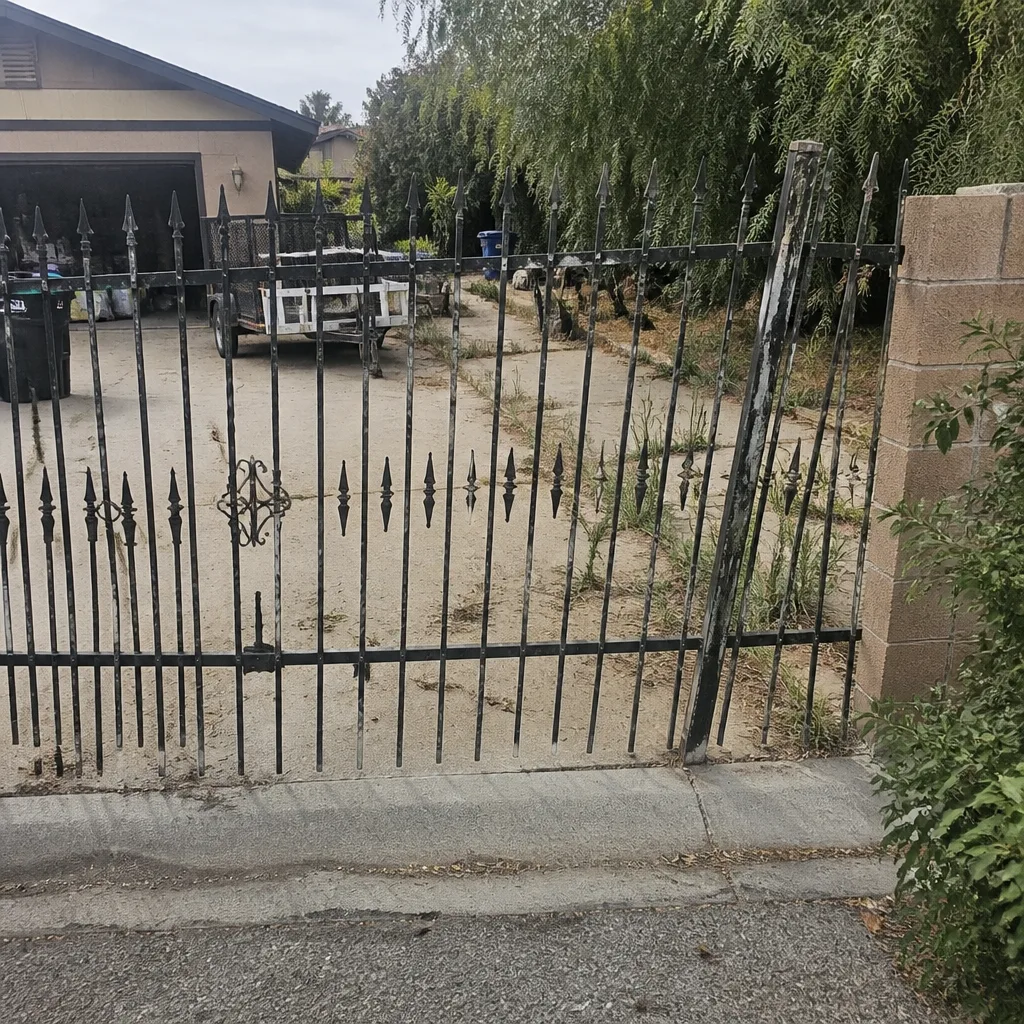 Before
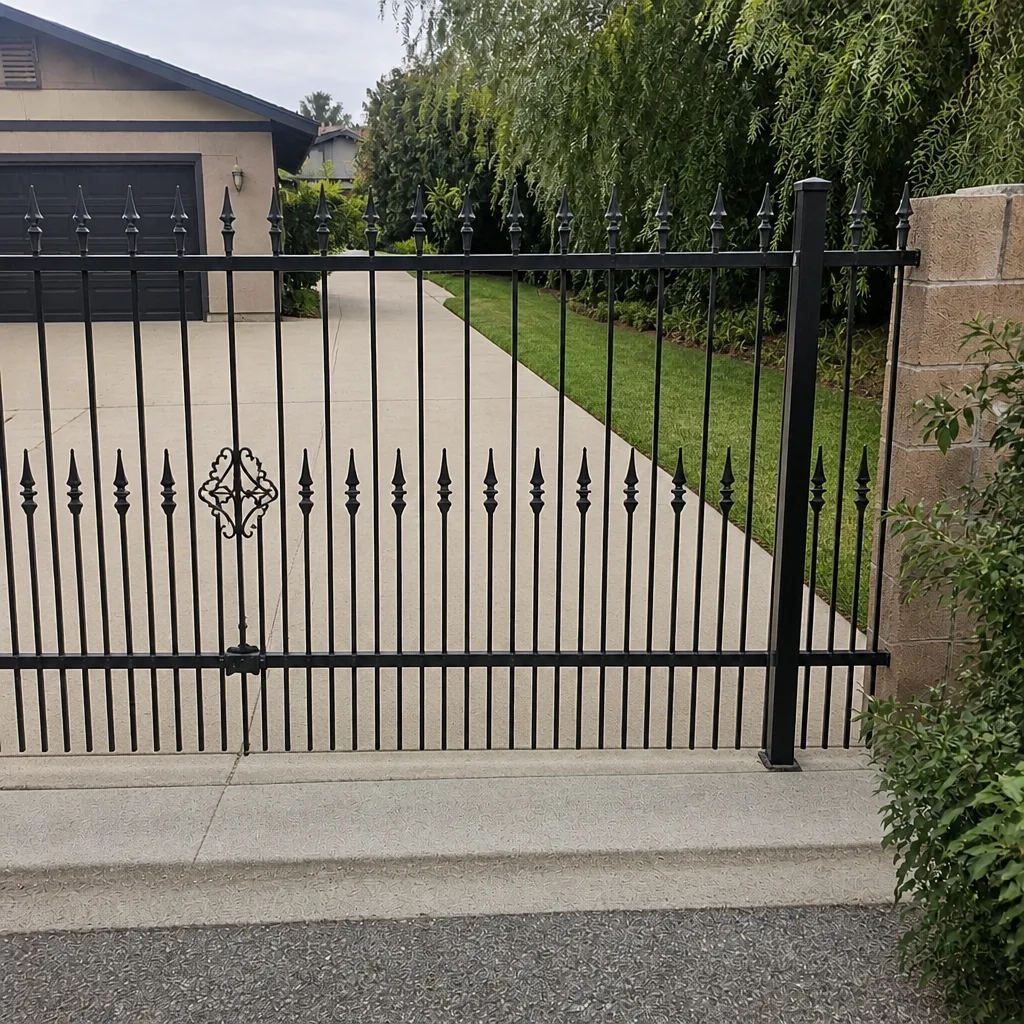 After
Frequently Asked Questions
Usually not, and it’s because the sag is almost always in the hinge post rather than the gate. A sagging gate in Enterprise typically means the post has shifted in the ground or the concrete was undersized. That’s a post repair requiring equipment you don’t own and a proper reset, not a hinge tightening. If you’re not sure which you’re looking at, call (833) 780-1547 and we’ll help you figure it out. Estimates are free.
Do the half-open test: open the gate halfway, let go, and see if it stays. If it stays put, the post and hinges are likely fine and you’re probably looking at a surface problem. If it swings closed or drops, the post or hinge is involved and that’s structural. A bowed gate frame is structural too. The 5-point check in this guide walks you through the rest.
Buying parts before diagnosing. We see it constantly in Enterprise: a homeowner buys an opener motor, or a hinge set, and the actual problem is a battery, a limit switch, a photo eye, or a post. Diagnose first, buy second. That’s a call we’re happy to take at (833) 780-1547.
Yes, and we do it often. A previous attempt doesn’t disqualify the job, but it does change how we diagnose. If a fix didn’t stick, the first thing we do is figure out what was changed and why. Call (833) 780-1547 and tell us what’s been tried. Free estimate on the second look.
We’re certified to service nine major gate brands, including LiftMaster, FAAC, BFT, Linear, Viking, Ghost Controls, DoorKing, Elite, and Mighty Mule. We don’t keep every part on the truck for every brand, but we can tell you quickly what the diagnosis is and how to get the right part. Call (833) 780-1547 and tell us the brand and the symptom.
Yes, in most cases, if you don’t own the equipment. Buying a welder, rods, a grinder, and a truck for a single post repair costs more than the repair itself. Renting is a half-day project before you’ve touched the gate. For most Enterprise homeowners without welding gear or an electrical background, professional repair is the cheaper option on the first visit. Call (833) 780-1547 for a free estimate and we’ll be straight with you about which category your job is in.
The Bottom Line
The honest split is this: lubricating, tightening visible hardware, clearing the track, adjusting limit screws, and swapping a remote battery are yours. Post repair, structural welding, operator wiring, and anything involving plumb and level are ours. Do the five-minute check in this guide before you buy any parts. If the repair falls on the professional side, don’t try a second fix on top of the first, because that’s where a $150 job turns into a $600 one. We’re happy to give you a straight answer on which category you’re in, whether the gate needs repair, replacement, or a new operator. For the bigger picture on operators and automation, our Gate Motor & Opener in Enterprise page covers what changes when the opener is the problem, and our Gatewood Fence & Gate Enterprise home page has the overview of everything we handle. Every job carries our 90-Day Done Right Promise in writing, and we quote the price before any work starts so there’s no surprise at the door. Calls are answered by a live person 24/7, not a voicemail or a call center. Standing offers stay on the table: $40 off any repair over $200, no trip charge inside the county, a free second opinion on any written estimate, and a permanent 10% discount for seniors and veterans.
How to Reach Us
If your gate is in the category where it’s not a homeowner job, or you’re simply not sure which side of the line you’re on, give us a call at (833) 780-1547 for a free estimate. We serve Enterprise and the surrounding communities, and our technicians have up to 25 years of experience. We’ll tell you the truth about what needs fixing, what can wait, and what you can do yourself.
Written by the team at Gatewood Fence & Gate Enterprise.