
Last updated November 18, 2026
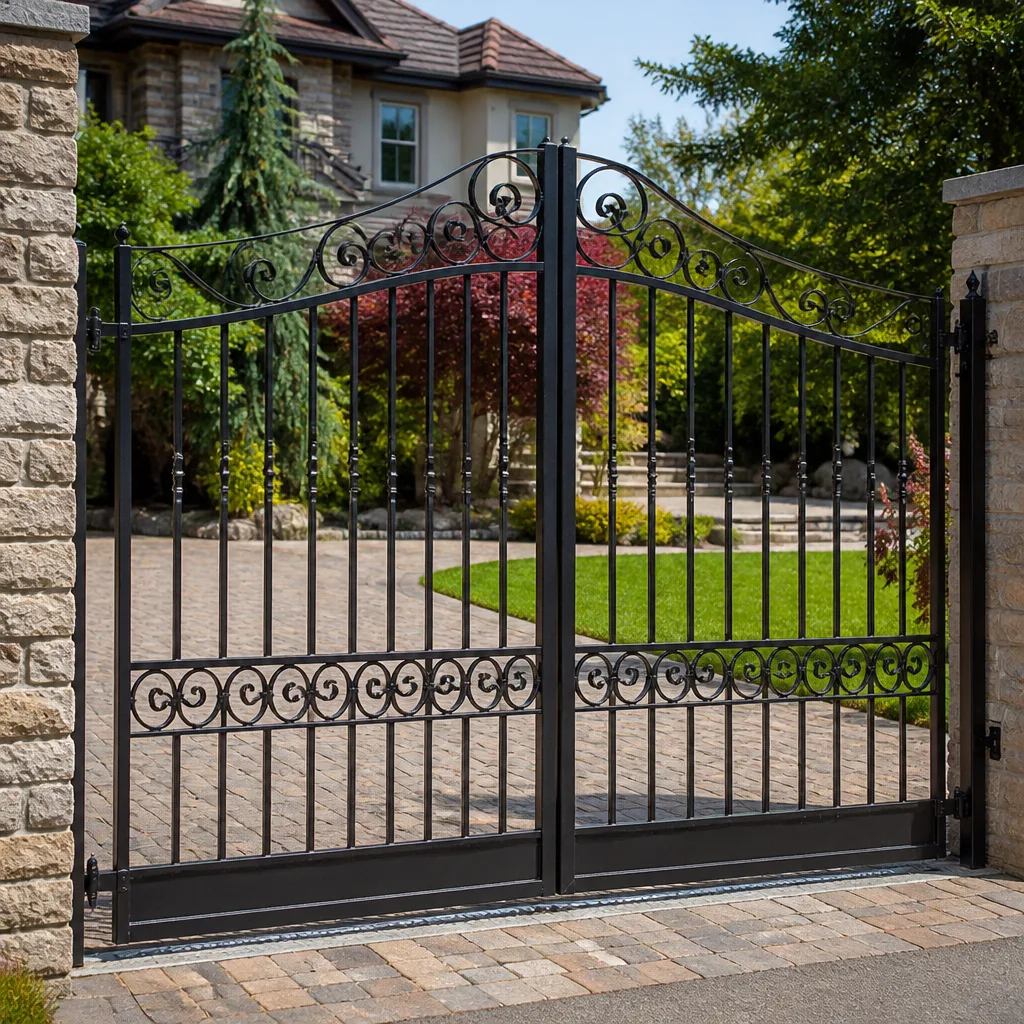 Wrought iron
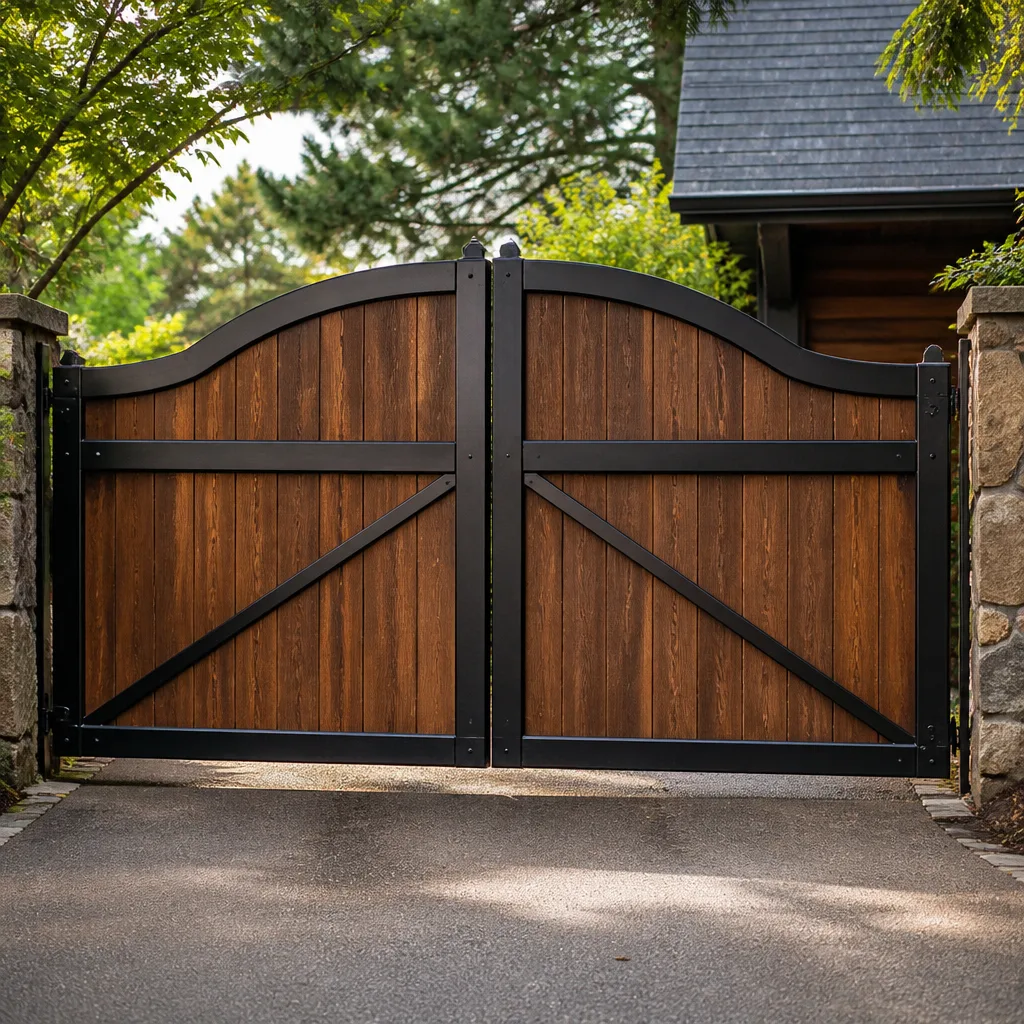 Wood & steel frame
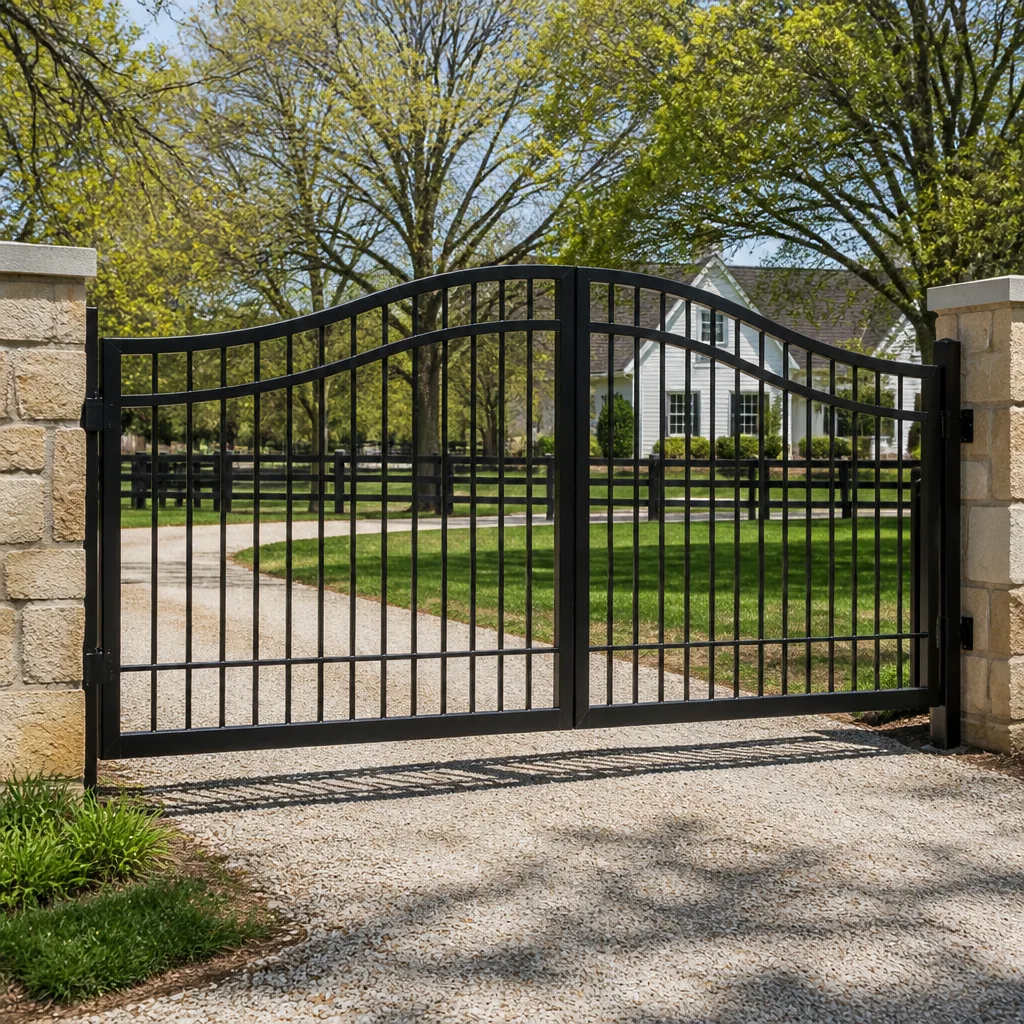 Farm & ranch
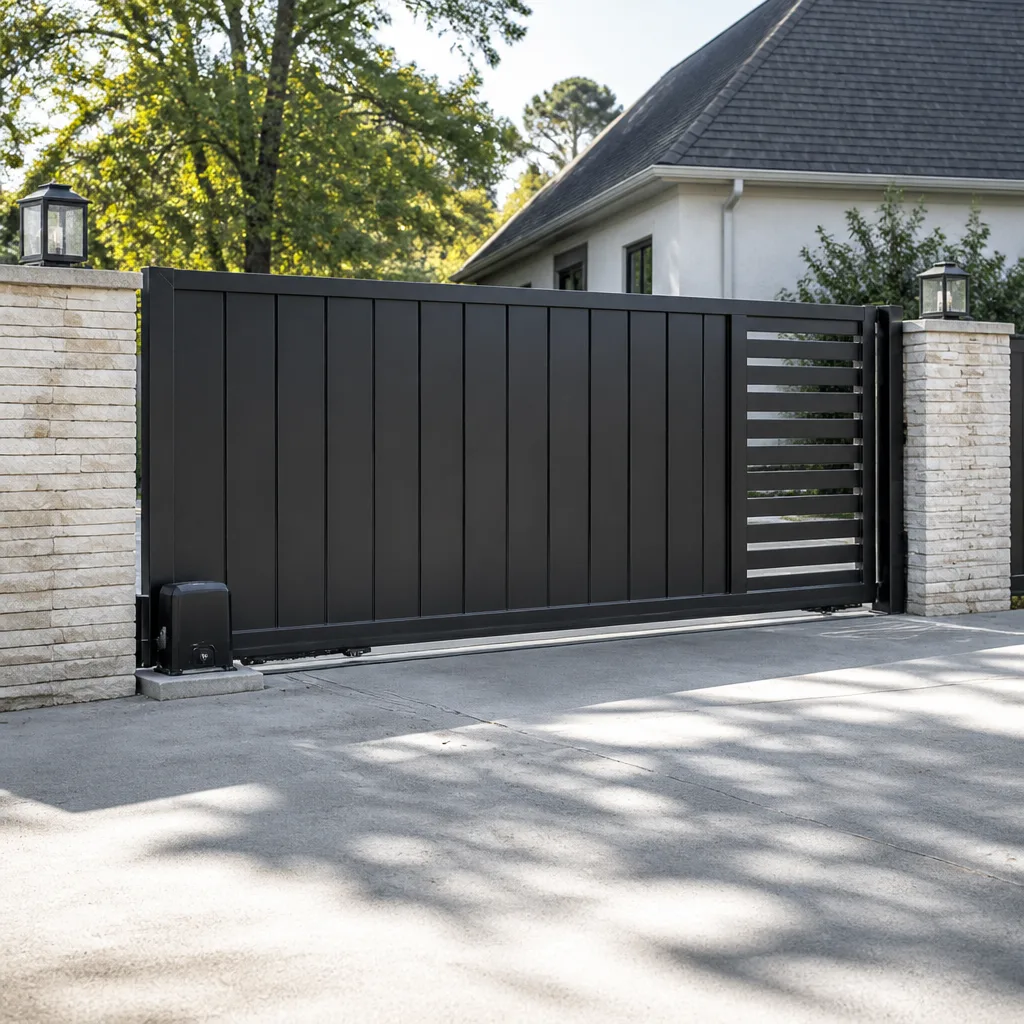 Sliding driveway gates
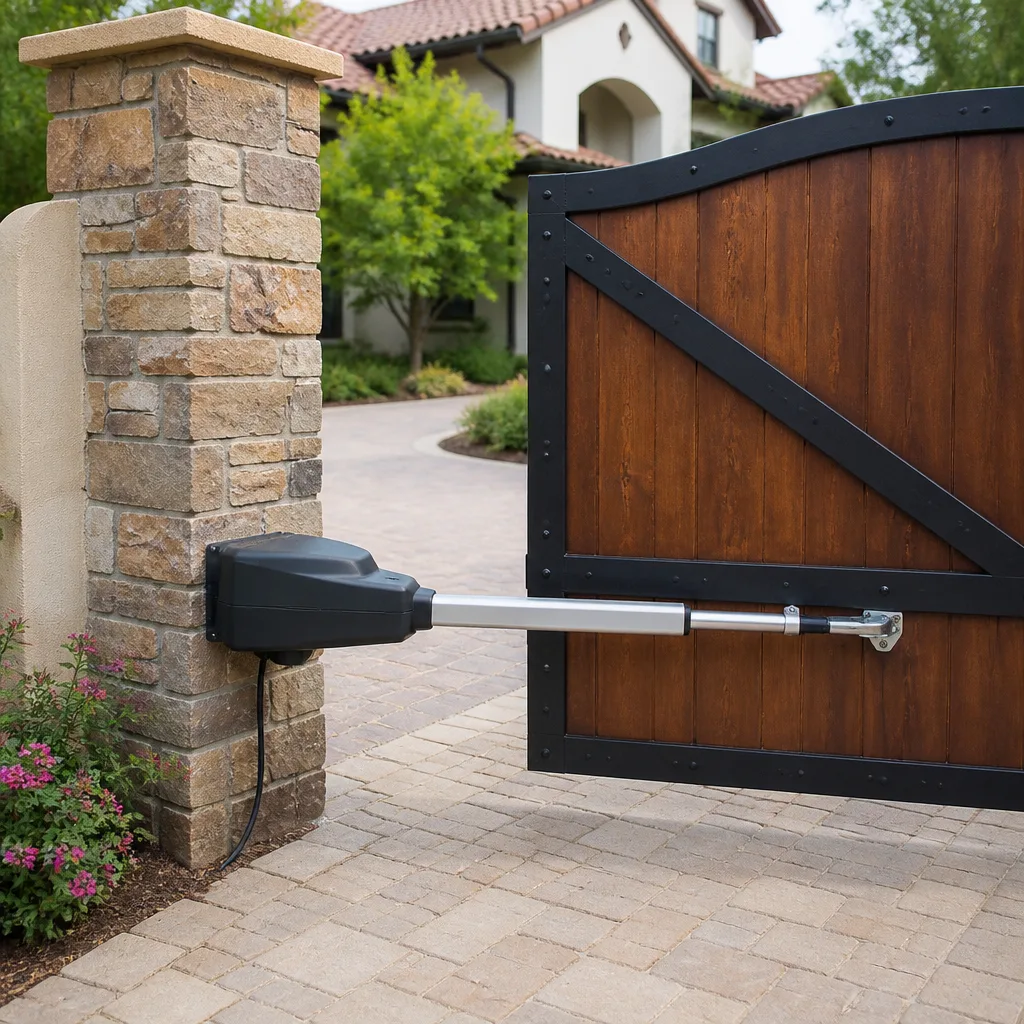 LiftMaster operators
Free on-site gate assessment - hinges, posts, and your LiftMaster or Nice gate operator checked before anything is quoted
The assessment is free and the quote is the invoice.
Get your free estimateGate Repair Cost Breakdown: The Enterprise Homeowner’s Reference for 2026
The most expensive gate repair we see isn’t the one with the broken weld. It’s the one where someone paid for three incomplete fixes before calling anyone who could actually diagnose the problem. By then they’ve spent $700 chasing a symptom that a $220 repair would have handled the first time. Gate repair in Enterprise runs anywhere from about $150 to over $1,400 depending on what’s genuinely failing, and the spread rarely has anything to do with the brand of gate you own. What follows is an honest line-by-line reference for 2026: real ranges, why the same problem has a cheap fix and an expensive one, how to read a quote, and what a real warranty is worth in dollars.
Quick Answer
Gate repair in Enterprise, NV typically costs $150 to $400 for common fixes like hinge replacement, weld repair, or a sagging gate adjustment, while post repair or operator replacement pushes the total to $600 to $1,400 or more. The single biggest driver of cost isn’t the part – it’s whether the repair addresses the underlying cause or just the visible symptom. A written quote that breaks out labor and materials is the best protection you have against a surprise invoice.
Styles & brands we work with
- Wrought iron
- Wood & steel frame
- Farm & ranch
- Sliding driveway gates
- LiftMaster operators
Table of Contents
- 2026 Gate Repair Ranges in Enterprise, by Category
- Why the Same Problem Costs $200 or $900
- On-Site Repair vs. Ordering Parts and Returning
- How to Read a Gate Repair Quote Line by Line
- What a 90-Day Warranty Is Actually Worth
- Enterprise Climate and Soil: Why Gates Fail Here
- Brands, Parts, and the Control Board Question
- Common Mistakes to Avoid
2026 Gate Repair Ranges in Enterprise, by Category
Here’s what the most common repairs actually run in the Enterprise market this year. These are ranges, not quotes – the final number depends on your gate, your hardware, and what we find when we open things up. Every price is agreed in writing before any work starts.
- Hinge replacement (per hinge, steel or aluminum): $150 – $320. Includes cutting out a seized or stripped hinge, welding a new one, and re-aligning the gate leaf.
- Post repair or reset: $350 – $850. The big variable is whether the post can be re-set in existing concrete or has to be pulled and re-poured. A leaning hinge post is the root cause behind most “my gate sags” calls.
- Weld repair (on-site): $180 – $400. Covers a cracked frame joint, a broken hinge tab, or a split at the latch. On-site welding means the gate never leaves your driveway.
- Operator (motor) replacement: $600 – $1,400 installed, depending on gate weight, travel length, and whether the power run needs work. Swing and slide units land in different parts of that range.
- Control board replacement: $280 – $650. Diagnosing the board is half the battle; a board that keeps failing often points to a surge, a bad limit switch, or a wiring fault upstream.
- Access control and keypad service: $200 – $550, depending on whether it’s a keypad swap or a full entry-system diagnosis.
For a full walk-through of how we scope each of these, see our Gate Repair in Enterprise page. If the gate has reached the point where repair no longer makes financial sense, our Gate Installation in Enterprise guide covers what replacement actually involves.
Why the Same Problem Costs $200 or $900
Two homeowners in Enterprise can describe the exact same thing – “my gate drags and won’t latch” – and one gets a $220 repair while the other gets a $900 one. That gap isn’t a pricing trick. It comes down to four real variables.
- The hinge vs. the post. A gate sags in the hinge post, not in the middle. If the post is sound and only the hinge is worn, the fix is inexpensive. If the post has rotated in the ground – common in Enterprise’s expansive clay soils – the hinge replacement alone will fail within a season, and the post has to be addressed.
- Cosmetic symptom vs. structural cause. A dragging gate caused by a worn roller is $200. The same drag caused by a bent frame or a failed footing is $700 or more. Fixing the symptom without the cause means you’ll pay twice.
- Gate weight and material. A lightweight ornamental aluminum gate and a 400-pound steel slide gate need different hardware and take different labor hours for the same nominal repair.
- Access to the failure point. A weld on the front face of the frame is quick. A weld buried inside a closed box section, behind decorative scrollwork, or on a gate that has to be propped and braced takes significantly more time.
That’s why we start with a diagnosis, not a part swap. Show me the gate closing on its own and I’ll show you where it’s failing – and the answer is almost always in the post or the frame, not the latch.
On-Site Repair vs. Ordering Parts and Returning
The cost difference between a repair done in one visit and a repair done in two isn’t just the second trip charge. It’s the return visit’s labor, the gate sitting unusable for days, and the reality that a second visit often uncovers a second problem – which means a third visit. Here’s why on-site welding and thorough first-visit diagnosis matters in dollars.
- Single-visit repair: One trip, one diagnostic, one invoice. Hardware is confirmed on site and the weld or adjustment is completed in the same window.
- Two-visit repair (parts ordered): First visit is diagnostic and measurement, parts ship from a distributor, second visit completes the work. You’re paying for two mobilizations, and if the gate is your only vehicle access, you’re also managing around an open or stuck gate for days.
- When the second trip is avoidable: Hinge fabrication, weld repairs, frame straightening, and most adjustments can be done in a single visit with on-site welding and the right hardware on hand. It’s only specialty parts – a specific control board, a proprietary operator, a non-standard keypad – that genuinely require ordering.
Ask any gate company in Enterprise one question before they leave the first visit: “Is everything you need in the truck, or are we scheduling a second trip?” The answer tells you what your final invoice is likely to look like.
How to Read a Gate Repair Quote Line by Line
A vague estimate is where surprise invoices come from. If a quote says “labor and materials: $475” with no breakdown, you can’t tell whether they’re charging you for four hours or eight, or whether the “materials” are a $30 hinge or a $300 operator component. Here’s what a real quote should look like.
- Diagnostic finding. What is actually broken, in plain language. “Hinge post has rotated and the top hinge has failed” – not “gate repair.”
- Parts, itemized. Each part named, with the brand where relevant – a Linear operator, a FAAC control board, a Viking arm. If the part is proprietary to a specific brand, you should see it named.
- Labor, in hours. Hours estimated and the hourly rate stated. Welding time and setup should be included, not added as a surprise.
- Trip charge, stated upfront. Either it’s there or it isn’t. No trip charge inside the county is one of our standing offers.
- Warranty terms. In writing, on the invoice, not verbal.
- What’s excluded. If the gate’s power supply or concrete footing is out of scope, that should be stated.
If a quote isn’t broken out like this, ask for it to be. Any outfit that won’t itemize a job is planning to leave themselves room. Our standing offers include a free second opinion on any written estimate – if you’ve got one in hand and want a plain read of it, send it over.
What a 90-Day Warranty Is Actually Worth
A warranty is worth the cost of the repair it protects. If your hinge replacement cost $280 and the weld fails at week six, a real warranty means the repair is redone at no charge – you save $280 plus the hassle of a second dispatch. A handshake and a “we’ll see how it goes” is worth exactly zero in that moment.
The difference shows up in two specific situations. First, when the failure is in a hidden location – a weld behind decorative steel, a hinge plate you can’t see without disassembly – and the first fix didn’t hold. Second, when the diagnosis itself was incomplete and the gate starts failing a slightly different way a month later. A written 90-day warranty requires the repair company to come back and make it right without a second invoice. It also nudges the original diagnosis to be thorough, because the company knows it may be the one paying for a missed cause.
Every job we do in Enterprise is stamped with the 90-Day Done Right Promise in writing on the invoice. If it’s not done right, one call brings us back.
Enterprise Climate and Soil: Why Gates Fail Here
Gate hardware in Enterprise fails in ways homeowners in wetter, cooler climates never see. The two primary culprits:
- Expansive clay soil. The soil under most Enterprise properties swells and shrinks with the seasonal moisture cycle. A hinge post set in soil that moves will rotate, tilt, or lift over a few seasons – which is why a post repair here is often the actual job behind a “sagging gate” complaint.
- Heat cycling on hardware. Summer surface temperatures on exposed steel gates routinely hit 150 degrees Fahrenheit and higher. Grease in factory-sealed hinges dries out, powder-coat finishes microfracture, and operators work harder in the heat. Regular lubrication in late spring pays for itself in hinge life.
- Wind and gates left to rack. Gates in Enterprise that are left open in high wind loads get twisted at the post, which accelerates everything above.
- Sun-hardened wiring. Exposed low-voltage runs for keypads and safety edges become brittle faster here. When a keypad keeps failing, we check the wiring before we replace the keypad.
None of that is unique to Enterprise, but the combination of clay soil and dry heat is. It’s also why we don’t quote a post repair without looking at the footing – if we replace the bracket without addressing a soft footing, we’ll be back in eighteen months and the homeowner will feel like they were sold the same fix twice.
Brands, Parts, and the Control Board Question
Control boards are the single most common place we see a homeowner overcharged for something that didn’t need replacing. A gate operator that won’t respond isn’t automatically a bad board – it’s often a failed limit switch, a wiring fault, a dead battery in the backup, or a safety-edge circuit that’s tripped. A board swap runs $280 to $650. A wiring repair or a limit switch might run $150 to $250. Getting the diagnosis right is the difference.
We’re certified to service nine major gate brands: LiftMaster, FAAC, BFT, Linear, Viking, Ghost Controls, DoorKing, Elite, and Mighty Mule. If your operator is one of those and the diagnosis is genuinely a control board, the replacement is straightforward and the part is available. If it’s a symptom of something else, we fix the something else. Our Gate Motor & Opener in Enterprise page covers operator-specific diagnostics in more detail.
One word of advice specific to this market: battery backup units fail quietly, and after a spring power outage a lot of Enterprise homeowners discover their operator had a dead backup they didn’t know about. A $60 backup battery test is cheaper than a $500 board replacement when a dead battery causes an operator to fault repeatedly.
Common Mistakes to Avoid
- Accepting a phone quote as the actual price. A phone price is an estimate for a hypothetical. If it’s not in writing and it changes at the door, that’s a company problem, not a you problem – walk away from anyone who won’t put the number in writing.
- Replacing the hinge without checking the post. Half the sagging-gate calls we run in Enterprise turn out to be a rotated post, and replacing the hinge alone buys you one season, not a fix.
- Swapping the control board before testing the wiring. A dead keypad, a stuck limit switch, or a damaged low-voltage run will mimic a bad board. Diagnose first – a board is a $280 part at minimum, and there’s no refund once it’s installed.
- Greasing hinges with the wrong product. Heavy chassis grease attracts dust and grinds the hinge faster in a dry climate. A light lithium grease in late spring is the better call in Enterprise.
- Painting over a cracked weld. A powder coat that’s been touched up with spray paint will hide the crack long enough to fail completely under load. Look for paint cracking along a weld seam every spring.
- Ignoring the safety edges. If your operator reverses on its own or the safety photo-eye misses its beam, that’s a $150 to $250 fix that protects a child or a pet – don’t defer it because the gate still opens.
- Choosing the cheapest bid on an operator replacement. Operator installs are $600 to $1,400 for a reason – weight rating, travel, and power run quality vary enormously. A too-cheap install that under-specifies the motor will fail in two years and cost you the full price again.
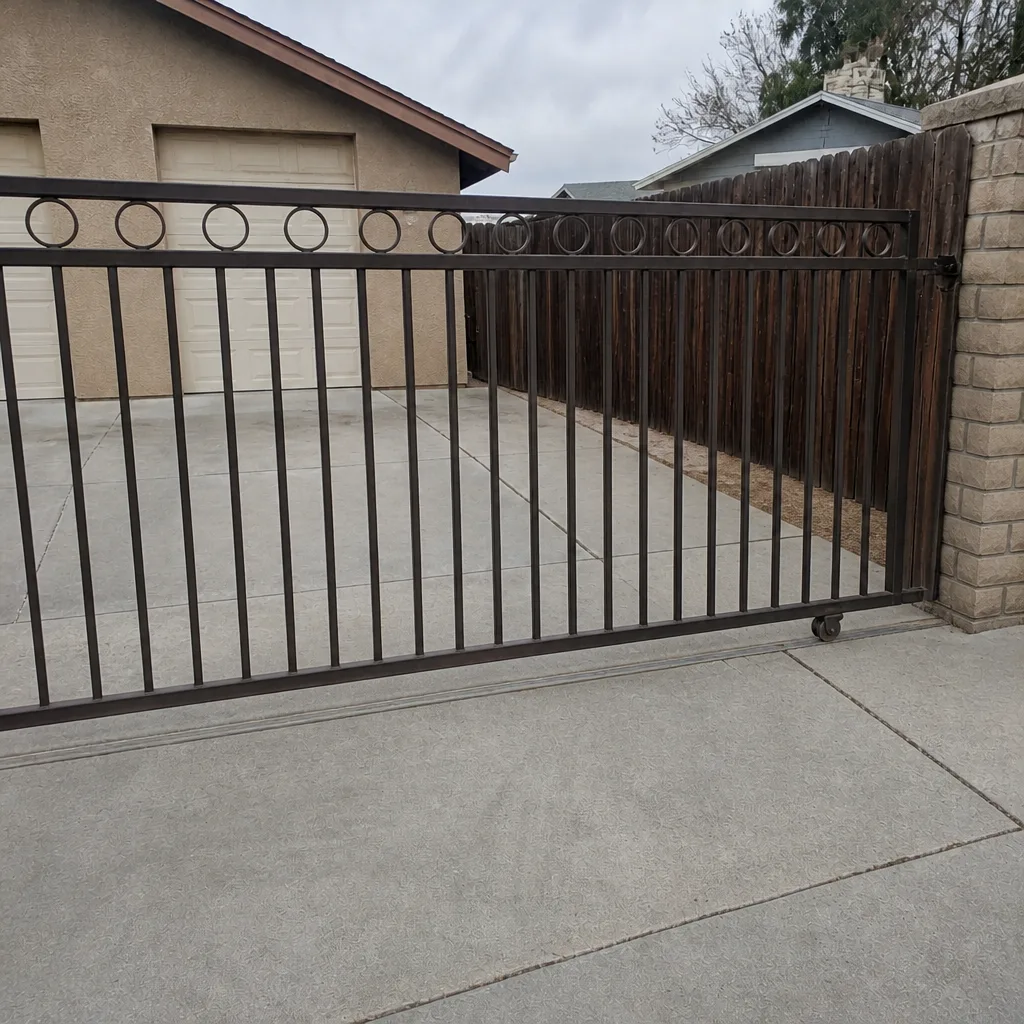
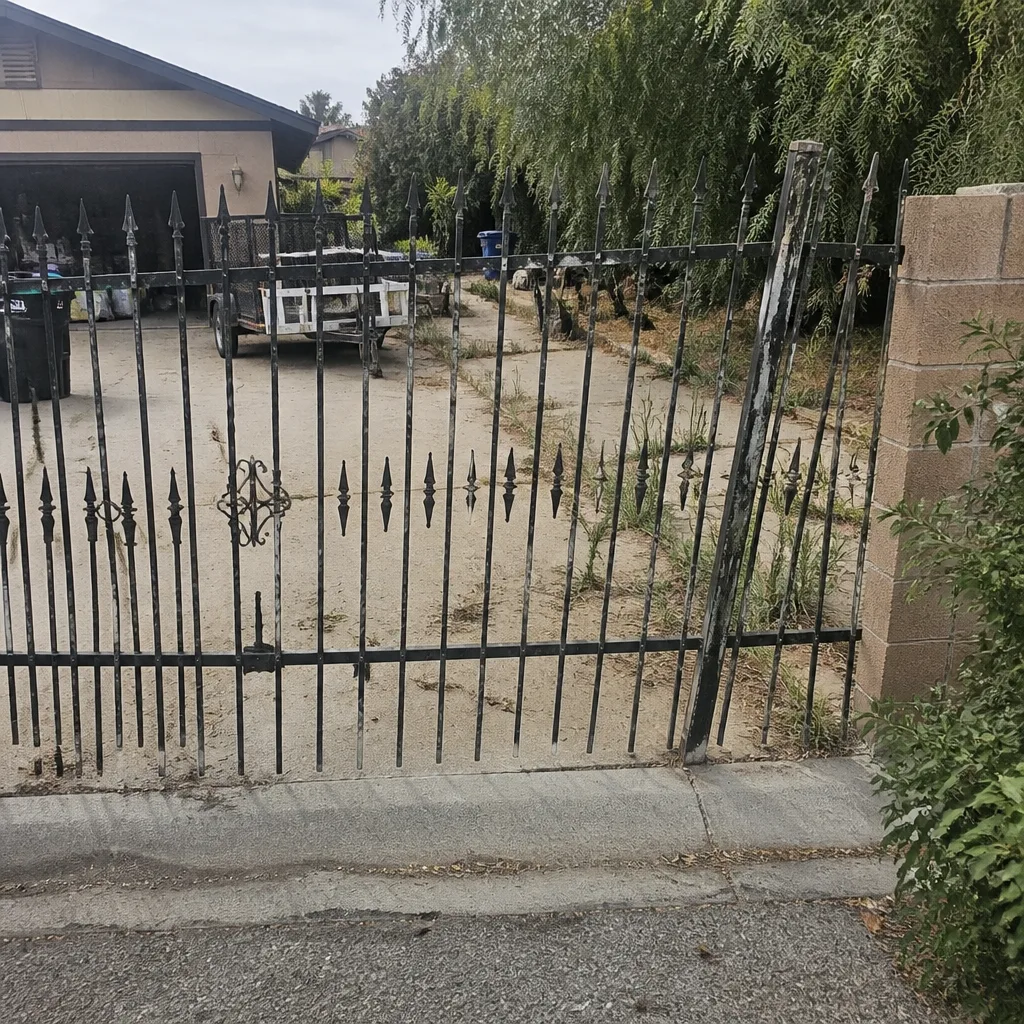
See the difference
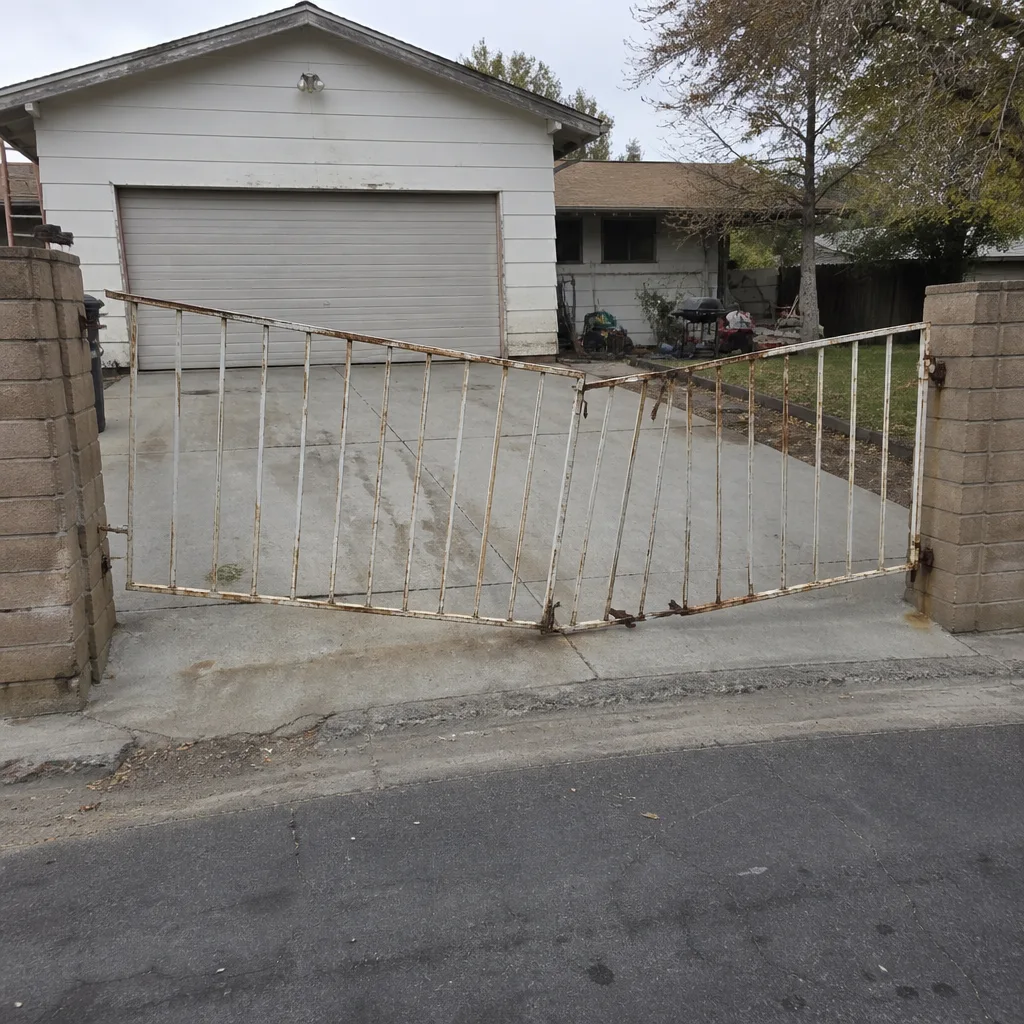 Before
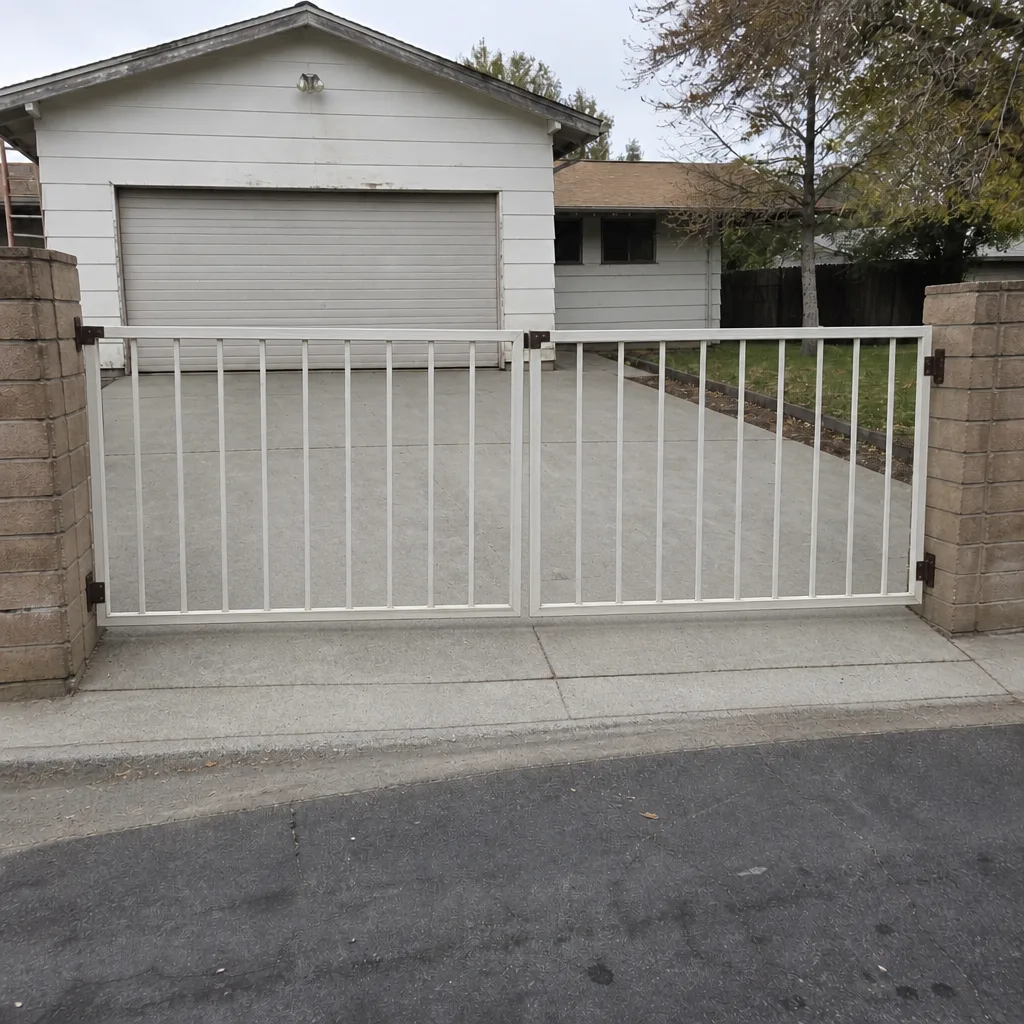 After
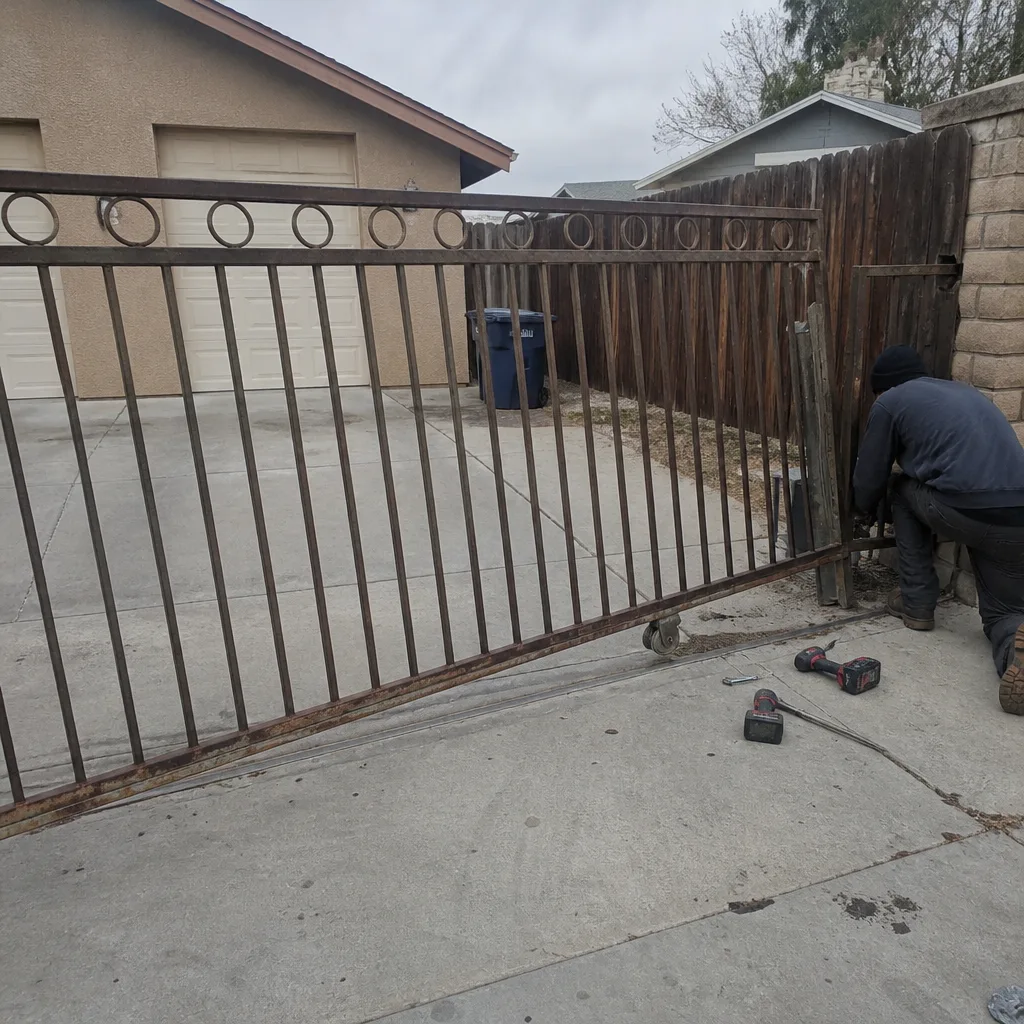 Before
 After
 Before
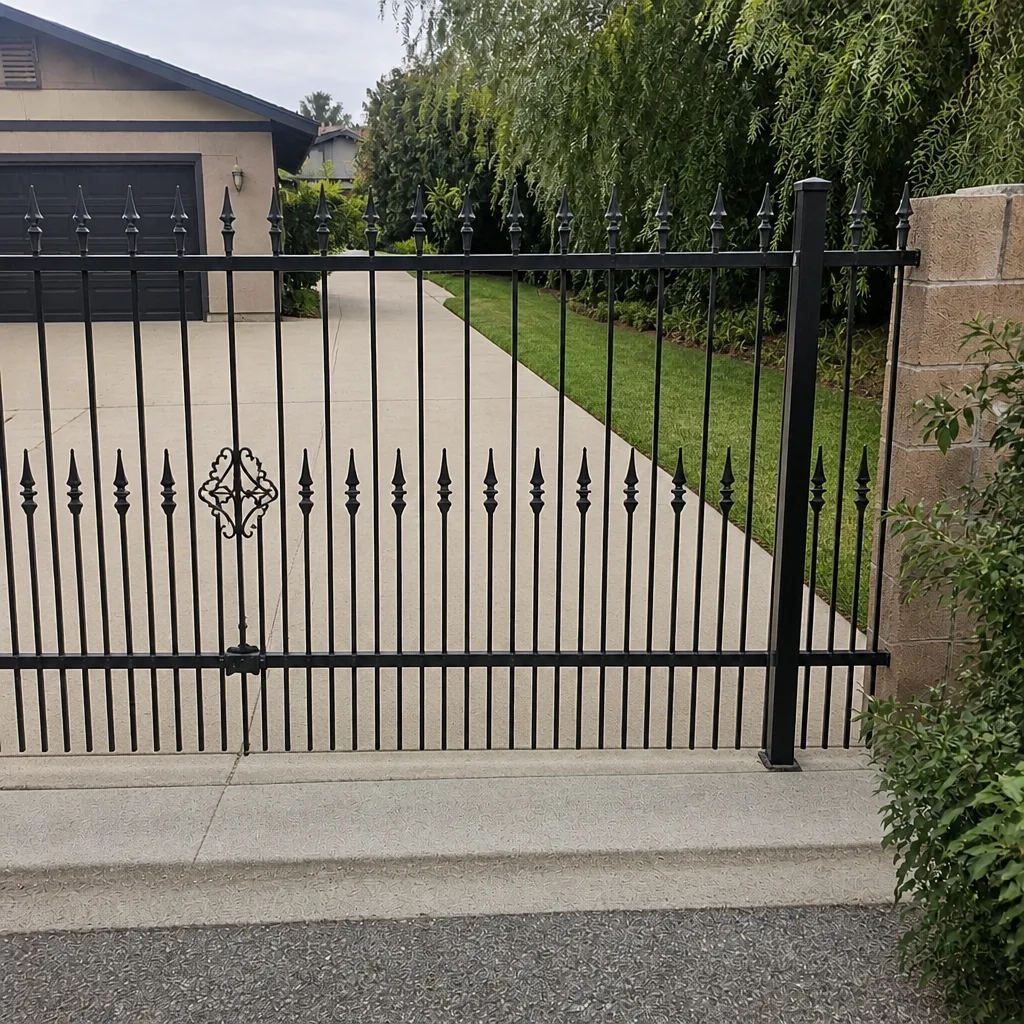 After
When to Call a Professional
Some things you can handle yourself – a squeaky hinge, a latch that needs a quarter turn of adjustment, a battery in the keypad. Others need a trained eye. Any repair involving the torsion spring or the operator’s high-voltage connection is a genuine safety issue and should not be attempted without proper training – those components can cause serious injury. A steel gate that has shifted on a loaded hinge post is also a structural situation, not a self-fix. And any time a weld, a post footing, or the control board is part of the picture, the diagnosis matters more than the repair. Gatewood Fence & Gate Enterprise offers free estimates in Enterprise – call (833) 780-1547 and a live person will answer.
Frequently Asked Questions
Most common repairs in Enterprise run $150 to $400 – hinge replacement, weld repair, and adjustment fall in that band. Post repair pushes toward $350 to $850, and operator replacement runs $600 to $1,400 installed. The final number depends on the diagnosis, not just the description of the symptom. Call (833) 780-1547 for an exact quote – estimates are free.
For repair calls in Enterprise, same-day service is often possible, and emergency gate calls are handled around the clock – a live person answers every call, day or night. New installations and operator replacements are measured and scheduled, not same-day. Call (833) 780-1547 and we’ll tell you honestly what today looks like.
A sagging gate is almost always a hinge post issue, not the gate leaf itself. If the post is sound, the fix runs $150 to $320. If the post has rotated in Enterprise’s expansive clay soil, the repair is a post reset at $350 to $850, and skipping it means the hinge fix will fail again. A short in-person diagnosis settles which one you’re dealing with. Call (833) 780-1547 to schedule a free estimate.
We weld on site. A cracked frame joint, a broken hinge tab, or a split at the latch is welded in your driveway with the gate still mounted, which is both cheaper and faster than a haul-away repair. The only time we recommend taking a gate down is when the frame itself needs a full rebuild – and we’ll tell you that upfront. Call (833) 780-1547 with a photo and a description and we’ll give you a straight read.
Every job we do in Enterprise carries the 90-Day Done Right Promise in writing on the invoice. If the repair fails within 90 days of the completed work, one call brings us back at no additional charge. The warranty covers our labor and installation, and any parts we supplied. Call (833) 780-1547 if you’re comparing warranties on multiple quotes – we’re happy to explain what’s actually being promised.
Yes, and it’s free. Send us any written estimate – we’ll read it line by line and tell you what’s clear and what isn’t. That’s one of our standing offers and it doesn’t require you to book the job with us. Call (833) 780-1547 or bring the quote by. Seniors and veterans also get a permanent 10% discount, and there’s no trip charge inside the county.
The Bottom Line
The gate repair bill that hurts isn’t the biggest one – it’s the one you paid three times for the same problem. Understand the four variables that drive cost (post condition, cause vs. symptom, gate weight, access to the failure), insist on a written itemized quote, ask whether the first visit can finish the job, and treat the warranty as part of the price. Do those four things and you’ll land on the honest end of the range for whatever’s actually wrong. For a straight read on your gate in Enterprise, see our Gatewood Fence & Gate Enterprise home page or call (833) 780-1547. Estimates are free, the price is agreed before any work starts, and a live person answers around the clock.
Written by the team at Gatewood Fence & Gate Enterprise.