
Last updated November 18, 2026
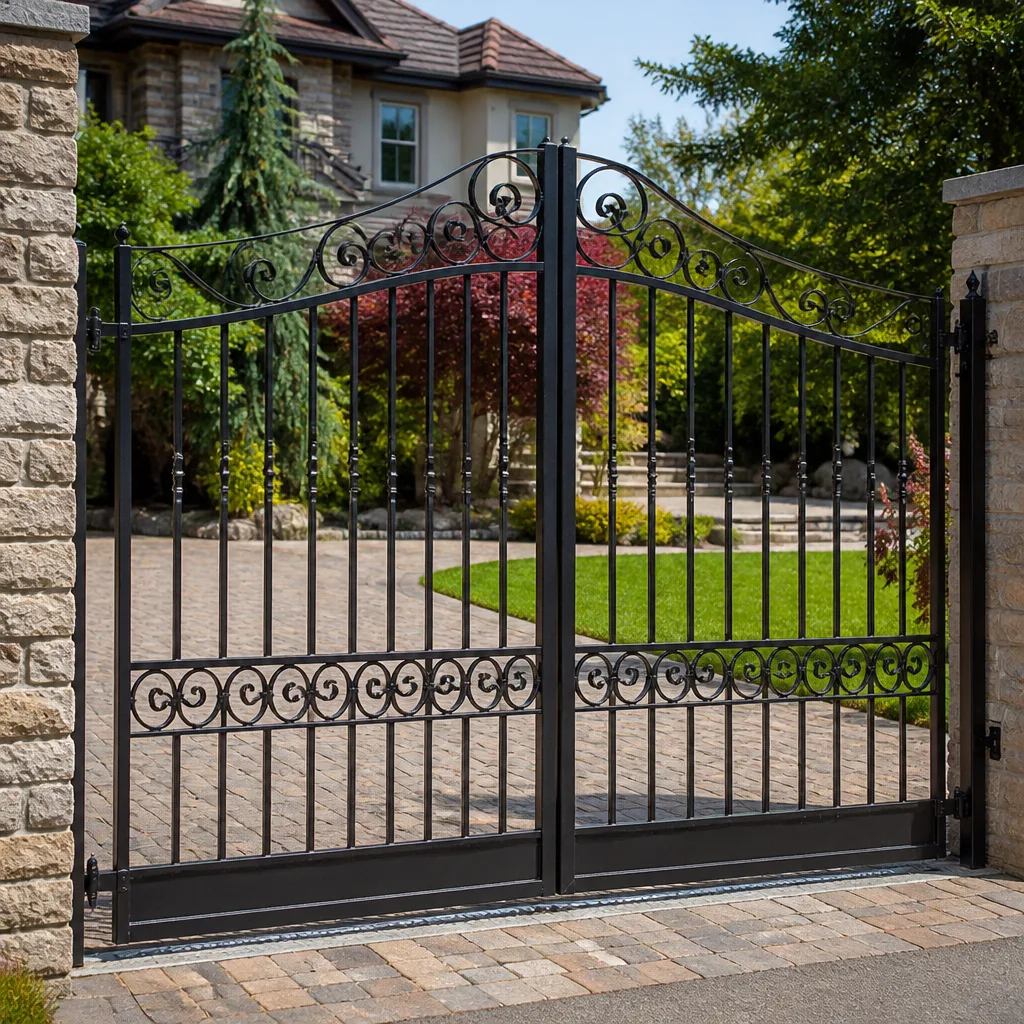 Wrought iron
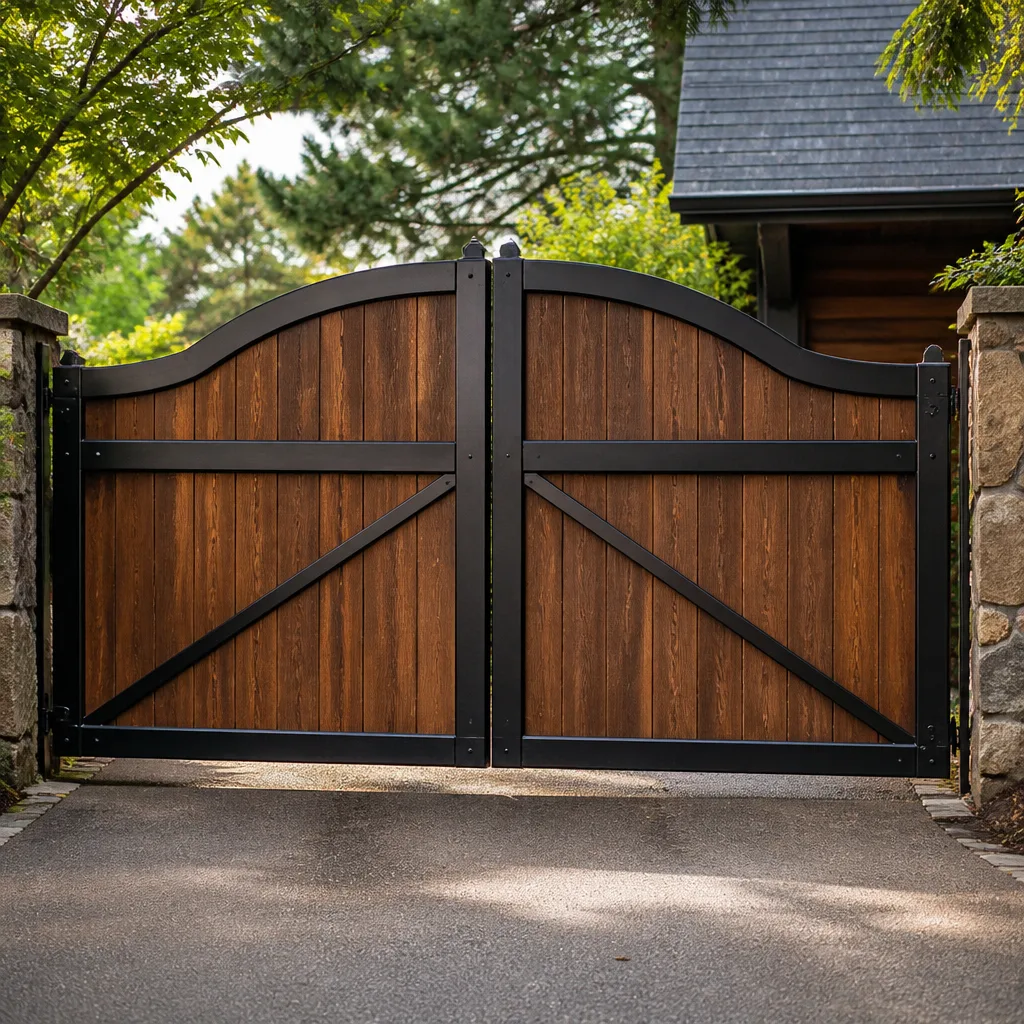 Wood & steel frame
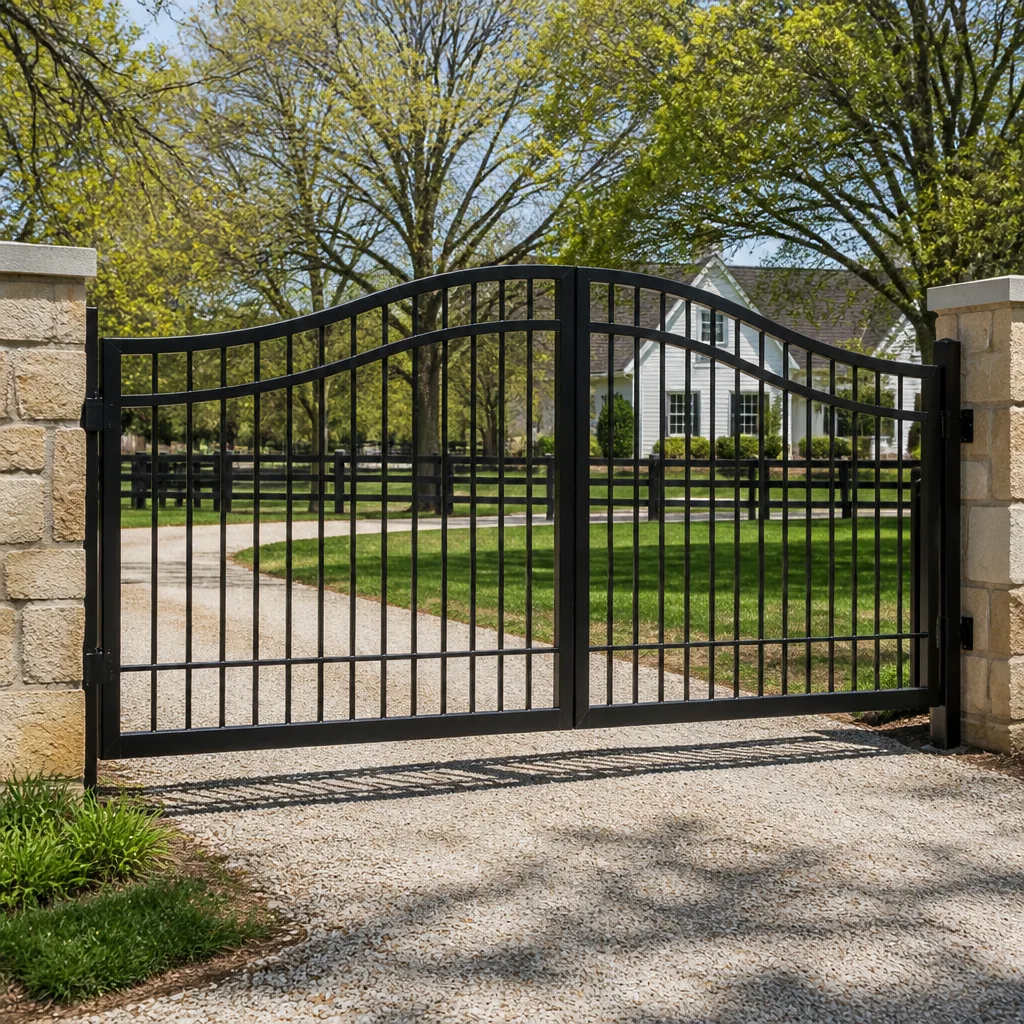 Farm & ranch
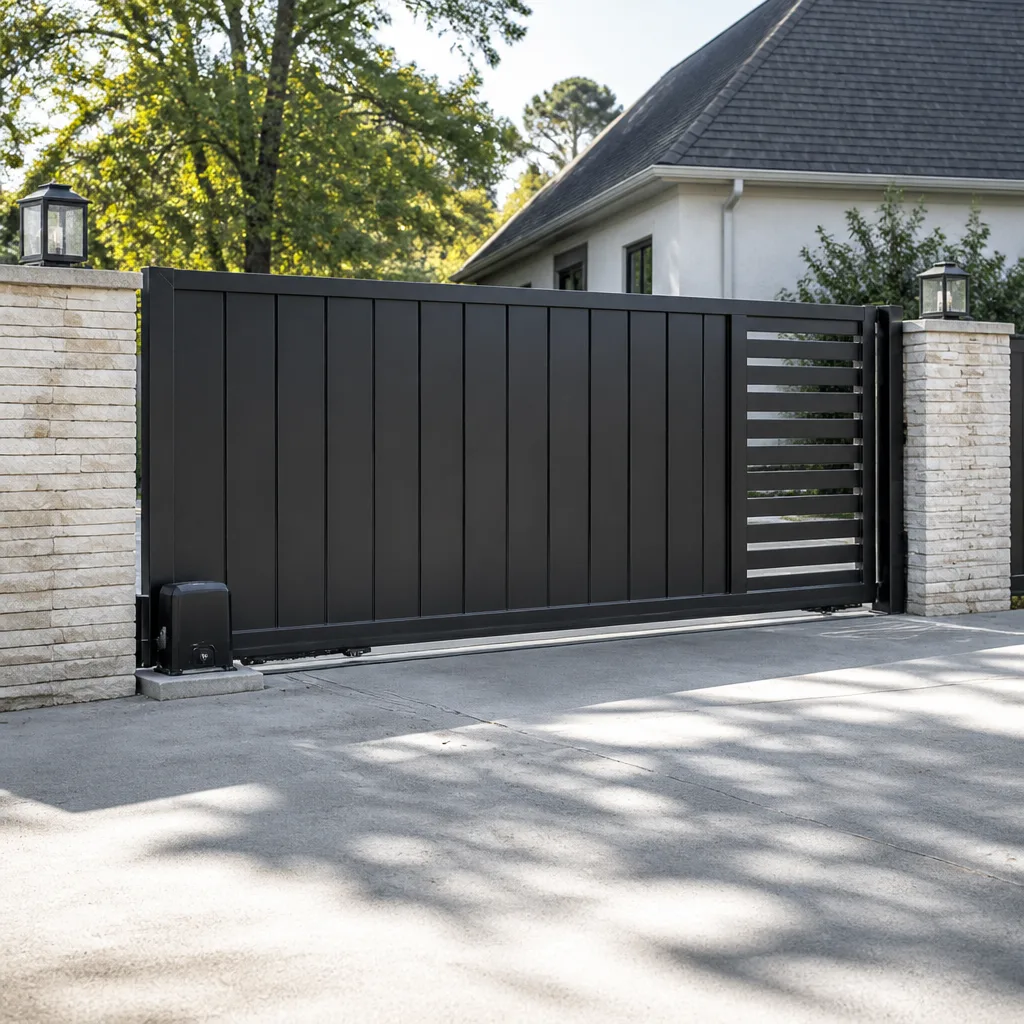 Sliding driveway gates
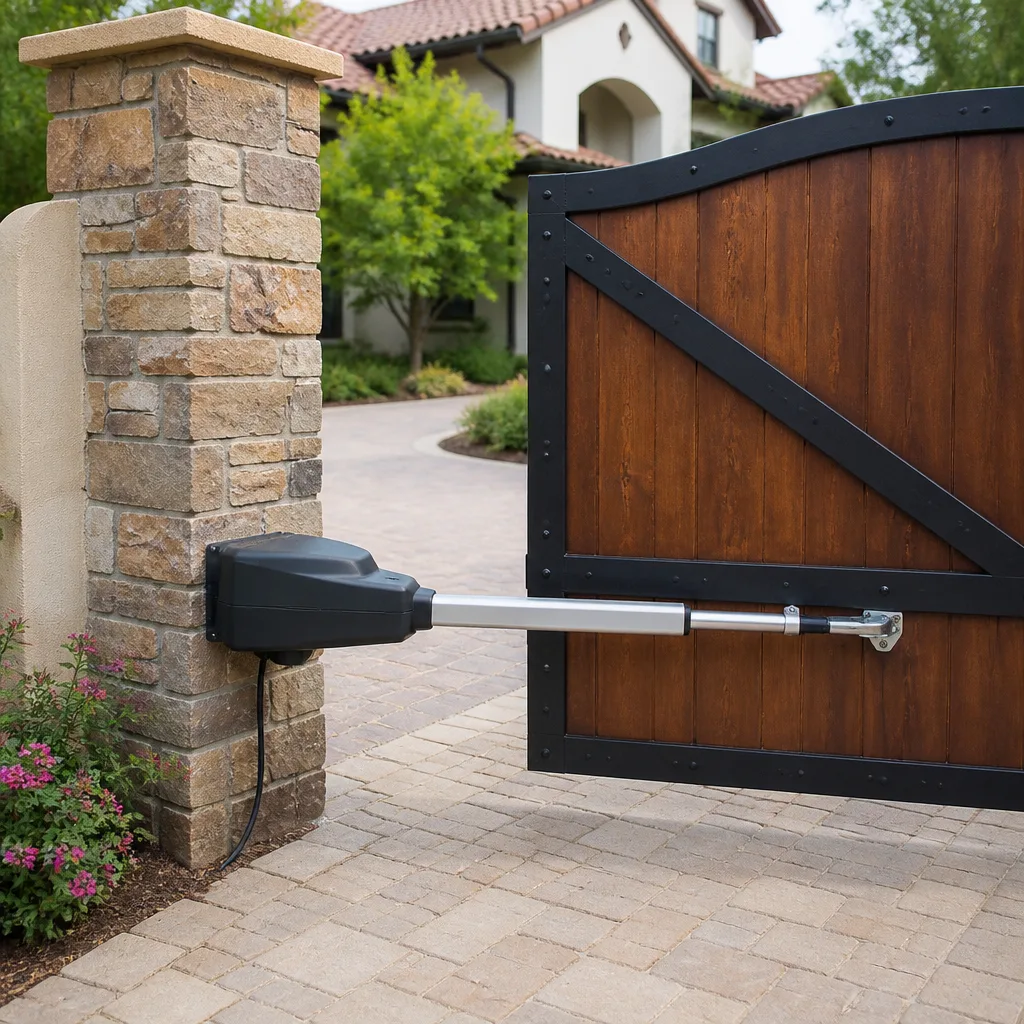 LiftMaster operators
Free on-site gate assessment - hinges, posts, and your LiftMaster or Nice gate operator checked before anything is quoted
The assessment is free and the quote is the invoice.
Get your free estimateSeasonal Gate Repair Care for Enterprise: Year-Round Homeowner’s Guide
Here’s what surprises people: the gate that worked fine all winter starts dragging every June in Enterprise, and it isn’t a coincidence. Thermal expansion in steel frames and baked-out lubricant are as predictable as the heat itself. Afternoon temperatures that push past 110 for weeks, followed by winter nights that drop into the twenties or below, put your gate through a mechanical stress cycle most seasonal guides never mention. A guide written for a mild coastal climate will tell you to “check the hinges in spring,” then send you on your way. That advice misses the number one thing we see when we pull up to a driveway in Enterprise in mid-July: a sagging gate nobody noticed was failing in April. This guide walks through the full year in this valley, month by month, so the drag never starts.
Quick Answer
In Enterprise, the right seasonal gate care comes down to two pieces of timing: service the operator, rubber seals, and finish in May before the summer heat stress kicks in, and re-check your spring inspection in March once the ground has finished moving. Lubricate, tighten, and adjust before each season changes, not only after something breaks.
Styles & brands we work with
- Wrought iron
- Wood & steel frame
- Farm & ranch
- Sliding driveway gates
- LiftMaster operators
Table of Contents
- Why Enterprise Heat Is Harder on Gates Than a Desert Postcard Suggests
- What Extreme Summer Heat Does to Operators, Seals, and Painted Surfaces
- Winter Drops, Timing Settings, and Why Your Gate Feels Slower
- The Spring Inspection Sequence After a Wet Winter
- Wind Season Prep: Welds, Hardware, and the Gust That Finds the Weak Spot
- Before You Leave for Summer: Closing Out an Empty House Safely
- Common Mistakes to Avoid
- When to Call a Professional
Why Enterprise Heat Is Harder on Gates Than a Desert Postcard Suggests
People picture a desert and think dry, so it should be easy on metal. The exact opposite is true for your gate. Enterprise runs a hard heat cycle through the summer, and it runs a hard cold cycle through the winter. Those two swings, all year, are what wear gate hardware out faster than steady temperatures would. Steel frames swell in the heat and shrink in the cold. A gate that was measured and hung for a perfect fit in October can bind in August without anyone touching a thing. That is thermal expansion, and it moves a heavier gate more than you would guess.
The heat doesn’t just move the frame. It degrades everything attached to it: the grease in the hinges, the rubber in the seals, the paint on the surfaces. What looked fine in February can be cracked and flat by June, because summer in Enterprise bakes it out. The wind carries fine grit and dust too, and grit mixed into spent lubricant turns into a grinding paste that wears hinge pins and rollers from the inside.
The homeowners we help in neighborhoods around the valley have learned one thing that runs counter to a lot of advice out there: don’t wait for cooler weather to think about summer. The work is done in the shoulder season, in May, before the peak heat sets in. Two things you want handled before June:
- Re-grease every moving part with a high-temperature lubricant. A standard grease that thins out and drips at 105 degrees is leaving your hinges dry exactly when the metal is expanding and needs the slip most. Use a lubricant rated for high heat.
- Inspect the rubber seals and the paint on exposed surfaces. Cracked seals let grit in and let heat drive out moisture. Faded or chalking paint is the first sign the finish is breaking down, and a fresh coat on the steel frame is cheaper every year you delay it.
Do those two before the heat peak and you’ve taken care of the most common summer failures before they could start. This is the heart of Gatewood Fence & Gate Enterprise home thinking: fix the cause in the shoulder season so it never becomes a repair in the peak.
What Extreme Summer Heat Does to Operators, Seals, and Painted Surfaces
Automation is where heat turns into money. When the temperature climbs, the grease inside an operator thins out and the motor works harder to push the same gate. A gate that felt perfectly balanced in April can feel sluggish in July, because the motor is fighting the heat along with the weight of the gate. It’s not a slower motor; it’s the same motor doing much more work. This is how a summer heat wave turns a normal operator into a burned-out one, and it happens on every brand we service, from Ghost Controls residential units to heavier BFT and Linear swing operators.
The rubber is the other one. Seals around the operator housing, weatherstripping on the gate frame, and any rubber buffers on the hinges take the heat all summer. When they crack, they stop doing their job, and then the grit gets in. Once grit is in the hinge or the operator, the drag goes up again.
The two things to do in May
- Lubricate with a lubricant rated for the heat, and re-check it once in mid-summer to make sure it hasn’t thinned away. High-temperature grease on hinges, rollers, and operator pivots.
- Inspect and protect the finish and the seals. Touch up any chalking or cracking paint on the frame. Replace cracked rubber seals before they let the grit in. If a seal is already gone, that’s a cheap fix now and an expensive one later.
If the operator starts making a noise it didn’t make in the spring, or the gate reverses without touching anything, don’t ignore it. A heat-stressed operator is telling you it needs a look before the motor quits entirely. Our Gate Motor & Opener service in Enterprise exists for exactly that call. When we look at a heat-stressed operator, we’re not looking to swap parts. We’re looking at why the motor is dragging and fixing that. A fresh coat of high-temp grease on a properly balanced gate often costs less than one part swap and lasts all season.
Winter Drops, Timing Settings, and Why Your Gate Feels Slower
From December through February in Enterprise, your automatic gate may seem to move slower. It usually isn’t a failing opener. Cold does two things at once. It stiffens the grease in the pivots and hinges, so the gate itself moves with more resistance than it did in September. And it tightens every metal surface, because cold makes steel shrink and can shift the frame a fraction. Combine the two and the operator is pushing a stiffer gate with the same power. That’s the “slower” gate.
Some operators adjust to this better than others. Certain models track their own limits and re-learn as conditions change, which is why we like Gate Motor & Opener service that respects each brand’s own behavior. A Ghost Controls unit and a Linear operator don’t handle cold the same way, and a setting that works perfectly in July can trip a safety sensor in January. If your gate starts stopping halfway or reversing at the end, the cold is the usual culprit. A quick adjustment of the travel limits and the safety sensors gets it moving again.
What to do as the cold comes in
- Re-check and top off lubricant with something that stays pliable in the cold. Grease that gets stiff as glass is worse than no grease.
- Check your safety edges and the reversing test. Before a winter storm is the time to know your gate will reverse rather than continue closing on something.
- Look at the timing settings and travel limits on any opener you have a manual for, or schedule a winter reset so the gate opens and closes smoothly when the temperature drops.
You don’t need to understand the electronics to notice a problem: if the gate “feels slower” or reverses on a cold morning, the setup needs a look. This is a normal call every winter in Enterprise, not a sign the opener is done for.
The Spring Inspection Sequence After a Wet Winter
This is the one a lot of people skip, and it costs them every year. Ground shift in the Enterprise area is real. We get rain that soaks the soil, and then it dries out again. A gate post that looked dead plumb in October can be leaning a little in March. A gate doesn’t sag in the middle; it sags in the hinge post, and that post is where you need to look first. So here’s the spring sequence, in order:
- Check the gate posts first. Are the hinge post and the latch post still in line with each other? A small lean is normal; one that’s got the gate dragging at the bottom is a post problem, and patching the panel won’t fix a post. Fix the panel without the post and you’ll fix it twice.
- Test the swing. Open the gate by hand and let it go. Does it come to rest on its own, or does it swing one way or drag? Show me a gate closing on its own and I’ll show you where it’s failing. A gate that swings by itself is signaling a post or hinge problem.
- Inspect the hinges, rollers, and all hardware. Tighten loose bolts, replace worn hinge pins, and clear out the grit from the winter.
- Inspect the welds. Look at the frame joints where the gate takes the most stress, near the hinge post and the latch. A hairline crack in a weld is easy to miss in March and breaks in a windstorm in May. Cleaning the weld down and re-welding on site is exactly what we do, so the gate stays in the driveway where it belongs.
- Test the operator, the access control, and the reversing safety. Run the full open-and-close cycle, test the reversing action, and check the keypads, transmitters, or card readers for the season.
That sequence catches the problems that started under the winter rain. Do it in March, fix what it finds, and the summer heat won’t land on a gate that’s already failing. Sometimes a homeowner brings in a gate that another outfit has already written off as a replacement. Our Gate Repair in Enterprise team is built to repair first, so the gate stays where it is.
Wind Season Prep: Welds, Hardware, and the Gust That Finds the Weak Spot
Wind in Enterprise isn’t a rumor; it’s a season. The open valley lets a gust hit a wide gate like a sail, and the first thing any wind load finds is the weak spot you left alone in March. A gate has to hold against that. Most of the stress lands on three places: the hinge post, the frame welds near the hinges, and the hardware that ties the panel to the post. That’s where to look, and it’s where we look first when a gate comes in with a wind story.
The wind-season check
- Inspect the welds for stress cracks. Not just the visible joints; look at the frame at the hinge side and the latch side. A crack looks like a fine dark line in the paint. If you can see it, catch it before the wind does.
- Tighten and inspect all hardware. Hinge bolts, latch bolts, and any brackets. A loose bolt in a gust is a gate that comes off its post.
- Test the frame for flex. Push against the gate at a few points and watch the frame. A frame that flexes more than it did last year has a weakening joint somewhere.
We’ve seen plenty of gates that a big gust “found” exactly because a crack in a weld went untended for a couple of seasons. A little on-site welding now prevents a gate on the ground later. If a weld does fail, it’s a repair, not a replacement, and it’s done in your driveway. That’s the repair-first philosophy, and it’s the whole point of the Gate Repair side of what we do.
Before You Leave for Summer: Closing Out an Empty House Safely
Plenty of Enterprise homeowners head out of the valley for a stretch in the peak summer heat, which is smart. What’s not smart is leaving a gate you haven’t checked since spring. A gate that fails while you’re gone isn’t just a nuisance. It’s a security problem for an empty house. A gate stuck open, or stuck closed with a mail carrier or a family member needing in, becomes a call you’re making from the road.
Before you lock up and go, run through a short checklist:
- Lubricate and tighten. Do the May heat-prep early the week before you leave, so the gate is at its best before you go.
- Test the full operating cycle. Open and close the gate several times, test the reversing safety, and check every remote and keypad. Make sure the backup battery, if your operator has one, is charged.
- Set the gate for an empty house. Decide whether you want it open or closed while you’re gone, and make sure the access control (keypads, codes, any gate access system) is set for anyone who needs to get in. A neighbor with a code is worth having.
- Take a photo of the working gate. If something goes wrong while you’re away, you’ll have a reference for what “normal” looked like when you left.
For the longer picture, our gate access control service in Enterprise can set up a system that lets you manage access while you’re gone, so an empty house isn’t dependent on one physical key. And if you’re adding a gate or a new operator for security while you travel, our Gate Installation in Enterprise handles the measure, the order, and the written price, scheduled around your timeline rather than a same-day promise.
Common Mistakes to Avoid
- Waiting for the heat to notice the heat problem. By the time the gate drags in July, the damage was done in April. Do the heat prep in May, not after the first failure.
- Greasing with the wrong lubricant. Standard grease that thins and drips in the Enterprise heat leaves the hinge dry. Use a lubricant rated for high temperatures.
- Patching the panel and ignoring the post. A gate sags in the hinge post, not the middle. Fix the panel without the post and you’ll fix it twice.
- Skipping the post check after a wet winter. Ground shifts in this valley, and a post that was plumb in October can lean by March. Check it every spring.
- Ignoring cracked welds and loose hardware in wind season. A gust will find the crack you missed. Catch it before the wind does.
- Leaving for the summer without testing the gate. An empty house with a failed gate is a security risk you didn’t need to take.
- Letting a heat-stressed operator run until it quits. A drag or a noise in June is a cheap adjustment now and a burned-out motor later.
When to Call a Professional
Some seasonal care belongs in your own two hands; some of it doesn’t. Call in a pro when a post leans enough to drag the gate, when a frame weld is cracked or the panel flexes more than it should, or when the operator makes a noise, reverses without reason, or shows a fault. Anything involving the safety edges, the reversing test, or the electrical side of a gate operator is the work of someone who does it for a living, and it’s worth having checked before a season turns. Gatewood Fence & Gate Enterprise offers free estimates in Enterprise for any of it. Call (833) 780-1547 and a live person answers, day or night. Every job carries the 90-Day Done Right Promise in writing, and because our technicians have up to 25 years of experience on these exact brands, the work gets done once.
See the difference
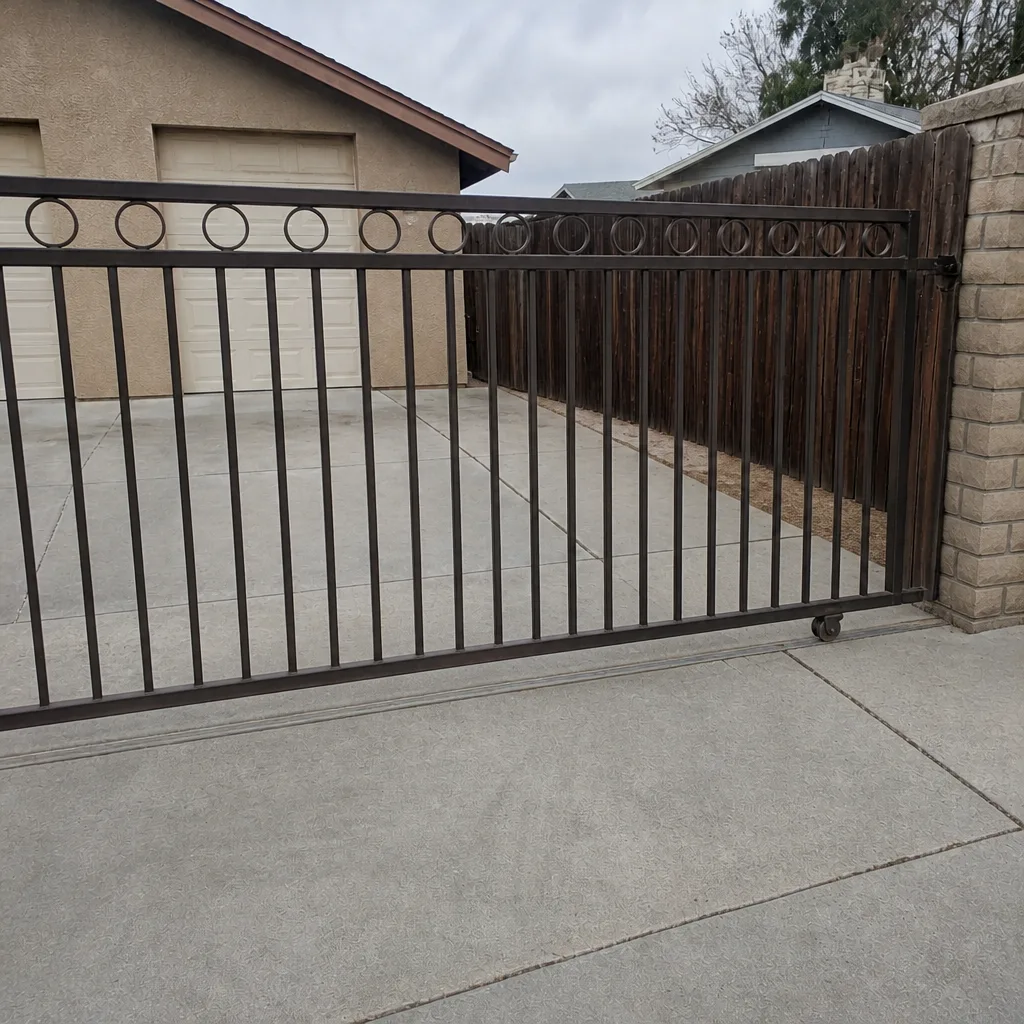
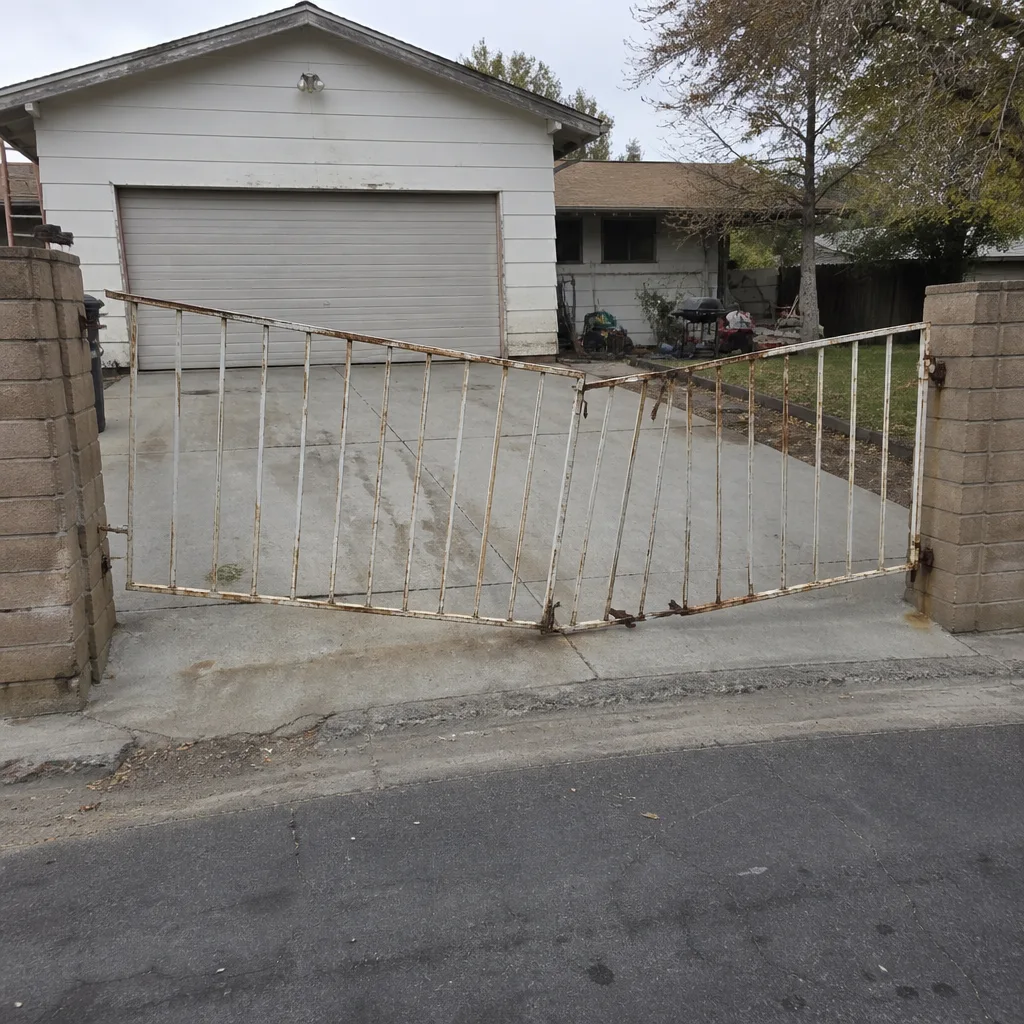 Before
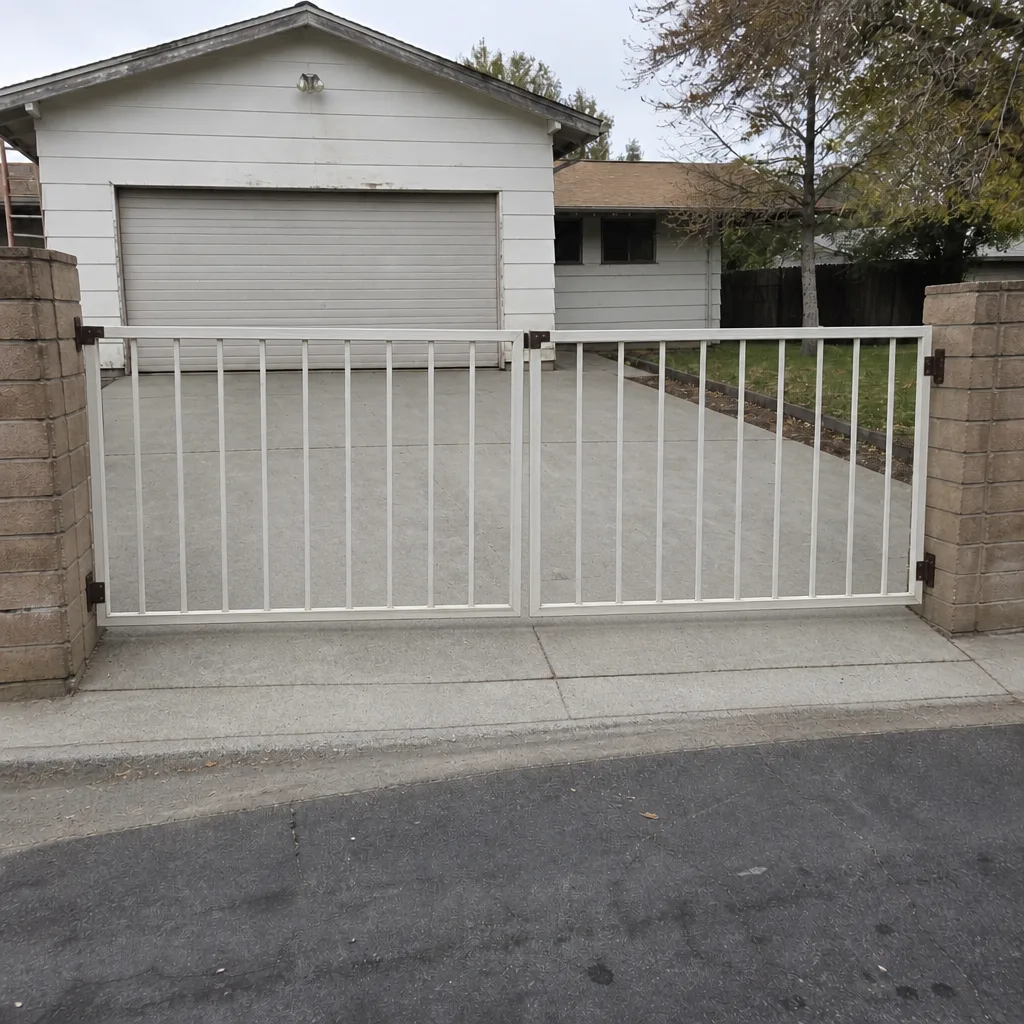 After
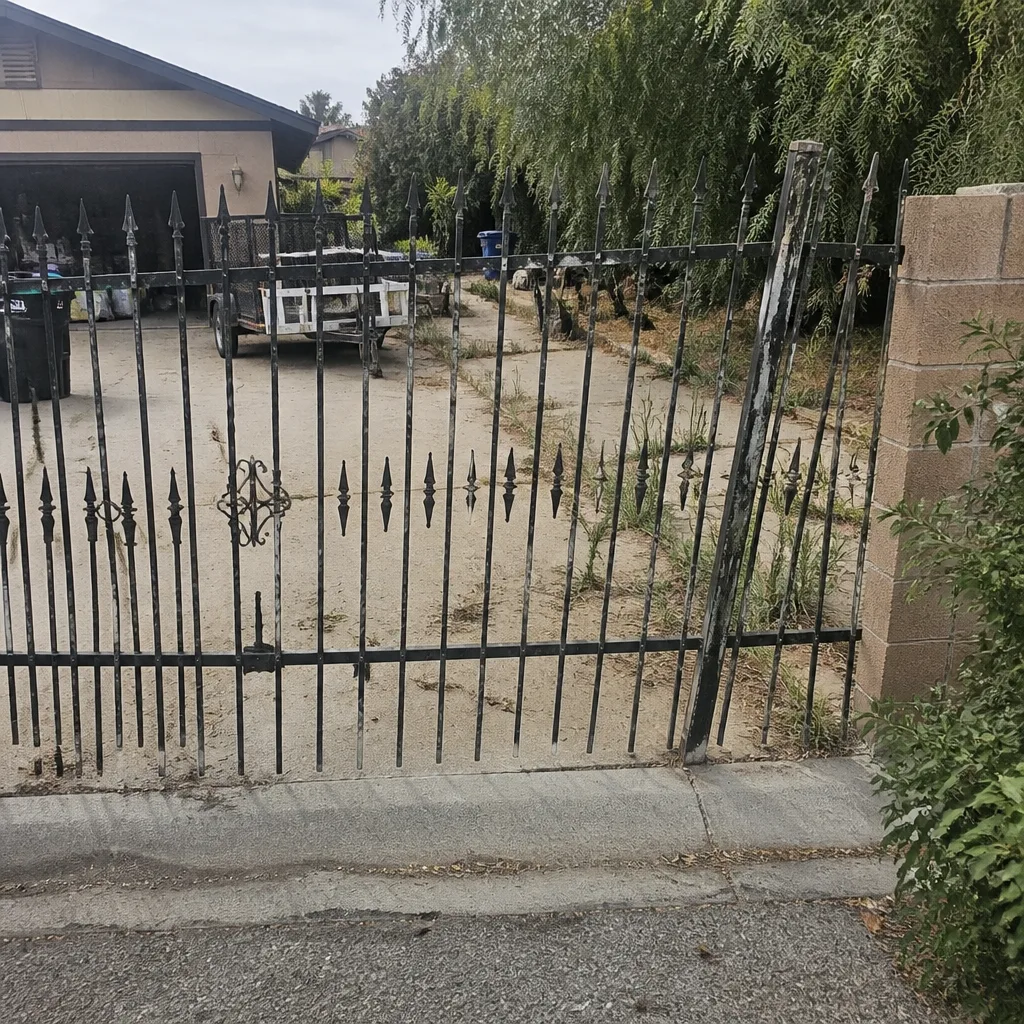
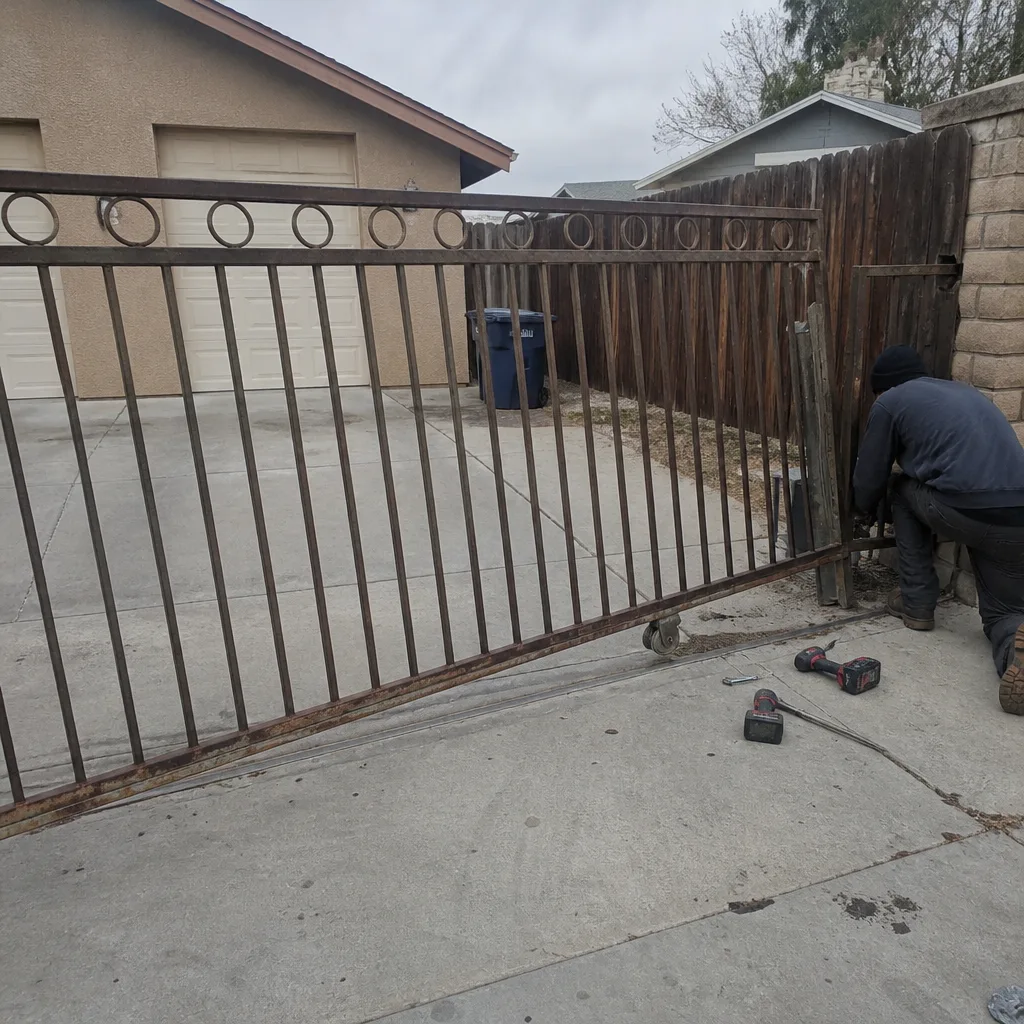 Before
 After
 Before
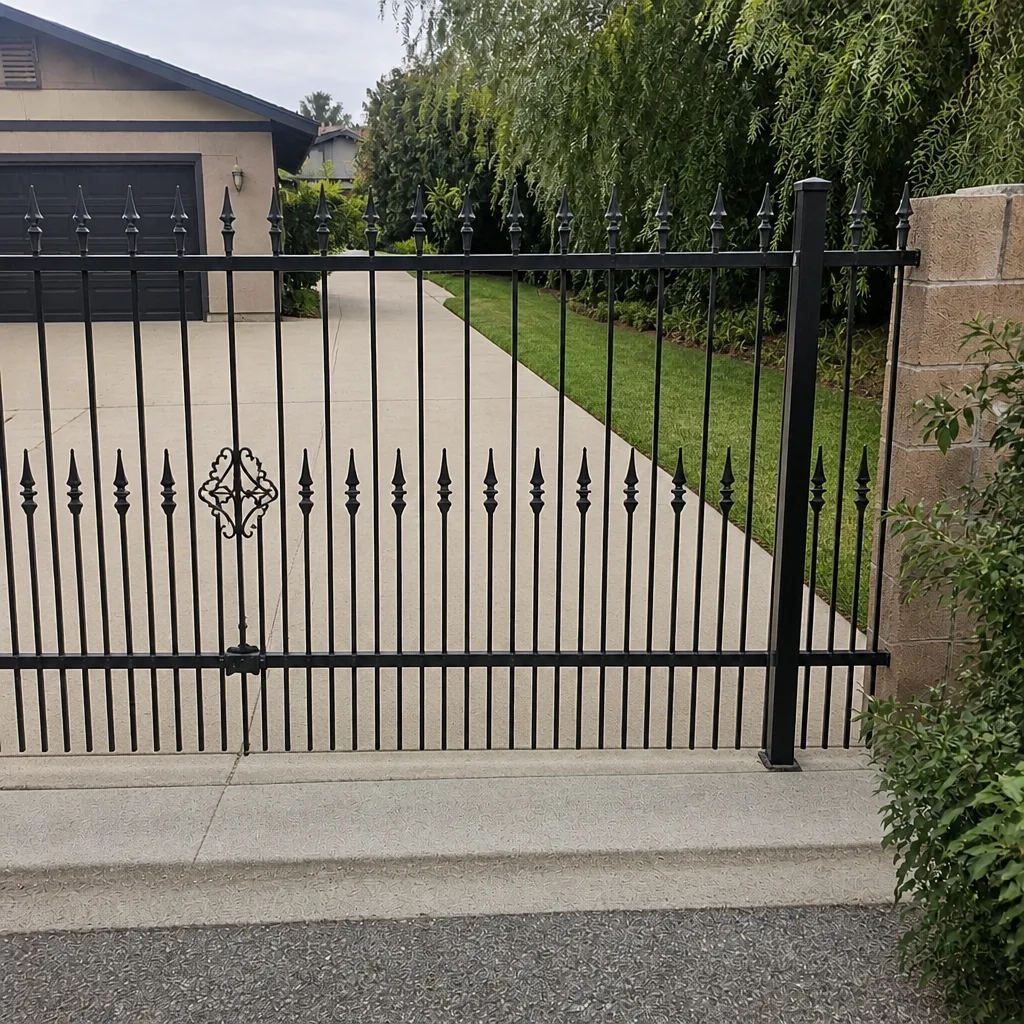 After
Frequently Asked Questions
Twice a year: once in May before the summer heat, and once in March after the winter. That spring-and-fall pairing catches both the thermal stress of summer and the ground shift after a wet winter, which is what this climate demands. A heavy-use gate on a slope may want a third check in the middle of summer. Call (833) 780-1547 for a free estimate on a service visit.
Cold stiffens the grease and tightens the metal, so the gate moves with more resistance while the opener works at the same power. It usually isn’t a failing motor; it’s a setup that needs the travel limits and lubricant adjusted for the cold. If it reverses or stops halfway, get it looked at, and call (833) 780-1547 to schedule a winter reset.
A high-temperature lubricant that doesn’t thin out and drip at the peak summer heat, and stays pliable in the winter cold. A standard grease that thins in July and stiffens in January is worse than none, because it turns into grit-trapping paste. When we service a gate, we use a lubricant rated for the full swing, and you can ask us what we’re using on your call to (833) 780-1547.
It can almost always be repaired on site. We weld in your driveway so the gate stays where it belongs, which avoids the haul-away-and-replace route a lot of outfits push. A hairline crack found in spring is a small repair; the same crack found after a windstorm may be more. Call (833) 780-1547 for a free estimate before the gust finds it.
Yes: run the full open-and-close cycle, test the reversing safety, check the remote and keypad, and set the gate for the house being empty. Make sure anyone who needs access has a code, and consider a gate access system that doesn’t depend on a single key. Call (833) 780-1547 and we’ll walk you through it before you go.
Every job is quoted upfront and agreed in writing before any work begins, so the price doesn’t change at the door. We have standing offers that don’t require haggling: $40 off any repair over $200, no trip charge inside the county, a free second opinion on any written estimate, and a permanent 10% discount for seniors and veterans. Call (833) 780-1547 for a free estimate in Enterprise.
The Bottom Line
Gate care in Enterprise is a two-season routine, not a one-time fix. The heat is the stress test and the winter is the reset, with the spring ground check and the wind season in between. Get the lubricant, the seals, the post, the welds, and the operator on a calendar, and you catch the failures before they cost you. Do it in May and in March, and your gate does its job through both. When something on that list is beyond a homeowner’s hands, that’s where we come in: repair-first, welded on site, and backed by the 90-Day Done Right Promise. Call (833) 780-1547 for a free estimate today.
Written by the team at Gatewood Fence & Gate Enterprise.